
收藏与出售
如何开始集邮:新手指南
更新于 · 5 分钟阅读 · StampGo 团队
快速回答
先选定一个方向,比如一个国家、一个时期或一个专题,然后准备三样东西:插册、镊子和放大镜。在买贵重邮品之前,先从自己的信件、家里的旧册子和邮商的低价混合袋里收集,并在归档时逐枚识别。
关键信息
- 起步花费
- 一本插册、一把镊子和一个放大镜。比一顿外卖还便宜
- 第一个决定
- 方向:选定一个国家、时期或专题,胜过什么都收
- 最省钱的来源
- 自己的信件、家里的旧册子、邮商混合袋和集邮会的轮阅册
- 拿取邮票要用
- 镊子,绝不要用手指
- 不要做的事
- 给新票贴贴纸、把老封上的邮票泡下来、购买“投资”礼包
- 去哪里学
- 本地集邮协会或全国性集邮组织
Is stamp collecting still worth doing?
Yes, as a hobby. It's cheap to start and endlessly deep, but treat it as enjoyment rather than investment: most stamps are common, and the ones that rise in value are the scarce, well-preserved exceptions.
Millions of people collected stamps through the 20th century, which is why so much material survives and why common stamps cost cents. That's good news for a beginner: you can build a big, interesting collection for very little. It's also why you shouldn't buy stamps as an investment. See are old stamps worth money? for what actually carries value.
How do I choose what to collect?
Pick one boundary and start there: a single country, a period, or a topic such as birds, trains or space. A focus keeps it affordable and satisfying, and you can always widen it later.
| Type of collection | What it's like |
|---|---|
| One country | The classic approach. Albums and catalogues are built for it |
| One reign or era | Smaller and cheaper, e.g. one monarch or one decade |
| Topical (thematic) | Birds, ships, space, sport. Fun, visual and easy to start from mixtures |
| Postal history (covers) | Whole envelopes, rates and routes. More research, fewer duplicates |
| One issue in depth | Every plate, perforation and shade of a single series |
Topical collecting is the easiest start for most people, because almost any cheap mixture will contain something that fits your theme.
What do I need to start a stamp collection?
Three things: somewhere to put stamps (a stockbook), tongs to handle them, and a magnifier. Everything else can wait until you know what you collect.
- A stockbook, a book of card pages with clear strips that hold stamps without hinges or glue.
- Stamp tongs, which look like tweezers with flat, polished tips. Fingers leave oils that stain over time.
- A magnifier of about 10×, for perforations, small print and flaws.
- Optional later: printed album pages, mounts, a perforation gauge and a watermark tray.
Our guide to stamp collecting supplies covers what's worth buying and what damages stamps.
Where do I get stamps cheaply when starting out?
From your own incoming mail, family albums, charity shops, dealer mixtures sold by weight, club circuit books and inexpensive lots online. Beginners rarely need to buy single stamps at first.
- Your own mail, plus mail from friends, family and work. Ask people to save envelopes for you.
- Family albums, which often hold decades of stamps nobody has looked at. Handle them as they are until you've checked what's inside.
- Mixtures and kiloware, bags of stamps on paper sold by weight. Cheap, and good practice at soaking and sorting.
- Stamp clubs, where circuit books let members buy inexpensive stamps from each other.
- Dealers and shows, for filling specific gaps once you know what you want.
How should I organize a new collection?
File stamps by country and date to begin with, in a stockbook or on album pages, and keep a simple list of what you have. Being consistent matters more than which system you choose.
A list saves you from buying duplicates and makes insurance and selling far easier later. See how to organize a stamp collection, and how to store stamps for keeping them in good condition.
What beginner mistakes should I avoid?
Don't hinge unused stamps, don't soak stamps off old covers, don't store anything in PVC pages or damp rooms, and don't spend serious money before you can identify and grade stamps yourself.
- Hinging unused stamps. Hinges leave marks that reduce value. Use mounts instead.
- Soaking everything. Some covers are worth more whole. See how to remove stamps from envelopes.
- Bad storage. Damp, sunlight, tape, glue and PVC pages all cause permanent damage.
- Buying before you can grade. Condition drives price. Read stamp condition grades first.
- Trimming or cleaning stamps. It destroys value, and experts spot it immediately.
How long does it take to build a decent stamp collection?
A few evenings gets you a sorted starter collection. A year of casual collecting fills most of the common spaces in a country album. The slow part is the last stretch, where the remaining gaps are the scarce, expensive stamps.
Almost every collection follows the same curve. The first hundred stamps cost nothing and arrive quickly, the next few hundred come from mixtures and swaps, and then progress slows because what's left is genuinely hard to find. That's the point where most collectors either specialize, narrowing to one era or one issue, or widen into a new country.
- First month: sort what you have, learn to use tongs, fill a stockbook.
- First year: settle on a focus, start an album, learn to identify and grade.
- After that: buy selectively, upgrade weak copies, and keep a want list so you're never shopping blind.
分步操作
How to identify and log your first stamps with StampGo
The hardest part for a beginner is knowing what you're holding. StampGo names the stamp from a photo, so you can file it correctly from day one.
- 1
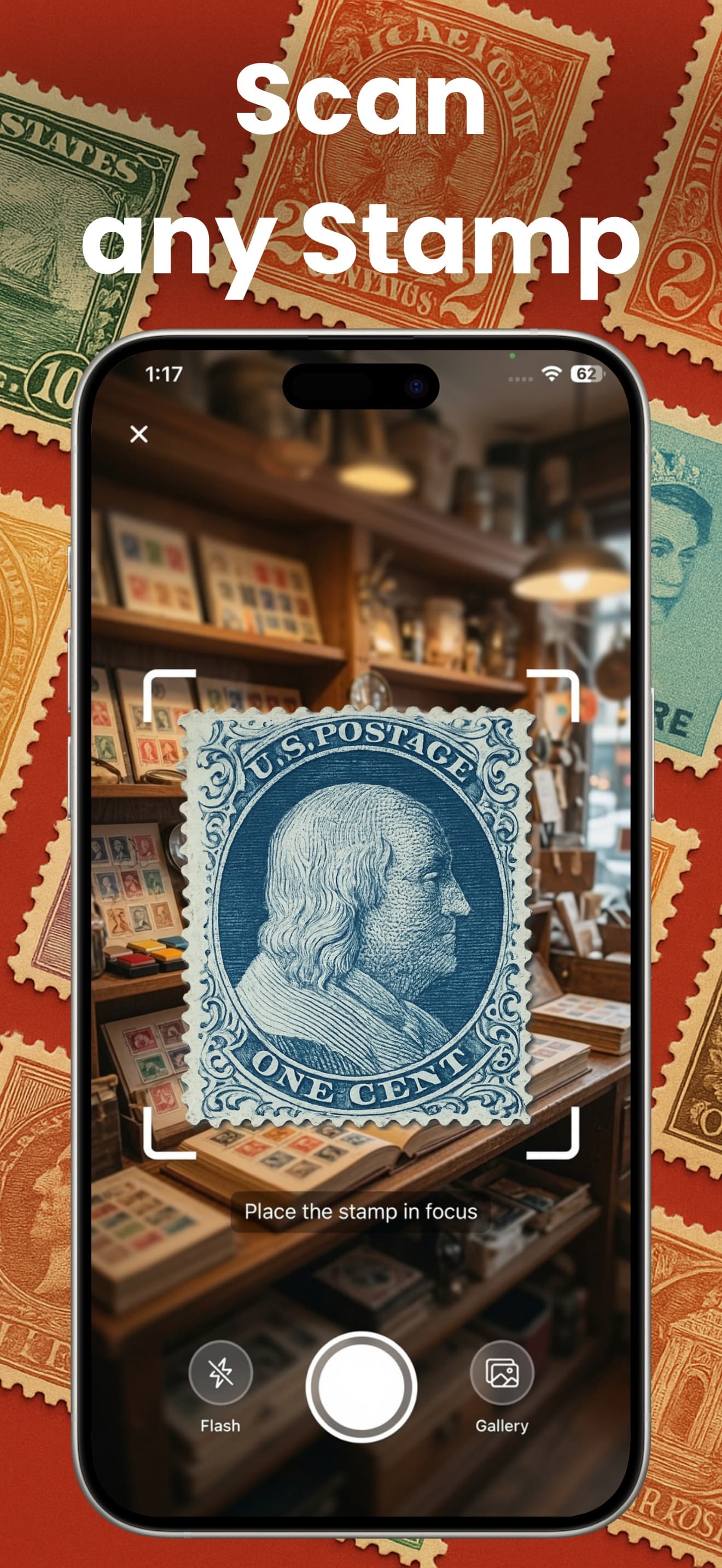
Scan a stamp from your pile
Tap Scan Now and photograph one stamp, flat and in good light.
- 2
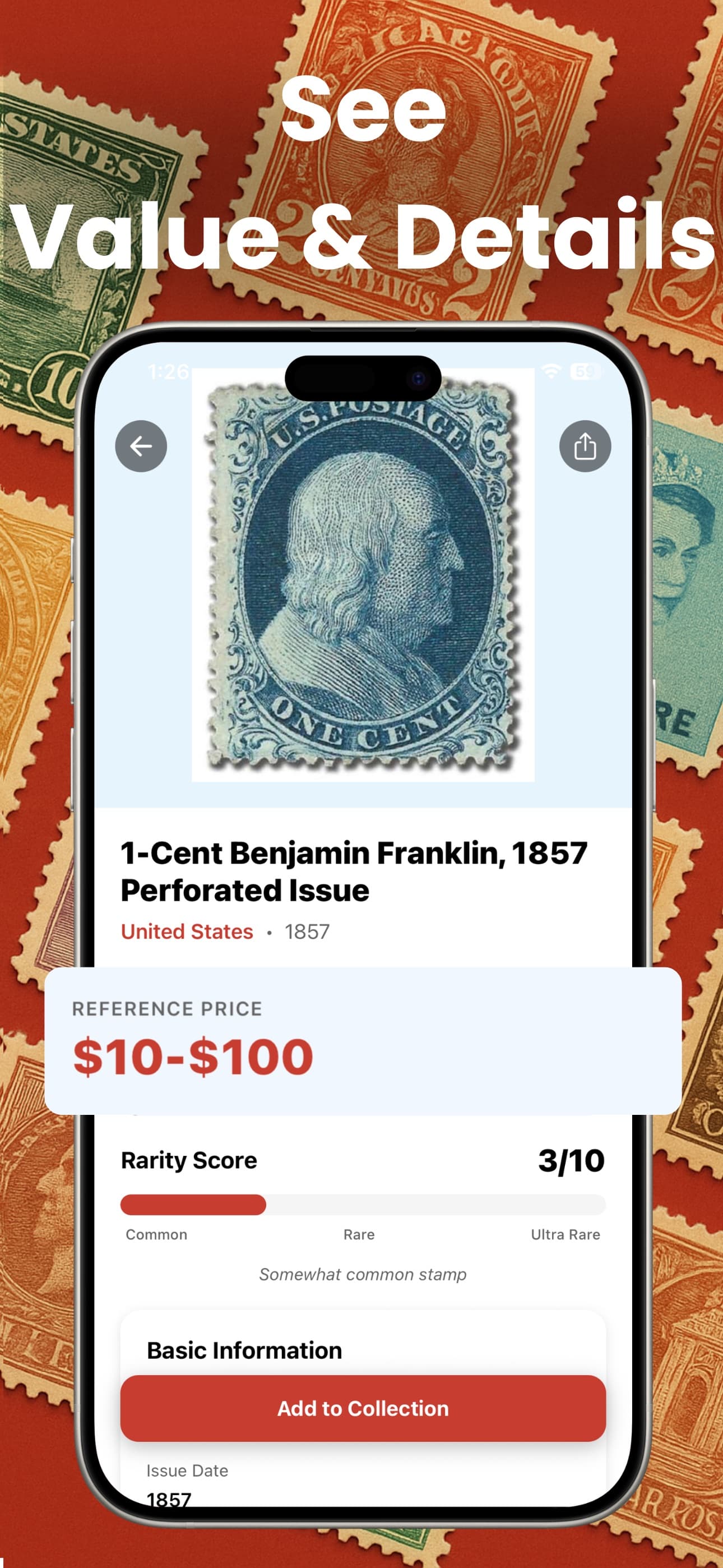
Read what it is
StampGo shows the country, year, denomination and a reference price range, which tells you where to file it.
- 3
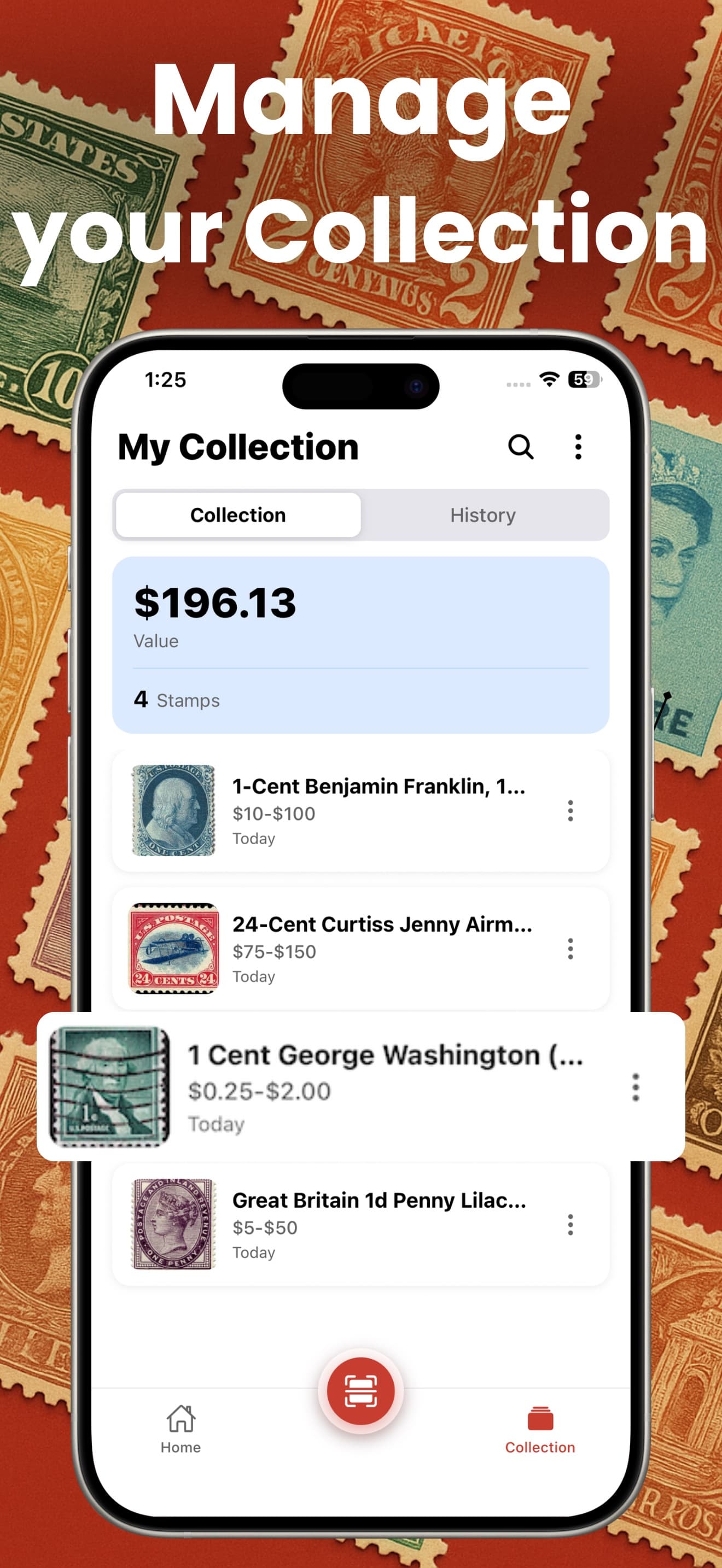
Add it to your collection
Save it so you build a running list as you sort, instead of writing one out later.
- 4
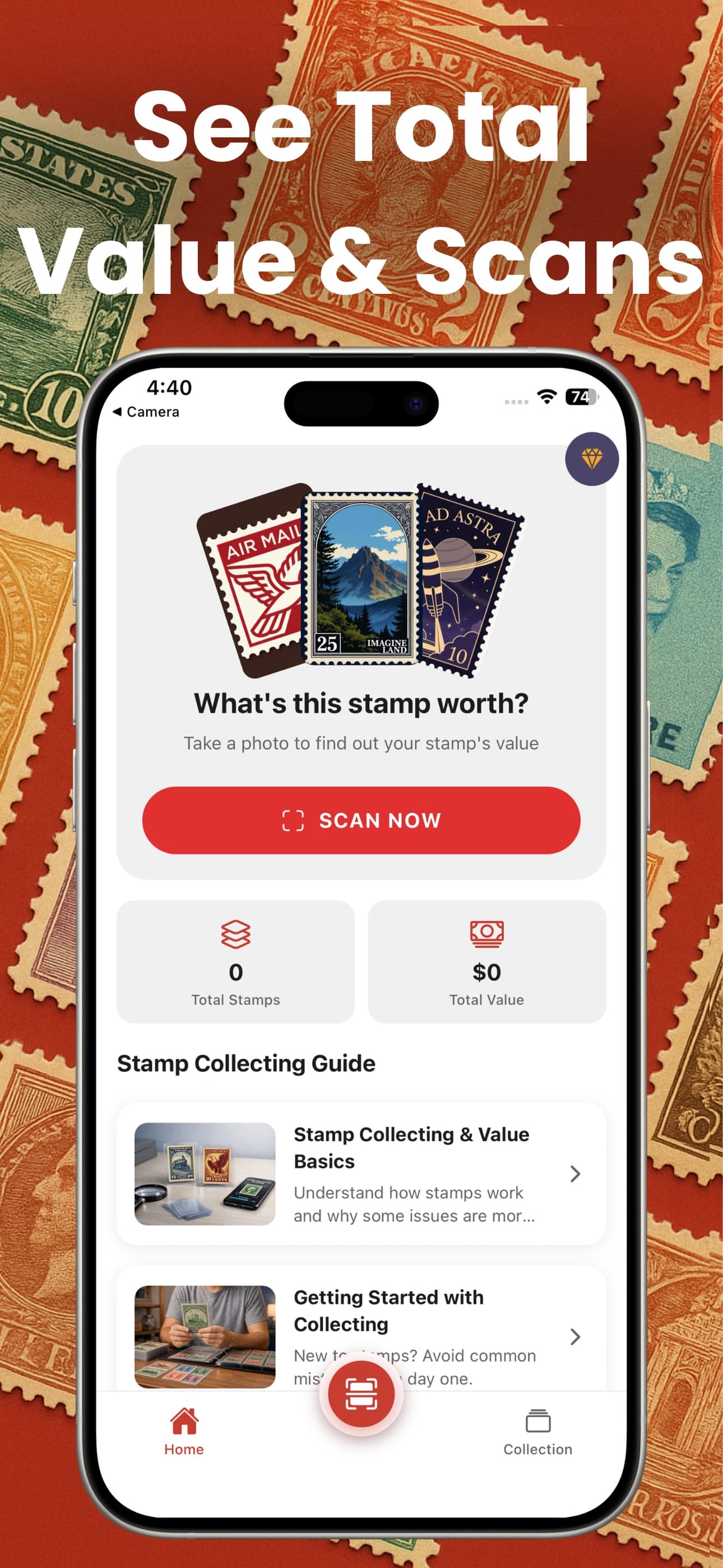
Watch the collection grow
The home screen shows how many stamps you've logged and their combined estimated value.


iOS 与 Android 免费下载
常见问题
开始集邮需要多少钱?
非常少。一本插册、一把镊子和一个放大镜就够了,最早的一批邮票可以从自己的信件里免费获得。先把钱花在工具和知识上,再花在邮票上。
集邮适合孩子吗?
适合。花费低,能学地理和历史,也不需要盯着屏幕。给孩子从专题收藏和插册起步,不必一上来就买昂贵的集邮册。
日常信件上的邮票值得留吗?
值得留来练手,但现代信销票很常见,价值极低。它们的意义在于提供免费素材,用来分拣、水洗和做专题收藏。
要不要加入集邮协会?
这是学得最快的途径。协会能提供便宜的邮票、识别上的帮助,也能接触到组织轮阅和鉴定服务的全国性团体。
