
收藏與出售
怎麼開始集郵
更新於 · 5 分鐘閱讀 · StampGo 團隊
快速解答
開始集郵請先選定方向(一個國家、一個時期或一個主題),從便宜的混合批與收到的信件郵票入手,並準備鑷子、放大鏡與一本插卡簿。在真正懂得自己買的是什麼之前,別碰貴的郵票。
重點資料
- 選定方向
- 一個國家、一個時期或一個主題。不要什麼都收
- 第一批郵票
- 收到的信件、家裡的舊盒子、便宜的混合批
- 基本工具
- 鑷子、放大鏡、插卡簿、量齒尺
- 花費
- 入門很便宜,工具與郵票都不貴
- 先學什麼
- 先學齒孔、浮水印與品相,再談價值
- 加入社群
- 本地郵會或網路社群學得最快
Is stamp collecting still worth doing?
Yes, as a hobby. It's cheap to start and endlessly deep, but treat it as enjoyment rather than investment: most stamps are common, and the ones that rise in value are the scarce, well-preserved exceptions.
Millions of people collected stamps through the 20th century, which is why so much material survives and why common stamps cost cents. That's good news for a beginner: you can build a big, interesting collection for very little. It's also why you shouldn't buy stamps as an investment. See are old stamps worth money? for what actually carries value.
How do I choose what to collect?
Pick one boundary and start there: a single country, a period, or a topic such as birds, trains or space. A focus keeps it affordable and satisfying, and you can always widen it later.
| Type of collection | What it's like |
|---|---|
| One country | The classic approach. Albums and catalogues are built for it |
| One reign or era | Smaller and cheaper, e.g. one monarch or one decade |
| Topical (thematic) | Birds, ships, space, sport. Fun, visual and easy to start from mixtures |
| Postal history (covers) | Whole envelopes, rates and routes. More research, fewer duplicates |
| One issue in depth | Every plate, perforation and shade of a single series |
Topical collecting is the easiest start for most people, because almost any cheap mixture will contain something that fits your theme.
What do I need to start a stamp collection?
Three things: somewhere to put stamps (a stockbook), tongs to handle them, and a magnifier. Everything else can wait until you know what you collect.
- A stockbook, a book of card pages with clear strips that hold stamps without hinges or glue.
- Stamp tongs, which look like tweezers with flat, polished tips. Fingers leave oils that stain over time.
- A magnifier of about 10×, for perforations, small print and flaws.
- Optional later: printed album pages, mounts, a perforation gauge and a watermark tray.
Our guide to stamp collecting supplies covers what's worth buying and what damages stamps.
Where do I get stamps cheaply when starting out?
From your own incoming mail, family albums, charity shops, dealer mixtures sold by weight, club circuit books and inexpensive lots online. Beginners rarely need to buy single stamps at first.
- Your own mail, plus mail from friends, family and work. Ask people to save envelopes for you.
- Family albums, which often hold decades of stamps nobody has looked at. Handle them as they are until you've checked what's inside.
- Mixtures and kiloware, bags of stamps on paper sold by weight. Cheap, and good practice at soaking and sorting.
- Stamp clubs, where circuit books let members buy inexpensive stamps from each other.
- Dealers and shows, for filling specific gaps once you know what you want.
How should I organize a new collection?
File stamps by country and date to begin with, in a stockbook or on album pages, and keep a simple list of what you have. Being consistent matters more than which system you choose.
A list saves you from buying duplicates and makes insurance and selling far easier later. See how to organize a stamp collection, and how to store stamps for keeping them in good condition.
What beginner mistakes should I avoid?
Don't hinge unused stamps, don't soak stamps off old covers, don't store anything in PVC pages or damp rooms, and don't spend serious money before you can identify and grade stamps yourself.
- Hinging unused stamps. Hinges leave marks that reduce value. Use mounts instead.
- Soaking everything. Some covers are worth more whole. See how to remove stamps from envelopes.
- Bad storage. Damp, sunlight, tape, glue and PVC pages all cause permanent damage.
- Buying before you can grade. Condition drives price. Read stamp condition grades first.
- Trimming or cleaning stamps. It destroys value, and experts spot it immediately.
How long does it take to build a decent stamp collection?
A few evenings gets you a sorted starter collection. A year of casual collecting fills most of the common spaces in a country album. The slow part is the last stretch, where the remaining gaps are the scarce, expensive stamps.
Almost every collection follows the same curve. The first hundred stamps cost nothing and arrive quickly, the next few hundred come from mixtures and swaps, and then progress slows because what's left is genuinely hard to find. That's the point where most collectors either specialize, narrowing to one era or one issue, or widen into a new country.
- First month: sort what you have, learn to use tongs, fill a stockbook.
- First year: settle on a focus, start an album, learn to identify and grade.
- After that: buy selectively, upgrade weak copies, and keep a want list so you're never shopping blind.
逐步操作
How to identify and log your first stamps with StampGo
The hardest part for a beginner is knowing what you're holding. StampGo names the stamp from a photo, so you can file it correctly from day one.
- 1
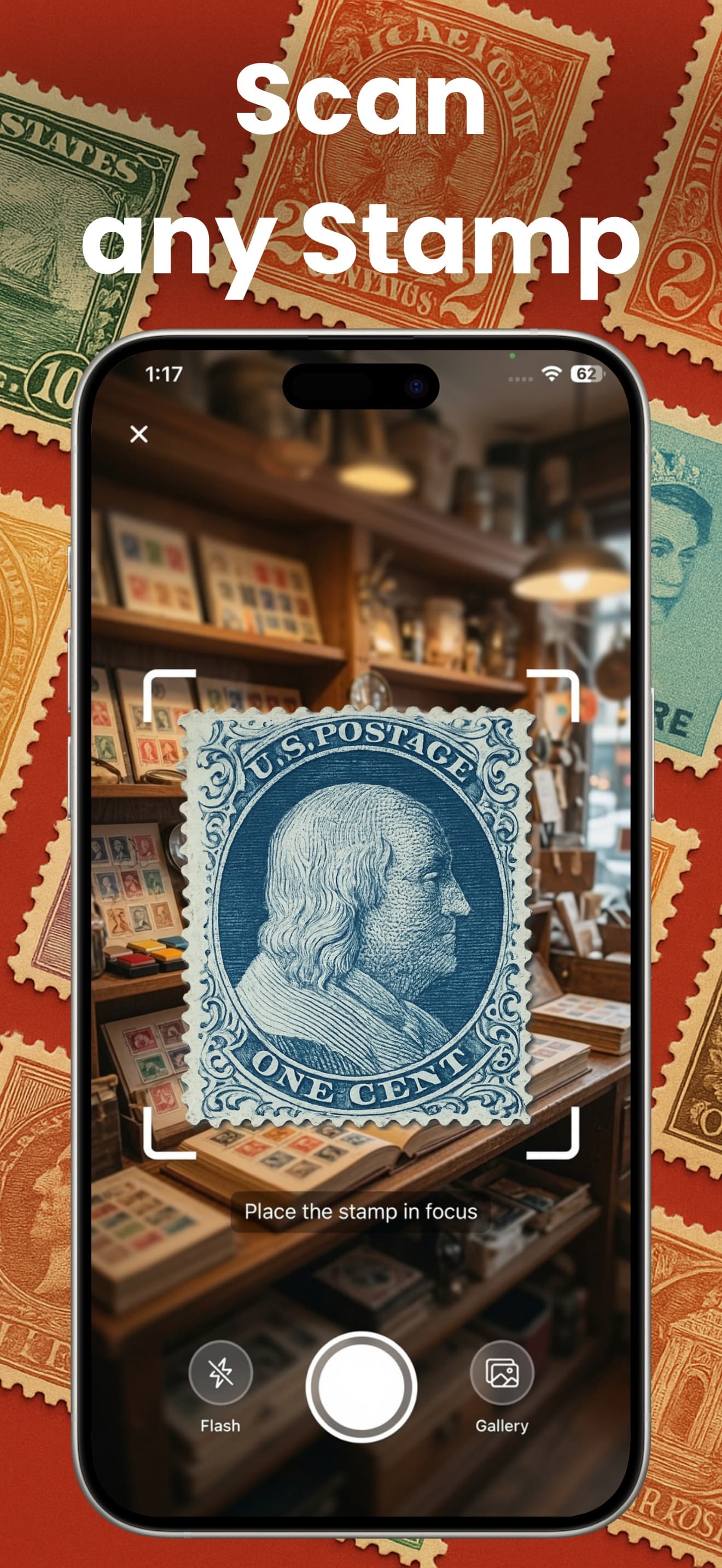
Scan a stamp from your pile
Tap Scan Now and photograph one stamp, flat and in good light.
- 2
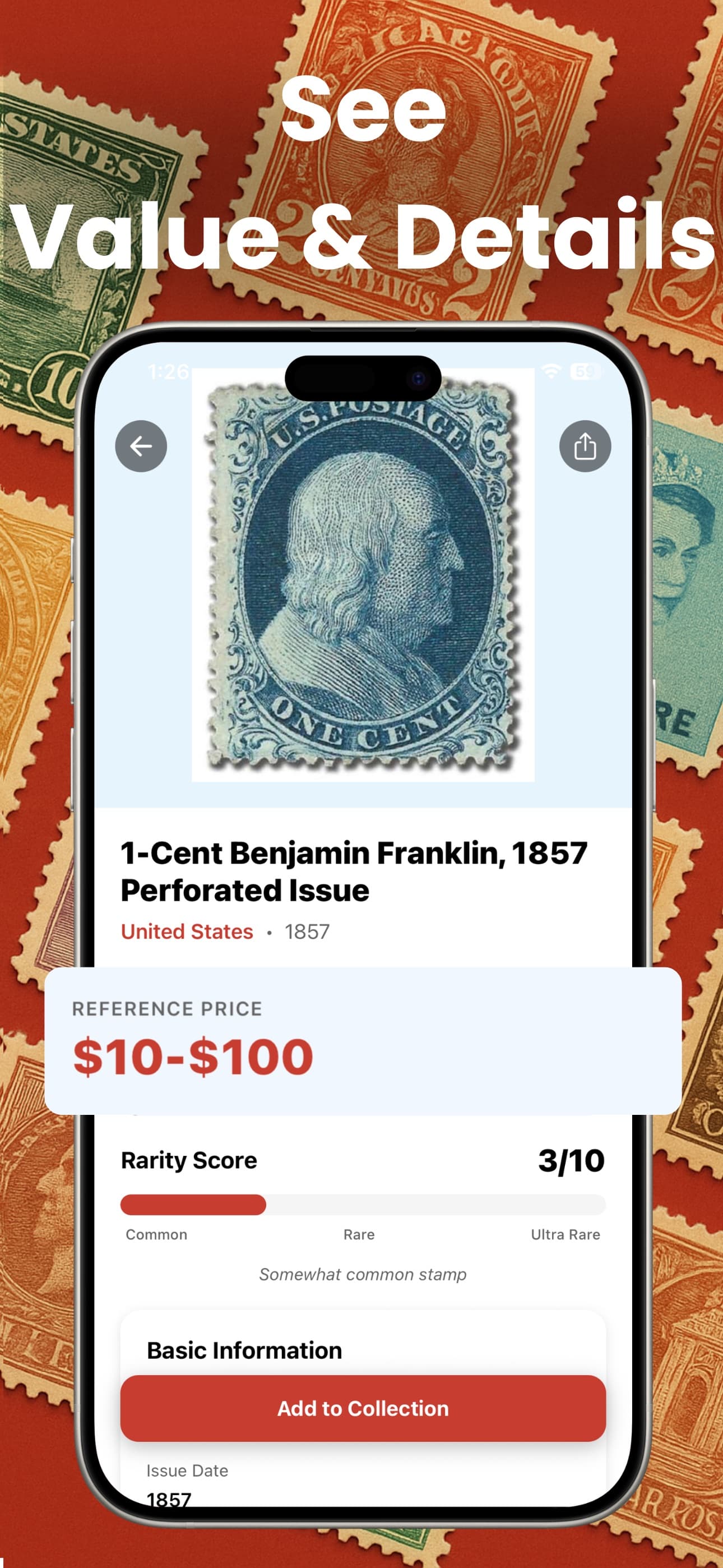
Read what it is
StampGo shows the country, year, denomination and a reference price range, which tells you where to file it.
- 3
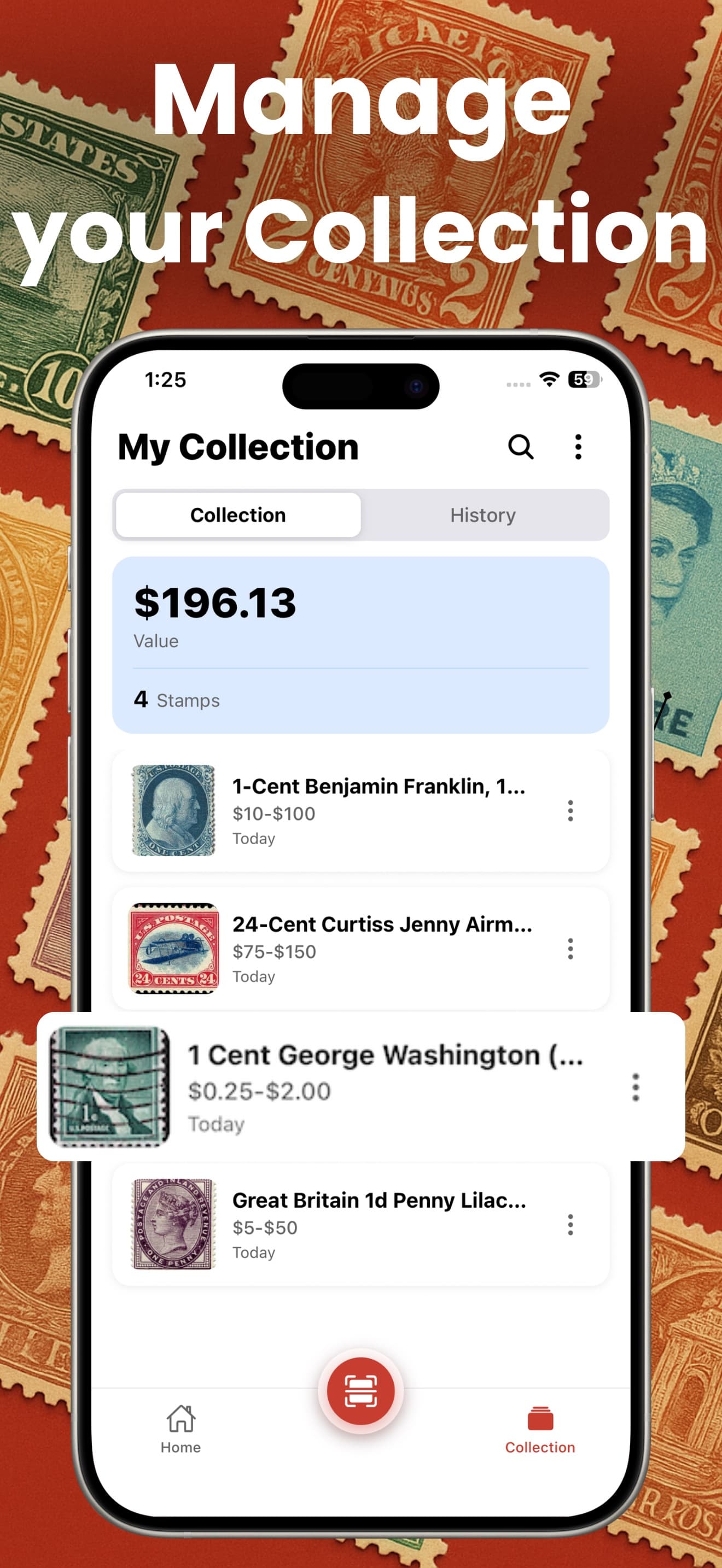
Add it to your collection
Save it so you build a running list as you sort, instead of writing one out later.
- 4
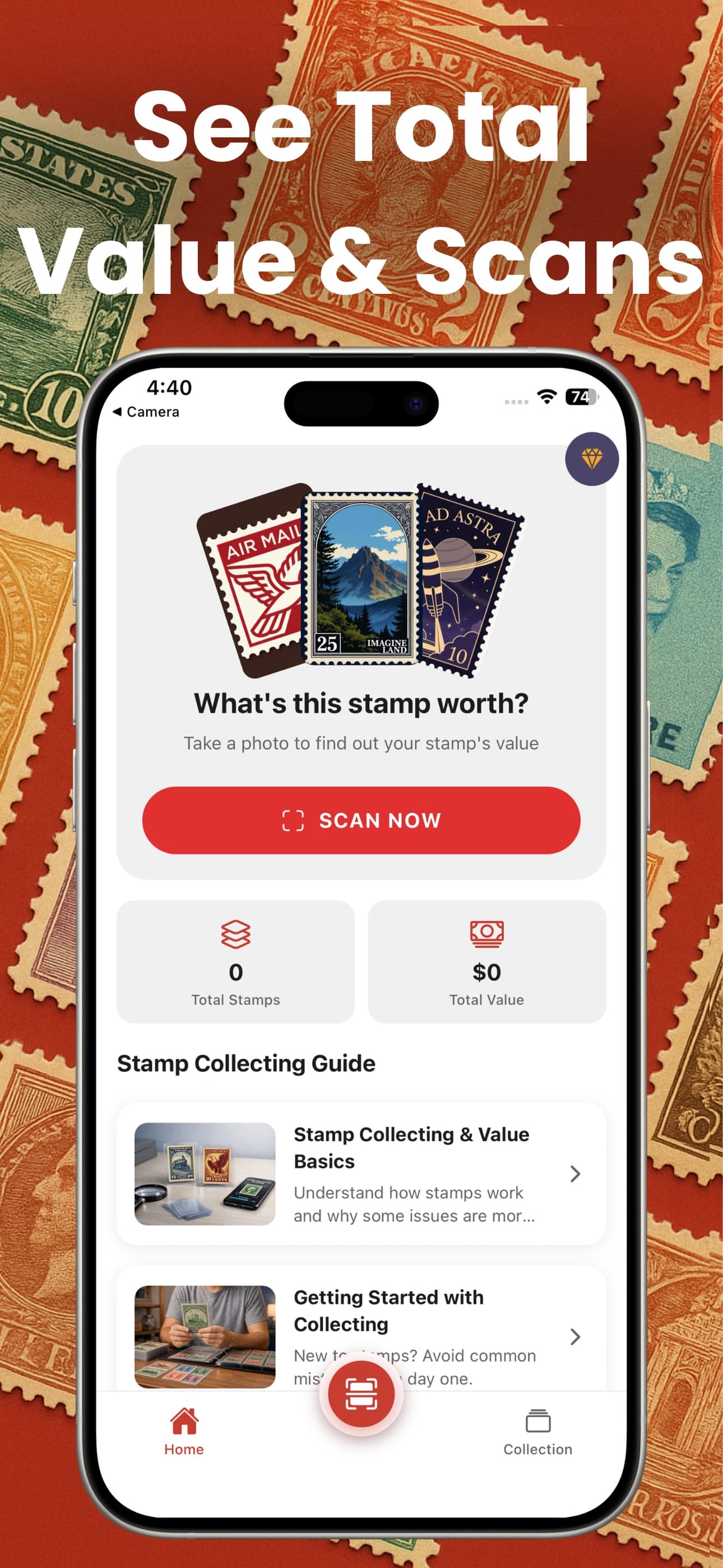
Watch the collection grow
The home screen shows how many stamps you've logged and their combined estimated value.


iOS 與 Android 免費下載
常見問題
集郵很花錢嗎?
不必然。世界上多數郵票都很便宜,小預算也能建立不錯的收藏。只有追求古典稀有票時才會變貴。
新手該收哪些郵票?
自己國家的郵票通常最容易入門:量多、便宜、資料齊全。專題收藏也是很好的起點。
一開始該買什麼?
鑷子、放大鏡與一本插卡簿。這些就足以安全地處理與保存郵票,花費也不高。
新手最常犯的錯誤是什麼?
用手直接拿郵票,以及用錯材質保存。請用鑷子,避開自黏式相簿與膠帶。
