
Známky podle zemí
Známky Indie: které mají opravdu cenu
Aktualizováno · 5 min čtení · Tým StampGo
Rychlá odpověď
Cenné indické známky jsou ty nejranější: Scinde Dawk z roku 1852, emise Viktorie z roku 1854, známky knížecích států a příležitostné známky Gándhího z roku 1948, zvlášť nominál 10 rupií. Většina známek vydaných po nezávislosti se tiskla ve velkých nákladech a má malou cenu, ať ceník slibuje cokoli.
Klíčová fakta
- První známka
- Scinde Dawk z roku 1852, první lepená poštovní známka Asie
- První celoindická emise
- Litografie Viktorie z roku 1854 včetně dvoubarevných 4 annas
- Slavná rarita
- 4 annas z roku 1854 s převrácenou hlavou
- Knížecí státy
- Konvenční a lenní státy vydávaly vlastní známky, sbírají se zvlášť
- Klíčová novější série
- Příležitostné známky Mahátmy Gándhího z roku 1948, zvlášť 10 rupií
- Obvykle běžné
- Většina známek vydaných po roce 1950
What are Indian stamps worth by era?
Early British India issues and princely state stamps hold the value. Post-independence commemoratives were printed in large quantities and are generally worth little.
| Era | Key issues | Typical value |
|---|---|---|
| 1852 | Scinde Dawk | A major rarity in any condition |
| 1854–1900 | Queen Victoria lithographs and engraved issues | Often valuable, especially unused or on cover |
| 1900–1947 (British India) | King Edward VII, George V and George VI definitives | Mostly modest, with better high values and varieties |
| Princely states | Convention and feudatory state issues and overprints | Varies enormously. Some are scarce, and overprints are faked |
| 1947–1950 | Independence and Gandhi commemoratives | The 1948 Gandhi 10 rupees is the key stamp |
| 1950–today | Republic commemoratives and definitives | Usually worth little, however old they look |
Which Indian stamps are worth money?
The Scinde Dawk of 1852, the 1854 Queen Victoria issues (above all the inverted-head 4 annas), scarce princely state issues, and the 1948 Gandhi 10-rupee stamp, especially in sound unused condition.
- Scinde Dawk (1852). Issued for the province of Sind, and the first adhesive stamp in Asia. Genuine examples are rare and heavily faked.
- 1854 Queen Victoria issues. India's first national stamps, lithographed in several dies. The 4 annas is bi-coloured, and the version with an inverted head is one of the world's famous rarities.
- Princely state issues. Some states printed tiny quantities. Overprints for convention states are common targets for forgery.
- 1948 Gandhi commemoratives. The set of four is collected everywhere, and the 10-rupee value carries most of the money. Official overprinted versions are rarer still.
- Covers and postal history. Early Indian mail, especially to and from Britain, is collected in its own right.
Are old Indian stamps from the 1960s to 1990s worth anything?
Usually very little. India issued large numbers of commemoratives in that period and collectors saved them in quantity, so most sell for a few rupees or cents each.
This is what surprises people searching for an “Indian stamps price list”: the stamps in a family album are usually the common ones. Value sits with the pre-independence material, and with condition. An album of 1970s commemoratives is a nice collection, not a windfall. See are old stamps worth money?
How do I identify an Indian stamp?
Read the inscription and the currency. British India stamps say “India” with a monarch's portrait and use annas and rupees, while post-1947 issues carry the Ashoka lions emblem, and princely state stamps name the state.
- Annas and pies date a stamp before 1957, when India decimalized to naye paise.
- A monarch's head means British India, which dates it between 1854 and 1947.
- “Service” overprints mark official mail stamps, which are collected separately.
- A state name, such as Hyderabad, Travancore or Jaipur, means a princely state issue with its own catalogue listing.
Stanley Gibbons is the standard catalogue for India and the states. See stamp catalogue numbers.
Are Indian revenue stamps the same as postage stamps?
No. Revenue stamps pay a tax or duty on documents such as receipts and agreements. They're collected, but they're valued separately from postage stamps and are usually inexpensive.
Many searches for Indian stamp values are really about revenue stamps used on paperwork. If a stamp says “Revenue”, names a court fee, or appears on a legal document, that's what you have.
Are Indian stamps on old envelopes worth more?
Often, yes. Indian postal history is widely collected, and covers showing early routes, military field post offices or unusual destinations can be worth considerably more than the stamps alone.
- Pre-1947 covers carrying British India stamps, especially to or from Britain and other colonies.
- Field post office and military mail, including mail from Indian forces serving overseas in both world wars.
- Princely state covers, where the state's stamps are shown in genuine postal use.
- Airmail and early flight covers, which connect to the first air routes between Europe and India.
The rule is the same as everywhere: don't soak stamps off an envelope that looks old or unusual until someone has looked at it. See how to remove stamps from envelopes.
Krok za krokem
How to check Indian stamp values with StampGo
Indian issues span British India, hundreds of princely states and the Republic, so the first question is always which one you're holding.
- 1
Scan the stamp
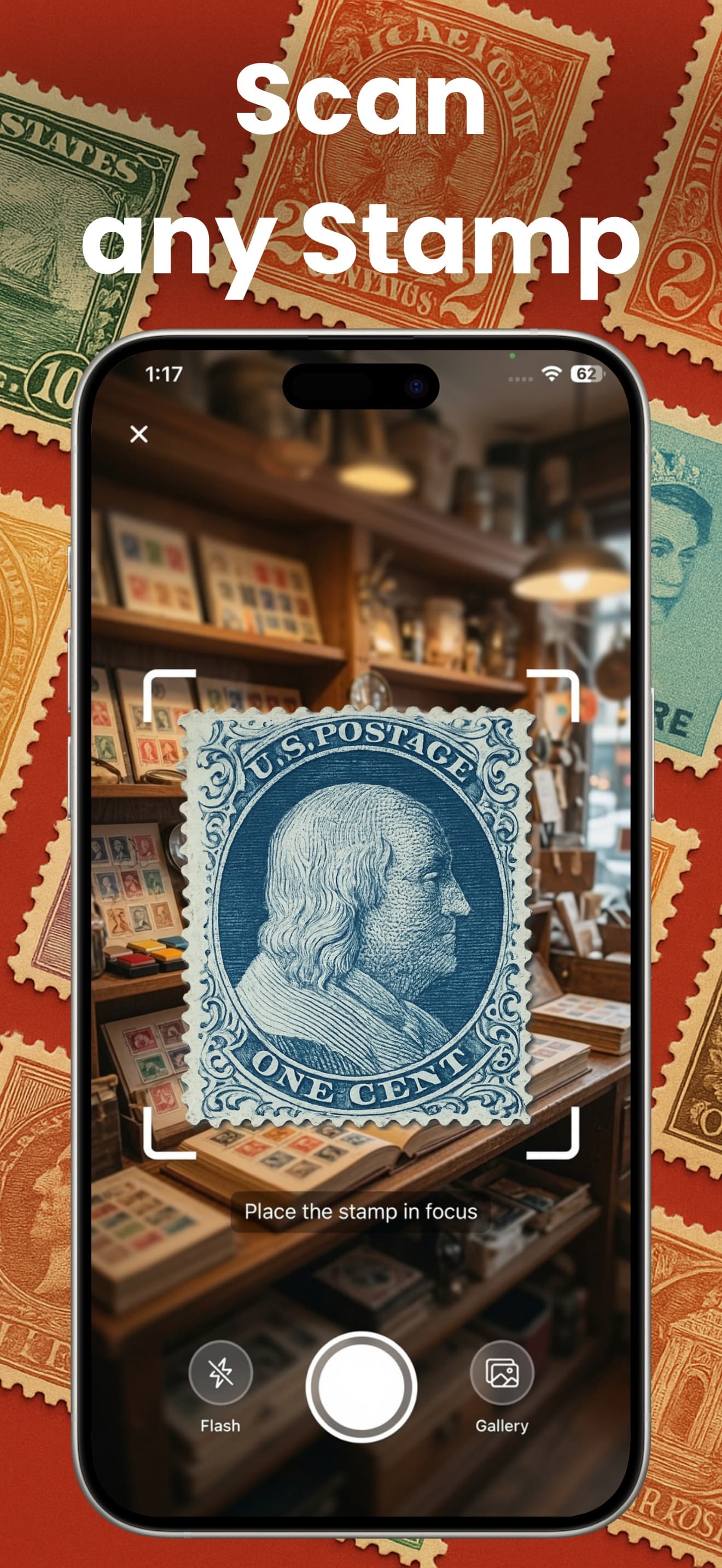
Tap Scan Now and photograph one stamp at a time, flat and in good light.
- 2
See the issue and period
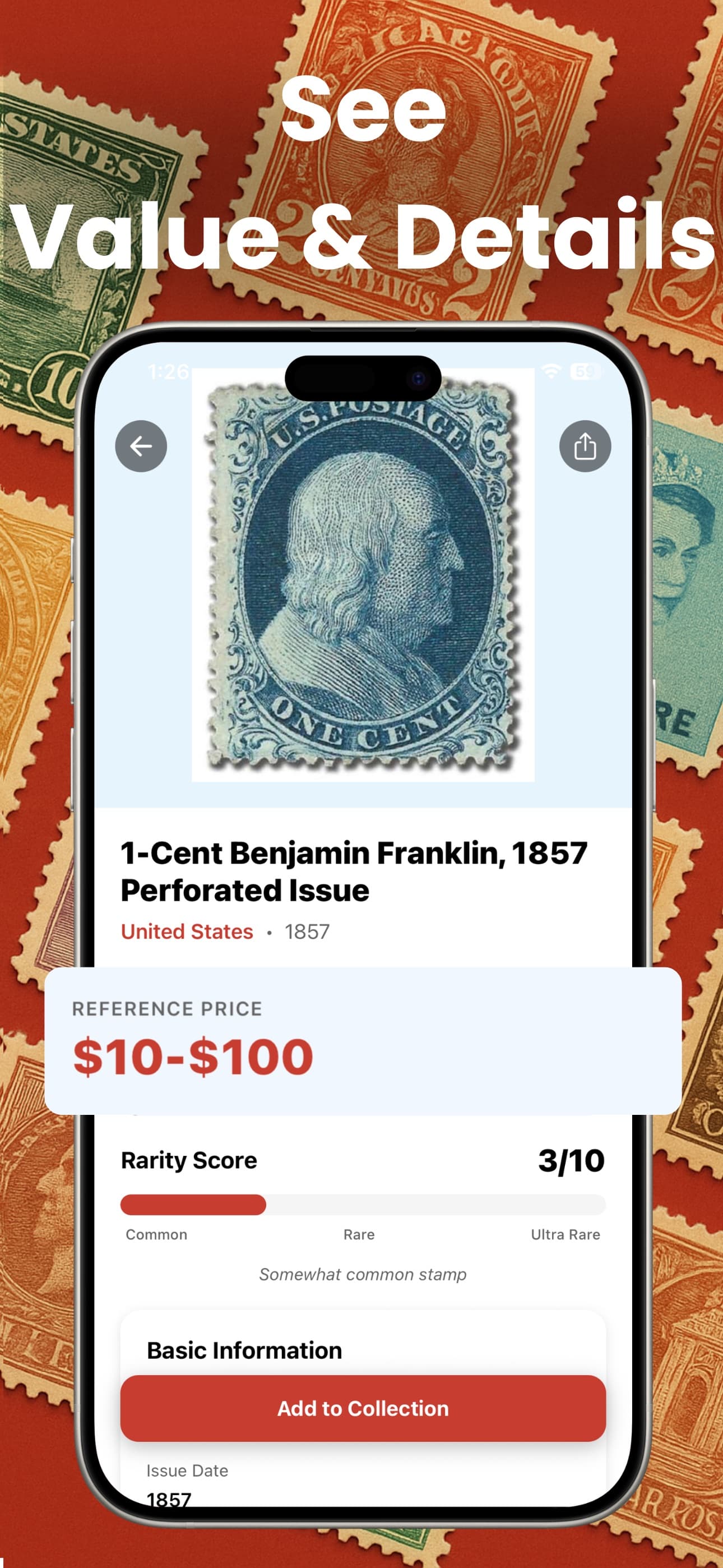
StampGo names the issue and year, which tells you whether it's British India, a state issue or a modern Republic stamp.
- 3
Prioritize by rarity
A high rarity score on a pre-1947 stamp is your cue to check condition carefully and consider expertizing.
- 4
Build your collection list
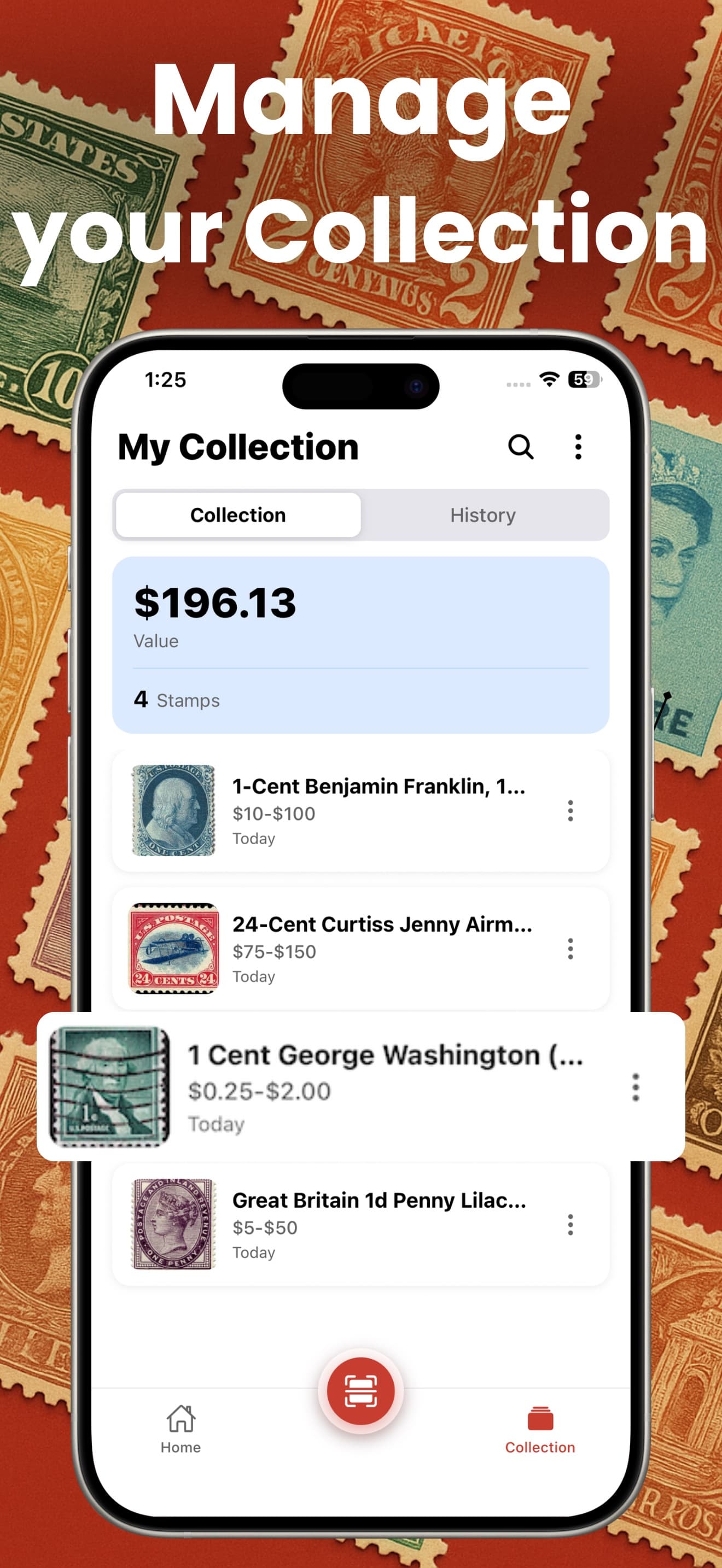
Save the stamps and keep a running total, so you know which parts of an album carry the value.


Zdarma ke stažení pro iOS i Android
Časté dotazy
Která indická známka má nejvyšší cenu?
Slavné rarity jsou Scinde Dawk z roku 1852 a 4 annas z roku 1854 s převrácenou hlavou. Z pozdějších emisí je klíčová Gándhí za 10 rupií z roku 1948, zvlášť ve verzi se služebním přetiskem.
Jakou cenu má známka s Gándhím?
Běžné nominály série z roku 1948 jsou dostupné, zatímco 10 rupií má cenu podstatně vyšší a čistá a dobře centrovaná ještě mnohem vyšší. Pozdější příležitostné známky s Gándhím jsou běžné.
Mají známky Britské Indie cenu?
Některé ano. Rané emise Viktorie a vzácné varianty mohou stát hodně, zatímco běžné výplatní známky krále Jiřího, které jsou ve většině alb, jsou obyčejné.
Který katalog pokrývá indické známky?
Standardem je Stanley Gibbons, se specializovanými katalogy pro knížecí státy. Indii uvádí i Scott.
