
Známky podle zemí
Známky Kanady: které mají opravdu cenu
Aktualizováno · 5 min čtení · Tým StampGo
Rychlá odpověď
Většina kanadských známek po třicátých letech je běžná: razítkované za koruny, čisté zhruba za nominál. Hodnota je v pencových a centových emisích z let 1851 až 1859, v Large a Small Queens, ve vysokých nominálech jubilejní emise z roku 1897, v raných vysokých nominálech jako Bluenose 50 centů z roku 1929 a v tiskových chybách. Cenu určuje stav. StampGo pozná kanadské známky z fotografie.
Klíčová fakta
- První známka
- Třípencový bobr z roku 1851, návrh Sandford Fleming
- Velká rarita
- Twelvepence Black z roku 1851 s královnou Viktorií
- Klasické emise
- Pence (1851–57), centy (1859), Large Queens (1868), Small Queens (1870)
- Oblíbené vysoké nominály
- Jubilejní emise 1897 od 1 do 5 dolarů a Bluenose 50 centů z roku 1929
- Standardní katalog
- Unitrade Specialized Catalogue of Canadian Stamps
- Obvykle běžné
- Většina známek vydaných od poloviny třicátých let
What are Canadian stamps worth by era?
The pre-Confederation classics of 1851–1867 hold the most value, the Victorian Queens and 1897–1898 issues are mixed, and most stamps from the 1930s on are common unless they're errors or scarce varieties.
| Era | Key issues | Typical value |
|---|---|---|
| 1851–1859 (pence and cents issues) | Three-Penny Beaver, 6d Prince Albert, 12d Black, 1859 cents issue | Often hundreds of dollars and up. The 12d Black is a major rarity |
| 1868–1897 (Large and Small Queens) | Queen Victoria definitives | Common values cost a few dollars; scarce papers, perforations and shades far more |
| 1897–1898 | Diamond Jubilee, Maple Leaf and Numeral issues, the 1898 map stamp | Low values are modest; the Jubilee $1–$5 high values are valuable |
| 1911–1935 | King George V Admirals, the 1928–29 Scroll issue with the Bluenose | Mixed. High values and coil varieties can be valuable |
| 1935–today | Definitives and commemoratives | Mostly common, apart from errors |
Which Canadian stamps are worth money?
The best candidates are the 1851–1859 classics, Large and Small Queen varieties, the Jubilee high values, the 1929 Bluenose and errors, especially unused and well centered.
- The Three-Penny Beaver (1851), Canada's first stamp.
- The Twelvepence Black (1851), one of the great rarities of Canadian philately.
- Large and Small Queens (1868–1897), where paper, perforation and shade varieties drive value.
- Diamond Jubilee high values (1897), from $1 to $5.
- The 50¢ Bluenose (1929), one of Canada's best-loved stamps. Well-centered unused copies fetch the most.
- Errors, such as imperforates and missing colors on later issues. See error stamps.
What is Canada's first stamp worth?
The 1851 Three-Penny Beaver typically sells for hundreds of dollars used, depending on its margins and condition, and much more unused. It was Canada's first stamp, and one of the first anywhere to show an animal rather than a monarch.
Designed by Sandford Fleming, the engineer who later championed standard time zones, the Beaver broke with the tradition of putting the monarch on every stamp. Like the Penny Black it was imperforate, so the margins matter a great deal. Forgeries exist, so valuable copies should be expertized.
Are old Canadian stamps worth anything?
Some are. Stamps from before about 1900 and early 20th-century high values can be valuable, but most Canadian stamps since the 1930s are common and worth cents used.
A typical family album holds plenty of King George V Admirals and Queen Elizabeth II definitives, printed in huge numbers. The stamps worth checking are the older Victorian issues, high values and anything that looks different from the usual version. See how to tell if a stamp is rare.
How do I check a Canadian stamp's value?
Identify the issue and its catalogue number, check perforation, paper and shade on classic issues, grade the condition, then compare recent sales. The Unitrade catalogue is the standard reference for Canada.
Scott and Stanley Gibbons also list Canadian stamps. For the classics, margins and centering matter as much as the issue itself. See stamp condition grades.
How can I tell roughly when a Canadian stamp was issued?
Look at the currency and the monarch. Values in pence date from 1851–1859 and cents from 1859 on, and the ruler shown narrows it further: Victoria until 1901, then Edward VII, George V, George VI and Elizabeth II.
- Queen Victoria: issues up to 1901, including the Large Queens, Small Queens and 1897 Jubilee.
- Edward VII: definitives from 1903.
- George V: from 1911, including the long-running Admiral issue.
- George VI: from 1937.
- Elizabeth II: from 1953 until 2022.
What about Newfoundland stamps?
Newfoundland issued its own stamps from 1857 until it joined Canada in 1949, and they're collected separately. The early pence issues and a few airmail rarities are valuable, while most 20th-century Newfoundland stamps are affordable.
If a stamp says “Newfoundland” rather than “Canada”, it comes from this once-separate dominion. Its 1857–1866 pence issues are scarce, and its pioneering airmail stamps are famous: the 1919 Hawker and 1927 De Pinedo overprints were produced in tiny numbers for early long-distance flights, and both are major rarities. Faked overprints are common, so certificates matter.
Newfoundland stamps from the 1930s and 1940s, including the pictorial definitives showing local scenes and wildlife, are generally inexpensive. After 1949, Canadian stamps were used there.
Krok za krokem
How to check Canadian stamp values with StampGo
StampGo recognizes Canadian stamps from the pence issues to today, so you can sort an album quickly and focus on the stamps that matter.
- 1
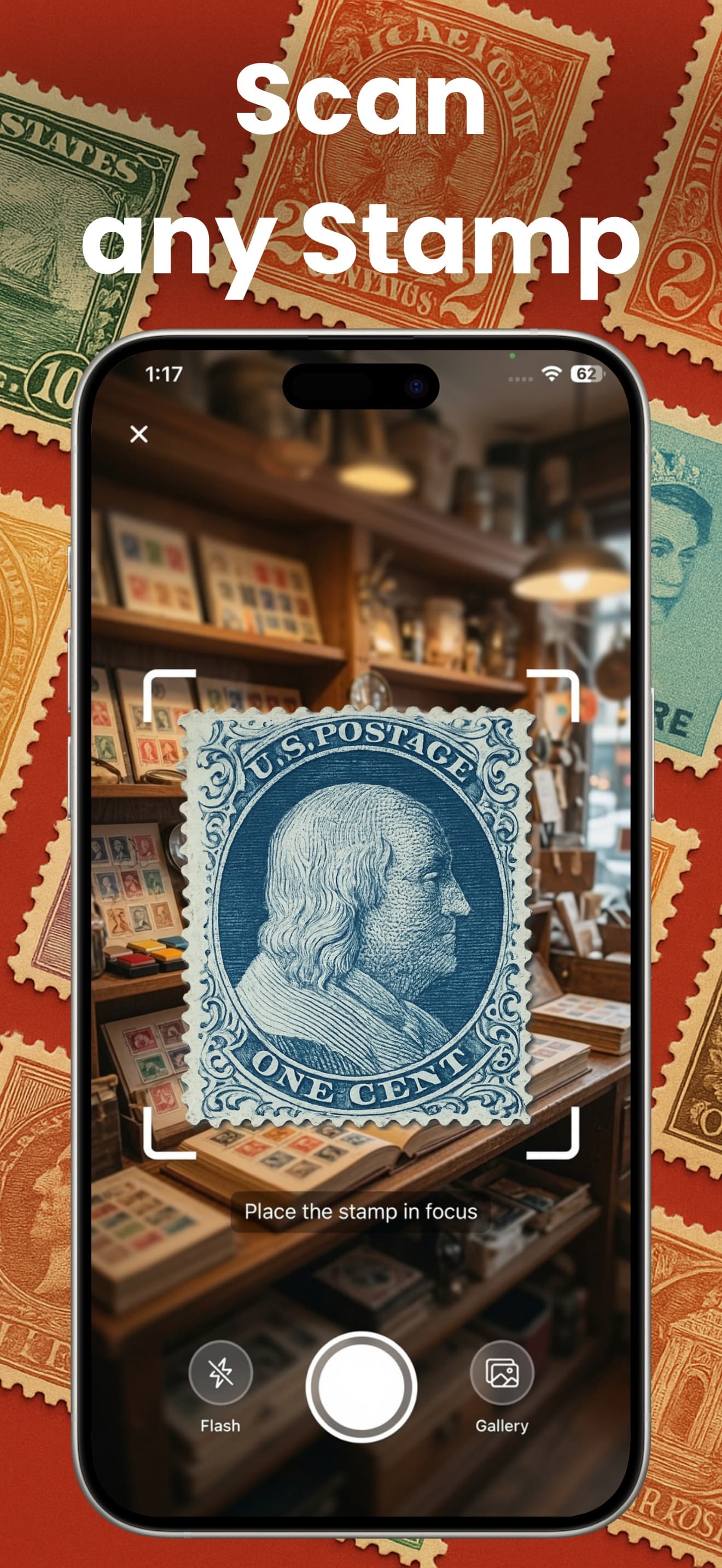
Scan the stamp
Tap Scan Now and photograph one stamp at a time, flat and in good light.
- 2
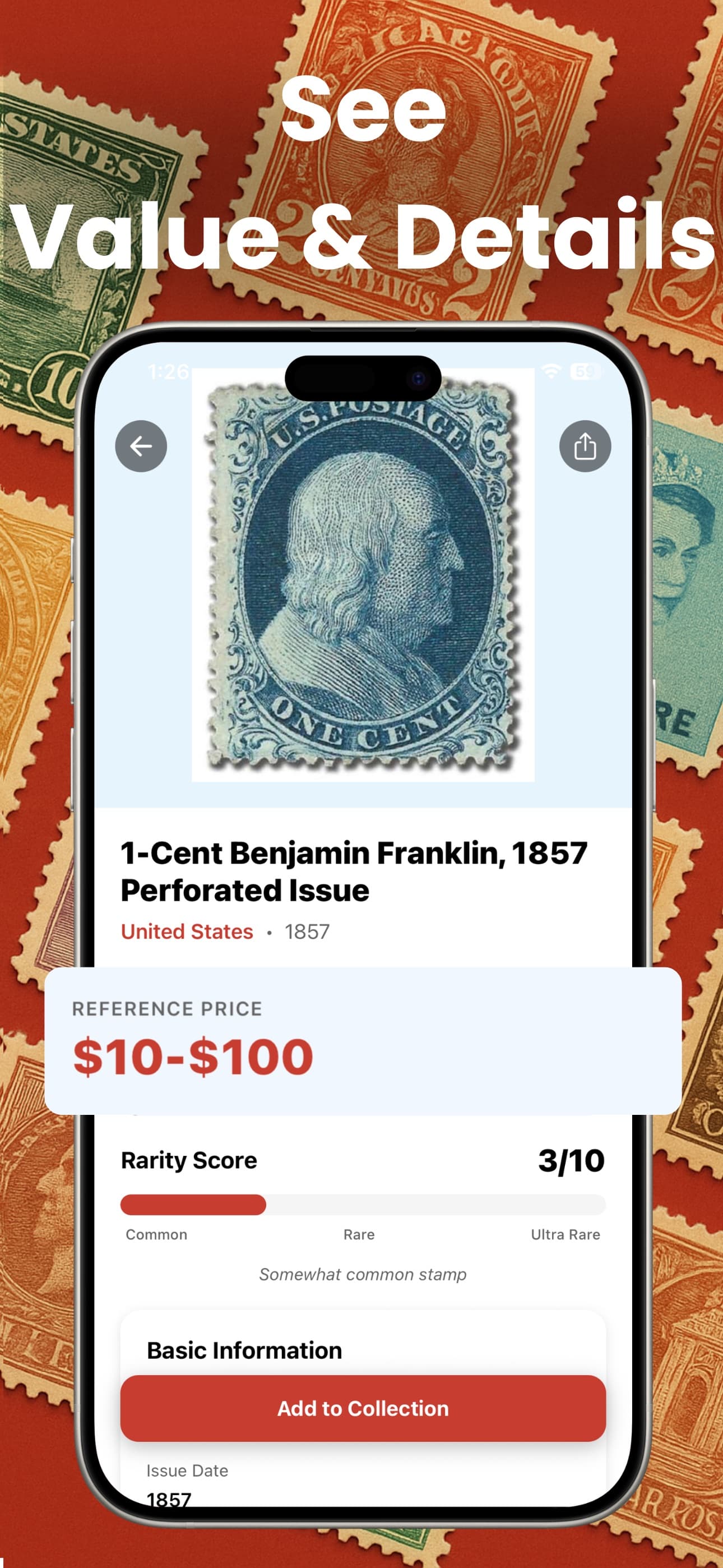
See the issue and price range
StampGo shows the stamp's name, country, year and a reference price range.
- 3
Check rarity, then varieties
A high rarity score is your cue to check perforation, paper and shade on classic issues.
- 4
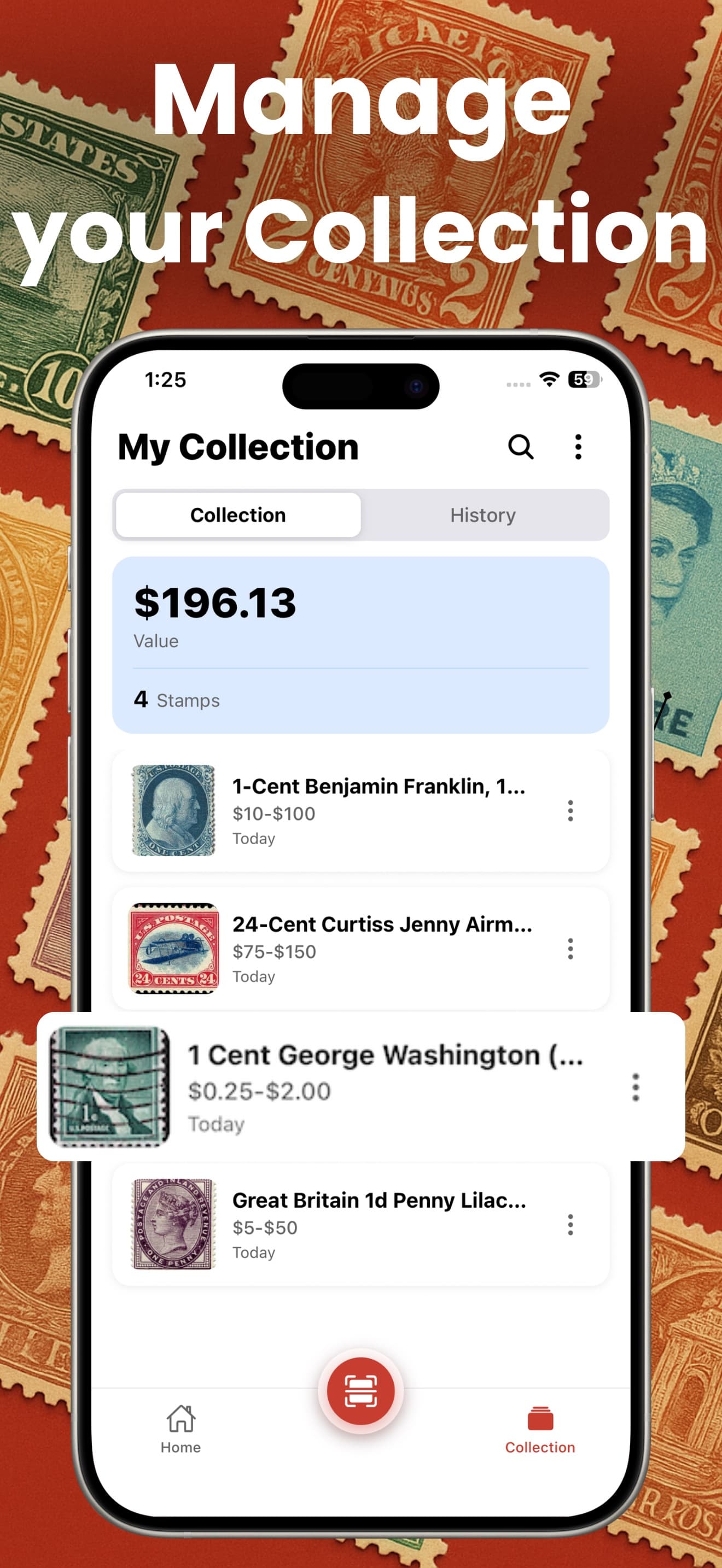
Save it to your collection
Add each stamp and track the collection's total estimated value.


Zdarma ke stažení pro iOS i Android
Časté dotazy
Která kanadská známka má nejvyšší cenu?
Twelvepence Black z roku 1851 platí za nejslavnější kanadskou raritu. Cenné jsou také čisté klasické emise, vzácné varianty Large Queens a některé tiskové chyby.
Jakou cenu má známka Bluenose?
Bluenose 50 centů z roku 1929 se razítkovaná prodává obvykle za desítky dolarů a čistá podstatně dráž, zvlášť dobře centrovaná a bez stopy po nálepce. Téměř celý rozdíl vysvětluje stav.
Mají kanadské známky s Alžbětou II. nějakou cenu?
Většina je běžná a stojí koruny. Výjimkou jsou tiskové chyby, některé vysoké nominály a vzácné varianty, které hledají specialisté.
Jaký katalog použít pro kanadské známky?
V Kanadě je standardem Unitrade Specialized Catalogue of Canadian Stamps. Kanadské emise uvádějí i Scott a Stanley Gibbons.
Jakou cenu mají kanadské Large Queens?
Large Queens z roku 1868 jdou od desítek dolarů u běžných razítkovaných hodnot až po mnohem víc u vzácných papírů, tisků s vodoznakem a čistých kusů. Hodnota 15 centů zůstala v oběhu desítky let po výměně ostatních, proto je nejběžnější a najdete ji v mnoha odstínech.
