
Valores por país
Sellos de Canadá: cuáles valen dinero de verdad
Actualizado el · 6 min de lectura · Por el equipo de StampGo
Respuesta rápida
La mayoría de los sellos canadienses posteriores a los años treinta son comunes: céntimos usados y cerca del valor facial nuevos. El valor está en las emisiones en peniques y centavos de 1851 a 1859, las Large y Small Queens, los valores altos del Jubileo de 1897, los valores altos de principios del siglo XX como el Bluenose de 50 centavos de 1929, y los errores. El estado marca el precio. StampGo identifica sellos canadienses con una foto.
Datos clave
- Primer sello
- El Castor de tres peniques de 1851, diseñado por Sandford Fleming
- Gran rareza
- El Twelvepence Black de 1851, con la reina Victoria
- Emisiones clásicas
- Peniques (1851–57), Centavos (1859), Large Queens (1868), Small Queens (1870)
- Valores altos populares
- El Jubileo de 1897 de 1 a 5 dólares y el Bluenose de 50 centavos de 1929
- Catálogo de referencia
- Unitrade Specialized Catalogue of Canadian Stamps
- Suelen ser comunes
- La mayoría de los sellos emitidos desde mediados de los años treinta
What are Canadian stamps worth by era?
The pre-Confederation classics of 1851–1867 hold the most value, the Victorian Queens and 1897–1898 issues are mixed, and most stamps from the 1930s on are common unless they're errors or scarce varieties.
| Era | Key issues | Typical value |
|---|---|---|
| 1851–1859 (pence and cents issues) | Three-Penny Beaver, 6d Prince Albert, 12d Black, 1859 cents issue | Often hundreds of dollars and up. The 12d Black is a major rarity |
| 1868–1897 (Large and Small Queens) | Queen Victoria definitives | Common values cost a few dollars; scarce papers, perforations and shades far more |
| 1897–1898 | Diamond Jubilee, Maple Leaf and Numeral issues, the 1898 map stamp | Low values are modest; the Jubilee $1–$5 high values are valuable |
| 1911–1935 | King George V Admirals, the 1928–29 Scroll issue with the Bluenose | Mixed. High values and coil varieties can be valuable |
| 1935–today | Definitives and commemoratives | Mostly common, apart from errors |
Which Canadian stamps are worth money?
The best candidates are the 1851–1859 classics, Large and Small Queen varieties, the Jubilee high values, the 1929 Bluenose and errors, especially unused and well centered.
- The Three-Penny Beaver (1851), Canada's first stamp.
- The Twelvepence Black (1851), one of the great rarities of Canadian philately.
- Large and Small Queens (1868–1897), where paper, perforation and shade varieties drive value.
- Diamond Jubilee high values (1897), from $1 to $5.
- The 50¢ Bluenose (1929), one of Canada's best-loved stamps. Well-centered unused copies fetch the most.
- Errors, such as imperforates and missing colors on later issues. See error stamps.
What is Canada's first stamp worth?
The 1851 Three-Penny Beaver typically sells for hundreds of dollars used, depending on its margins and condition, and much more unused. It was Canada's first stamp, and one of the first anywhere to show an animal rather than a monarch.
Designed by Sandford Fleming, the engineer who later championed standard time zones, the Beaver broke with the tradition of putting the monarch on every stamp. Like the Penny Black it was imperforate, so the margins matter a great deal. Forgeries exist, so valuable copies should be expertized.
Are old Canadian stamps worth anything?
Some are. Stamps from before about 1900 and early 20th-century high values can be valuable, but most Canadian stamps since the 1930s are common and worth cents used.
A typical family album holds plenty of King George V Admirals and Queen Elizabeth II definitives, printed in huge numbers. The stamps worth checking are the older Victorian issues, high values and anything that looks different from the usual version. See how to tell if a stamp is rare.
How do I check a Canadian stamp's value?
Identify the issue and its catalogue number, check perforation, paper and shade on classic issues, grade the condition, then compare recent sales. The Unitrade catalogue is the standard reference for Canada.
Scott and Stanley Gibbons also list Canadian stamps. For the classics, margins and centering matter as much as the issue itself. See stamp condition grades.
How can I tell roughly when a Canadian stamp was issued?
Look at the currency and the monarch. Values in pence date from 1851–1859 and cents from 1859 on, and the ruler shown narrows it further: Victoria until 1901, then Edward VII, George V, George VI and Elizabeth II.
- Queen Victoria: issues up to 1901, including the Large Queens, Small Queens and 1897 Jubilee.
- Edward VII: definitives from 1903.
- George V: from 1911, including the long-running Admiral issue.
- George VI: from 1937.
- Elizabeth II: from 1953 until 2022.
What about Newfoundland stamps?
Newfoundland issued its own stamps from 1857 until it joined Canada in 1949, and they're collected separately. The early pence issues and a few airmail rarities are valuable, while most 20th-century Newfoundland stamps are affordable.
If a stamp says “Newfoundland” rather than “Canada”, it comes from this once-separate dominion. Its 1857–1866 pence issues are scarce, and its pioneering airmail stamps are famous: the 1919 Hawker and 1927 De Pinedo overprints were produced in tiny numbers for early long-distance flights, and both are major rarities. Faked overprints are common, so certificates matter.
Newfoundland stamps from the 1930s and 1940s, including the pictorial definitives showing local scenes and wildlife, are generally inexpensive. After 1949, Canadian stamps were used there.
Paso a paso
How to check Canadian stamp values with StampGo
StampGo recognizes Canadian stamps from the pence issues to today, so you can sort an album quickly and focus on the stamps that matter.
- 1
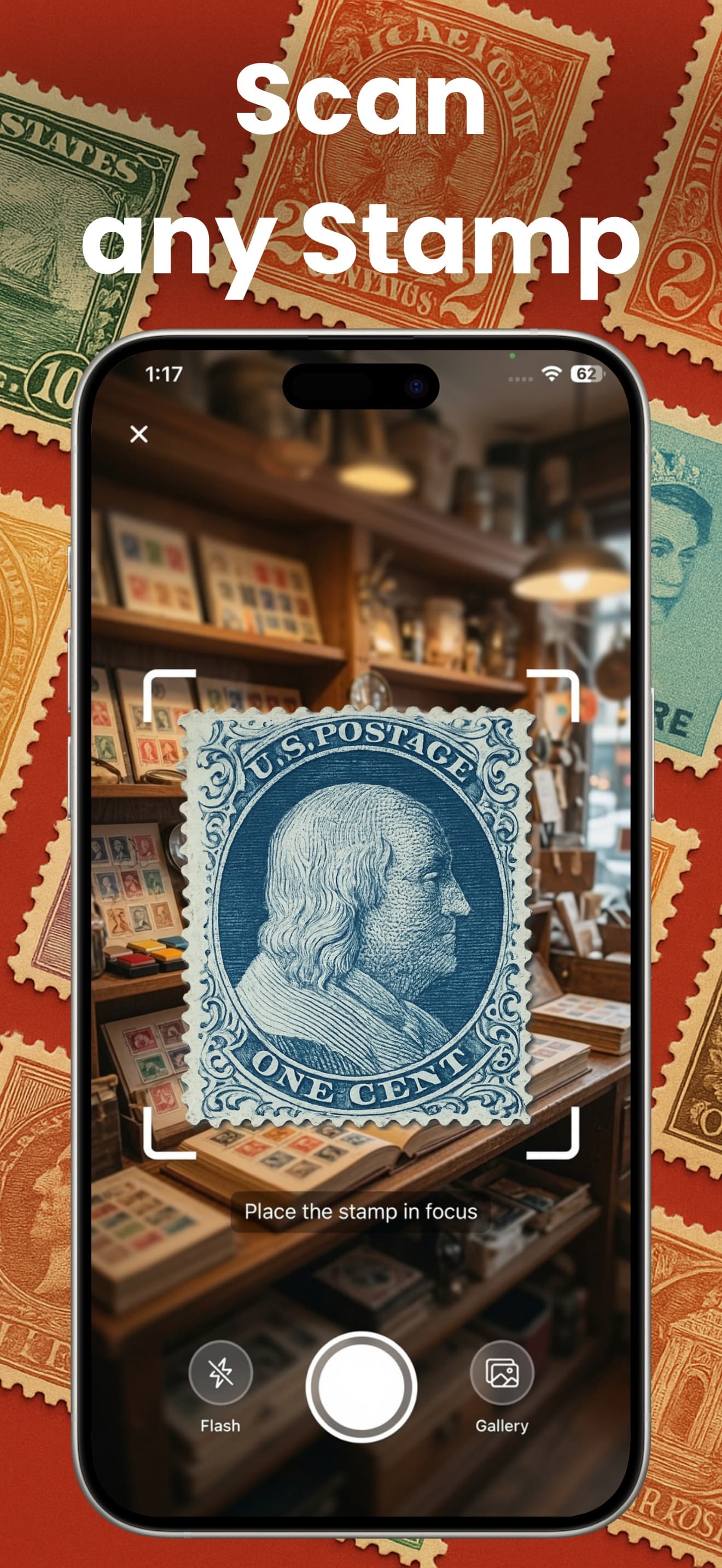
Scan the stamp
Tap Scan Now and photograph one stamp at a time, flat and in good light.
- 2
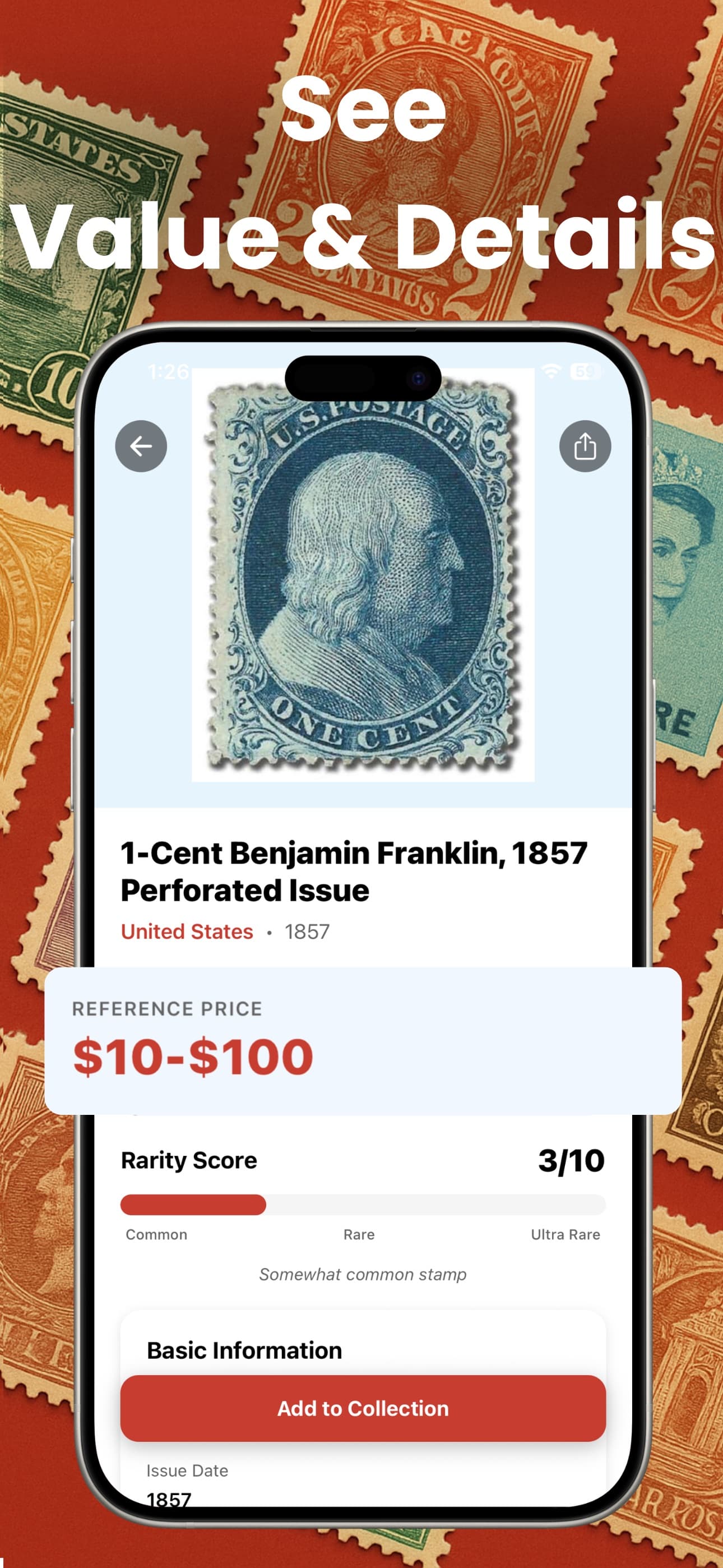
See the issue and price range
StampGo shows the stamp's name, country, year and a reference price range.
- 3
Check rarity, then varieties
A high rarity score is your cue to check perforation, paper and shade on classic issues.
- 4
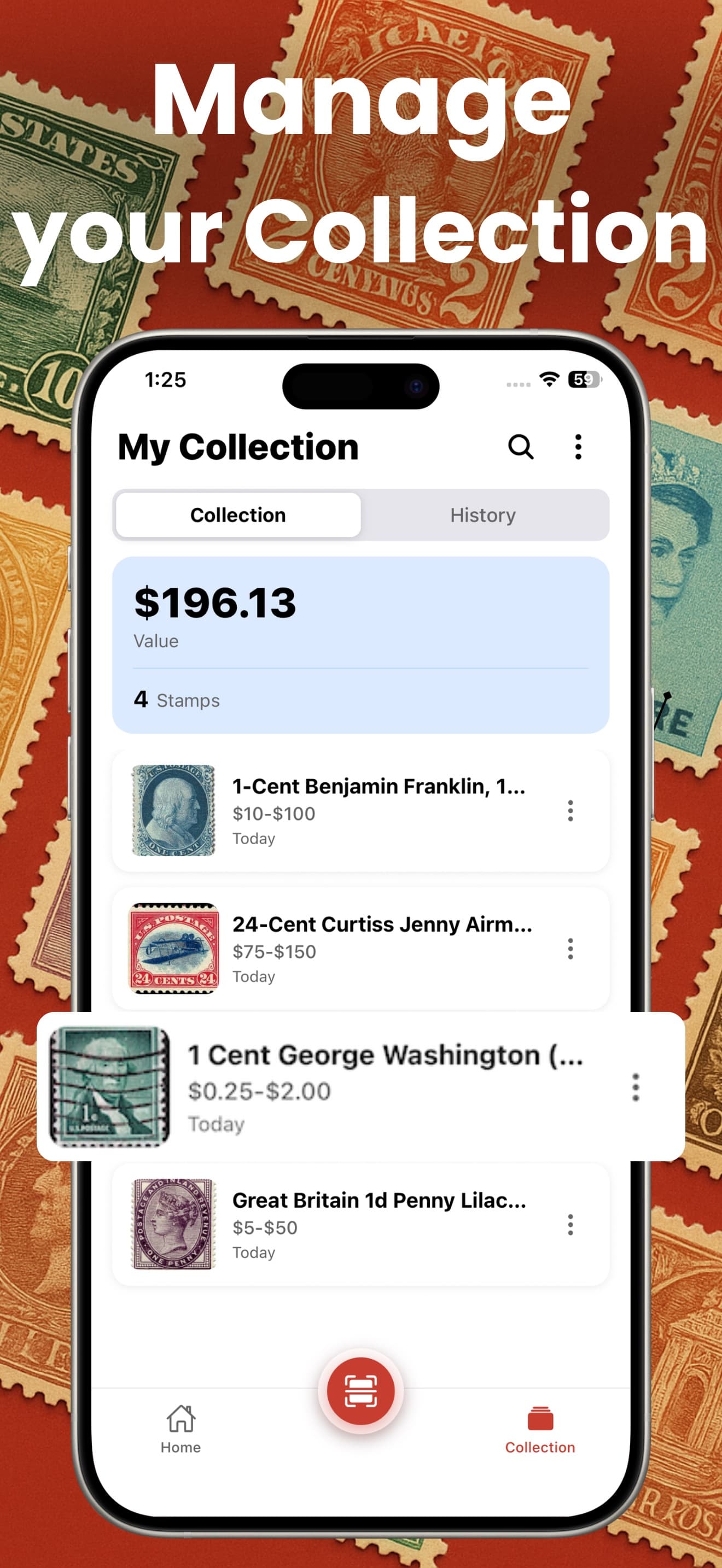
Save it to your collection
Add each stamp and track the collection's total estimated value.


Descarga gratuita para iOS y Android
Preguntas frecuentes
¿Cuál es el sello canadiense más valioso?
El Twelvepence Black de 1851 se considera en general la rareza más famosa de Canadá. También son valiosas las emisiones clásicas nuevas, las variedades escasas de Large Queens y ciertos errores.
¿Cuánto vale un sello Bluenose?
El Bluenose de 50 centavos de 1929 suele venderse por decenas de dólares usado y bastante más nuevo, sobre todo bien centrado y sin fijasellos. El estado explica casi toda la diferencia.
¿Valen algo los sellos canadienses con Isabel II?
La mayoría son comunes y valen céntimos. Las excepciones son los errores, algunos valores altos y variedades escasas que buscan los especialistas.
¿Qué catálogo debo usar para sellos canadienses?
El Unitrade Specialized Catalogue of Canadian Stamps es la referencia en Canadá. Scott y Stanley Gibbons también recogen las emisiones canadienses.
¿Cuánto valen las Large Queens de Canadá?
Las Large Queens de 1868 van de decenas de dólares en los valores comunes usados a bastante más en papeles escasos, tiradas con filigrana y ejemplares nuevos. El valor de 15 centavos siguió en uso décadas después de sustituirse los demás, así que es el más común y aparece en muchos matices.
