
Colecciones y venta
Cómo guardar los sellos para que conserven su valor
Actualizado el · 6 min de lectura · Por el equipo de StampGo
Respuesta rápida
Guarda los sellos planos, a oscuras, en un lugar fresco y seco, idealmente entre 18 y 22 °C y con un 45 a 55 % de humedad relativa, en álbumes o monturas sin ácido y sin PVC. Mantenlos lejos de buhardillas, sótanos, baños y de la luz directa del sol, y no uses nunca cinta adhesiva, pegamento, gomas elásticas ni clips.
Datos clave
- Temperatura
- Entre 18 y 22 °C aproximadamente, y estable en lugar de cambiante
- Humedad
- En torno al 45–55 %. La humedad es lo que más valor destruye
- Luz
- Guardado a oscuras. El sol y la luz intensa apagan los colores de forma permanente
- Materiales
- Sin ácido, sin lignina, sin PVC. El poliéster (Mylar) y el polipropileno son seguros
- Peores lugares
- Buhardilla, sótano, garaje, baño, alféizar, encima de un radiador
- No uses nunca
- Cinta adhesiva, pegamento, gomas elásticas, clips, álbumes de fotos autoadhesivos
Where should I keep a stamp collection?
In the main living area of your home, in a cupboard or drawer away from windows, heat sources and outside walls. Interior rooms stay closer to a steady temperature and humidity than attics, basements or garages.
Most damage to inherited collections happens in storage rather than handling. Attics overheat, basements and garages hold damp, and lofts swing between both across a year. Those swings make paper expand and contract, gum stick and mould take hold.
- Store albums upright, like books, so pages don't press unevenly. Don't stack them flat under weight.
- Keep them off the floor, in case of leaks or flooding.
- Avoid outside walls, which are colder and can attract condensation.
- Keep them away from kitchens, where grease and steam travel further than you'd think.
What temperature and humidity are right for stamps?
Around 18–22 °C and 45–55% relative humidity, kept steady. Above roughly 65% humidity, gum becomes sticky and mould and foxing can start. Very dry air makes paper brittle.
The brown spots collectors call foxing, and the general browning called toning, both come from damp storage. They can't be reversed safely, and they cut a stamp's value sharply. If you live somewhere humid, a cheap hygrometer in the cupboard tells you more than guesswork, and silica gel packs help in a sealed box.
Unused stamps suffer first, because their gum absorbs moisture. That's one reason mounts are worth using: they keep the gum off the album page. See stamp condition grades for how much condition drives price.
Which storage materials are safe for stamps?
Acid-free, lignin-free paper and card, and clear plastics made from polyester (Mylar) or polypropylene. Avoid PVC, ordinary envelopes, newsprint and anything self-adhesive.
| Material | Verdict |
|---|---|
| Glassine envelopes | Safe and cheap for sorting duplicates. Replace if they yellow |
| Stockbooks with card pages | Safe, as long as pages aren't overfilled |
| Polyester (Mylar) or polypropylene mounts and sleeves | Safe for long-term storage |
| PVC sleeves and pages | Avoid. Plasticizers can leave stamps oily or stuck |
| “Magnetic” self-adhesive photo albums | Never. The adhesive bonds permanently to stamps |
| Ordinary envelopes and newsprint | Avoid. Acidic paper stains stamps over time |
How should I handle and check a stored collection?
Handle stamps with tongs on a clean, dry surface, and look through the collection about once a year for damp, foxing, insects or stamps starting to stick.
- Use tongs, not fingers. Skin oils stain paper and gum over months, not days.
- Work on a clean table with nothing to drink nearby.
- Check album pages for a musty smell, wavy paper or brown spots, all signs of damp.
- Watch for silverfish and other paper pests in older storage.
- If a page feels tacky, separate it with a sheet of glassine and reduce the humidity.
What if stamps are already stuck down or damaged?
Don't force anything. Stamps stuck to album pages, to each other or to clear sleeves can sometimes be released by a specialist, but home attempts usually cause thins and tears.
For common stamps, the loss is small and not worth the risk. For anything that might be valuable, take the whole page or block to a dealer or expertizing service instead of pulling it apart. Never try to clean, bleach or iron a stamp: experts spot the treatment, and the value goes with it.
Do I need records or insurance for a stamp collection?
If the collection is worth more than a few hundred dollars, keep a photographic record and a written inventory, and check whether your home policy covers collectables, which often have a low default limit.
Photograph album pages and any valuable single stamps, keep expert certificates with the inventory rather than loose in the album, and store a copy of the record somewhere other than the collection. See how to organize a stamp collection and how to value a stamp collection.
How should I store covers, sheets and first day covers?
Store covers upright in cover boxes or sleeves, keep full sheets flat in acid-free folders, and never fold anything to make it fit. Folding is permanent damage, and a crease through a stamp destroys most of its value.
- Covers and first day covers: upright in a cover box, or in PVC-free sleeves in a binder, so the paper isn't crushed.
- Full sheets and panes: flat, in acid-free folders large enough to hold them without bending the selvage.
- Blocks and multiples: flat in mounts or stockpages, never stacked loose where perforations can catch.
- Certificates and paperwork: with the inventory, not tucked inside the album where they crease.
Large items are the ones most often ruined in storage, because they don't fit the album and get folded once “just to put them away”. If something is too big for your system, change the storage rather than the item. See first day cover value.
Paso a paso
How to keep a photographic record with StampGo
A scan-as-you-file habit gives you a record of the collection without a separate photography session.
- 1
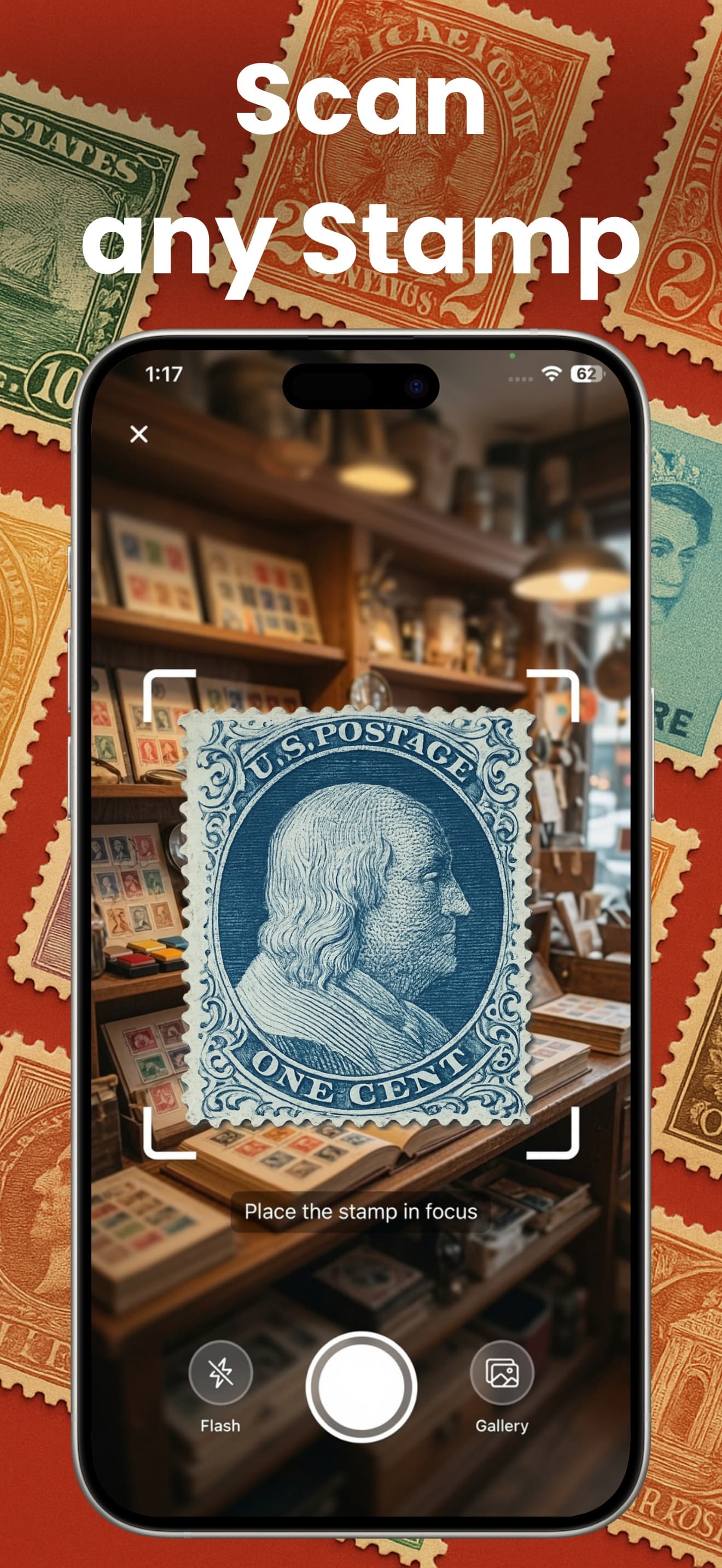
Scan stamps as you mount them
Photograph each stamp with Scan Now before it goes into the album.
- 2
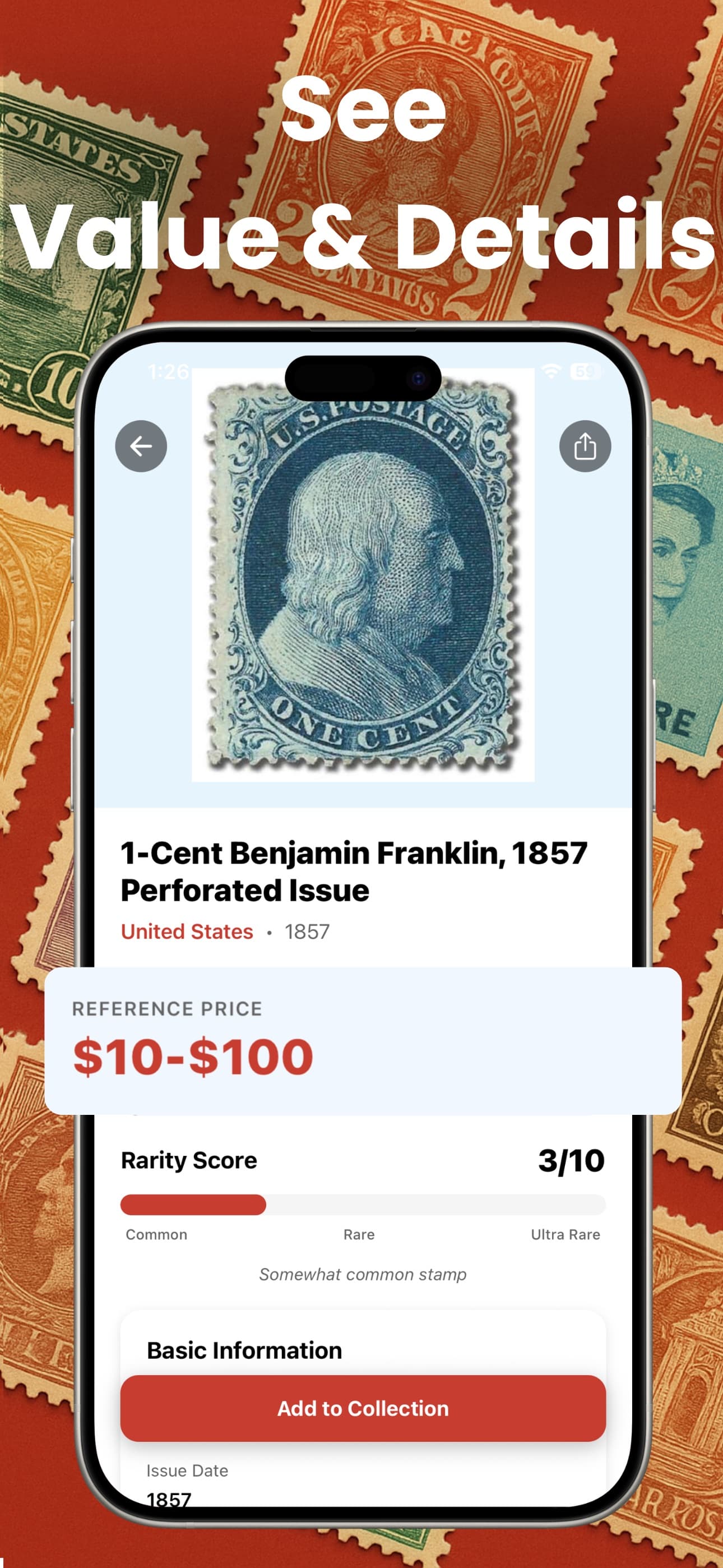
Keep the details with the image
Each result records the issue, year and a reference price range for that stamp.
- 3
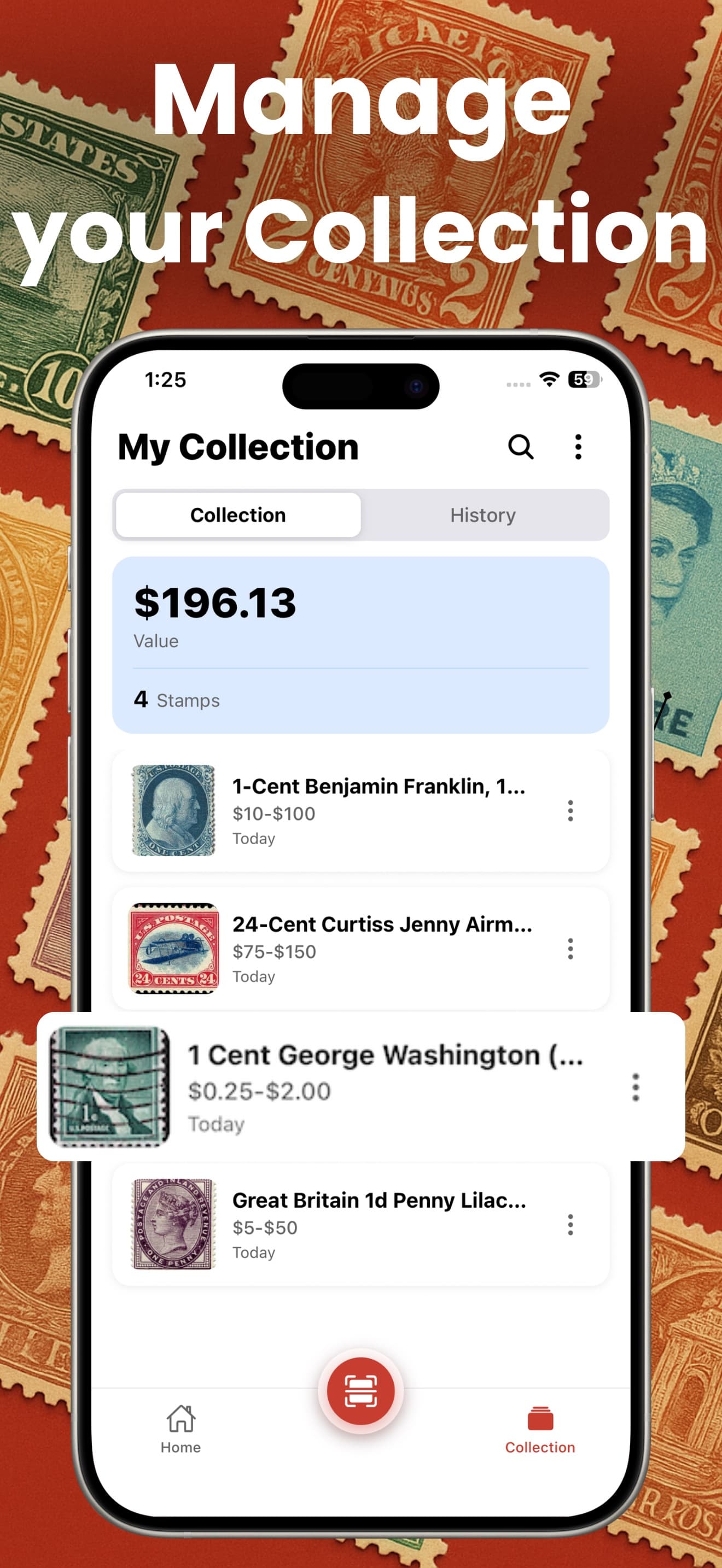
Build the inventory
Saved stamps form a list with a running total, which is what an insurer or a dealer wants to see.


Descarga gratuita para iOS y Android
Preguntas frecuentes
¿Puedo guardar sellos en una caja de seguridad del banco?
Sí para piezas muy valiosas, pero las cajas pueden ser húmedas y no podrás revisar la colección a menudo. Usa cajas de archivo cerradas con gel de sílice e inspecciónalas cuando vayas.
¿Sirven las bolsas con cierre zip para los sellos?
No para el largo plazo. Atrapan la humedad contra los sellos. Los sobres de cristal transpiran y son la opción estándar para clasificar y guardar a corto plazo.
¿Cómo evito que los sellos nuevos se peguen entre sí?
Mantén baja la humedad, guárdalos en monturas en lugar de cara contra cara, y no apiles nunca sellos nuevos sueltos. Una vez que la goma se ha fundido, separarlos suele causar daños.
¿De verdad el sol decolora los sellos?
Sí, y rápido en algunas tintas. Los colores apagados o amarillentos no se recuperan y hacen bajar varios grados el valor. Mantén los álbumes cerrados y lejos de la luz.
