
Samle og selge
Slik oppbevarer du frimerker så de beholder verdien
Oppdatert · 5 min. lesing · StampGo-teamet
Kort svar
Oppbevar merker flatt, mørkt, kjølig og tørt, helst ved 18–22 °C og 45–55 prosent relativ luftfuktighet, i syrefrie og PVC-frie album eller lommer. Hold dem unna loft, kjellere, bad og direkte sollys, og bruk aldri teip, lim, strikk eller binders.
Nøkkelfakta
- Temperatur
- Rundt 18–22 °C, og helst stabil framfor svingende
- Luftfuktighet
- Omtrent 45–55 prosent. Fukt ødelegger verdi raskest
- Lys
- Mørk oppbevaring. Sol og sterkt lys bleker farger permanent
- Materialer
- Syrefritt, ligninfritt, PVC-fritt. Polyester (Mylar) og polypropylen er trygge
- Verste steder
- Loft, kjeller, garasje, bad, vinduskarm, oppå en radiator
- Bruk aldri
- Teip, lim, strikk, binders, selvklebende fotoalbum
Where should I keep a stamp collection?
In the main living area of your home, in a cupboard or drawer away from windows, heat sources and outside walls. Interior rooms stay closer to a steady temperature and humidity than attics, basements or garages.
Most damage to inherited collections happens in storage rather than handling. Attics overheat, basements and garages hold damp, and lofts swing between both across a year. Those swings make paper expand and contract, gum stick and mould take hold.
- Store albums upright, like books, so pages don't press unevenly. Don't stack them flat under weight.
- Keep them off the floor, in case of leaks or flooding.
- Avoid outside walls, which are colder and can attract condensation.
- Keep them away from kitchens, where grease and steam travel further than you'd think.
What temperature and humidity are right for stamps?
Around 18–22 °C and 45–55% relative humidity, kept steady. Above roughly 65% humidity, gum becomes sticky and mould and foxing can start. Very dry air makes paper brittle.
The brown spots collectors call foxing, and the general browning called toning, both come from damp storage. They can't be reversed safely, and they cut a stamp's value sharply. If you live somewhere humid, a cheap hygrometer in the cupboard tells you more than guesswork, and silica gel packs help in a sealed box.
Unused stamps suffer first, because their gum absorbs moisture. That's one reason mounts are worth using: they keep the gum off the album page. See stamp condition grades for how much condition drives price.
Which storage materials are safe for stamps?
Acid-free, lignin-free paper and card, and clear plastics made from polyester (Mylar) or polypropylene. Avoid PVC, ordinary envelopes, newsprint and anything self-adhesive.
| Material | Verdict |
|---|---|
| Glassine envelopes | Safe and cheap for sorting duplicates. Replace if they yellow |
| Stockbooks with card pages | Safe, as long as pages aren't overfilled |
| Polyester (Mylar) or polypropylene mounts and sleeves | Safe for long-term storage |
| PVC sleeves and pages | Avoid. Plasticizers can leave stamps oily or stuck |
| “Magnetic” self-adhesive photo albums | Never. The adhesive bonds permanently to stamps |
| Ordinary envelopes and newsprint | Avoid. Acidic paper stains stamps over time |
How should I handle and check a stored collection?
Handle stamps with tongs on a clean, dry surface, and look through the collection about once a year for damp, foxing, insects or stamps starting to stick.
- Use tongs, not fingers. Skin oils stain paper and gum over months, not days.
- Work on a clean table with nothing to drink nearby.
- Check album pages for a musty smell, wavy paper or brown spots, all signs of damp.
- Watch for silverfish and other paper pests in older storage.
- If a page feels tacky, separate it with a sheet of glassine and reduce the humidity.
What if stamps are already stuck down or damaged?
Don't force anything. Stamps stuck to album pages, to each other or to clear sleeves can sometimes be released by a specialist, but home attempts usually cause thins and tears.
For common stamps, the loss is small and not worth the risk. For anything that might be valuable, take the whole page or block to a dealer or expertizing service instead of pulling it apart. Never try to clean, bleach or iron a stamp: experts spot the treatment, and the value goes with it.
Do I need records or insurance for a stamp collection?
If the collection is worth more than a few hundred dollars, keep a photographic record and a written inventory, and check whether your home policy covers collectables, which often have a low default limit.
Photograph album pages and any valuable single stamps, keep expert certificates with the inventory rather than loose in the album, and store a copy of the record somewhere other than the collection. See how to organize a stamp collection and how to value a stamp collection.
How should I store covers, sheets and first day covers?
Store covers upright in cover boxes or sleeves, keep full sheets flat in acid-free folders, and never fold anything to make it fit. Folding is permanent damage, and a crease through a stamp destroys most of its value.
- Covers and first day covers: upright in a cover box, or in PVC-free sleeves in a binder, so the paper isn't crushed.
- Full sheets and panes: flat, in acid-free folders large enough to hold them without bending the selvage.
- Blocks and multiples: flat in mounts or stockpages, never stacked loose where perforations can catch.
- Certificates and paperwork: with the inventory, not tucked inside the album where they crease.
Large items are the ones most often ruined in storage, because they don't fit the album and get folded once “just to put them away”. If something is too big for your system, change the storage rather than the item. See first day cover value.
Trinn for trinn
How to keep a photographic record with StampGo
A scan-as-you-file habit gives you a record of the collection without a separate photography session.
- 1
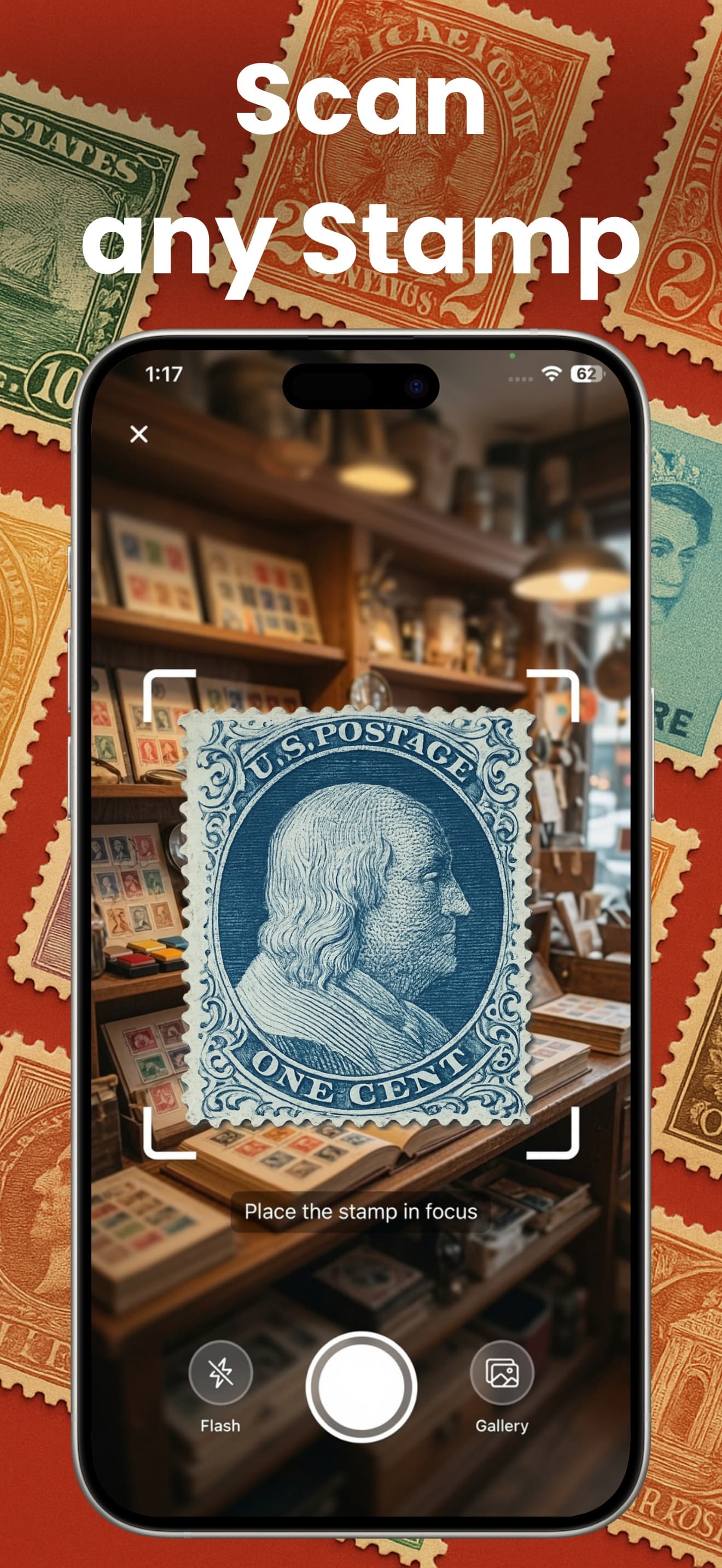
Scan stamps as you mount them
Photograph each stamp with Scan Now before it goes into the album.
- 2
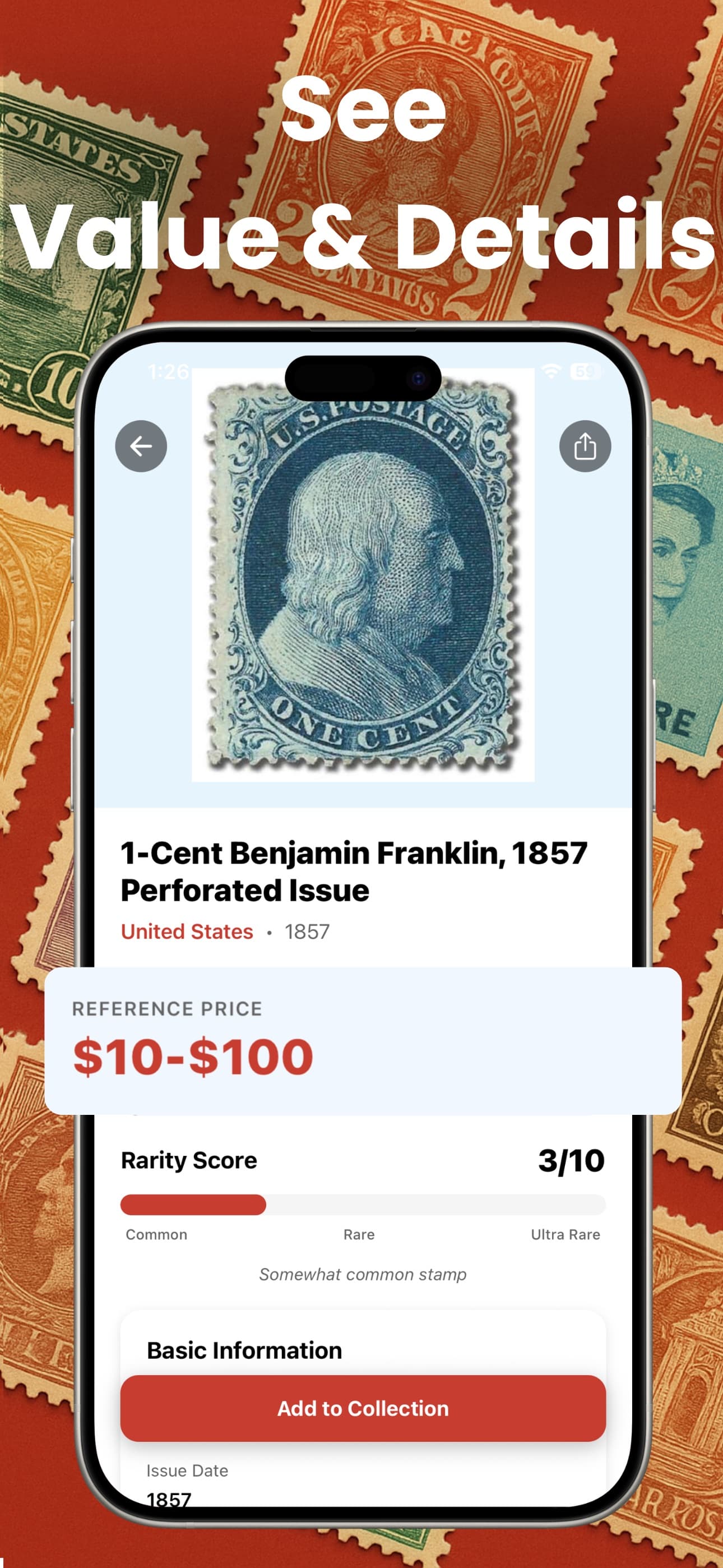
Keep the details with the image
Each result records the issue, year and a reference price range for that stamp.
- 3
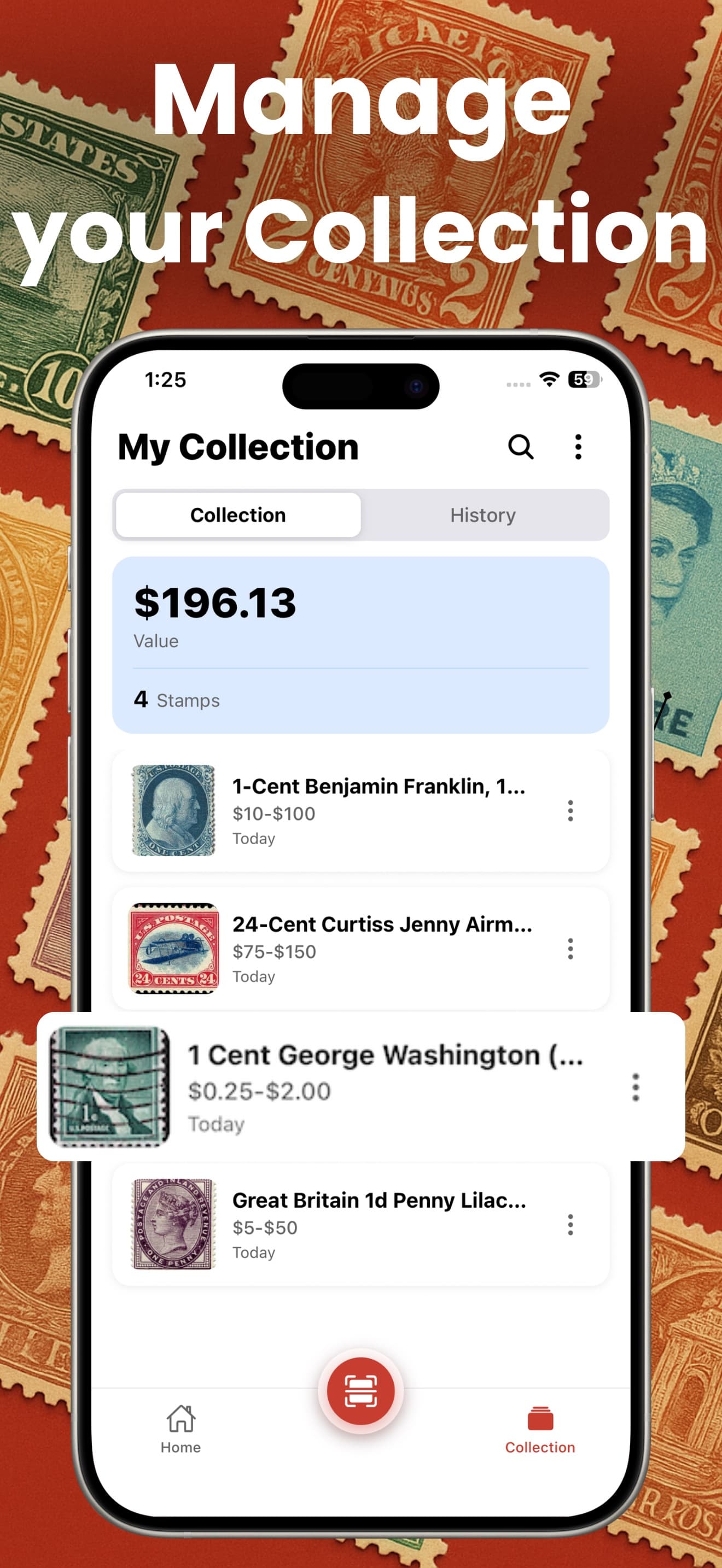
Build the inventory
Saved stamps form a list with a running total, which is what an insurer or a dealer wants to see.


Gratis å laste ned for iOS og Android
Ofte stilte spørsmål
Kan jeg oppbevare frimerker i en bankboks?
For svært verdifulle objekter ja, men bankbokser kan være fuktige, og du kan ikke sjekke samlingen ofte. Bruk lukkede arkivbokser med silikagel, og se over ved hvert besøk.
Egner glidelåsposer seg for frimerker?
Ikke til langtidsoppbevaring. De stenger fukt inne mot merkene. Pergaminkonvolutter puster og er standarden for sortering og kortere oppbevaring.
Hvordan hindrer jeg at ubrukte merker klistrer seg sammen?
Hold luftfuktigheten lav, oppbevar dem i lommer framfor bildeside mot bildeside, og stable aldri ubrukte merker løst. Når gummien først har smeltet sammen, gir separering nesten alltid skader.
Bleker sollys virkelig frimerker?
Ja, og raskt på enkelte trykkfarger. Blekede eller gulnede farger kan ikke gjenskapes og senker kvaliteten flere trinn. Hold album lukket og unna lyset.
