
Kolekcjonowanie i sprzedaż
Jak przechowywać znaczki, żeby zachowały wartość
Aktualizacja · 5 min czytania · Zespół StampGo
Krótka odpowiedź
Przechowuj znaczki na płasko, w ciemności, w chłodnym i suchym miejscu, najlepiej w 18–22 °C i przy wilgotności względnej 45–55 procent, w klaserach i kieszonkach bezkwasowych i bez PVC. Trzymaj je z dala od strychów, piwnic, łazienek i bezpośredniego słońca i nigdy nie używaj taśmy, kleju, gumek ani spinaczy.
Najważniejsze fakty
- Temperatura
- Około 18–22 °C, i raczej stabilna niż skacząca
- Wilgotność
- Mniej więcej 45–55 procent. Wilgoć niszczy wartość najszybciej
- Światło
- Przechowywanie w ciemności. Słońce i mocne światło trwale wypalają kolory
- Materiały
- Bezkwasowe, bez ligniny, bez PVC. Poliester (mylar) i polipropylen są bezpieczne
- Najgorsze miejsca
- Strych, piwnica, garaż, łazienka, parapet, nad kaloryferem
- Nigdy nie używaj
- Taśmy klejącej, kleju, gumek, spinaczy, samoprzylepnych albumów na zdjęcia
Where should I keep a stamp collection?
In the main living area of your home, in a cupboard or drawer away from windows, heat sources and outside walls. Interior rooms stay closer to a steady temperature and humidity than attics, basements or garages.
Most damage to inherited collections happens in storage rather than handling. Attics overheat, basements and garages hold damp, and lofts swing between both across a year. Those swings make paper expand and contract, gum stick and mould take hold.
- Store albums upright, like books, so pages don't press unevenly. Don't stack them flat under weight.
- Keep them off the floor, in case of leaks or flooding.
- Avoid outside walls, which are colder and can attract condensation.
- Keep them away from kitchens, where grease and steam travel further than you'd think.
What temperature and humidity are right for stamps?
Around 18–22 °C and 45–55% relative humidity, kept steady. Above roughly 65% humidity, gum becomes sticky and mould and foxing can start. Very dry air makes paper brittle.
The brown spots collectors call foxing, and the general browning called toning, both come from damp storage. They can't be reversed safely, and they cut a stamp's value sharply. If you live somewhere humid, a cheap hygrometer in the cupboard tells you more than guesswork, and silica gel packs help in a sealed box.
Unused stamps suffer first, because their gum absorbs moisture. That's one reason mounts are worth using: they keep the gum off the album page. See stamp condition grades for how much condition drives price.
Which storage materials are safe for stamps?
Acid-free, lignin-free paper and card, and clear plastics made from polyester (Mylar) or polypropylene. Avoid PVC, ordinary envelopes, newsprint and anything self-adhesive.
| Material | Verdict |
|---|---|
| Glassine envelopes | Safe and cheap for sorting duplicates. Replace if they yellow |
| Stockbooks with card pages | Safe, as long as pages aren't overfilled |
| Polyester (Mylar) or polypropylene mounts and sleeves | Safe for long-term storage |
| PVC sleeves and pages | Avoid. Plasticizers can leave stamps oily or stuck |
| “Magnetic” self-adhesive photo albums | Never. The adhesive bonds permanently to stamps |
| Ordinary envelopes and newsprint | Avoid. Acidic paper stains stamps over time |
How should I handle and check a stored collection?
Handle stamps with tongs on a clean, dry surface, and look through the collection about once a year for damp, foxing, insects or stamps starting to stick.
- Use tongs, not fingers. Skin oils stain paper and gum over months, not days.
- Work on a clean table with nothing to drink nearby.
- Check album pages for a musty smell, wavy paper or brown spots, all signs of damp.
- Watch for silverfish and other paper pests in older storage.
- If a page feels tacky, separate it with a sheet of glassine and reduce the humidity.
What if stamps are already stuck down or damaged?
Don't force anything. Stamps stuck to album pages, to each other or to clear sleeves can sometimes be released by a specialist, but home attempts usually cause thins and tears.
For common stamps, the loss is small and not worth the risk. For anything that might be valuable, take the whole page or block to a dealer or expertizing service instead of pulling it apart. Never try to clean, bleach or iron a stamp: experts spot the treatment, and the value goes with it.
Do I need records or insurance for a stamp collection?
If the collection is worth more than a few hundred dollars, keep a photographic record and a written inventory, and check whether your home policy covers collectables, which often have a low default limit.
Photograph album pages and any valuable single stamps, keep expert certificates with the inventory rather than loose in the album, and store a copy of the record somewhere other than the collection. See how to organize a stamp collection and how to value a stamp collection.
How should I store covers, sheets and first day covers?
Store covers upright in cover boxes or sleeves, keep full sheets flat in acid-free folders, and never fold anything to make it fit. Folding is permanent damage, and a crease through a stamp destroys most of its value.
- Covers and first day covers: upright in a cover box, or in PVC-free sleeves in a binder, so the paper isn't crushed.
- Full sheets and panes: flat, in acid-free folders large enough to hold them without bending the selvage.
- Blocks and multiples: flat in mounts or stockpages, never stacked loose where perforations can catch.
- Certificates and paperwork: with the inventory, not tucked inside the album where they crease.
Large items are the ones most often ruined in storage, because they don't fit the album and get folded once “just to put them away”. If something is too big for your system, change the storage rather than the item. See first day cover value.
Krok po kroku
How to keep a photographic record with StampGo
A scan-as-you-file habit gives you a record of the collection without a separate photography session.
- 1
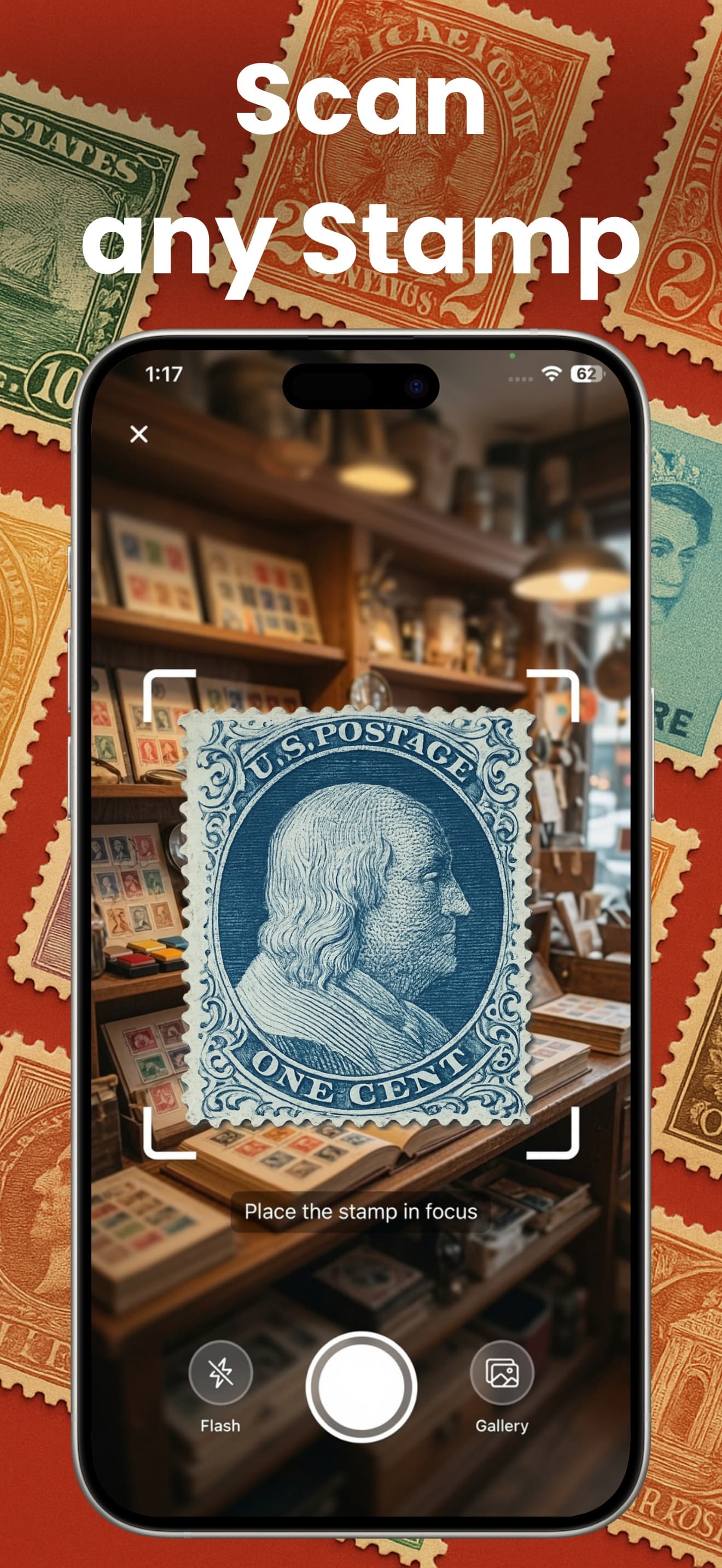
Scan stamps as you mount them
Photograph each stamp with Scan Now before it goes into the album.
- 2
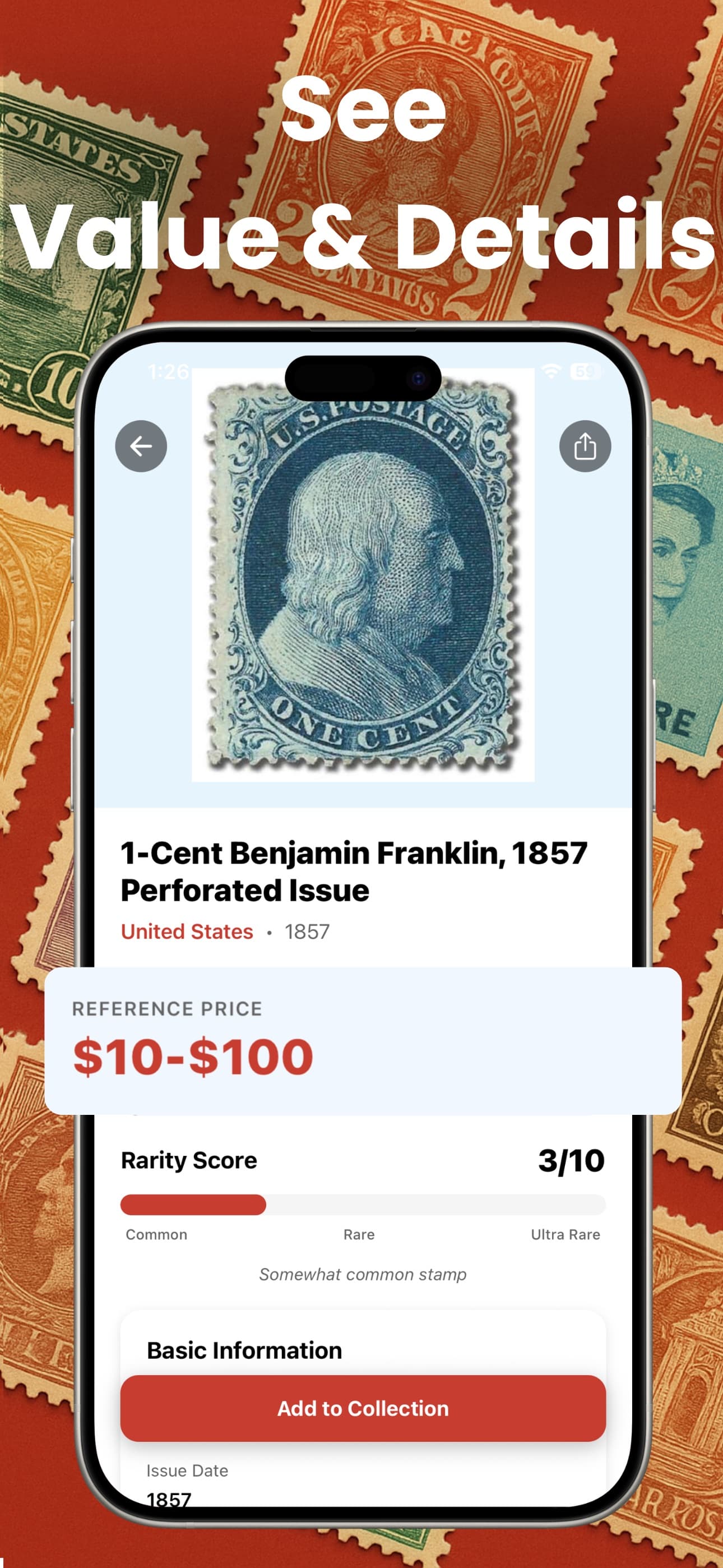
Keep the details with the image
Each result records the issue, year and a reference price range for that stamp.
- 3
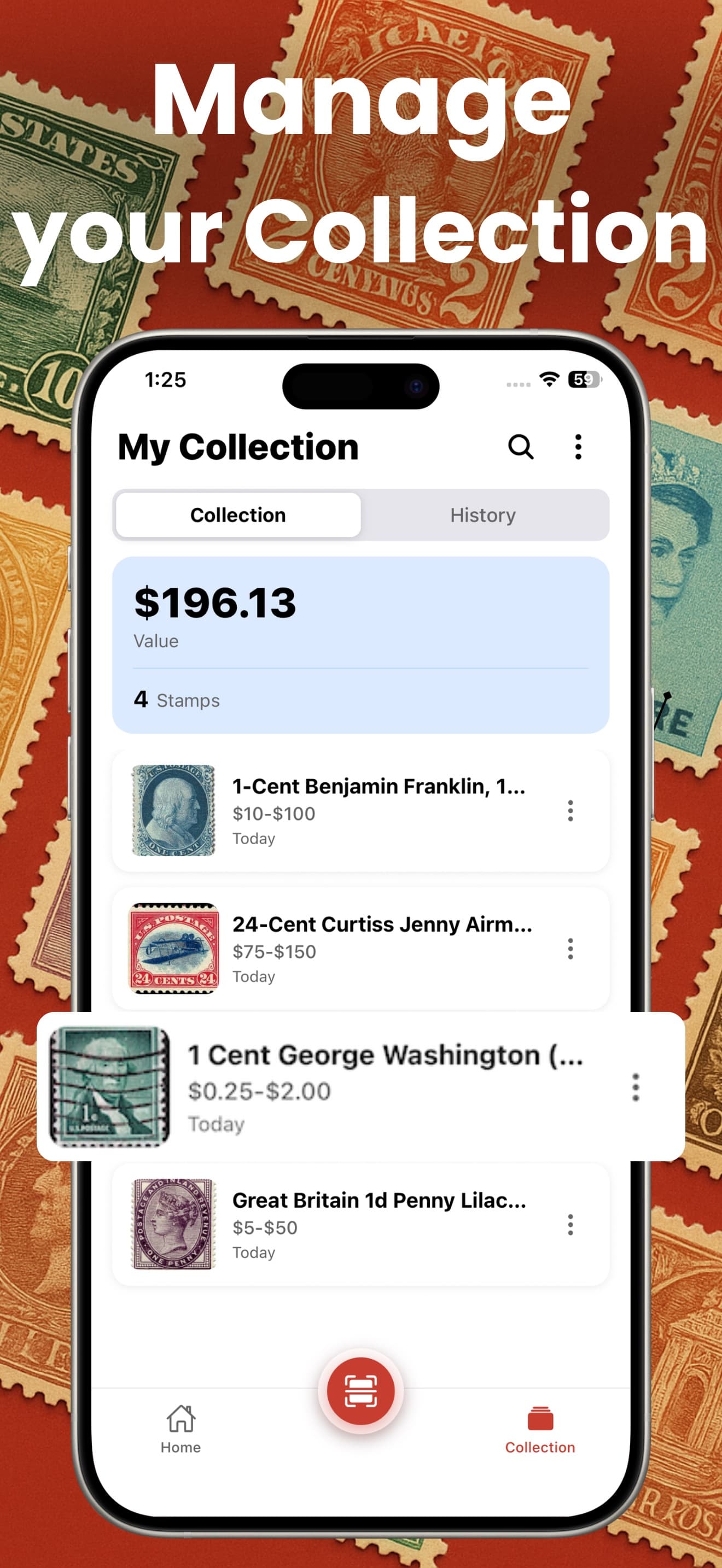
Build the inventory
Saved stamps form a list with a running total, which is what an insurer or a dealer wants to see.


Darmowa do pobrania na iOS i Androida
Pytania i odpowiedzi
Czy można trzymać znaczki w skrytce bankowej?
Przy bardzo cennych pozycjach tak, ale w skrytkach bywa wilgotno, a zbioru nie sprawdzisz często. Użyj zamkniętych pudeł archiwalnych z żelem krzemionkowym i oglądaj zbiór przy każdej wizycie.
Czy woreczki strunowe nadają się do znaczków?
Nie do długiego przechowywania. Zamykają wilgoć przy znaczkach. Kopertki pergaminowe oddychają i są standardem przy segregowaniu i krótkim przechowywaniu.
Jak nie dopuścić, by czyste znaczki się skleiły?
Utrzymuj niską wilgotność, trzymaj je w kieszonkach zamiast rysunkiem do rysunku i nigdy nie układaj czystych znaczków luzem w stos. Gdy guma już się zlepi, rozdzielanie prawie zawsze kończy się uszkodzeniem.
Czy słońce naprawdę wypala znaczki?
Tak, przy niektórych farbach bardzo szybko. Wyblakłych albo pożółkłych kolorów nie da się przywrócić, a spadek jakości wynosi kilka stopni. Trzymaj klasery zamknięte i z dala od światła.
