
Znaczki według krajów
Znaczki brytyjskie: ile są warte, od Wiktorii po Machiny
Aktualizacja · 5 min czytania · Zespół StampGo
Krótka odpowiedź
Większość brytyjskich znaczków z XX wieku, w tym Wildingi i Machiny Elżbiety II, jest pospolita i warta grosze. Wartość tkwi w znaczkach wiktoriańskich, zwłaszcza w Penny Blacku, wczesnych emisjach stalorytniczych i wysokich nominałach, a także w wysokich nominałach Edwarda VII i Jerzego V oraz w rzadkich odmianach. StampGo rozpoznaje brytyjskie znaczki, które nie mają nazwy kraju, na podstawie zdjęcia.
Najważniejsze fakty
- Pierwszy znaczek
- Penny Black (1840), pierwszy gumowany znaczek pocztowy na świecie
- Nazwa kraju
- Brak. Brytyjskie znaczki pokazują zamiast niej głowę monarchy
- Katalog wzorcowy
- Stanley Gibbons (znaczki opisuje się numerem SG)
- Zwykle cenne
- Emisje wiktoriańskie w dobrym stanie oraz wysokie nominały od Wiktorii po Jerzego V
- Zwykle pospolite
- Większość Wildingów, Machinów i znaczków okolicznościowych Elżbiety II
- Znaczki sprzed 1971
- W pensach i szylingach, już nieważne jako opłata pocztowa
What are British stamps worth by reign?
Victorian stamps (1840–1901) hold the most value, especially the early line-engraved issues and high values. Edward VII and George V high values can be valuable, while most George VI and Elizabeth II stamps are common.
| Reign | Key issues | Typical value |
|---|---|---|
| Victoria (1840–1901) | Penny Black, Twopence Blue, Penny Red, surface-printed issues, Penny Lilac | Common Penny Reds and Lilacs cost little; early issues and high values can be valuable |
| Edward VII (1902–1910) | Definitives up to £1 | Low values are common; high values are worth more |
| George V (1910–1936) | Seahorse high values, the 1929 £1 Postal Union Congress | The high values are the sought-after stamps |
| George VI (1937–1952) | Definitives and commemoratives | Mostly common |
| Elizabeth II (1952–2022) | Wildings, Machins (from 1967), commemoratives | Mostly common, apart from errors and scarce varieties |
| Charles III (2022– ) | Machin-style definitives and commemoratives | Face value |
Which British stamps are worth money?
UK stamps worth checking include Penny Blacks, Twopence Blues, Penny Reds from scarce plates, Victorian high values, George V Seahorses, the 1929 £1 PUC, and errors on Elizabeth II stamps.
- The [Penny Black](/pl/guides/penny-black-value) (1840). Used copies are affordable, but good ones are still worth tens to hundreds.
- The Twopence Blue (1840), which is scarcer than the Penny Black.
- Penny Red plate 77, the famous Penny Red rarity, with only a handful of copies known.
- Victorian high values, such as the £1 and £5 stamps.
- Seahorses (from 1913) and the 1929 £1 PUC.
- Elizabeth II errors, such as commemoratives with a missing color.
Penny Reds show how detail drives value. From 1864 the plate number is engraved into the side of the design, and while most plates are common, a few are scarce. The same stamp can be worth pennies or a great deal, depending on its plate.
What are Queen Elizabeth stamps worth?
Most Queen Elizabeth II stamps are worth pennies, because billions were printed. The value is in errors, scarce Machin varieties, some early high values, and certain booklets and coils that specialists seek.
Machin definitives, the plain profile design used from 1967, are among the most printed stamps in history. Specialists study their many printings, papers, phosphor bands and gums, and a few of those varieties are scarce, which is why Machins are a collecting field of their own.
Queen Elizabeth stamps from Commonwealth countries such as Australia, Canada and New Zealand are a separate matter. Their values depend on the country and printing, and some pre-decimal Commonwealth issues are worth more than their British counterparts.
How do I identify a British stamp?
British stamps are the only ones that don't show a country name. Instead they carry the reigning monarch's head: a full portrait on definitives and a small silhouette on commemoratives.
The monarch gives you the approximate date, and so does the currency. Pre-decimal stamps show values in pence (d) and shillings (s), while decimal “p” values date from 1971 onwards. Stanley Gibbons is the standard British catalogue, and dealers describe UK stamps by SG number. See how to identify stamps.
How do I check a UK stamp's value?
Identify the reign and issue, then the variety (plate, watermark or perforation on Victorian stamps), and grade the condition before comparing it with catalogue prices and recent sales.
On Victorian line-engraved stamps, the margins and the cancellation matter almost as much as the stamp itself. See stamp condition grades and how to tell if a stamp is rare.
What are British commemorative stamps worth?
Most British commemoratives from the 1960s onward are worth pennies. Earlier ones, such as the 1924–25 British Empire Exhibition, the 1929 Postal Union Congress and the 1935 Silver Jubilee, are more collectable, and the 1929 £1 PUC is valuable.
Britain was slow to adopt commemorative stamps, issuing its first in 1924 for the British Empire Exhibition, so early examples are relatively few. From the 1960s the Post Office issued several sets a year, and they were bought and saved in huge numbers.
There's a specialist twist. Some 1960s commemoratives were issued both with and without phosphor bands, which automatic letter-sorting machines used, and certain phosphor versions are scarcer than the ordinary ones. Tilt the stamp under a light to see the bands.
Krok po kroku
How to check British stamp values with StampGo
UK stamps don't name their country, so a photo is the fastest way to identify them. StampGo recognizes British issues from Victoria to today.
- 1
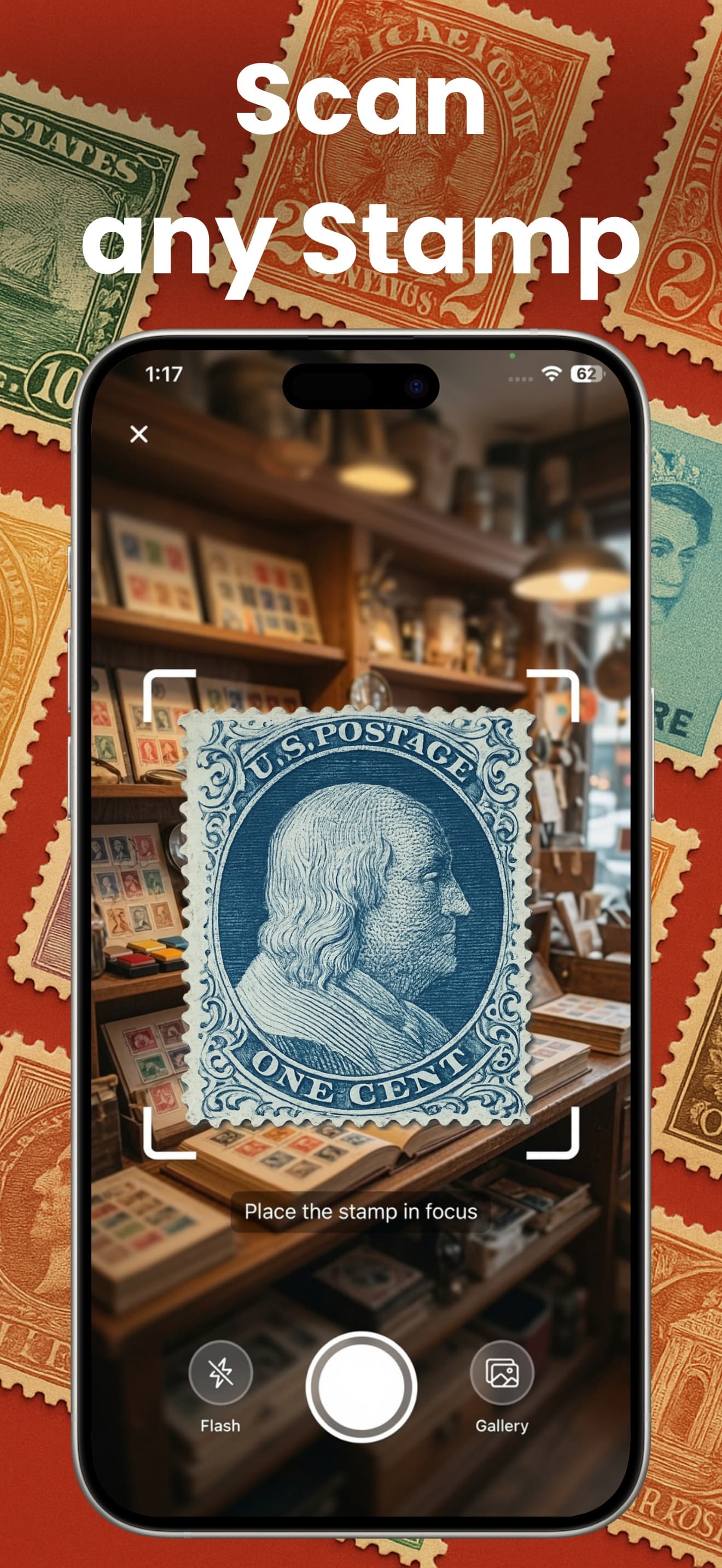
Scan the stamp
Tap Scan Now and photograph one British stamp at a time.
- 2
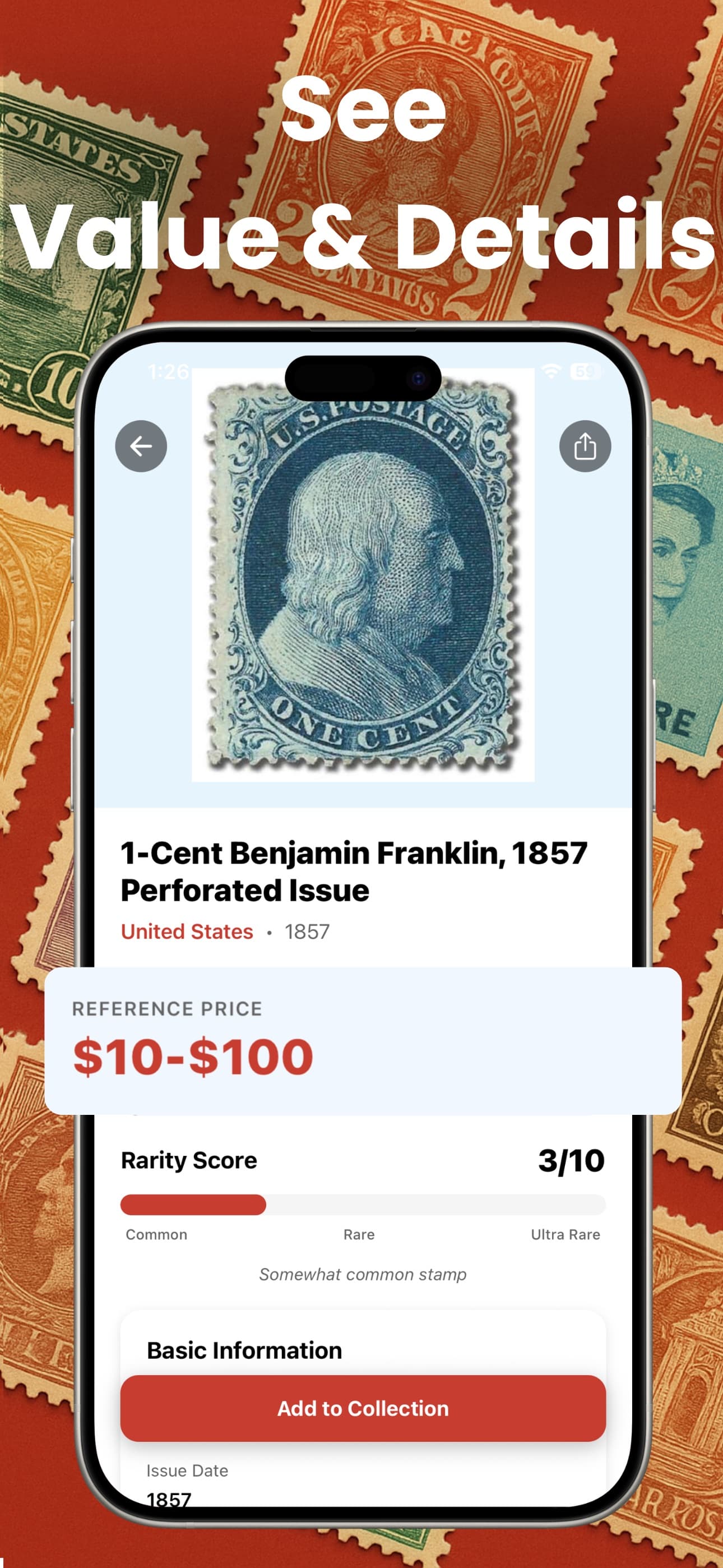
See the issue, year and price
StampGo names the stamp, such as a Great Britain 1d Penny Lilac, with its year and a reference price range.
- 3
Check the rarity score
The 1–10 rarity score shows which stamps to examine for plate numbers, watermarks and condition.
- 4
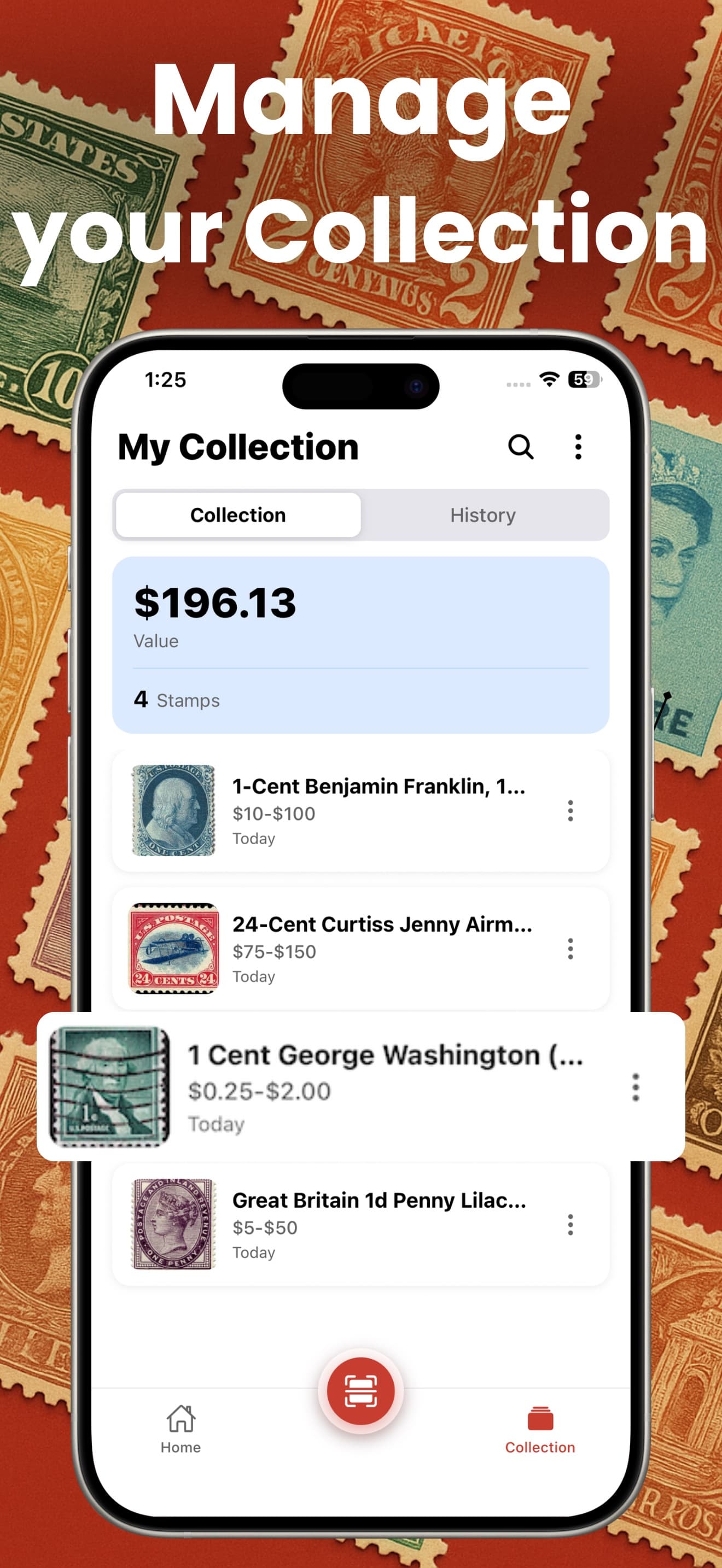
Save and total your collection
Add stamps to your collection and track their combined estimated value.


Darmowa do pobrania na iOS i Androida
Pytania i odpowiedzi
Czy stare brytyjskie znaczki są coś warte?
Niektóre tak. Znaczki wiktoriańskie i wysokie nominały z początku XX wieku bywają cenne, a większość znaczków od lat trzydziestych jest pospolita i warta grosze.
Który brytyjski znaczek jest najrzadszy?
Penny Red z płyty 77 to jeden z wielkich brytyjskich rarytasów, znany w zaledwie kilku egzemplarzach. Rzadkie są też czyste Penny Blacki z płyty 11 i część wysokich nominałów wiktoriańskich.
Czy Penny Black to najcenniejszy brytyjski znaczek?
Nie. Jest najsłynniejszy, ale wydrukowano około 68 milionów sztuk, więc egzemplarze kasowane są przystępne. Czyste Penny Blacki i rzadkie płyty są warte znacznie więcej.
Czy można jeszcze używać starych brytyjskich znaczków?
Znaczki sprzed reformy dziesiętnej (w pensach i szylingach) nie są już ważne. Znaczki obiegowe i bożonarodzeniowe bez kodu kreskowego straciły ważność 31 lipca 2023 roku, choć Royal Mail prowadziła wymianę. Znaczki okolicznościowe pozostają ważne.
Ile wart jest Penny Lilac?
1d Penny Lilac z 1881 roku wydrukowano w ogromnych nakładach, więc większość egzemplarzy kasowanych jest warta bardzo niewiele. Rzadsze odcienie, typy i odmiany ząbkowania oraz ładne egzemplarze czyste są warte więcej, więc przed wyceną sprawdź odmianę.
