
Valeurs par pays
Timbres britanniques : valeur, de Victoria aux Machin
Mis à jour le · 6 min de lecture · Par l’équipe StampGo
Réponse rapide
La plupart des timbres britanniques du XXe siècle, y compris les Wilding et les Machin d'Élisabeth II, sont courants et valent quelques centimes. La valeur se trouve dans les timbres victoriens, en particulier le Penny Black, les premières émissions en taille-douce et les fortes valeurs, ainsi que dans les fortes valeurs d'Édouard VII et de George V et les variétés rares. StampGo identifie en photo les timbres britanniques, qui ne portent aucun nom de pays.
L’essentiel
- Premier timbre
- Le Penny Black (1840), premier timbre-poste adhésif au monde
- Nom du pays
- Aucun. Les timbres britanniques montrent la tête du monarque à la place
- Catalogue de référence
- Stanley Gibbons (les timbres sont décrits par leur numéro SG)
- Souvent précieux
- Les émissions victoriennes en bel état et les fortes valeurs de Victoria à George V
- Souvent courants
- La plupart des Wilding, Machin et commémoratifs d'Élisabeth II
- Timbres d'avant 1971
- Libellés en d et s, et plus valables pour l'affranchissement
What are British stamps worth by reign?
Victorian stamps (1840–1901) hold the most value, especially the early line-engraved issues and high values. Edward VII and George V high values can be valuable, while most George VI and Elizabeth II stamps are common.
| Reign | Key issues | Typical value |
|---|---|---|
| Victoria (1840–1901) | Penny Black, Twopence Blue, Penny Red, surface-printed issues, Penny Lilac | Common Penny Reds and Lilacs cost little; early issues and high values can be valuable |
| Edward VII (1902–1910) | Definitives up to £1 | Low values are common; high values are worth more |
| George V (1910–1936) | Seahorse high values, the 1929 £1 Postal Union Congress | The high values are the sought-after stamps |
| George VI (1937–1952) | Definitives and commemoratives | Mostly common |
| Elizabeth II (1952–2022) | Wildings, Machins (from 1967), commemoratives | Mostly common, apart from errors and scarce varieties |
| Charles III (2022– ) | Machin-style definitives and commemoratives | Face value |
Which British stamps are worth money?
UK stamps worth checking include Penny Blacks, Twopence Blues, Penny Reds from scarce plates, Victorian high values, George V Seahorses, the 1929 £1 PUC, and errors on Elizabeth II stamps.
- The [Penny Black](/fr/guides/penny-black-value) (1840). Used copies are affordable, but good ones are still worth tens to hundreds.
- The Twopence Blue (1840), which is scarcer than the Penny Black.
- Penny Red plate 77, the famous Penny Red rarity, with only a handful of copies known.
- Victorian high values, such as the £1 and £5 stamps.
- Seahorses (from 1913) and the 1929 £1 PUC.
- Elizabeth II errors, such as commemoratives with a missing color.
Penny Reds show how detail drives value. From 1864 the plate number is engraved into the side of the design, and while most plates are common, a few are scarce. The same stamp can be worth pennies or a great deal, depending on its plate.
What are Queen Elizabeth stamps worth?
Most Queen Elizabeth II stamps are worth pennies, because billions were printed. The value is in errors, scarce Machin varieties, some early high values, and certain booklets and coils that specialists seek.
Machin definitives, the plain profile design used from 1967, are among the most printed stamps in history. Specialists study their many printings, papers, phosphor bands and gums, and a few of those varieties are scarce, which is why Machins are a collecting field of their own.
Queen Elizabeth stamps from Commonwealth countries such as Australia, Canada and New Zealand are a separate matter. Their values depend on the country and printing, and some pre-decimal Commonwealth issues are worth more than their British counterparts.
How do I identify a British stamp?
British stamps are the only ones that don't show a country name. Instead they carry the reigning monarch's head: a full portrait on definitives and a small silhouette on commemoratives.
The monarch gives you the approximate date, and so does the currency. Pre-decimal stamps show values in pence (d) and shillings (s), while decimal “p” values date from 1971 onwards. Stanley Gibbons is the standard British catalogue, and dealers describe UK stamps by SG number. See how to identify stamps.
How do I check a UK stamp's value?
Identify the reign and issue, then the variety (plate, watermark or perforation on Victorian stamps), and grade the condition before comparing it with catalogue prices and recent sales.
On Victorian line-engraved stamps, the margins and the cancellation matter almost as much as the stamp itself. See stamp condition grades and how to tell if a stamp is rare.
What are British commemorative stamps worth?
Most British commemoratives from the 1960s onward are worth pennies. Earlier ones, such as the 1924–25 British Empire Exhibition, the 1929 Postal Union Congress and the 1935 Silver Jubilee, are more collectable, and the 1929 £1 PUC is valuable.
Britain was slow to adopt commemorative stamps, issuing its first in 1924 for the British Empire Exhibition, so early examples are relatively few. From the 1960s the Post Office issued several sets a year, and they were bought and saved in huge numbers.
There's a specialist twist. Some 1960s commemoratives were issued both with and without phosphor bands, which automatic letter-sorting machines used, and certain phosphor versions are scarcer than the ordinary ones. Tilt the stamp under a light to see the bands.
Étape par étape
How to check British stamp values with StampGo
UK stamps don't name their country, so a photo is the fastest way to identify them. StampGo recognizes British issues from Victoria to today.
- 1
Scan the stamp
Tap Scan Now and photograph one British stamp at a time.
- 2
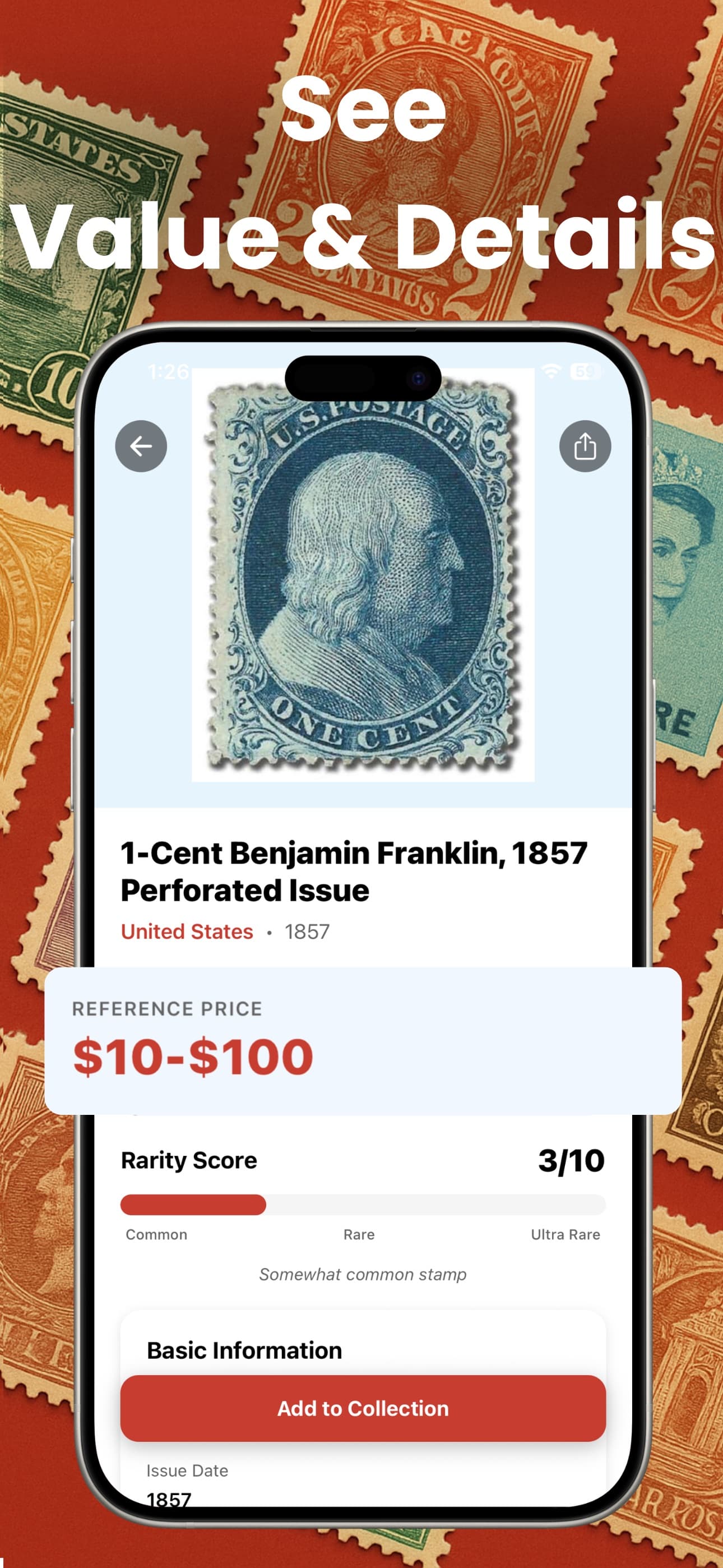
See the issue, year and price
StampGo names the stamp, such as a Great Britain 1d Penny Lilac, with its year and a reference price range.
- 3
Check the rarity score
The 1–10 rarity score shows which stamps to examine for plate numbers, watermarks and condition.
- 4
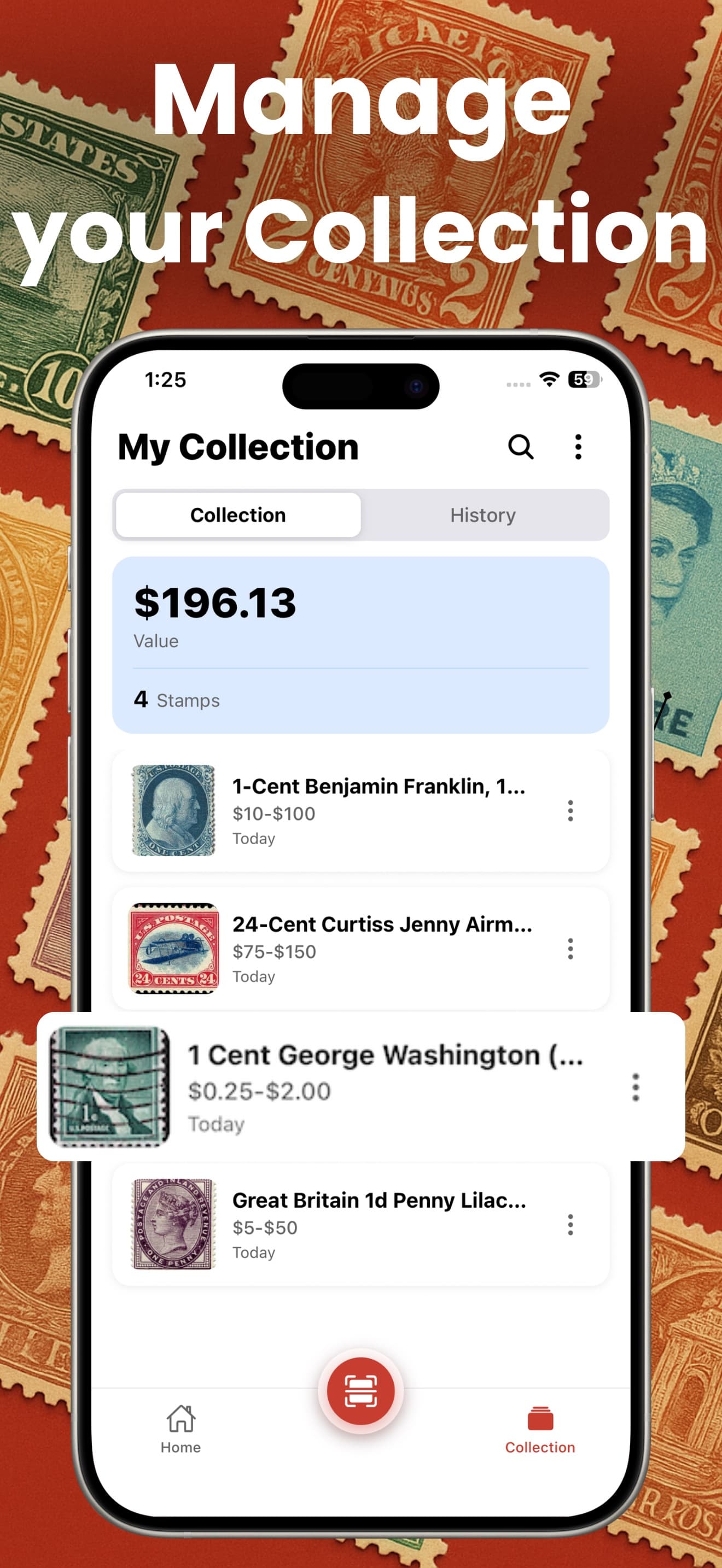
Save and total your collection
Add stamps to your collection and track their combined estimated value.


Téléchargement gratuit sur iOS et Android
Questions fréquentes
Les vieux timbres britanniques ont-ils de la valeur ?
Certains oui. Les timbres victoriens et les fortes valeurs du début du XXe siècle peuvent valoir cher, tandis que la plupart des timbres à partir des années 1930 sont courants et valent quelques centimes.
Quel est le timbre britannique le plus rare ?
Le Penny Red de la planche 77 est l'une des grandes raretés britanniques, avec une poignée d'exemplaires connus. Les Penny Black neufs de la planche 11 et certaines fortes valeurs victoriennes sont également rares.
Le Penny Black est-il le timbre britannique le plus précieux ?
Non. C'est le plus célèbre, mais environ 68 millions ont été imprimés : les exemplaires oblitérés restent abordables. Les Penny Black neufs et les planches rares valent bien davantage.
Peut-on encore utiliser de vieux timbres britanniques ?
Les timbres d'avant la décimalisation (en d et s) ne sont plus valables. Les timbres courants et de Noël sans code-barres ont cessé d'être valables le 31 juillet 2023, Royal Mail ayant organisé un échange. Les commémoratifs restent valables.
Combien vaut un Penny Lilac ?
Le 1d Penny Lilac de 1881 a été imprimé en quantités énormes : la plupart des exemplaires oblitérés valent très peu. Les nuances, types et variétés de dentelure plus rares, ainsi que les beaux exemplaires neufs, valent davantage : vérifiez la variété avant d'en fixer le prix.
