
Valeurs par pays
Timbres de Chine : lesquels ont vraiment de la valeur
Mis à jour le · 6 min de lecture · Par l’équipe StampGo
Réponse rapide
Les timbres chinois sont très demandés : une part plus importante que pour beaucoup de pays a une réelle valeur. Parmi les plus recherchés figurent les émissions de la dynastie Qing à partir de 1878, comme les Grands Dragons et les surcharges Red Revenue, certains timbres de la République populaire des années 1950 à 1970, et le timbre de l'année du Singe de 1980. L'état et l'authenticité sont déterminants, car les faux sont fréquents.
L’essentiel
- Premiers timbres chinois
- Les Grands Dragons, émis sous la dynastie Qing en 1878
- Raretés célèbres
- Les surcharges Red Revenue de 1897 et « Tout le pays est rouge » (1968)
- Timbre moderne le plus connu
- L'année du Singe 1980 (8 fen), premier timbre du zodiaque de la RPC
- Également prisés
- Les timbres de la République populaire des années 1950 à 1970, surtout neufs
- Risque majeur
- Les faux et les réimpressions sont très répandus, surtout pour les émissions rares
- À surveiller
- Les oblitérations de complaisance (CTO), généralement moins cotées que les neufs
Are old Chinese stamps worth money?
Often more than you'd expect. Collector demand in China has grown strongly over recent decades, so Qing dynasty issues, many early People's Republic stamps and certain famous issues sell well, while common later issues stay cheap.
Chinese stamps are a good example of demand driving value. Plenty of Western collections hold a few Chinese stamps picked up decades ago, and those are worth checking properly, especially anything with dragons, Mao Zedong or Cultural Revolution slogans.
What are Chinese stamps worth by era?
Qing dynasty stamps (1878–1911) and Cultural Revolution issues (1966–1976) are the most sought after. Republic-era stamps are mixed, and most issues since the late 1970s are affordable, with a few famous exceptions.
| Era | Key issues | Typical value |
|---|---|---|
| Qing dynasty (1878–1911) | Large Dragons, Small Dragons, Dowager issues, Red Revenue surcharges | Often valuable, especially in fine condition |
| Republic of China (1912–1949) | Junk and Reaper definitives, Sun Yat-sen issues, overprints | Mixed. Many are common, some overprints and varieties are valuable |
| People's Republic (1949–1965) | Early commemoratives and definitives | Mixed. Many unused sets sell well |
| Cultural Revolution (1966–1976) | Mao portraits and quotations, “The Whole Country is Red” | Strong demand; some issues are very valuable |
| 1977–today | Zodiac stamps from 1980, modern commemoratives | Mostly modest, apart from the 1980 Monkey and a few others |
How much is the Chinese monkey stamp worth?
The 1980 Year of the Monkey stamp (8 fen) is China's most famous modern stamp. Unused singles in fine condition typically sell for hundreds to over a thousand dollars, and full sheets for far more. Later monkey-year stamps (1992, 2004, 2016) are common.
Designed by the painter Huang Yongyu and engraved by Jiang Weijie, it was the first stamp in China's zodiac series. Because it's so valuable, it's widely faked. Buy or sell it only through reputable dealers or with a certificate.
What are the rarest Chinese stamps?
The 1897 Red Revenue small “1 dollar” surcharge and “The Whole Country is Red” of 1968 are among China's most famous rarities. Both have sold for very large sums, and both are heavily faked.
“The Whole Country is Red” was withdrawn within a day of its release in 1968 because of a problem with its map, so few legitimate copies exist. The Red Revenue surcharges were revenue stamps overprinted for postal use in 1897, and some surcharge varieties are extremely scarce. See how to tell if a stamp is rare.
How do I check a Chinese stamp's value?
Identify the issue and its catalogue number, check whether it's unused, used or cancelled-to-order, grade the condition, and be skeptical of anything that looks too good to be true. For rare issues, buy or sell only with a certificate.
Many People's Republic stamps were sold to collectors cancelled-to-order (CTO), with a neat postmark and often full gum. CTO stamps are usually worth less than unused ones. For misprints and faked errors, see error stamps.
How do I read the numbers on a Chinese stamp?
Most People's Republic stamps carry a small serial code in the bottom margin that identifies the set, the stamp's position in it and often the year, so they're easier to identify and date than most countries' stamps.
- 1949–1966: commemorative (“Ji”, 纪) and special (“Te”, 特) series numbers, with the stamp's position in the set.
- 1967–1973: Cultural Revolution issues of 1967–70 carry no serial code, and 1970–73 issues use plain numbers.
- 1974–1991: codes beginning with J (commemorative) or T (special), such as “T.46 (1-1) 1980” on the Monkey stamp.
- From 1992: a year-based code, such as “1992-1 (1-1)”.
The code tells you exactly which set a stamp belongs to, but not whether it's genuine. Reprints and fakes copy the codes too.
Are Hong Kong and Taiwan stamps valued like Chinese stamps?
No. Hong Kong, Taiwan (Republic of China) and Macau have their own stamp histories, catalogues and markets. Some are valuable, but each has to be identified and priced on its own terms.
Hong Kong issued stamps under British rule from 1862, with Queen Victoria and later monarchs, and its classic issues are popular with collectors. Taiwan has issued Republic of China stamps since 1949. Knowing which postal authority issued a stamp is the first step, and StampGo's profile shows it.
Étape par étape
How to check Chinese stamp values with StampGo
Chinese inscriptions can be hard to read if you don't know the script. StampGo identifies the issue from a photo and gives a reference price and rarity score.
- 1
Scan the stamp
Tap Scan Now and photograph the stamp flat, filling the frame.
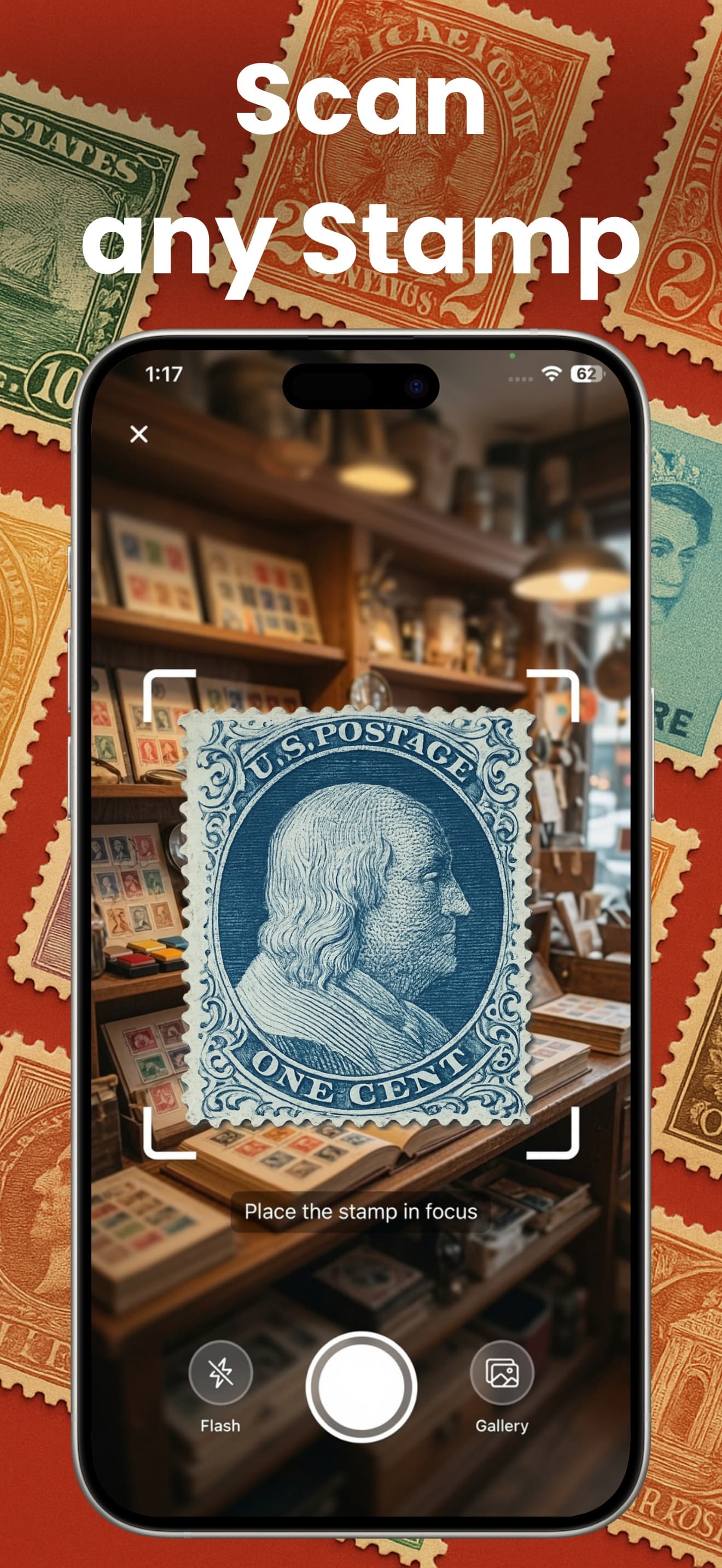
- 2
See the issue and era
StampGo names the stamp and shows its year, postal authority and a reference price range.
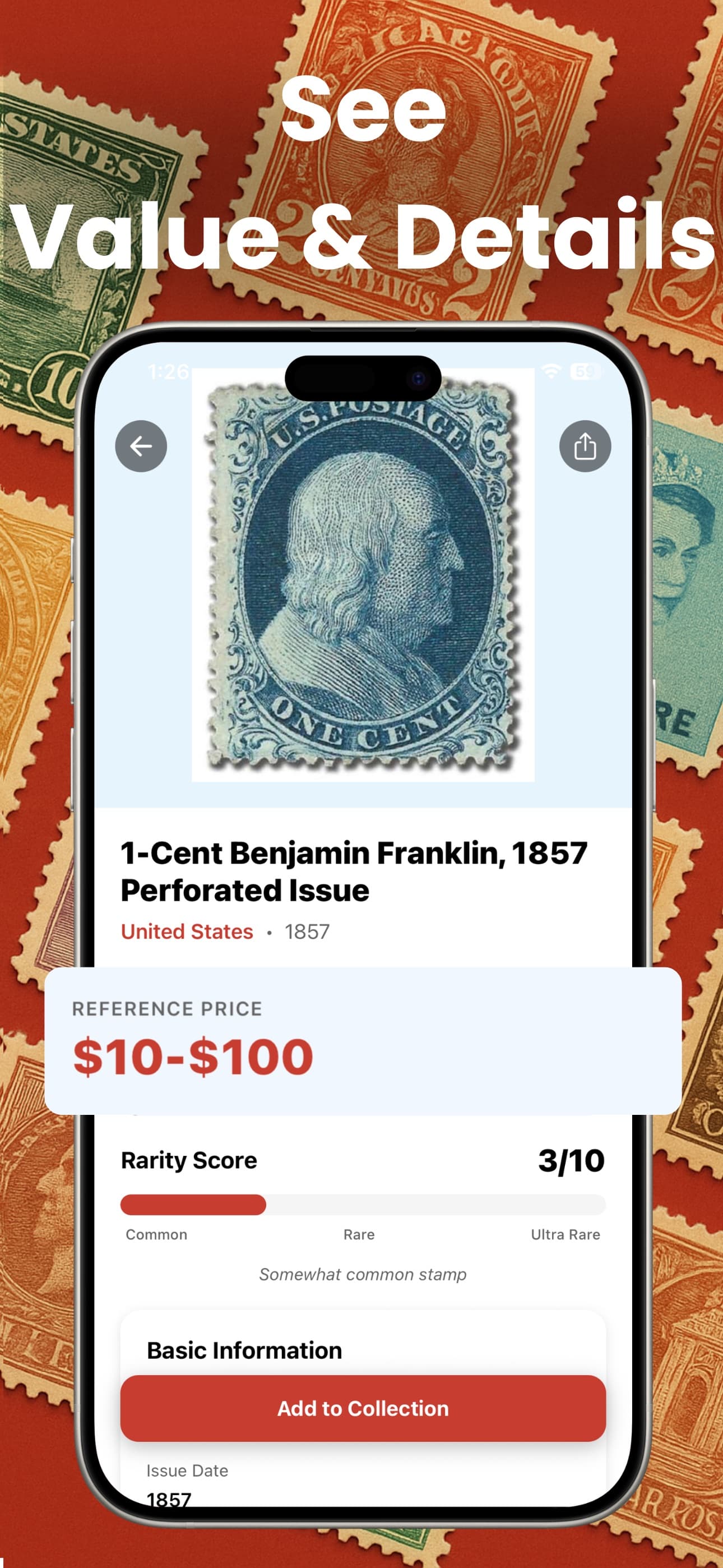
- 3
Prioritize by rarity
High rarity scores flag stamps worth checking carefully for authenticity and condition.
- 4
Save to your collection
Add each stamp to your collection and keep a running total of its estimated value.
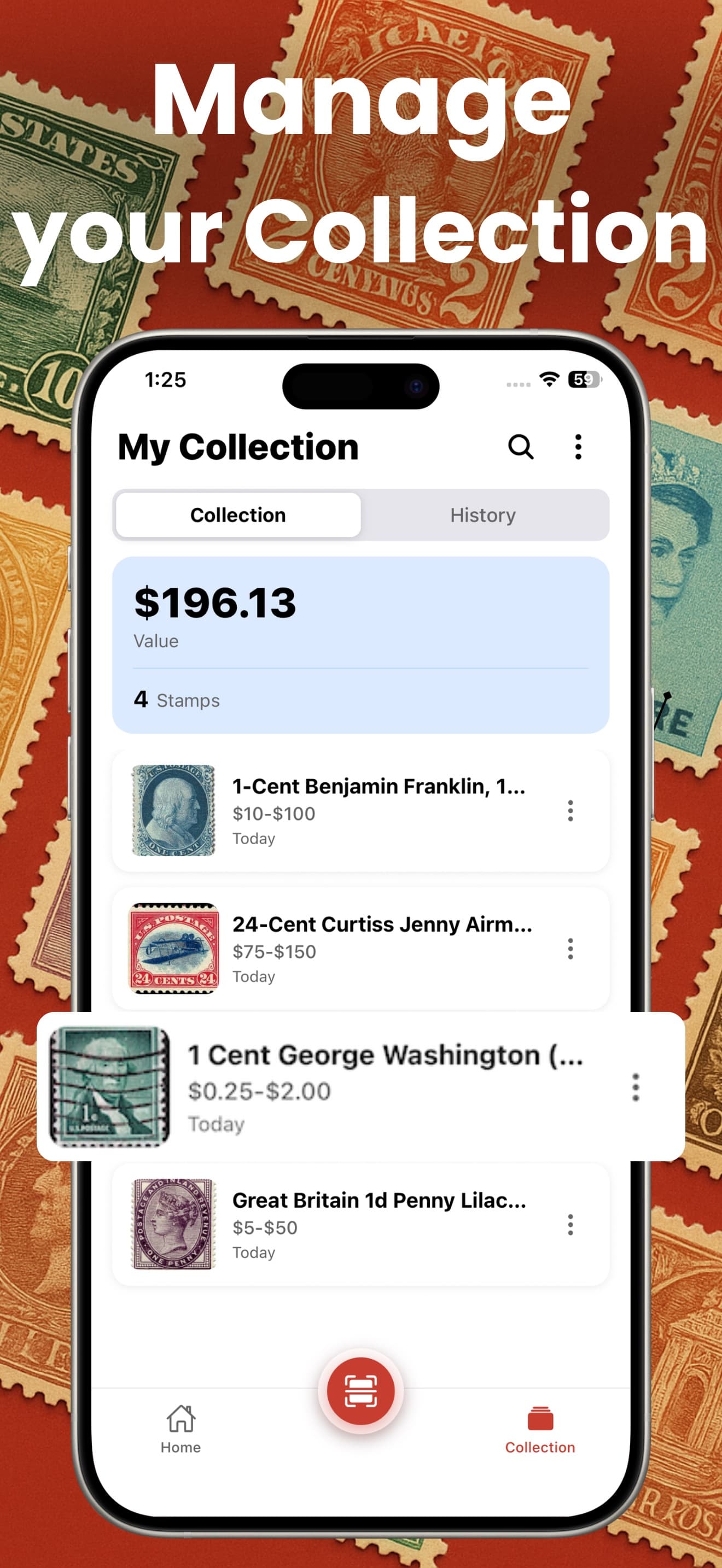


Téléchargement gratuit sur iOS et Android
Questions fréquentes
Les timbres à l'effigie de Mao valent-ils de l'argent ?
Certains oui. Les timbres de la Révolution culturelle représentant Mao ou ses citations sont très demandés, et certaines émissions valent cher, surtout neuves et en séries complètes. Les faux sont très fréquents : vérifiez soigneusement.
Quel est le timbre chinois le plus précieux ?
La petite surcharge « 1 dollar » Red Revenue de 1897 est souvent citée comme la plus précieuse. « Tout le pays est rouge » (1968) est une autre rareté célèbre.
Les timbres du zodiaque chinois ont-ils de la valeur ?
Le Singe de 1980, oui. La plupart des timbres du zodiaque ultérieurs ont été imprimés en grand nombre et restent abordables.
Que signifie CTO sur un timbre chinois ?
Cancelled to order, soit une oblitération de complaisance : des timbres oblitérés par la poste pour être vendus aux collectionneurs plutôt qu'utilisés sur du courrier. Ils valent généralement moins que les exemplaires neufs.
Les timbres chinois des années 1950 valent-ils quelque chose ?
Beaucoup de timbres du début de la République populaire des années 1950 restent abordables, mais les séries complètes neuves, les émissions rares et les exemplaires réellement oblitérés sur lettre peuvent valoir davantage. La demande des collectionneurs en Chine soutient mieux les prix que pour bien d'autres pays de la même époque.
