
Collections et vente
Décoller un timbre d'une enveloppe sans l'abîmer
Mis à jour le · 5 min de lecture · Par l’équipe StampGo
Réponse rapide
Faites flotter le timbre et son papier face vers le haut dans de l'eau froide ou tiède pendant 10 à 30 minutes, jusqu'à ce que le timbre se détache, soulevez-le à la pince, rincez-le, puis faites-le sécher à plat entre des feuilles absorbantes sous un poids léger. Ne trempez jamais un timbre sur une lettre de collection, et testez à part tout papier de couleur.
L’essentiel
- Eau
- Froide ou tiède, jamais chaude. L'eau chaude peut faire couler les encres et ramollir la gomme inégalement
- Durée
- 10 à 30 minutes en général. Laissez le timbre se détacher seul plutôt que de tirer
- Ne jamais tremper
- Les timbres sur lettres de valeur, les plis premier jour ou tout ce qui porte une oblitération intéressante
- Tremper à part
- Les papiers d'enveloppe rouges, kraft et autres papiers colorés, qui déteignent
- Autocollants
- Ils se détachent rarement. Découpez autour ou prolongez le trempage en eau tiède
- Séchage
- À plat, face vers le haut, entre des feuilles absorbantes sous un poids léger
Should I remove the stamp from the envelope at all?
Not always. A stamp on its original envelope can be worth more than the stamp alone when the cover is early, has an unusual rate, route or postmark, or carries a scarce stamp used correctly.
Soaking is fine for ordinary modern mail, which is where most collecting material comes from. It's a mistake on older or unusual covers, and it's irreversible. If an envelope looks old, was sent abroad, carries several stamps, or has registration, censor or airmail markings, keep it whole and ask before touching it.
See first day cover value and are old stamps worth money? for which covers are worth keeping intact.
How do I soak stamps off paper?
Trim the paper around each stamp, float them face-up on cool water, wait until they release on their own, lift them with tongs, rinse off the gum, and dry them flat.
- Trim the envelope paper to roughly 5 mm around each stamp, without cutting the perforations.
- Sort by paper color and stamp type, so anything that bleeds is soaked on its own.
- Float the pieces face-up in a shallow bowl of cool or lukewarm water. Don't crowd them.
- Wait 10–30 minutes. The stamp will separate on its own. Pulling early causes thins.
- Lift each stamp with tongs and rinse the remaining gum off the back in clean water.
- Dry face-up between sheets of blotting paper, kitchen towel or a drying book.
- Flatten under a light, even weight such as a heavy book, for a day.
Which stamps should never be soaked?
Anything on a collectable cover, stamps printed with inks that run, and stamps on strongly colored paper. Test a common example first if you're unsure.
- Collectable covers: early dates, unusual routes, scarce cancels, first day covers.
- Fugitive inks: some classic issues were deliberately printed with inks that run in water to prevent reuse. Test one cheap example first.
- Colored envelope paper: red, orange and manila paper bleeds and stains stamps permanently. Soak these one at a time.
- Stamps with pencil or ink notes you want to keep, and anything with a repair or hinge you're unsure about.
How do I remove self-adhesive stamps?
Modern self-adhesive stamps often refuse to float off. Give them a longer soak in warm water with a drop of dish soap, or simply trim them neatly on paper and collect them that way.
Self-adhesive gum is designed not to release in water. Many collectors accept this and keep modern used stamps on a neat rectangle of paper. If you want them clean, a longer warm soak works on some issues, and citrus-based solvents sold for the purpose work on others, though they need care and good ventilation.
Whatever you use, dry the stamp thoroughly before filing it. Residue left on the back attracts dirt and can stick to album pages.
How do I dry and flatten stamps after soaking?
Lay them face-up on absorbent paper, leave them until they're only slightly damp, then press them flat between clean sheets under a light weight overnight.
- Use blotting paper, plain kitchen towel or a purpose-made drying book. Avoid newsprint, whose ink transfers.
- Don't dry stamps on a radiator or in direct sun. They curl and colors fade.
- Press while very slightly damp for the flattest result.
- Check they're bone dry before filing, or they'll stick in the album.
What do I do with stamps after they've dried?
Check each one for damage, sort them by country into glassine envelopes or a stockbook, and set aside anything that looks scarce for a closer look before it goes into the album.
- Check the back against the light for thins caused by soaking or by an old hinge.
- Look at the perforations. Short or pulled perfs mean the stamp is filler material, not album material.
- Sort by country, then by era, into glassines or a stockbook.
- Set aside anything unusual: older designs, high denominations, odd perforations, anything that looks misprinted.
- Discard nothing valuable-looking because it's damaged. Scarce stamps are collected even with faults.
Soaking sessions are also the best time to start your inventory, since every stamp passes through your hands once. See how to organize a stamp collection.
Étape par étape
How to check a stamp before you soak it with StampGo
The point of scanning first is simple: it tells you whether you're holding a common modern stamp or something that should stay on its envelope.
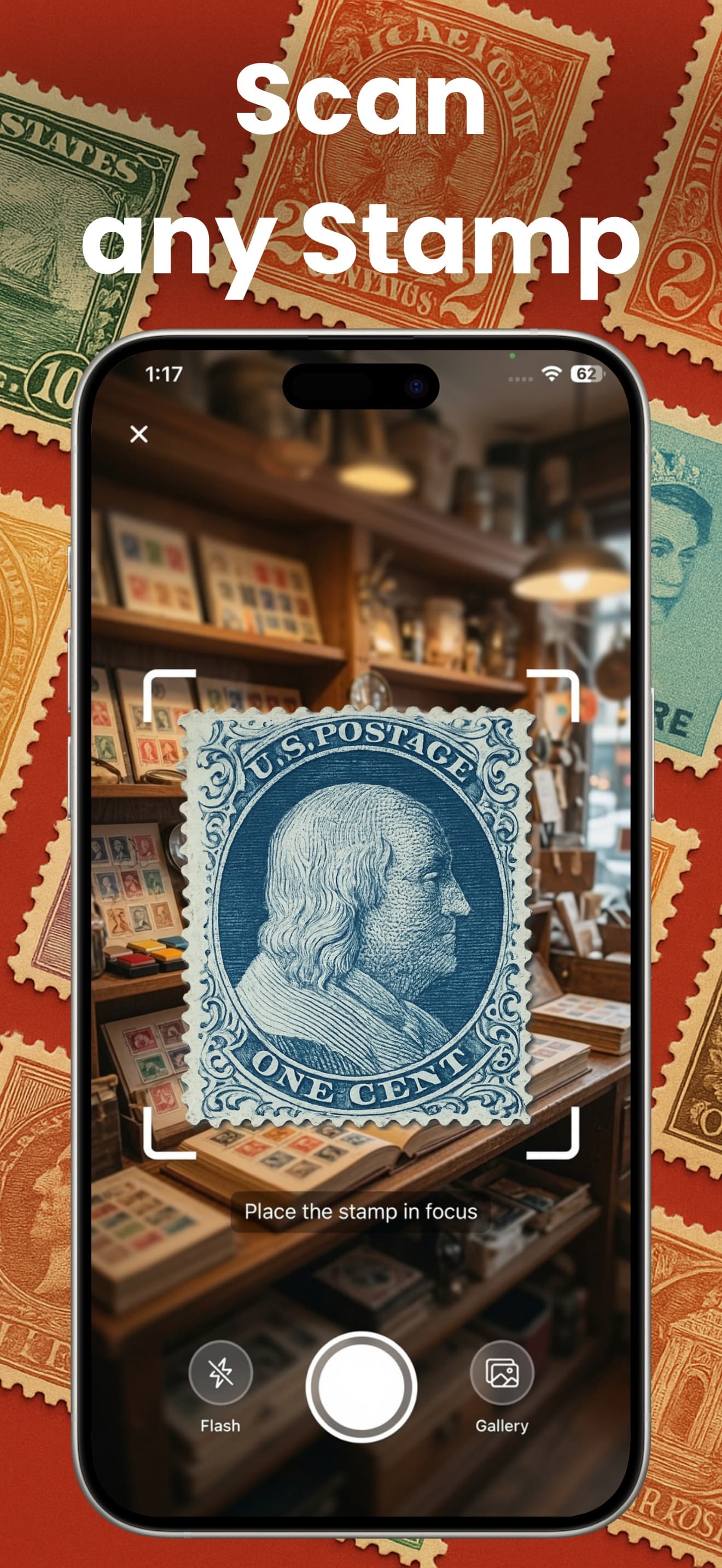
- 1
Scan the stamp while it's still on the cover
Tap Scan Now and photograph the stamp without removing it.
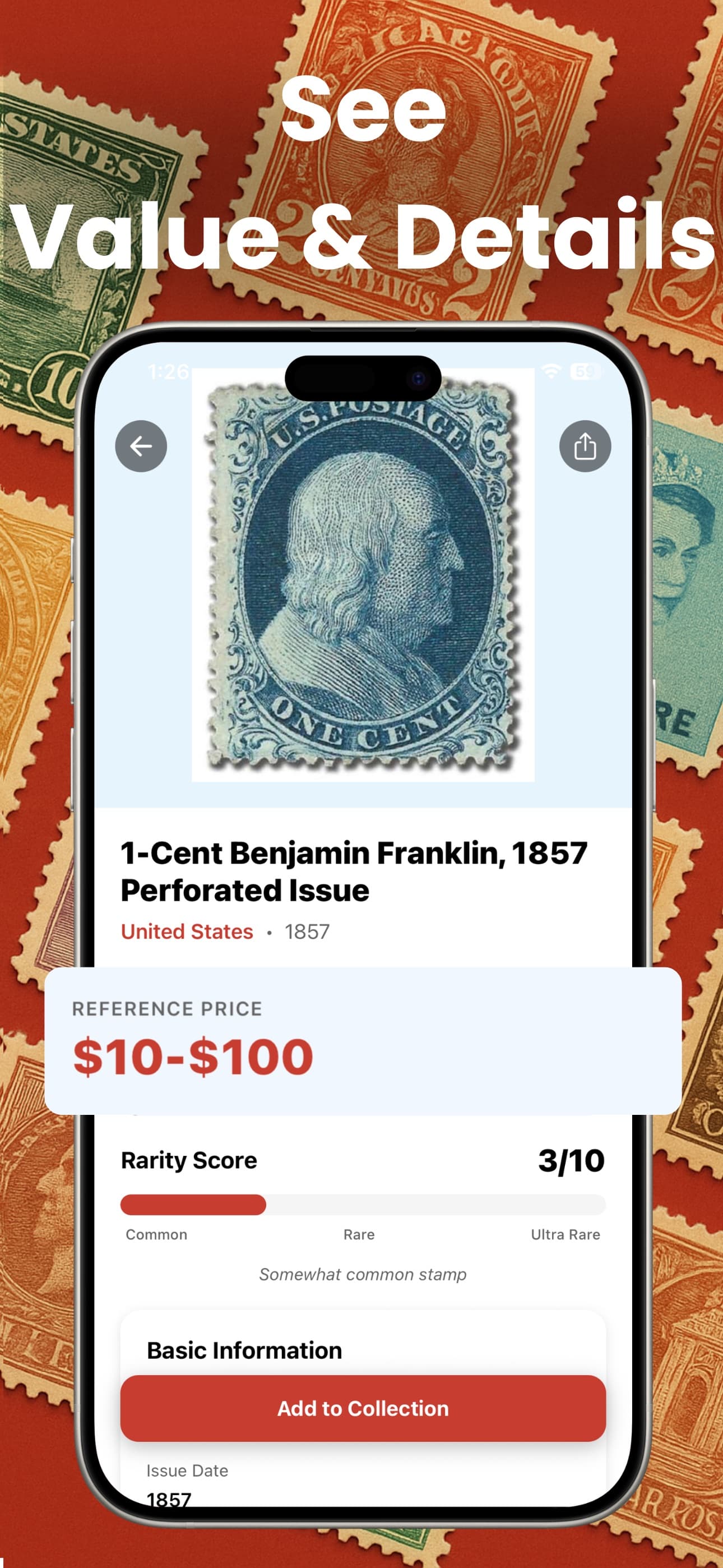
- 2
Check the issue and price range
A common modern issue is safe to soak. A high reference price or rarity score means stop and ask a dealer first.
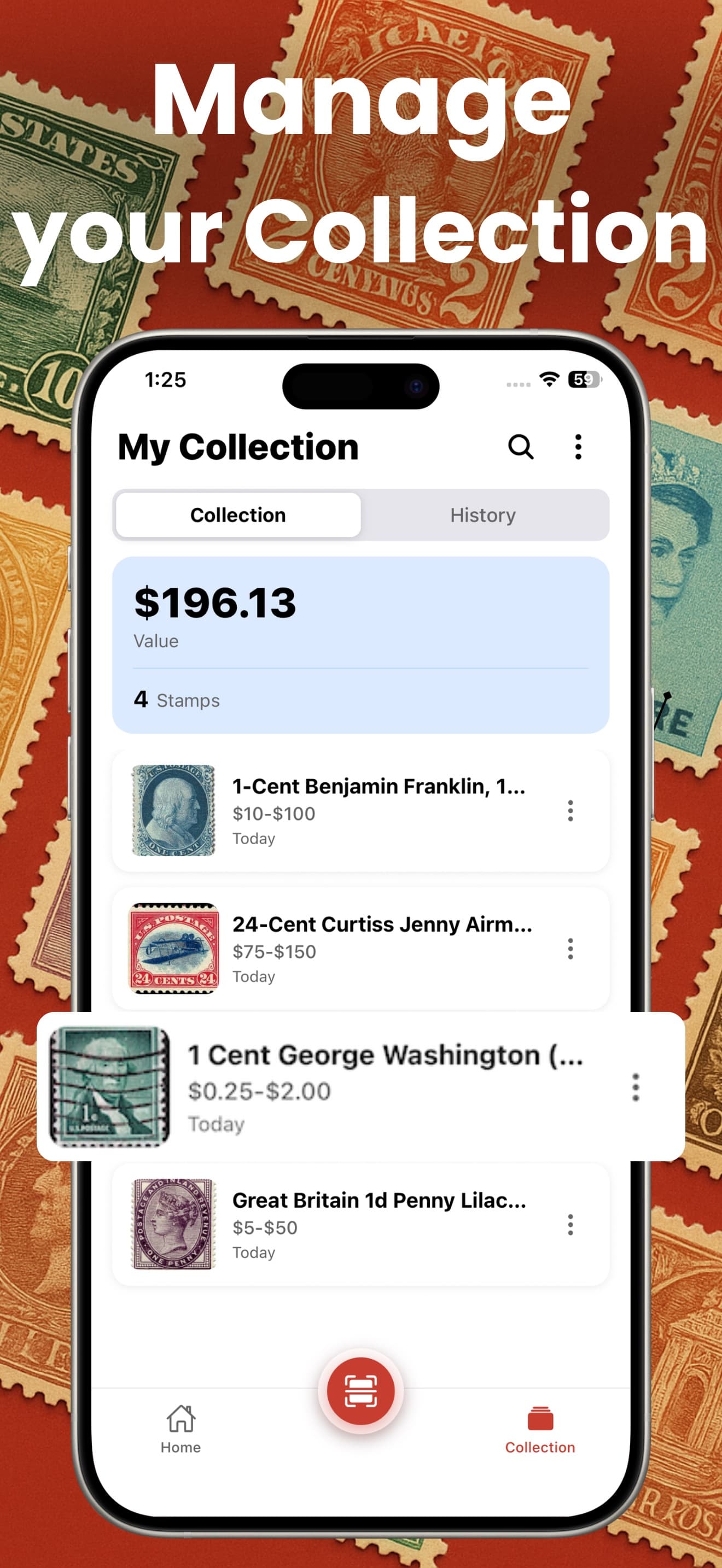
- 3
Save the ones worth keeping whole
Add them to your collection so you remember which covers were set aside, and why.


Téléchargement gratuit sur iOS et Android
Questions fréquentes
Peut-on utiliser un sèche-cheveux ou un micro-ondes ?
Mieux vaut éviter. Les deux risquent de roussir le papier, de fixer l'encre et de gondoler le timbre, et un micro-ondes peut enflammer les films ou fils de sécurité du courrier moderne. L'eau et la patience sont plus sûres et ne coûtent rien.
Puis-je réutiliser un timbre décollé d'une enveloppe ?
Non. Réutiliser un affranchissement déjà oblitéré est une fraude postale. Les timbres décollés du courrier ne servent qu'à la collection.
Pourquoi la couleur de mon timbre a-t-elle coulé au trempage ?
Certaines émissions utilisent des encres fugitives qui se dissolvent dans l'eau, et certains papiers d'enveloppe colorés déteignent sur le timbre. Les deux sont irréversibles, d'où l'intérêt de tester un exemplaire courant avant de tremper un lot.
Faut-il retirer complètement la gomme ?
Pour les timbres oblitérés, oui. Rincez l'ancienne gomme pour que le timbre reste plat et ne colle pas dans l'album. Ne retirez jamais la gomme d'origine d'un timbre neuf : cela détruit l'essentiel de sa valeur.
