
Collezioni e vendita
Come staccare i francobolli dalle buste senza rovinarli
Aggiornato il · 5 min di lettura · A cura del team StampGo
Risposta rapida
Fai galleggiare il francobollo con la sua carta, a faccia in su, in acqua fredda o tiepida per 10-30 minuti finché non si stacca, sollevalo con le pinzette, sciacqualo e fallo asciugare piatto tra fogli assorbenti sotto un peso leggero. Non bagnare mai francobolli su lettere da collezione, e prova a parte qualsiasi carta colorata.
In breve
- Acqua
- Fredda o tiepida, mai calda. L'acqua calda può far colare gli inchiostri e ammorbidire la gomma in modo irregolare
- Tempo
- Di solito 10-30 minuti. Lascia che il francobollo si stacchi da solo invece di tirare
- Non bagnare mai
- Francobolli su lettere di valore, buste primo giorno o qualunque cosa con un annullo interessante
- Bagna a parte
- Carta da buste rossa, avana e altre carte colorate, che stingono
- Autoadesivi
- Spesso non si staccano. Ritaglia intorno o prolunga il bagno tiepido
- Asciugatura
- Piatti, a faccia in su, tra fogli assorbenti sotto un peso leggero
Should I remove the stamp from the envelope at all?
Not always. A stamp on its original envelope can be worth more than the stamp alone when the cover is early, has an unusual rate, route or postmark, or carries a scarce stamp used correctly.
Soaking is fine for ordinary modern mail, which is where most collecting material comes from. It's a mistake on older or unusual covers, and it's irreversible. If an envelope looks old, was sent abroad, carries several stamps, or has registration, censor or airmail markings, keep it whole and ask before touching it.
See first day cover value and are old stamps worth money? for which covers are worth keeping intact.
How do I soak stamps off paper?
Trim the paper around each stamp, float them face-up on cool water, wait until they release on their own, lift them with tongs, rinse off the gum, and dry them flat.
- Trim the envelope paper to roughly 5 mm around each stamp, without cutting the perforations.
- Sort by paper color and stamp type, so anything that bleeds is soaked on its own.
- Float the pieces face-up in a shallow bowl of cool or lukewarm water. Don't crowd them.
- Wait 10–30 minutes. The stamp will separate on its own. Pulling early causes thins.
- Lift each stamp with tongs and rinse the remaining gum off the back in clean water.
- Dry face-up between sheets of blotting paper, kitchen towel or a drying book.
- Flatten under a light, even weight such as a heavy book, for a day.
Which stamps should never be soaked?
Anything on a collectable cover, stamps printed with inks that run, and stamps on strongly colored paper. Test a common example first if you're unsure.
- Collectable covers: early dates, unusual routes, scarce cancels, first day covers.
- Fugitive inks: some classic issues were deliberately printed with inks that run in water to prevent reuse. Test one cheap example first.
- Colored envelope paper: red, orange and manila paper bleeds and stains stamps permanently. Soak these one at a time.
- Stamps with pencil or ink notes you want to keep, and anything with a repair or hinge you're unsure about.
How do I remove self-adhesive stamps?
Modern self-adhesive stamps often refuse to float off. Give them a longer soak in warm water with a drop of dish soap, or simply trim them neatly on paper and collect them that way.
Self-adhesive gum is designed not to release in water. Many collectors accept this and keep modern used stamps on a neat rectangle of paper. If you want them clean, a longer warm soak works on some issues, and citrus-based solvents sold for the purpose work on others, though they need care and good ventilation.
Whatever you use, dry the stamp thoroughly before filing it. Residue left on the back attracts dirt and can stick to album pages.
How do I dry and flatten stamps after soaking?
Lay them face-up on absorbent paper, leave them until they're only slightly damp, then press them flat between clean sheets under a light weight overnight.
- Use blotting paper, plain kitchen towel or a purpose-made drying book. Avoid newsprint, whose ink transfers.
- Don't dry stamps on a radiator or in direct sun. They curl and colors fade.
- Press while very slightly damp for the flattest result.
- Check they're bone dry before filing, or they'll stick in the album.
What do I do with stamps after they've dried?
Check each one for damage, sort them by country into glassine envelopes or a stockbook, and set aside anything that looks scarce for a closer look before it goes into the album.
- Check the back against the light for thins caused by soaking or by an old hinge.
- Look at the perforations. Short or pulled perfs mean the stamp is filler material, not album material.
- Sort by country, then by era, into glassines or a stockbook.
- Set aside anything unusual: older designs, high denominations, odd perforations, anything that looks misprinted.
- Discard nothing valuable-looking because it's damaged. Scarce stamps are collected even with faults.
Soaking sessions are also the best time to start your inventory, since every stamp passes through your hands once. See how to organize a stamp collection.
Passo dopo passo
How to check a stamp before you soak it with StampGo
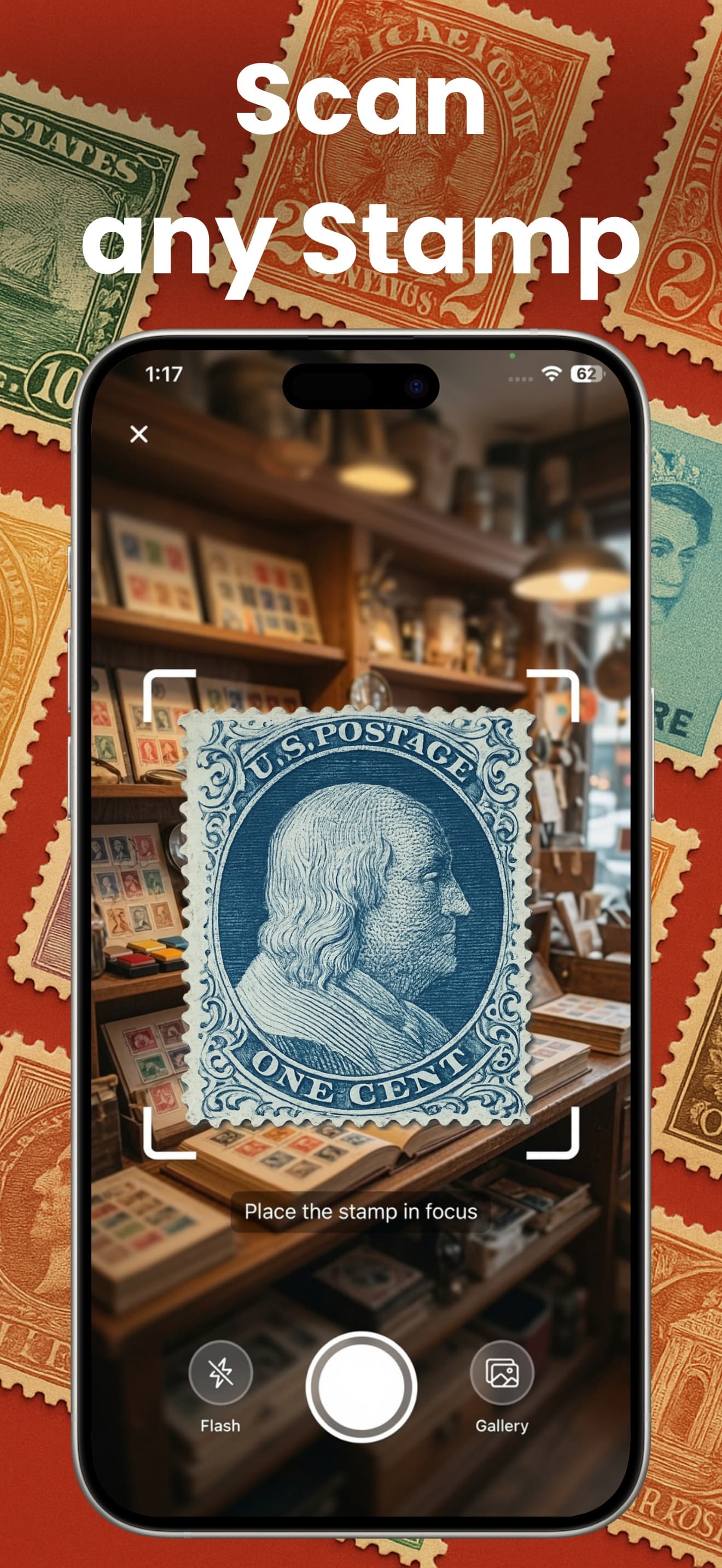
The point of scanning first is simple: it tells you whether you're holding a common modern stamp or something that should stay on its envelope.
- 1
Scan the stamp while it's still on the cover
Tap Scan Now and photograph the stamp without removing it.
- 2
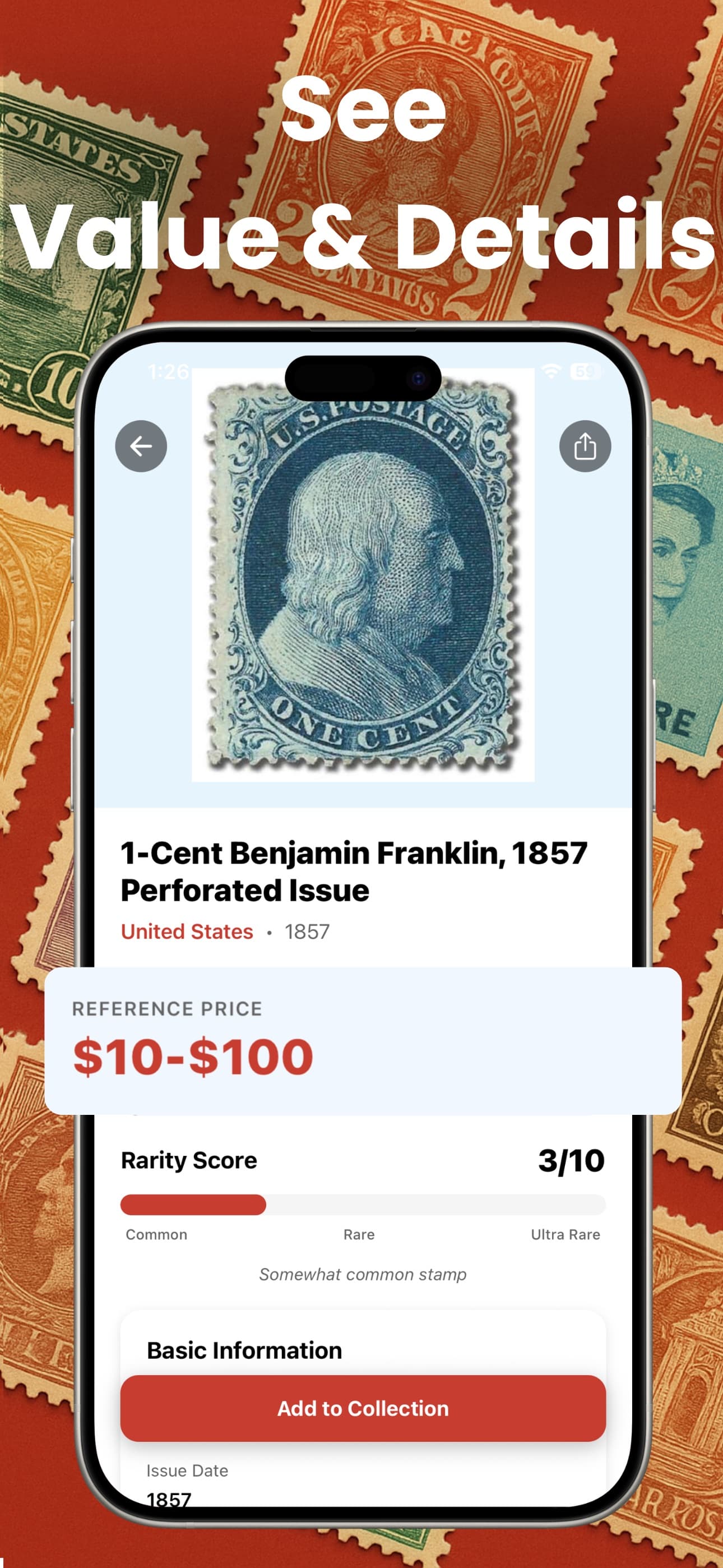
Check the issue and price range
A common modern issue is safe to soak. A high reference price or rarity score means stop and ask a dealer first.
- 3
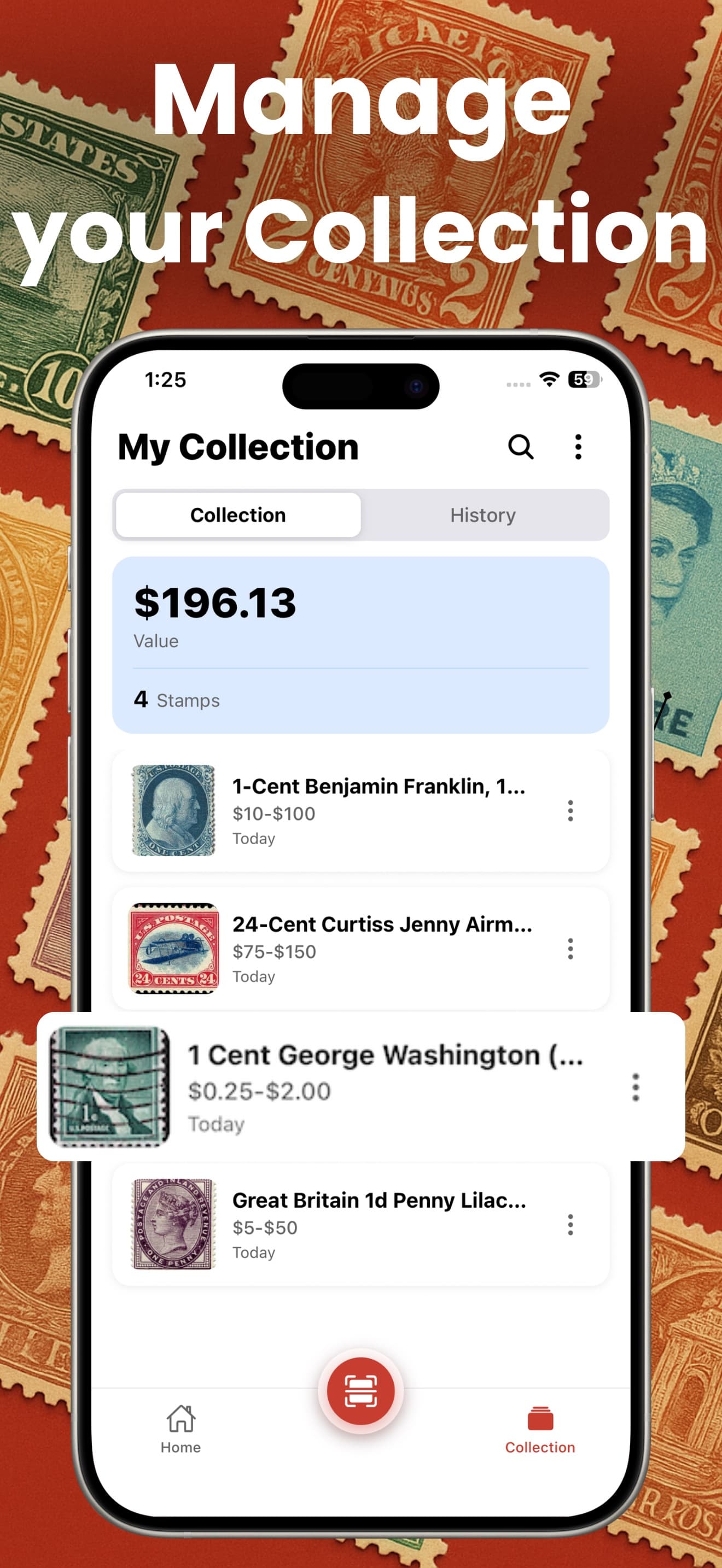
Save the ones worth keeping whole
Add them to your collection so you remember which covers were set aside, and why.


Download gratuito per iOS e Android
Domande frequenti
Posso usare phon o microonde per staccare i francobolli?
Meglio di no. Entrambi rischiano di bruciacchiare la carta, fissare l'inchiostro e ondulare il francobollo, e il microonde può incendiare pellicole o fili di sicurezza della posta moderna. Acqua e pazienza sono più sicure e non costano nulla.
Posso riutilizzare un francobollo staccato da una busta?
No. Riutilizzare un'affrancatura già annullata è una frode postale. I francobolli staccati dalla posta servono solo a collezionare.
Perché il colore del mio francobollo è colato nel bagno?
Alcune emissioni usano inchiostri fugaci che si sciolgono in acqua, e certe carte da buste colorate stingono sul francobollo. Entrambi i danni sono permanenti, per questo conviene provare con un esemplare comune prima di bagnare un lotto.
Devo rimuovere del tutto la gomma?
Sui francobolli usati sì. Sciacqua via la vecchia gomma così il francobollo resta piatto e non si incolla nell'album. Non tentare mai di togliere la gomma originale da un francobollo nuovo: ne distrugge gran parte del valore.
