
Saml og sælg
Sådan får du frimærker af kuverter uden at ødelægge dem
Opdateret · 5 min. læsning · StampGo-teamet
Kort svar
Lad mærket og papiret flyde med billedsiden opad i koldt eller lunkent vand i 10-30 minutter, til mærket slipper, løft det med pincet, skyl det, og tør det fladt mellem sugende ark under en let vægt. Udblød aldrig mærker på samlerværdige breve, og test farvet papir separat.
Nøglefakta
- Vand
- Koldt eller lunkent, aldrig varmt. Varmt vand kan få tryksværte til at løbe og gummien til at blive ujævnt blød
- Tid
- Som regel 10-30 minutter. Lad mærket slippe af sig selv i stedet for at trække
- Udblød aldrig
- Mærker på værdifulde breve, førstedagskuverter eller noget med et interessant stempel
- Udblød separat
- Rødt, brunt og andet farvet kuvertpapir, der smitter af
- Selvklæbende
- Slipper ofte ikke. Klip rundt om dem, eller udblød længere i lunkent vand
- Tørring
- Fladt, billedsiden opad, mellem sugende ark under en let vægt
Should I remove the stamp from the envelope at all?
Not always. A stamp on its original envelope can be worth more than the stamp alone when the cover is early, has an unusual rate, route or postmark, or carries a scarce stamp used correctly.
Soaking is fine for ordinary modern mail, which is where most collecting material comes from. It's a mistake on older or unusual covers, and it's irreversible. If an envelope looks old, was sent abroad, carries several stamps, or has registration, censor or airmail markings, keep it whole and ask before touching it.
See first day cover value and are old stamps worth money? for which covers are worth keeping intact.
How do I soak stamps off paper?
Trim the paper around each stamp, float them face-up on cool water, wait until they release on their own, lift them with tongs, rinse off the gum, and dry them flat.
- Trim the envelope paper to roughly 5 mm around each stamp, without cutting the perforations.
- Sort by paper color and stamp type, so anything that bleeds is soaked on its own.
- Float the pieces face-up in a shallow bowl of cool or lukewarm water. Don't crowd them.
- Wait 10–30 minutes. The stamp will separate on its own. Pulling early causes thins.
- Lift each stamp with tongs and rinse the remaining gum off the back in clean water.
- Dry face-up between sheets of blotting paper, kitchen towel or a drying book.
- Flatten under a light, even weight such as a heavy book, for a day.
Which stamps should never be soaked?
Anything on a collectable cover, stamps printed with inks that run, and stamps on strongly colored paper. Test a common example first if you're unsure.
- Collectable covers: early dates, unusual routes, scarce cancels, first day covers.
- Fugitive inks: some classic issues were deliberately printed with inks that run in water to prevent reuse. Test one cheap example first.
- Colored envelope paper: red, orange and manila paper bleeds and stains stamps permanently. Soak these one at a time.
- Stamps with pencil or ink notes you want to keep, and anything with a repair or hinge you're unsure about.
How do I remove self-adhesive stamps?
Modern self-adhesive stamps often refuse to float off. Give them a longer soak in warm water with a drop of dish soap, or simply trim them neatly on paper and collect them that way.
Self-adhesive gum is designed not to release in water. Many collectors accept this and keep modern used stamps on a neat rectangle of paper. If you want them clean, a longer warm soak works on some issues, and citrus-based solvents sold for the purpose work on others, though they need care and good ventilation.
Whatever you use, dry the stamp thoroughly before filing it. Residue left on the back attracts dirt and can stick to album pages.
How do I dry and flatten stamps after soaking?
Lay them face-up on absorbent paper, leave them until they're only slightly damp, then press them flat between clean sheets under a light weight overnight.
- Use blotting paper, plain kitchen towel or a purpose-made drying book. Avoid newsprint, whose ink transfers.
- Don't dry stamps on a radiator or in direct sun. They curl and colors fade.
- Press while very slightly damp for the flattest result.
- Check they're bone dry before filing, or they'll stick in the album.
What do I do with stamps after they've dried?
Check each one for damage, sort them by country into glassine envelopes or a stockbook, and set aside anything that looks scarce for a closer look before it goes into the album.
- Check the back against the light for thins caused by soaking or by an old hinge.
- Look at the perforations. Short or pulled perfs mean the stamp is filler material, not album material.
- Sort by country, then by era, into glassines or a stockbook.
- Set aside anything unusual: older designs, high denominations, odd perforations, anything that looks misprinted.
- Discard nothing valuable-looking because it's damaged. Scarce stamps are collected even with faults.
Soaking sessions are also the best time to start your inventory, since every stamp passes through your hands once. See how to organize a stamp collection.
Trin for trin
How to check a stamp before you soak it with StampGo
The point of scanning first is simple: it tells you whether you're holding a common modern stamp or something that should stay on its envelope.
- 1
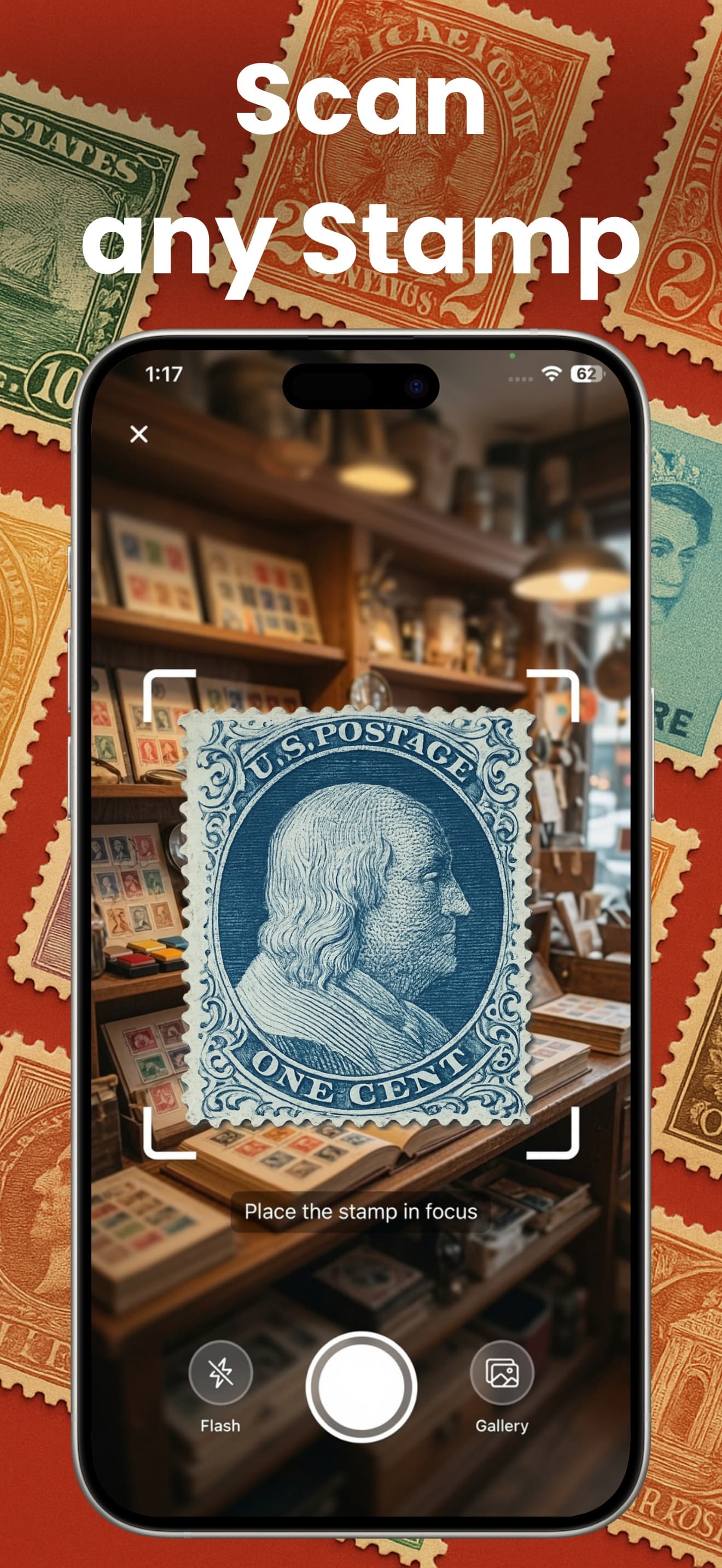
Scan the stamp while it's still on the cover
Tap Scan Now and photograph the stamp without removing it.
- 2
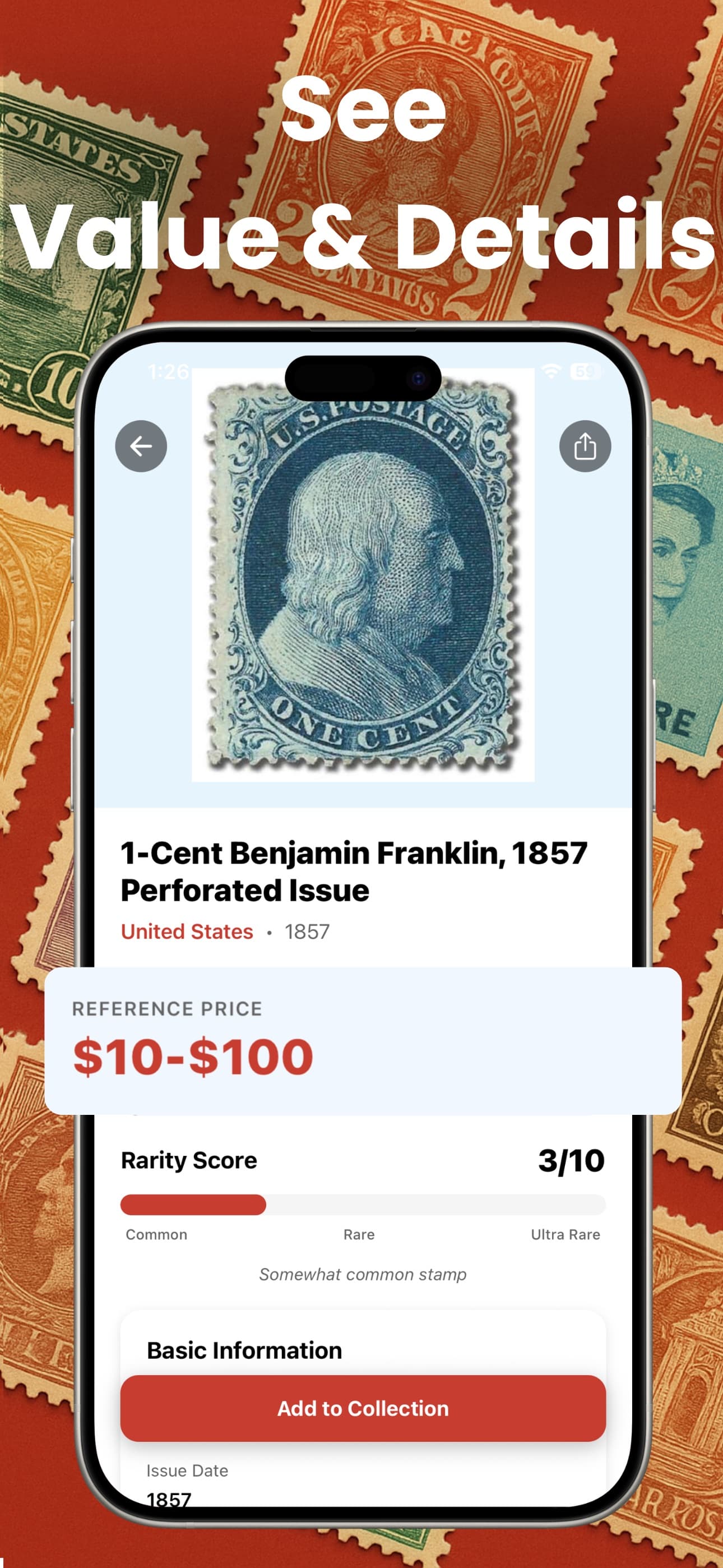
Check the issue and price range
A common modern issue is safe to soak. A high reference price or rarity score means stop and ask a dealer first.
- 3
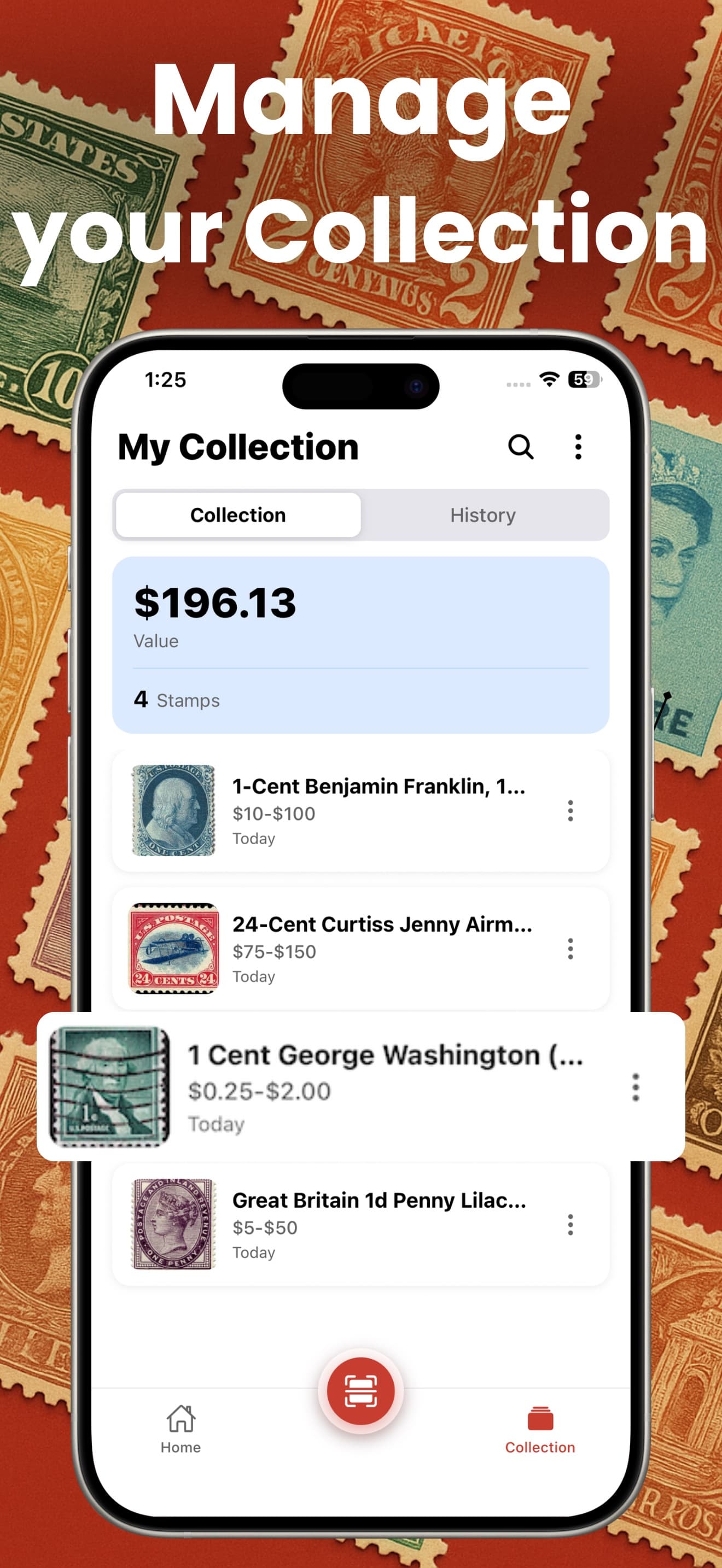
Save the ones worth keeping whole
Add them to your collection so you remember which covers were set aside, and why.


Gratis at hente til iOS og Android
Ofte stillede spørgsmål
Kan jeg bruge hårtørrer eller mikroovn til at få mærker af?
Helst ikke. Begge dele risikerer at svide papiret, fiksere tryksværten og få mærket til at bølge, og i en mikroovn kan folier eller sikkerhedstråde i moderne post antændes. Vand og tålmodighed er sikrere og koster intet.
Må jeg genbruge et mærke, jeg har fået af en kuvert?
Nej. At genbruge allerede stemplet porto er svindel. Mærker taget af post er kun til samlingen.
Hvorfor løb farven på mit mærke under udblødningen?
Nogle udgaver bruger uægte tryksværter, der opløses i vand, og visse farvede kuvertpapirer smitter af på mærket. Begge skader er varige, så test et almindeligt eksemplar, før du udbløder et helt hold.
Skal jeg fjerne gummien helt?
På stemplede mærker, ja. Skyl den gamle gummi af, så mærket ligger fladt og ikke klæber i albummet. Fjern aldrig den originale gummi fra et ubrugt mærke: det ødelægger størstedelen af værdien.
