
Frimærker efter land
Tyske frimærker: hvad gamle udgaver er værd
Opdateret · 5 min. læsning · StampGo-teamet
Kort svar
De fleste tyske mærker fra 1900 til 1945, inklusive 1920'ernes inflationsudgaver og Tredje Riges mærker, er meget almindelige og øre værd. Værdien ligger i de gamle tyske stater før 1871, som det bayerske »Schwarzer Einser« fra 1849, i tidlige rigsudgaver i god stand, i sjældne varianter og i visse efterkrigsobjekter. StampGo genkender tyske mærker på et foto.
Nøglefakta
- Første tyske mærke
- Bayerns 1 kreuzer »Schwarzer Einser«, 1849
- Gamle tyske stater
- Bayern, Preussen, Sachsen, Baden, Württemberg med flere udsendte mærker før 1871
- Standardkatalog
- Michel (handlere angiver Michel-numre)
- Inflationstiden
- 1920'ernes mærker i enorme oplag, pålydende op til milliarder mark. Som regel øre
- Tredje Rige (1933–1945)
- Overvejende meget almindelige. Brugsmærker med Hitler er lidt værd
- Berømt sjældenhed
- Badens farvefejl på 9 kreuzer fra 1851
What are German stamps worth by era?
Stamps of the old German states (1849–1867) are the most valuable group. Values drop sharply for the 20th century, when inflation-era and Third Reich stamps were printed in enormous numbers.
| Era | Key issues | Typical value |
|---|---|---|
| Old German states (1849–1867) | Bavaria, Prussia, Saxony, Baden, Württemberg, Thurn and Taxis | Many are valuable, especially unused or on cover |
| North German Confederation and early Reich (1868–1899) | Eagle and numeral issues | Common values are modest; better items and fine condition command more |
| Germania and inflation era (1900–1923) | Germania definitives, 1920s inflation surcharges | Very common, mostly cents |
| Weimar and Third Reich (1924–1945) | Hindenburg and Hitler definitives, commemoratives | Mostly common. Some souvenir sheets and varieties sell for more |
| Occupation, West and East Germany (1945–1990) | Allied occupation issues, Bundespost, DDR | Mostly common. Certain early issues and errors are worth more |
Which German stamps are worth money?
Stamps from the old German states before 1871 are the most likely to be valuable, along with scarce varieties, some souvenir sheets such as the 1935 OSTROPA sheet, and major errors like the Baden 9 kreuzer.
- Bavaria's Schwarzer Einser (1849), the first German stamp.
- Saxony's 3 pfennig red (1850), known as the “Sachsen Dreier”.
- Other state issues from Prussia, Baden, Württemberg, Hanover and Thurn and Taxis, especially unused or on cover.
- The 1935 OSTROPA souvenir sheet, a well-known Third Reich item.
- Errors and scarce varieties, identified using the Michel catalogue.
Are WW2 German stamps worth anything?
Most aren't. Third Reich stamps, including the common Hitler-head definitives, were printed in enormous quantities and usually sell for cents. The exceptions are some souvenir sheets, overprints for occupied territories, scarce varieties and genuine postal history.
Wartime propaganda forgeries and occupation overprints have been widely faked, so expensive items need a certificate. German expertizers, organized in the BPP (Bund Philatelistischer Prüfer), mark or certify the genuine ones.
Are German inflation stamps worth anything?
Usually not. During the 1923 hyperinflation, stamps were issued with face values in the millions and billions of marks and printed in vast numbers, so most sell for cents today, however impressive they look.
They're a vivid history lesson, and a few varieties and covers showing extraordinary postal rates interest specialists, but a pile of inflation stamps is rarely worth much.
How do I check a German stamp's value?
Identify the issuing state or period, find the Michel number, check for varieties and grade the condition, then compare recent sales. For the old German states, certificates are common because forgeries are widespread.
Inscriptions help you place a stamp. “Bayern” is Bavaria, “Preussen” is Prussia, “Sachsen” is Saxony and “Württemberg” is Württemberg. Stamps of the German Reich read “Reichspost” until 1902 and “Deutsches Reich” from 1902 to 1945. After the war, “Deutsche Post” appeared on early occupation and East German issues, “Deutsche Bundespost” on most West German stamps, and simply “Deutschland” on stamps of reunified Germany from 1995. See how to identify stamps and how to tell if a stamp is rare.
What are German colonial stamps worth?
Stamps of the former German colonies (roughly 1897–1914) are popular with collectors and generally worth more than German stamps of the same period, especially high values, unused sets, and genuine used copies with clear colonial postmarks.
Germany's colonies, including German East Africa, German South West Africa, Cameroon, Togo, Samoa, New Guinea and Kiautschou in China, first used overprinted German stamps and then the “Yacht” design showing the imperial yacht Hohenzollern. Low values are affordable; the mark values and early overprints are where the money is.
Two cautions. Many colonial stamps carry postmarks applied later, sometimes with genuine cancelling devices, and overprints are frequently forged. A certificate from a German BPP expert is standard for the better items.
Are West German (Bundespost) stamps worth anything?
Most are common, but a few early issues from 1949–1955 are worth real money, especially unused and never hinged. The 1951–52 “Posthorn” definitives and some early commemoratives are the ones to check.
From the late 1950s onward, West German stamps were produced and saved in large numbers and are rarely worth more than a few cents. As with other countries, condition and original gum make the difference on the better early issues.
Trin for trin
How to check German stamp values with StampGo
StampGo reads German inscriptions and designs from a photo and names the issue, so you can pick out the old-states stamps and scarce issues from the common ones.
- 1
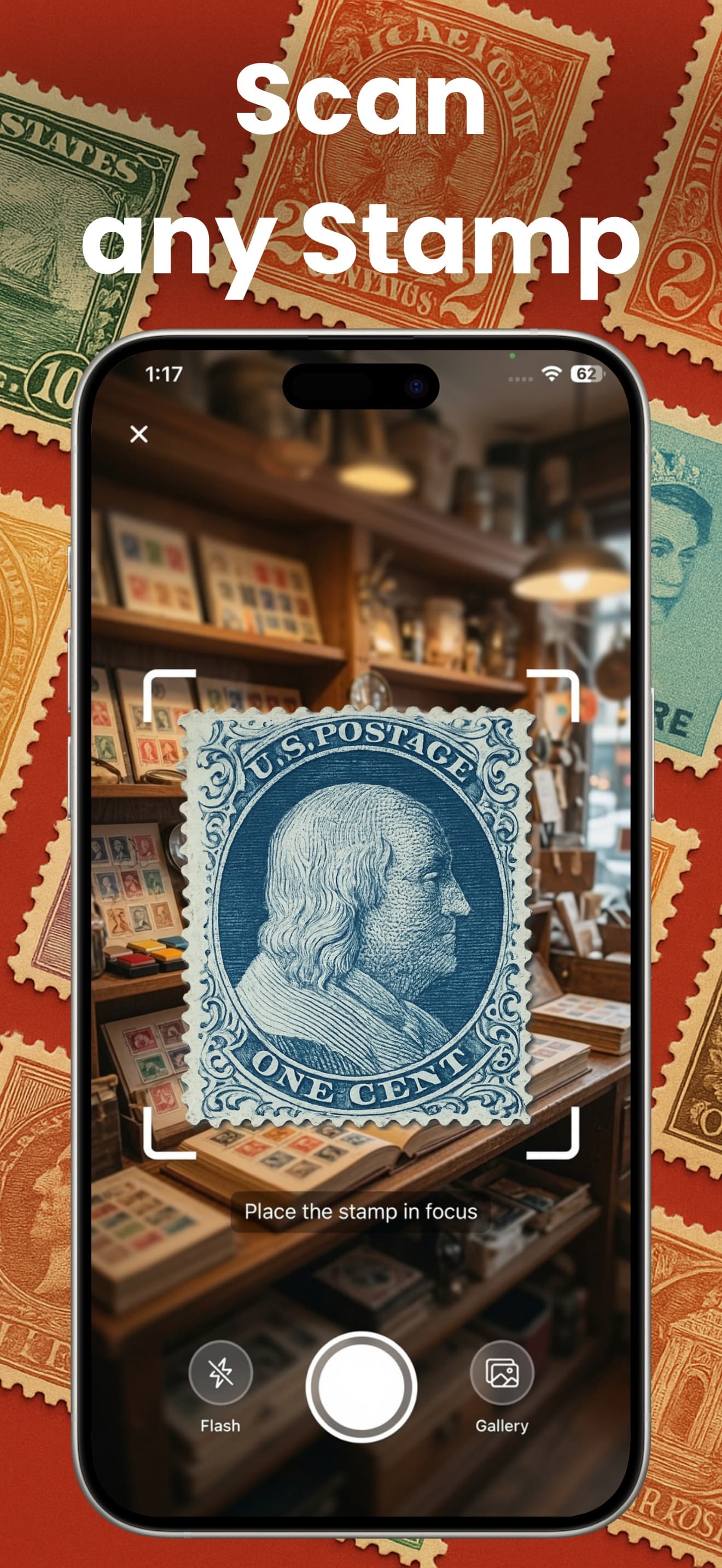
Scan the stamp
Tap Scan Now and photograph one stamp at a time.
- 2
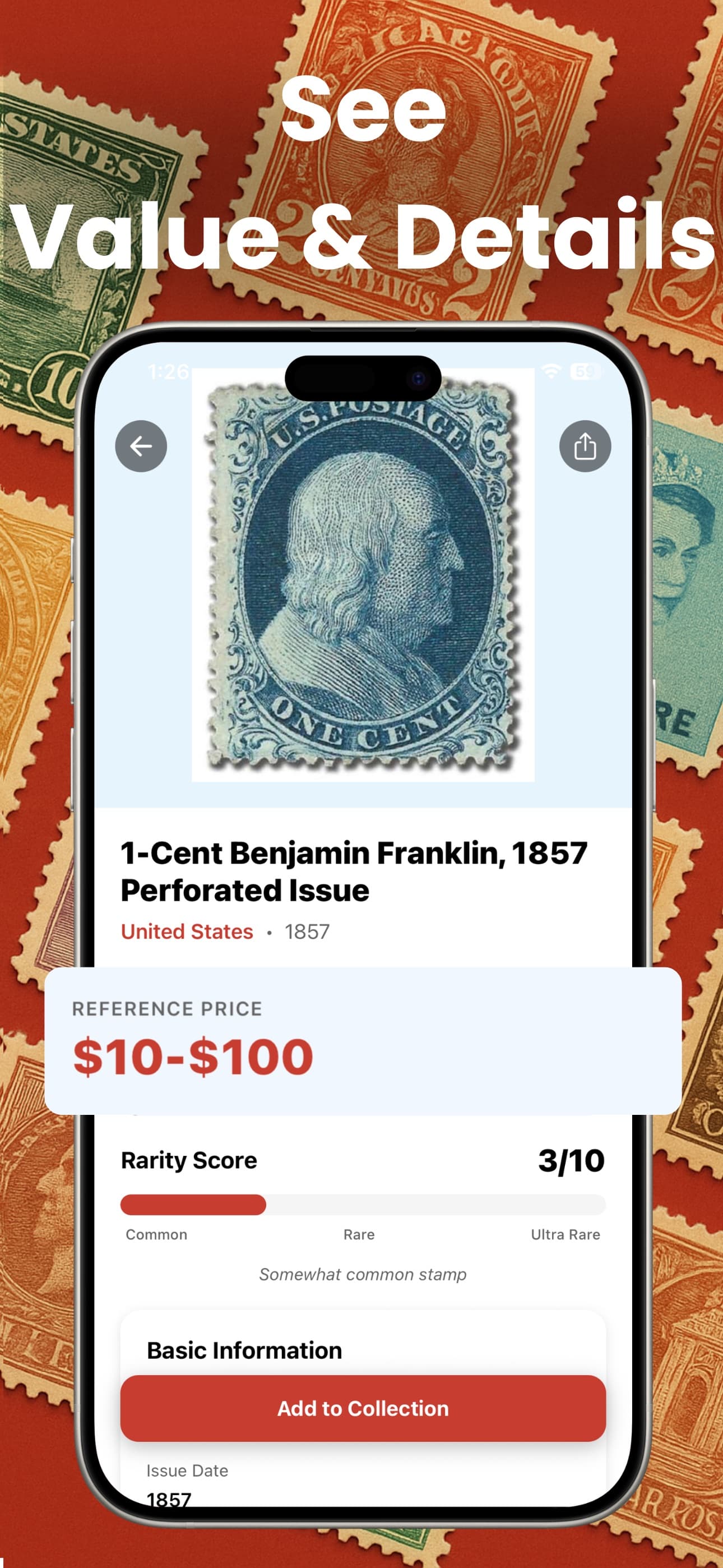
See the state or period and price
StampGo shows the issue, country or state, year and a reference price range.
- 3
Use rarity to prioritize
High rarity scores point to the stamps worth checking in Michel, or sending for a certificate.
- 4
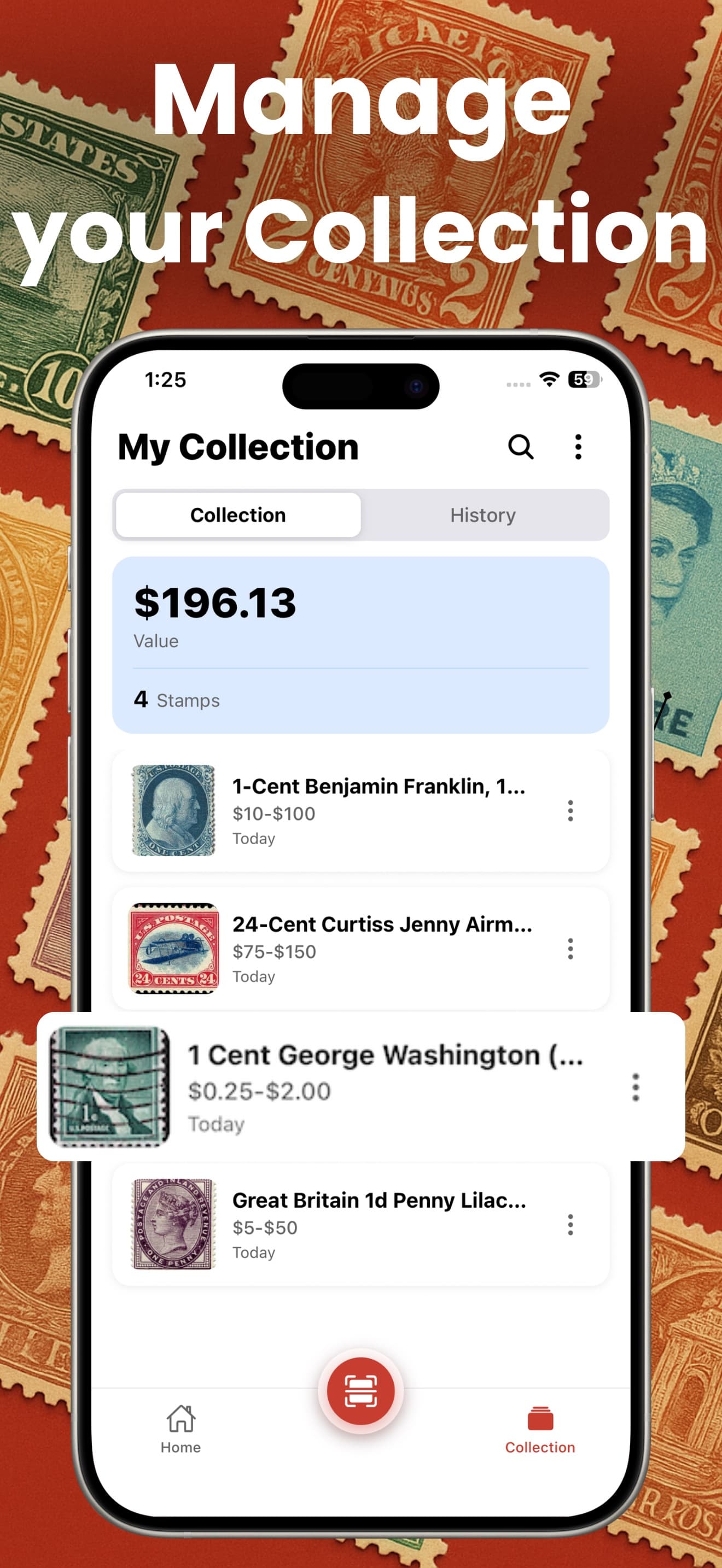
Save your finds
Add them to your collection and track the total estimated value.


Gratis at hente til iOS og Android
Ofte stillede spørgsmål
Hvilket tysk frimærke er dyrest?
Badens farvefejl på 9 kreuzer fra 1851 nævnes normalt som det dyreste tyske frimærke. Andre store sjældenheder kommer fra de gamle tyske stater, som visse udgaver fra Bayern og Sachsen i exceptionel stand.
Er Hitler-mærker noget værd?
De fleste brugsmærker med Hitlers portræt er meget almindelige og øre værd. Enkelte miniark, varianter og breve er mere værd.
Er DDR-frimærker værdifulde?
De fleste DDR-mærker er almindelige. Nogle få tidlige udgaver, varianter og fejltryk søges af specialister.
Hvilket katalog bruges til tyske frimærker?
Michel-kataloget er standarden for tyske frimærker, og handlere angiver normalt Michel-numre.
