
Berømte frimærker
Førstedagskuverter: hvad dine er værd, årti for årti
Opdateret · 5 min. læsning · StampGo-teamet
Kort svar
De fleste førstedagskuverter (FDC) er nogle få tiere eller mindre værd, fordi millioner blev fremstillet til samlere, især efter 1940'erne. En kuvert er mere værd, når den er tidlig (før cirka 1930), bærer en sjælden eller håndmalet vignet, har et sjældent mærke eller et fejltryk, eller har et usædvanligt stempel. StampGo genkender mærket på kuverten, så du ved, hvor du skal begynde.
Nøglefakta
- Hvad en FDC er
- En kuvert eller et kort med et nyt mærke, stemplet på udgivelsesdagen
- Vignet (cachet)
- Det trykte, stemplede eller håndtegnede motiv, oftest til venstre på kuverten
- Historie
- Organiseret samling begyndte i 1920'erne, vignetfremstillingen blomstrede i 1930'erne
- De fleste FDC'er
- Nogle få tiere eller mindre
- Mere værd
- Kuverter fra før 1930, sjældne eller håndmalede vignetter, sjældne mærker, fejltryk
- Specialforening
- American First Day Cover Society (AFDCS)
What is a first day cover?
A first day cover is an envelope or card bearing a new stamp, cancelled on the stamp's first day of issue, usually in the official first-day city. Many carry a cachet: a printed or hand-drawn design related to the stamp.
First day cover collecting as we know it took off in the 1920s, and cachet-making became a full industry in the 1930s. Large cachet makers produced covers for nearly every new US stamp from then on, which is why so many survive.
How much are first day covers worth?
Most are worth a few dollars or less. First day covers were produced by the million for collectors, so supply far outstrips demand, except for early, unusual or specialist covers.
| Decade | Typical value | Worth more when |
|---|---|---|
| Before 1930 | Often tens of dollars and up | Early dates, scarce stamps, rare uncacheted covers |
| 1930s | A few dollars to tens | Early cachets by notable makers, hand-painted cachets |
| 1940s–1950s | Usually a few dollars | Unusual cachets, scarce stamps, special postmarks |
| 1960s–1980s | Usually under a few dollars | Hand-painted cachets, errors, small-run cachet makers |
| 1990s–today | Often less than the stamps' face value | Very limited cachets, errors |
Which first day covers are valuable?
Early covers, especially from before the 1920s, covers with scarce or hand-painted cachets, covers bearing expensive stamps or errors, and covers with unusual postmarks.
- Early first days: covers made before FDC collecting was organized are scarce.
- Hand-painted cachets, and limited-edition cachets by sought-after artists.
- High-value or rare stamps on cover, where the stamp alone is valuable.
- Errors on cover, such as a missing color or an imperforate stamp. See error stamps.
- Unusual postmarks: unofficial first-day cities, or covers cancelled before the official date (“pre-dates”).
Should I remove stamps from first day covers?
No. A first day cover's value lies in the whole item: the stamp, cancellation and cachet together. Removing the stamp destroys the cover's value, and a loose stamp is usually worth very little.
Store covers upright in boxes or cover albums, away from damp and sunlight, and avoid rubber bands and paper clips, which dent and stain envelopes.
How do I check what a first day cover is worth?
Identify the stamp and date, note the cachet maker and whether the cachet is hand-painted or printed, check the envelope's condition, and compare recent sales of the same cover.
The American First Day Cover Society (AFDCS) is the specialist organization for FDC collectors, and a good place to learn about cachet makers and values. For large accumulations, see how to value a stamp collection.
What makes a first day cover cachet valuable?
Scarcity and artistry. Early cachets, hand-painted or hand-drawn designs, small production runs and work by sought-after artists are worth more than mass-printed cachets from the big commercial makers.
- Early cachets: George W. Linn's 1923 cachet for the Harding memorial stamp is generally considered the first printed cachet, and cachets from the 1920s–30s are the most collectable.
- Hand-painted cachets: each one is unique, and collectors of particular artists pay premiums.
- Limited runs: covers produced in the hundreds rather than the tens of thousands.
- Mass-market cachets: printed by the big commercial makers in huge quantities, and usually worth little on their own.
How do I identify a first day cover's cachet maker?
Look for a name or logo on the back flap or in a corner of the cachet. Many commercial makers signed their covers, and collector references, including those from the American First Day Cover Society, catalogue cachet makers in detail.
Even without a name, the design style, the envelope and the printing method can point to a maker. Knowing the maker helps you compare like with like when you look up sold prices.
Are British and other countries' first day covers worth anything?
The same rules apply: most modern covers are worth little, while early covers, scarce postmarks and special cachets are worth more. British first day covers from before the 1960s are scarcer than later ones, when official Post Office covers became widely available.
On British covers, special handstamps and the town where the cover was cancelled can matter as much as the cachet. Covers bearing high-value stamps, such as the 1929 £1 PUC, are sought after. See UK stamp values.
Trin for trin
How to check a first day cover with StampGo
The stamp is the starting point. StampGo identifies it from a photo, and the checklist above helps you judge the rest of the cover.
- 1
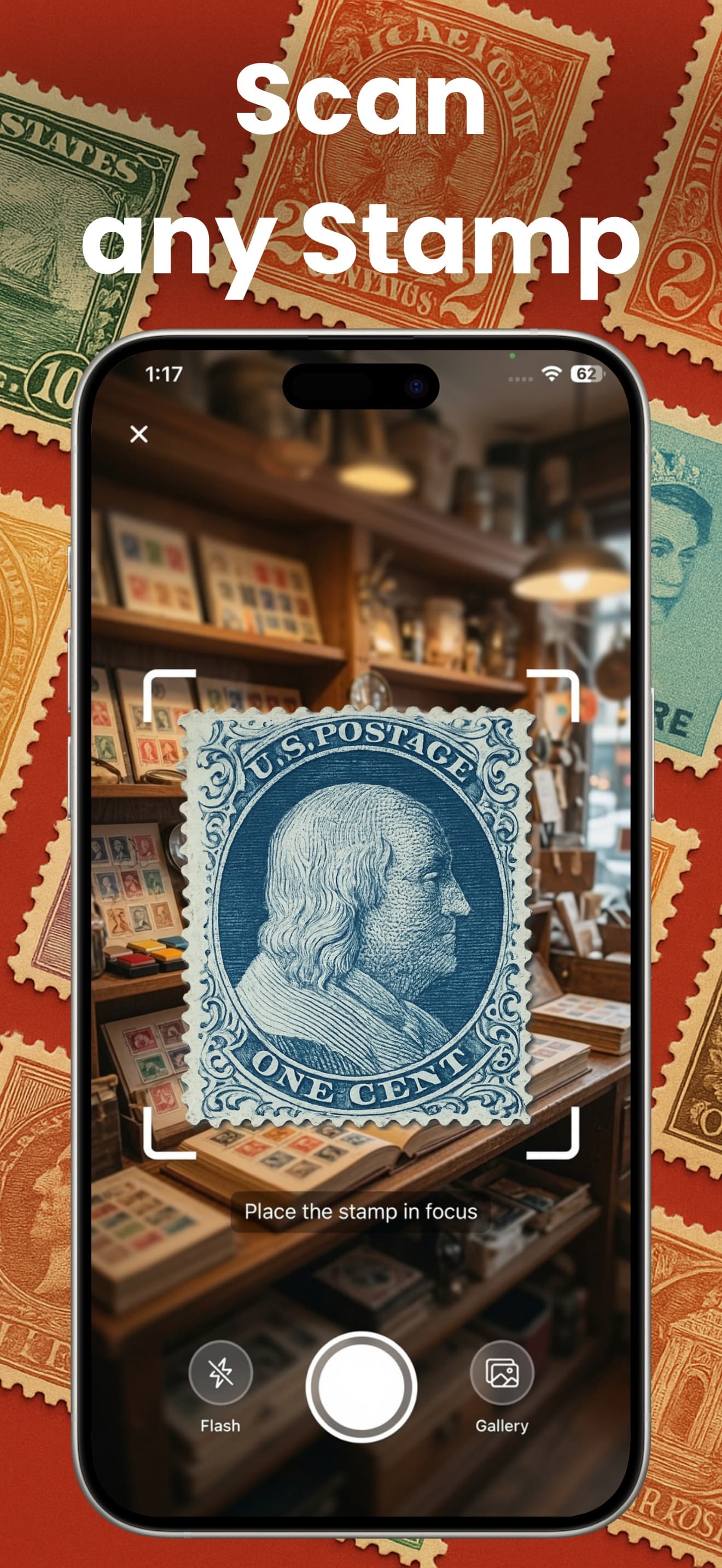
Scan the stamp on the cover
Tap Scan Now and photograph the stamp, leaving it on the envelope.
- 2
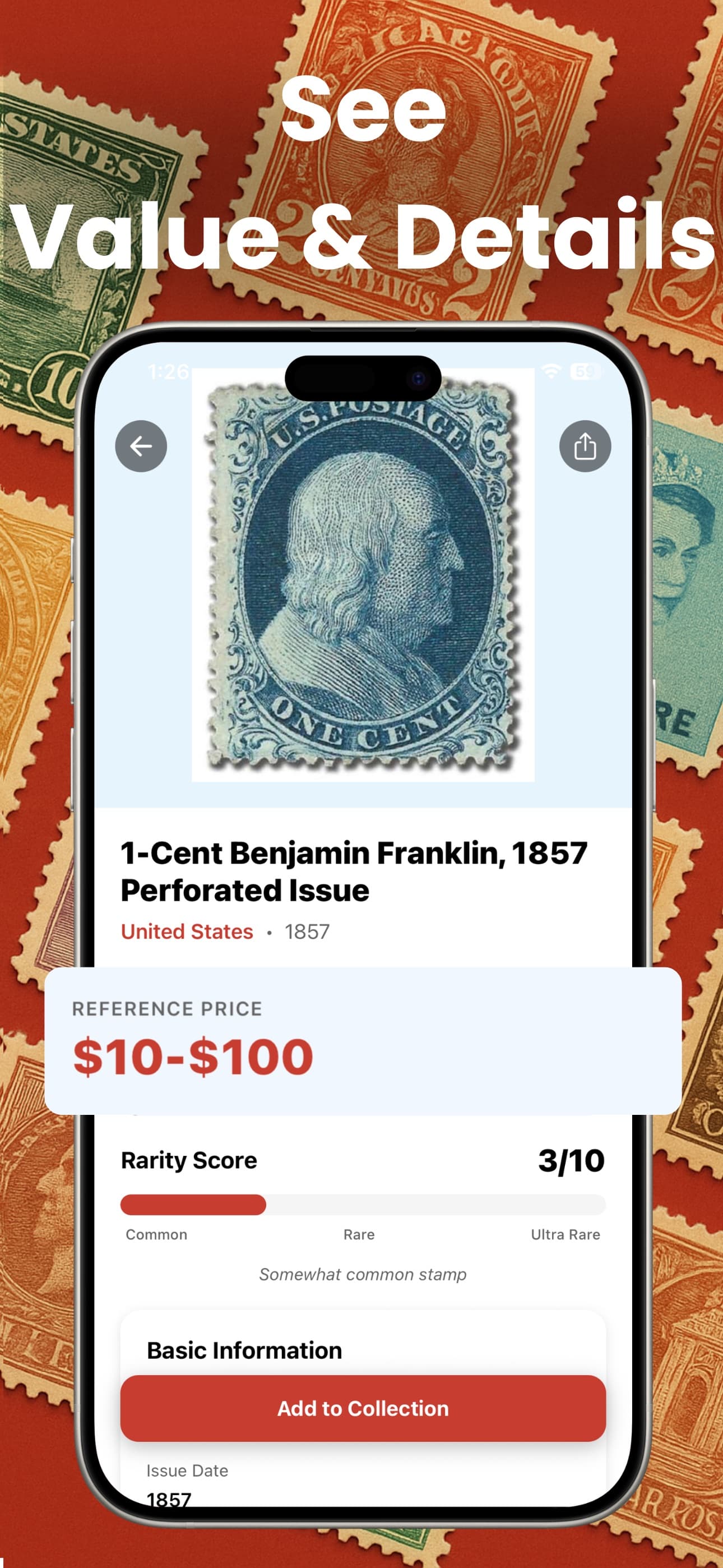
See the issue, year and value
StampGo identifies the stamp and its year, and gives a reference price for the stamp itself.
- 3
Judge the cover
Check the cachet, the postmark date and the condition. Hand-painted cachets and early dates add value.
- 4
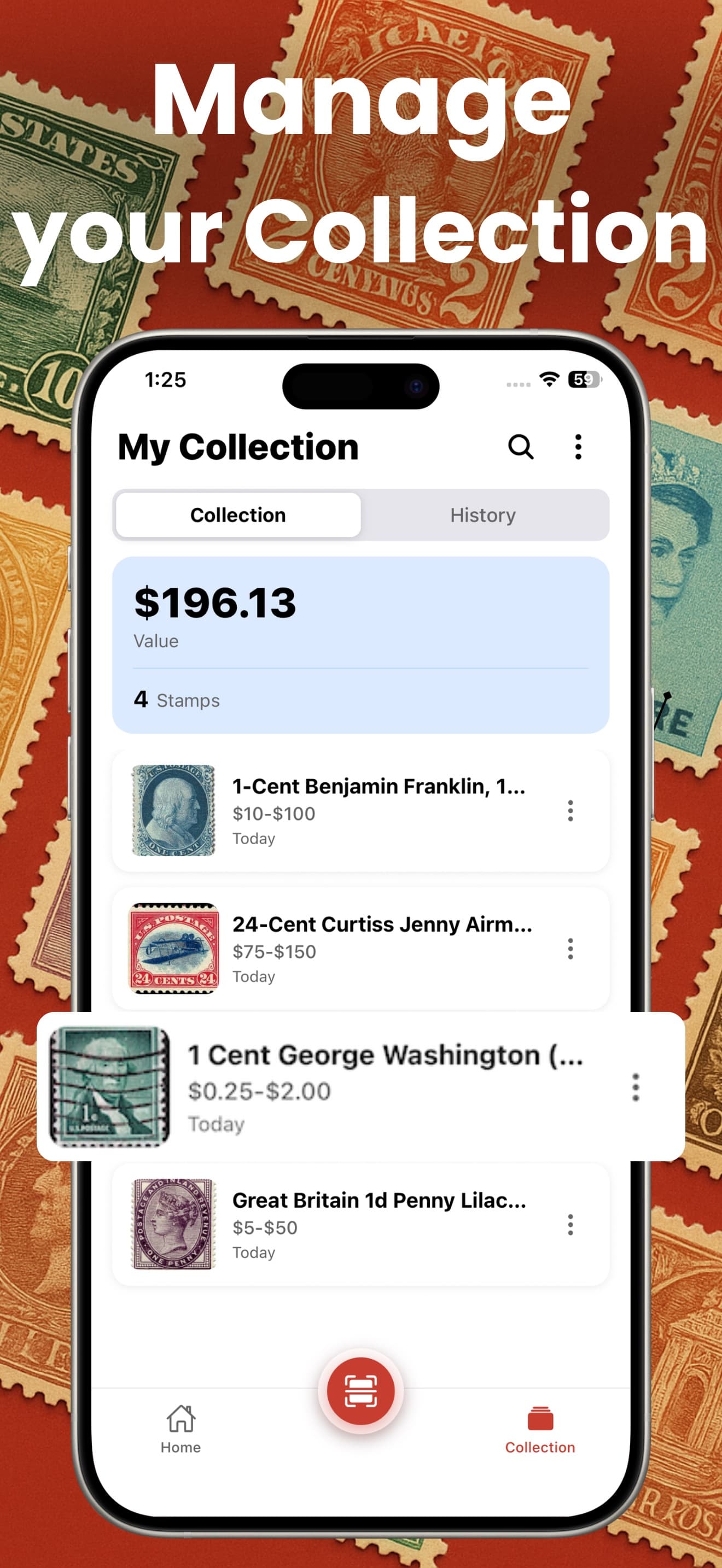
Save it to your collection
Add it to your collection to keep a record alongside your other stamps.


Gratis at hente til iOS og Android
Ofte stillede spørgsmål
Er førstedagskuverter noget værd?
Som regel kun lidt. De fleste går for nogle få tiere eller mindre, men tidlige kuverter, håndmalede eller sjældne vignetter og kuverter med sjældne mærker eller fejltryk kan være langt mere værd.
Hvad er førstedagskuverter fra 1960'erne og 1970'erne værd?
De fleste under nogle få tiere stykket, fordi de blev fremstillet i enorme mængder. Håndmalede vignetter og sjældne vignetmagere er undtagelserne.
Hvad er en cachet på en førstedagskuvert?
Det er motivet, trykt, stemplet eller tegnet i hånden, oftest i kuvertens venstre side, som knytter an til mærket eller lejligheden.
Hvor kan jeg sælge førstedagskuverter?
Almindelige FDC'er går bedst i partier, på nettet eller til handlere. Bedre kuverter kan gå til specialiserede handlere, til frimærkemesser eller til andre samlere via American First Day Cover Society.
