
Valori per paese
Francobolli della Cina: quali valgono davvero
Aggiornato il · 5 min di lettura · A cura del team StampGo
Risposta rapida
I francobolli cinesi sono molto richiesti, quindi una quota maggiore rispetto a molti Paesi ha un valore reale. Tra i più ricercati ci sono le emissioni della dinastia Qing dal 1878, come i Grandi Draghi e le soprastampe Red Revenue, alcuni francobolli della Repubblica Popolare dagli anni Cinquanta ai Settanta e il francobollo dell'Anno della Scimmia del 1980. Stato e autenticità sono decisivi, perché i falsi sono frequenti.
In breve
- Primi francobolli cinesi
- I Grandi Draghi, emessi sotto la dinastia Qing nel 1878
- Rarità celebri
- Le soprastampe Red Revenue del 1897 e «Tutto il Paese è rosso» (1968)
- Francobollo moderno più noto
- L'Anno della Scimmia 1980 (8 fen), primo francobollo dello zodiaco della RPC
- Anche ricercati
- I francobolli della Repubblica Popolare dagli anni Cinquanta ai Settanta, soprattutto nuovi
- Rischio principale
- Falsi e ristampe sono molto diffusi, soprattutto per le emissioni rare
- Attenzione a
- Gli annulli di favore (CTO), che di solito valgono meno dei nuovi
Are old Chinese stamps worth money?
Often more than you'd expect. Collector demand in China has grown strongly over recent decades, so Qing dynasty issues, many early People's Republic stamps and certain famous issues sell well, while common later issues stay cheap.
Chinese stamps are a good example of demand driving value. Plenty of Western collections hold a few Chinese stamps picked up decades ago, and those are worth checking properly, especially anything with dragons, Mao Zedong or Cultural Revolution slogans.
What are Chinese stamps worth by era?
Qing dynasty stamps (1878–1911) and Cultural Revolution issues (1966–1976) are the most sought after. Republic-era stamps are mixed, and most issues since the late 1970s are affordable, with a few famous exceptions.
| Era | Key issues | Typical value |
|---|---|---|
| Qing dynasty (1878–1911) | Large Dragons, Small Dragons, Dowager issues, Red Revenue surcharges | Often valuable, especially in fine condition |
| Republic of China (1912–1949) | Junk and Reaper definitives, Sun Yat-sen issues, overprints | Mixed. Many are common, some overprints and varieties are valuable |
| People's Republic (1949–1965) | Early commemoratives and definitives | Mixed. Many unused sets sell well |
| Cultural Revolution (1966–1976) | Mao portraits and quotations, “The Whole Country is Red” | Strong demand; some issues are very valuable |
| 1977–today | Zodiac stamps from 1980, modern commemoratives | Mostly modest, apart from the 1980 Monkey and a few others |
How much is the Chinese monkey stamp worth?
The 1980 Year of the Monkey stamp (8 fen) is China's most famous modern stamp. Unused singles in fine condition typically sell for hundreds to over a thousand dollars, and full sheets for far more. Later monkey-year stamps (1992, 2004, 2016) are common.
Designed by the painter Huang Yongyu and engraved by Jiang Weijie, it was the first stamp in China's zodiac series. Because it's so valuable, it's widely faked. Buy or sell it only through reputable dealers or with a certificate.
What are the rarest Chinese stamps?
The 1897 Red Revenue small “1 dollar” surcharge and “The Whole Country is Red” of 1968 are among China's most famous rarities. Both have sold for very large sums, and both are heavily faked.
“The Whole Country is Red” was withdrawn within a day of its release in 1968 because of a problem with its map, so few legitimate copies exist. The Red Revenue surcharges were revenue stamps overprinted for postal use in 1897, and some surcharge varieties are extremely scarce. See how to tell if a stamp is rare.
How do I check a Chinese stamp's value?
Identify the issue and its catalogue number, check whether it's unused, used or cancelled-to-order, grade the condition, and be skeptical of anything that looks too good to be true. For rare issues, buy or sell only with a certificate.
Many People's Republic stamps were sold to collectors cancelled-to-order (CTO), with a neat postmark and often full gum. CTO stamps are usually worth less than unused ones. For misprints and faked errors, see error stamps.
How do I read the numbers on a Chinese stamp?
Most People's Republic stamps carry a small serial code in the bottom margin that identifies the set, the stamp's position in it and often the year, so they're easier to identify and date than most countries' stamps.
- 1949–1966: commemorative (“Ji”, 纪) and special (“Te”, 特) series numbers, with the stamp's position in the set.
- 1967–1973: Cultural Revolution issues of 1967–70 carry no serial code, and 1970–73 issues use plain numbers.
- 1974–1991: codes beginning with J (commemorative) or T (special), such as “T.46 (1-1) 1980” on the Monkey stamp.
- From 1992: a year-based code, such as “1992-1 (1-1)”.
The code tells you exactly which set a stamp belongs to, but not whether it's genuine. Reprints and fakes copy the codes too.
Are Hong Kong and Taiwan stamps valued like Chinese stamps?
No. Hong Kong, Taiwan (Republic of China) and Macau have their own stamp histories, catalogues and markets. Some are valuable, but each has to be identified and priced on its own terms.
Hong Kong issued stamps under British rule from 1862, with Queen Victoria and later monarchs, and its classic issues are popular with collectors. Taiwan has issued Republic of China stamps since 1949. Knowing which postal authority issued a stamp is the first step, and StampGo's profile shows it.
Passo dopo passo
How to check Chinese stamp values with StampGo
Chinese inscriptions can be hard to read if you don't know the script. StampGo identifies the issue from a photo and gives a reference price and rarity score.
- 1
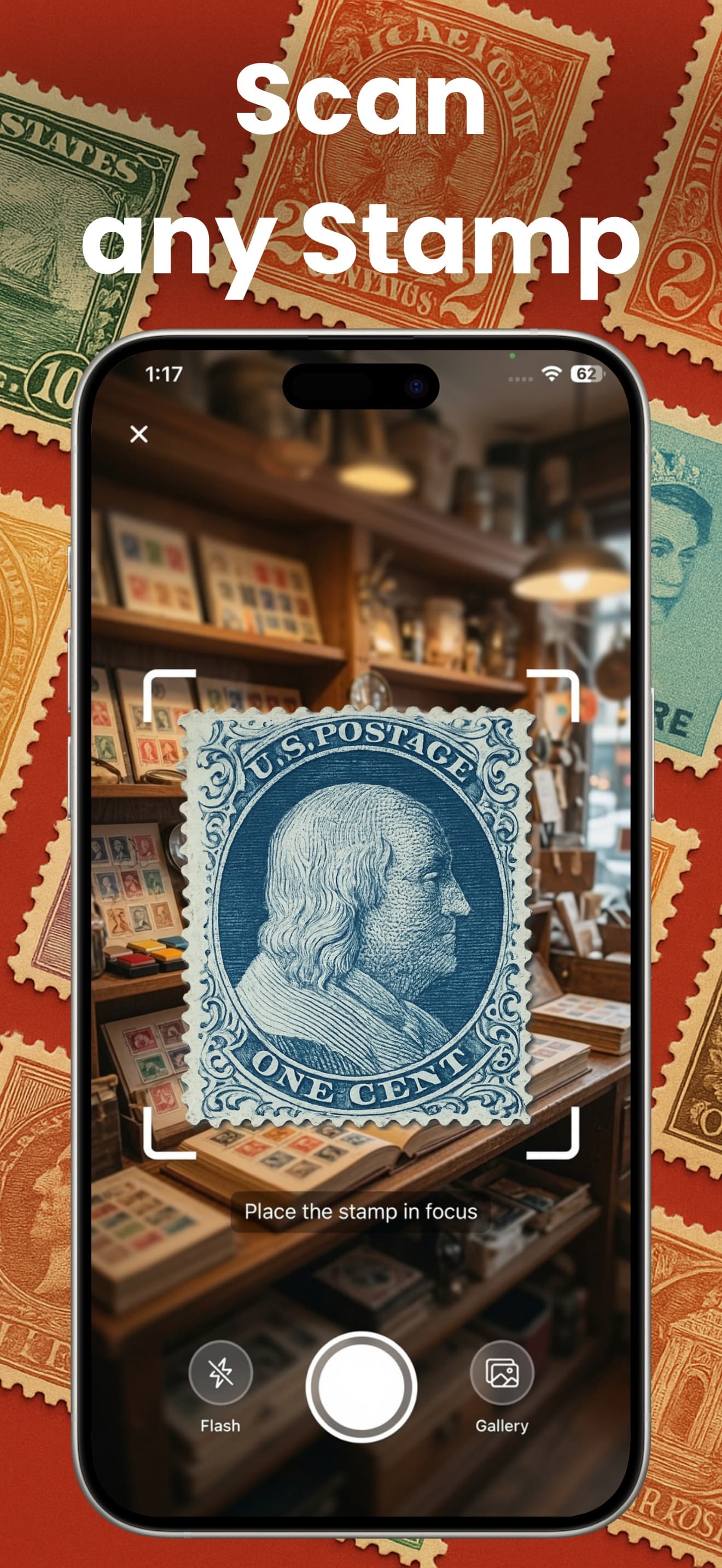
Scan the stamp
Tap Scan Now and photograph the stamp flat, filling the frame.
- 2
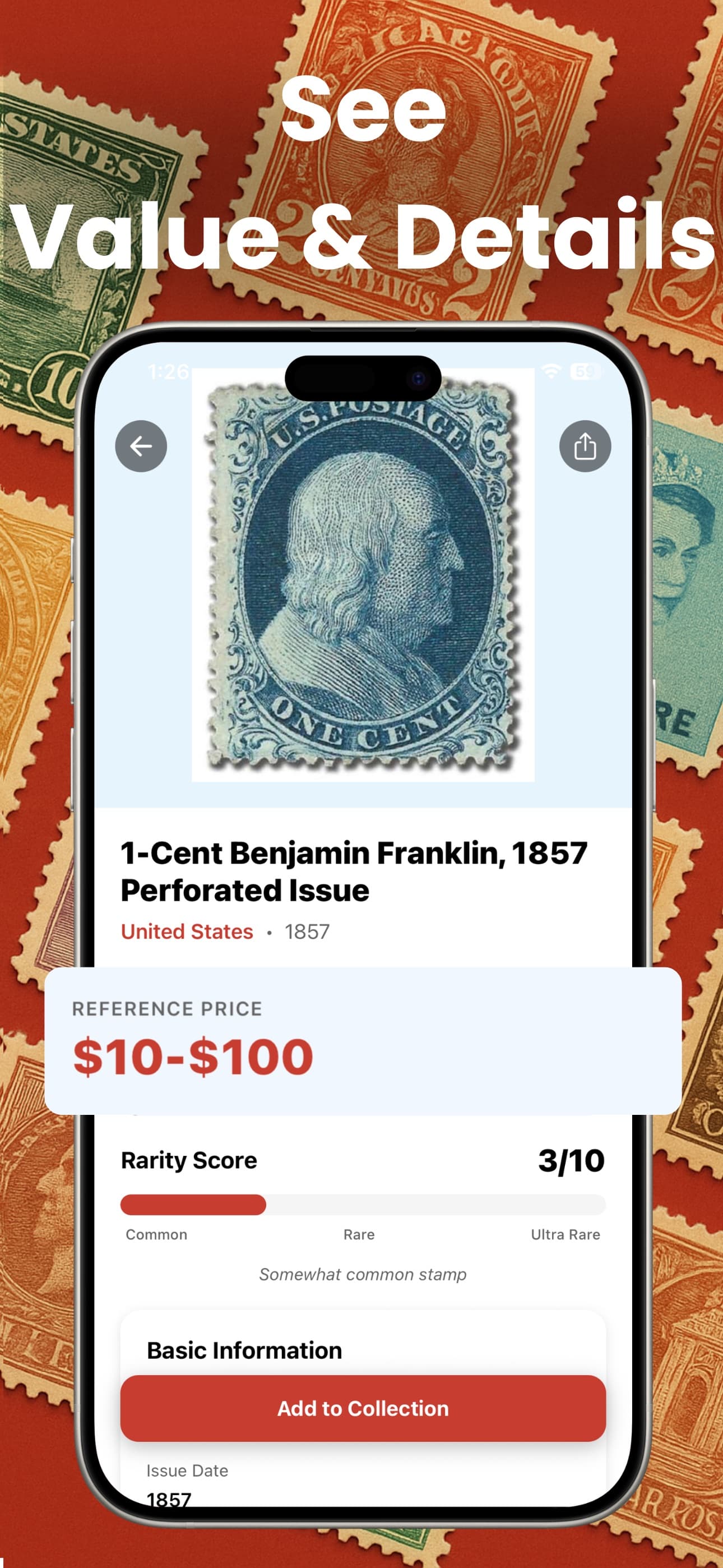
See the issue and era
StampGo names the stamp and shows its year, postal authority and a reference price range.
- 3
Prioritize by rarity
High rarity scores flag stamps worth checking carefully for authenticity and condition.
- 4
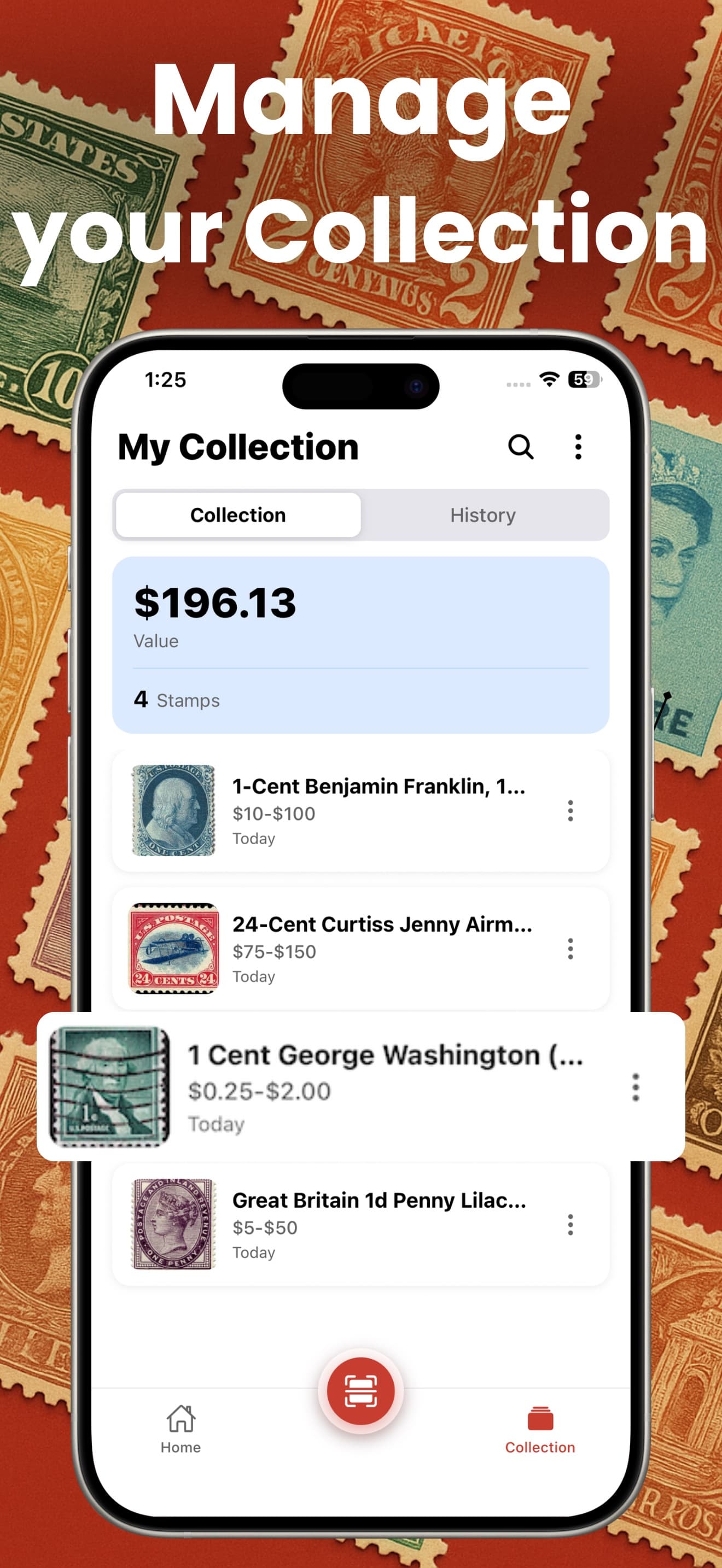
Save to your collection
Add each stamp to your collection and keep a running total of its estimated value.


Download gratuito per iOS e Android
Domande frequenti
I francobolli di Mao valgono qualcosa?
Alcuni sì. I francobolli della Rivoluzione culturale con Mao o le sue citazioni sono molto richiesti, e certe emissioni sono preziose, soprattutto nuove e in serie complete. I falsi sono molto comuni, quindi controlla con attenzione.
Qual è il francobollo cinese più prezioso?
Viene spesso citata la piccola soprastampa «1 dollaro» del Red Revenue del 1897 come la più preziosa. «Tutto il Paese è rosso» (1968) è un'altra rarità celebre.
I francobolli dello zodiaco cinese sono preziosi?
La Scimmia del 1980 lo è. La maggior parte dei francobolli zodiacali successivi fu stampata in grandi quantità ed è accessibile.
Cosa significa CTO sui francobolli cinesi?
Cancelled to order, cioè annullo di favore: francobolli annullati dall'amministrazione postale per la vendita ai collezionisti anziché usati sulla posta. Di solito valgono meno degli esemplari nuovi.
I francobolli cinesi degli anni Cinquanta valgono qualcosa?
Molti francobolli dei primi anni della Repubblica Popolare sono accessibili, ma le serie complete nuove, le emissioni rare e gli esemplari realmente viaggiati su lettera possono valere di più. La domanda dei collezionisti in Cina sostiene i prezzi più che in molti Paesi della stessa epoca.
