
Collezioni e vendita
Materiale filatelico: cosa serve davvero
Aggiornato il · 5 min di lettura · A cura del team StampGo
Risposta rapida
L'essenziale è un classificatore o un album, le pinzette da francobolli e una lente 10×. Aggiungi taschine invece delle linguelle per i francobolli nuovi, più un odontometro e una vaschetta per filigrane quando inizi a distinguere le varietà. Evita i fogli in PVC e gli album fotografici autoadesivi, che con il tempo rovinano i francobolli.
In breve
- Indispensabili
- Classificatore o album, pinzette da francobolli, lente 10×
- Tipi di album
- Album prestampati per Paese, fogli bianchi, classificatori
- Linguelle o taschine
- Linguelle per gli usati, taschine per i nuovi
- Strumenti di identificazione
- Odontometro, vaschetta per filigrane, righello millimetrato, lampada UV
- Cerca
- Materiali senza acidi, senza lignina e senza PVC
- Evita
- Fogli in PVC, album fotografici autoadesivi, nastro, colla, elastici, graffette
What stamp collecting supplies do beginners actually need?
A stockbook to hold stamps, tongs to handle them and a magnifier to examine them. That's enough for months, and it costs less than a single decent stamp.
- Stamp tongs. Flat, polished tips, unlike tweezers. Fingers transfer oils that stain paper and gum.
- A stockbook. Card pages with clear strips that grip stamps without adhesive. Ideal while you're still sorting.
- A magnifier. Around 10× is right for perforations, shades, repairs and small print.
- Glassine envelopes. Cheap paper envelopes for sorting duplicates. Unlike ordinary paper, they don't transfer chemicals.
Should I use an album, a stockbook or blank pages?
Use a stockbook while you sort, a printed album if you collect one country and like filling spaces, and blank pages if you want to lay out a collection your own way.
| Option | Best for | Watch out for |
|---|---|---|
| Stockbook | Sorting, duplicates, work in progress | Overfilling pages, which bends stamps |
| Printed country album | Collecting one country in catalogue order | Costly to keep up to date, and gaps can tempt overspending |
| Blank album pages | Topical collections and your own layout | Needs mounts and a bit of design effort |
| Ring binder with sleeves | Covers and postal history | Check the sleeves are PVC-free |
Should I use stamp hinges or mounts?
Use mounts for unused stamps and anything valuable, and hinges only for used stamps you don't mind marking. A hinge leaves a trace on the gum, and that reduces the value of an unused stamp.
A hinge is a small piece of gummed, folded paper that sticks the stamp to the page. Peeling one off can lift paper from the back and create a thin. A mount is a clear sleeve, usually black-backed, that holds the stamp without touching the gum.
This matters commercially: collectors pay a premium for mint never hinged stamps. See stamp condition grades for what hinging does to price.
Which tools help with identifying stamps?
A perforation gauge, a watermark tray, a millimeter ruler and a UV lamp. They separate stamps that look identical but differ in value, especially classic issues.
- Perforation gauge: counts perforation holes per 2 cm, which distinguishes many issues.
- Watermark tray and fluid: reveals watermarks in the paper. Check the fluid is safe for the stamp's inks.
- Millimeter ruler: measures design size, which separates flat-plate from rotary-press printings.
- UV lamp: shows phosphor bands and tagging on modern stamps, and some repairs.
You only need these once a stamp looks worth the effort. How to identify stamps explains when each one earns its place.
Which supplies damage stamps?
PVC pages, self-adhesive “magnetic” photo albums, tape, glue, rubber bands and paper clips all cause permanent damage, from sticky residue and staining to dents and tears.
- PVC sleeves and pages can release plasticizers that leave stamps oily or stuck.
- “Magnetic” photo albums use adhesive that bonds to stamps and cannot be removed safely.
- Tape and glue stain through the paper and destroy value instantly.
- Rubber bands perish, stick and cut into stamps.
- Paper clips dent, rust and tear perforations.
Look for materials described as acid-free, lignin-free and PVC-free. Polyester (Mylar) and polypropylene are the safe clear plastics. How to store stamps covers the rest.
What does a stamp collecting starter kit cost?
Very little. Tongs, a magnifier and a stockbook are the whole kit, and each is inexpensive. The specialist tools cost more, but you only buy them when a stamp is worth the trouble.
| Item | When to buy it |
|---|---|
| Stamp tongs | Immediately. Handling stamps with fingers causes slow, invisible damage |
| Stockbook | Immediately. Somewhere safe to put stamps while you sort |
| 10× magnifier | Immediately. You can't judge condition without one |
| Mounts | When you start keeping unused stamps |
| Album or blank pages | Once you've chosen a focus, so you buy the right album |
| Perforation gauge and watermark tray | When you start separating varieties of the same design |
| UV lamp | Only for modern phosphor issues or checking repairs |
Buy the album last, not first. Beginners often buy a large worldwide album, then find that it has thousands of spaces they will never fill. A stockbook and a clear focus are far more satisfying. See how to start a stamp collection.
Passo dopo passo
Where StampGo replaces some of the kit
Tools answer “which variety is this?”. An app answers “what is this, and is it worth the effort?” first, which saves you reaching for the gauge at all.
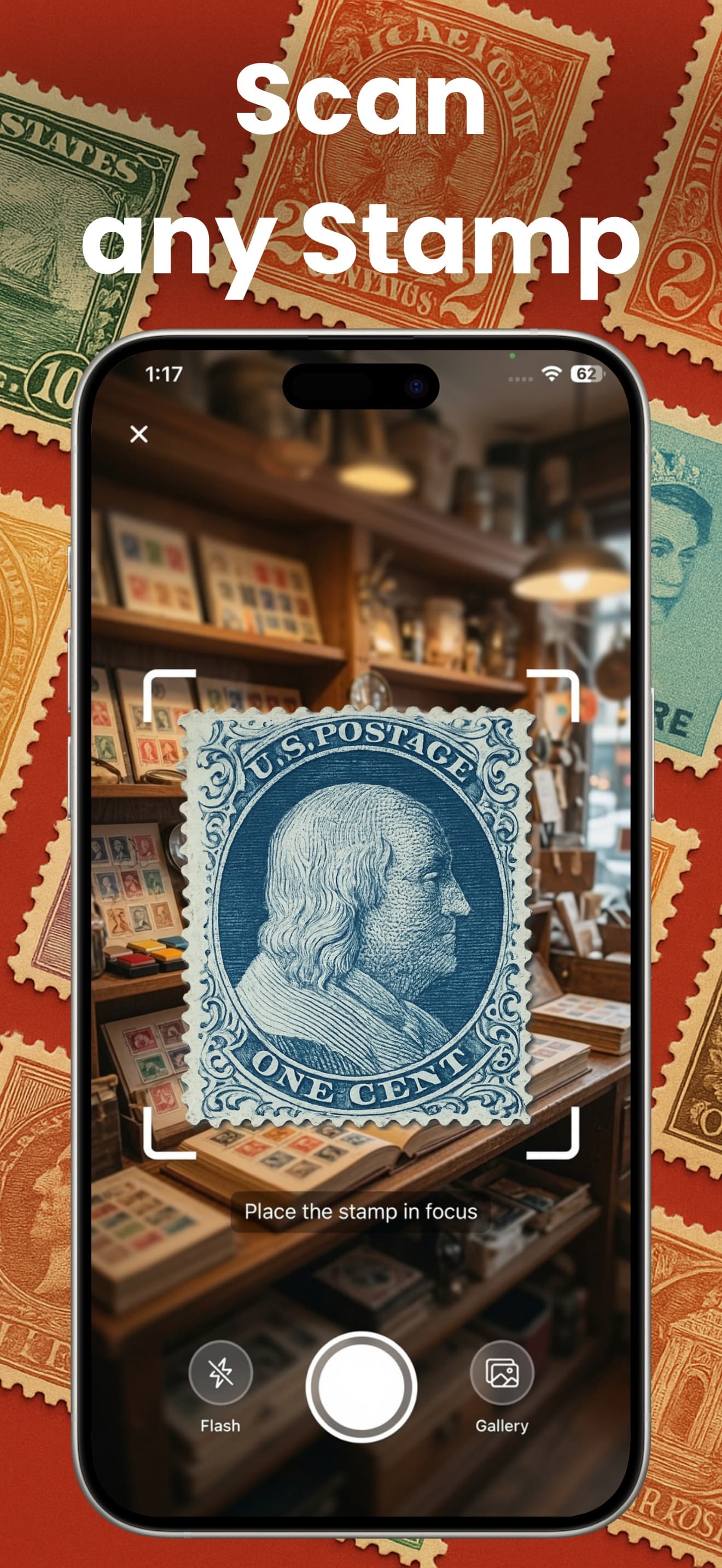
- 1
Scan before you sort
Photograph the stamp with Scan Now to get its country, year and denomination.
- 2
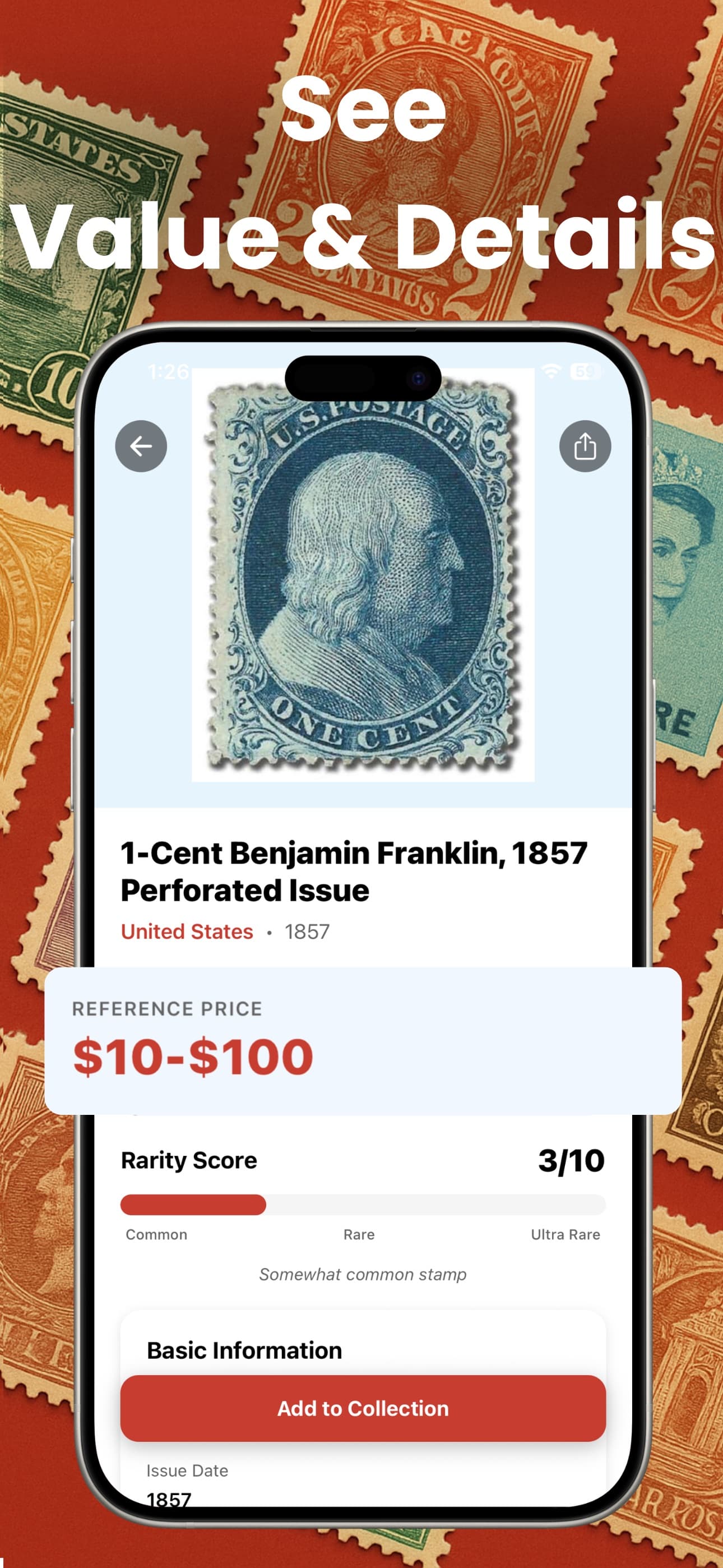
Check the price range
A modest reference price means file it and move on. A high one is your cue to get out the gauge and watermark tray.
- 3
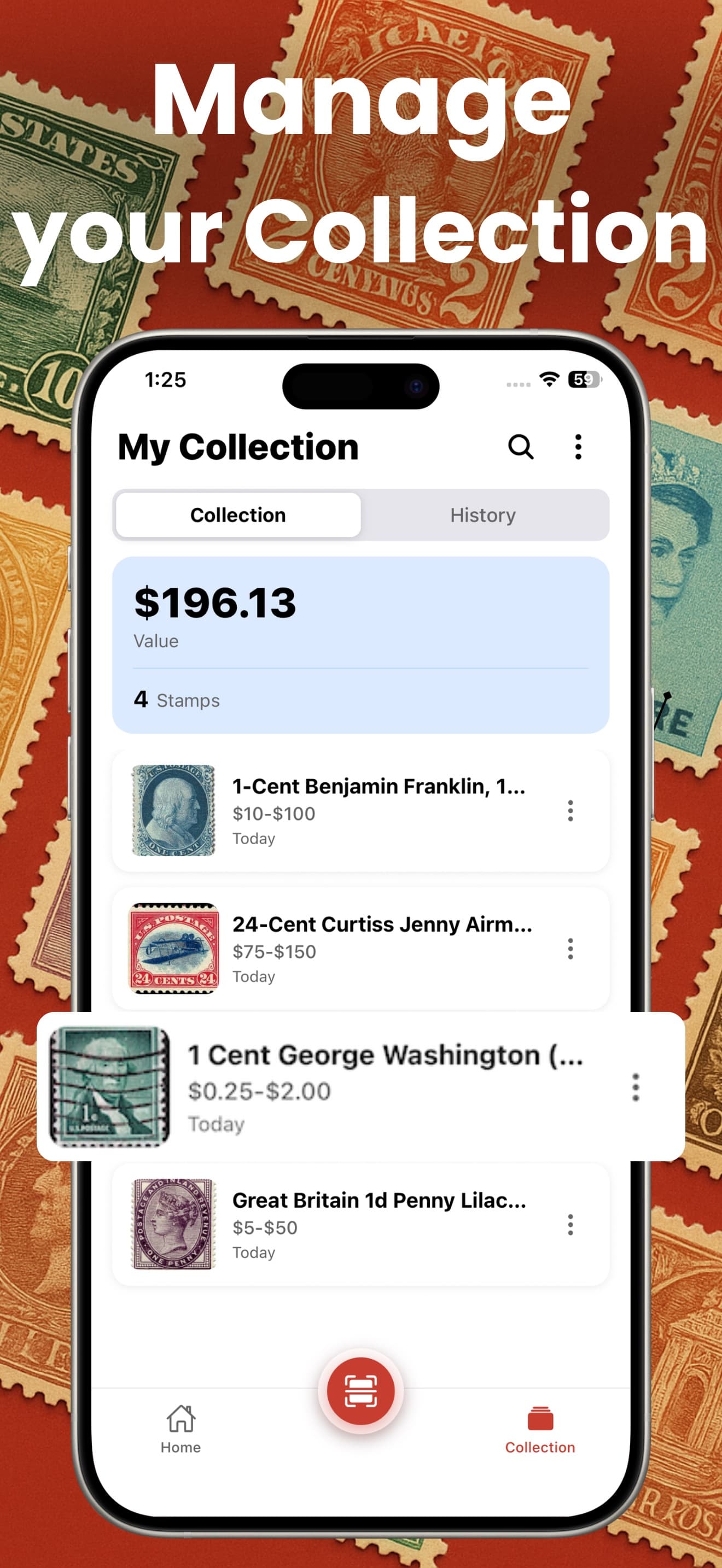
Log it as you mount it
Add each stamp to your collection so your album and your list stay in step.


Download gratuito per iOS e Android
Domande frequenti
Le linguelle rovinano i francobolli?
Vanno bene sugli usati, ma lasciano un segno sulla gomma dei nuovi, e questo abbassa il prezzo. Usa le taschine per tutto ciò che è nuovo o di valore.
Che ingrandimento serve per i francobolli?
Circa 10× copre quasi tutto: dentellatura, tonalità, annulli e piccoli difetti. Le lenti più potenti hanno un campo visivo minimo e servono solo per il lavoro di dettaglio sulle varietà.
Mi serve una lampada UV?
Solo se collezioni francobolli moderni con bande al fosforo, o se vuoi individuare riparazioni. È un acquisto successivo, non iniziale.
Dove posso comprare materiale filatelico?
Da commercianti filatelici, alle manifestazioni e online. Gli elenchi delle associazioni filateliche riportano i soci che seguono un codice deontologico.
Posso usare normali pinzette da sopracciglia?
No. Le pinzette da sopracciglia hanno punte affilate e zigrinate che bucano e sgualciscono i francobolli. Le pinzette filateliche hanno punte lisce, piatte o a spatola, pensate per scivolare sotto il francobollo senza segnarlo, e costano pochissimo.
