
Známky podle zemí
Známky Číny: které mají opravdu cenu
Aktualizováno · 5 min čtení · Tým StampGo
Rychlá odpověď
O čínské známky je silný zájem, takže má skutečnou cenu větší část než u mnoha zemí. K nejžádanějším patří emise dynastie Čching od roku 1878, jako Velcí draci a přetisky Red Revenue, některé známky Čínské lidové republiky z padesátých až sedmdesátých let a známka roku Opice z roku 1980. Rozhodující jsou stav a pravost, protože padělky jsou časté.
Klíčová fakta
- První čínské známky
- Velcí draci vydaní za dynastie Čching v roce 1878
- Slavné rarity
- Přetisky Red Revenue z roku 1897 a „Celá země je rudá“ (1968)
- Nejznámější moderní známka
- Rok Opice 1980 (8 fen), první zvěrokruhová známka ČLR
- Rovněž žádané
- Známky ČLR z padesátých až sedmdesátých let, zvlášť čisté
- Hlavní riziko
- Padělky a dotisky jsou velmi časté, obzvlášť u vzácných emisí
- Pozor na
- Zdvořilostní razítka (CTO), obvykle levnější než čisté kusy
Are old Chinese stamps worth money?
Often more than you'd expect. Collector demand in China has grown strongly over recent decades, so Qing dynasty issues, many early People's Republic stamps and certain famous issues sell well, while common later issues stay cheap.
Chinese stamps are a good example of demand driving value. Plenty of Western collections hold a few Chinese stamps picked up decades ago, and those are worth checking properly, especially anything with dragons, Mao Zedong or Cultural Revolution slogans.
What are Chinese stamps worth by era?
Qing dynasty stamps (1878–1911) and Cultural Revolution issues (1966–1976) are the most sought after. Republic-era stamps are mixed, and most issues since the late 1970s are affordable, with a few famous exceptions.
| Era | Key issues | Typical value |
|---|---|---|
| Qing dynasty (1878–1911) | Large Dragons, Small Dragons, Dowager issues, Red Revenue surcharges | Often valuable, especially in fine condition |
| Republic of China (1912–1949) | Junk and Reaper definitives, Sun Yat-sen issues, overprints | Mixed. Many are common, some overprints and varieties are valuable |
| People's Republic (1949–1965) | Early commemoratives and definitives | Mixed. Many unused sets sell well |
| Cultural Revolution (1966–1976) | Mao portraits and quotations, “The Whole Country is Red” | Strong demand; some issues are very valuable |
| 1977–today | Zodiac stamps from 1980, modern commemoratives | Mostly modest, apart from the 1980 Monkey and a few others |
How much is the Chinese monkey stamp worth?
The 1980 Year of the Monkey stamp (8 fen) is China's most famous modern stamp. Unused singles in fine condition typically sell for hundreds to over a thousand dollars, and full sheets for far more. Later monkey-year stamps (1992, 2004, 2016) are common.
Designed by the painter Huang Yongyu and engraved by Jiang Weijie, it was the first stamp in China's zodiac series. Because it's so valuable, it's widely faked. Buy or sell it only through reputable dealers or with a certificate.
What are the rarest Chinese stamps?
The 1897 Red Revenue small “1 dollar” surcharge and “The Whole Country is Red” of 1968 are among China's most famous rarities. Both have sold for very large sums, and both are heavily faked.
“The Whole Country is Red” was withdrawn within a day of its release in 1968 because of a problem with its map, so few legitimate copies exist. The Red Revenue surcharges were revenue stamps overprinted for postal use in 1897, and some surcharge varieties are extremely scarce. See how to tell if a stamp is rare.
How do I check a Chinese stamp's value?
Identify the issue and its catalogue number, check whether it's unused, used or cancelled-to-order, grade the condition, and be skeptical of anything that looks too good to be true. For rare issues, buy or sell only with a certificate.
Many People's Republic stamps were sold to collectors cancelled-to-order (CTO), with a neat postmark and often full gum. CTO stamps are usually worth less than unused ones. For misprints and faked errors, see error stamps.
How do I read the numbers on a Chinese stamp?
Most People's Republic stamps carry a small serial code in the bottom margin that identifies the set, the stamp's position in it and often the year, so they're easier to identify and date than most countries' stamps.
- 1949–1966: commemorative (“Ji”, 纪) and special (“Te”, 特) series numbers, with the stamp's position in the set.
- 1967–1973: Cultural Revolution issues of 1967–70 carry no serial code, and 1970–73 issues use plain numbers.
- 1974–1991: codes beginning with J (commemorative) or T (special), such as “T.46 (1-1) 1980” on the Monkey stamp.
- From 1992: a year-based code, such as “1992-1 (1-1)”.
The code tells you exactly which set a stamp belongs to, but not whether it's genuine. Reprints and fakes copy the codes too.
Are Hong Kong and Taiwan stamps valued like Chinese stamps?
No. Hong Kong, Taiwan (Republic of China) and Macau have their own stamp histories, catalogues and markets. Some are valuable, but each has to be identified and priced on its own terms.
Hong Kong issued stamps under British rule from 1862, with Queen Victoria and later monarchs, and its classic issues are popular with collectors. Taiwan has issued Republic of China stamps since 1949. Knowing which postal authority issued a stamp is the first step, and StampGo's profile shows it.
Krok za krokem
How to check Chinese stamp values with StampGo
Chinese inscriptions can be hard to read if you don't know the script. StampGo identifies the issue from a photo and gives a reference price and rarity score.
- 1
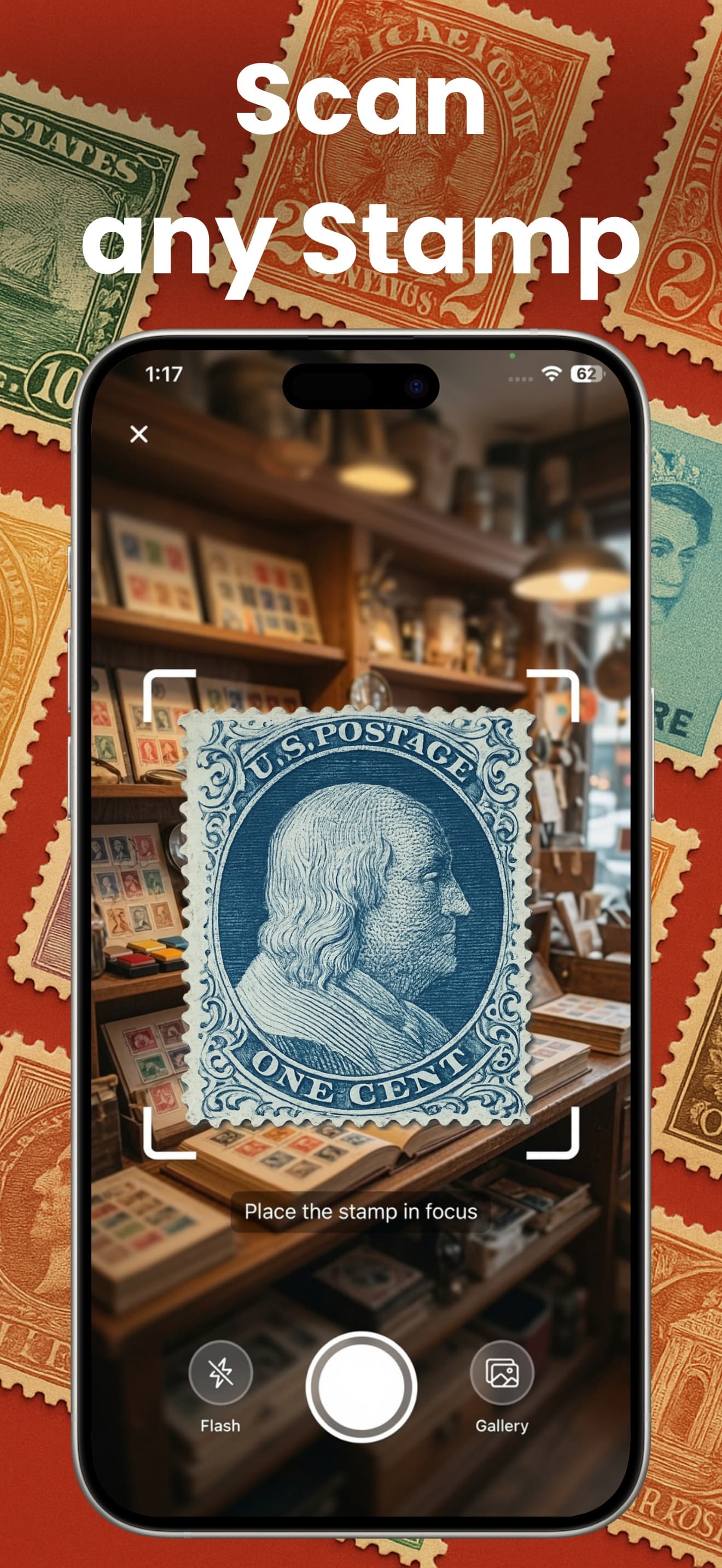
Scan the stamp
Tap Scan Now and photograph the stamp flat, filling the frame.
- 2
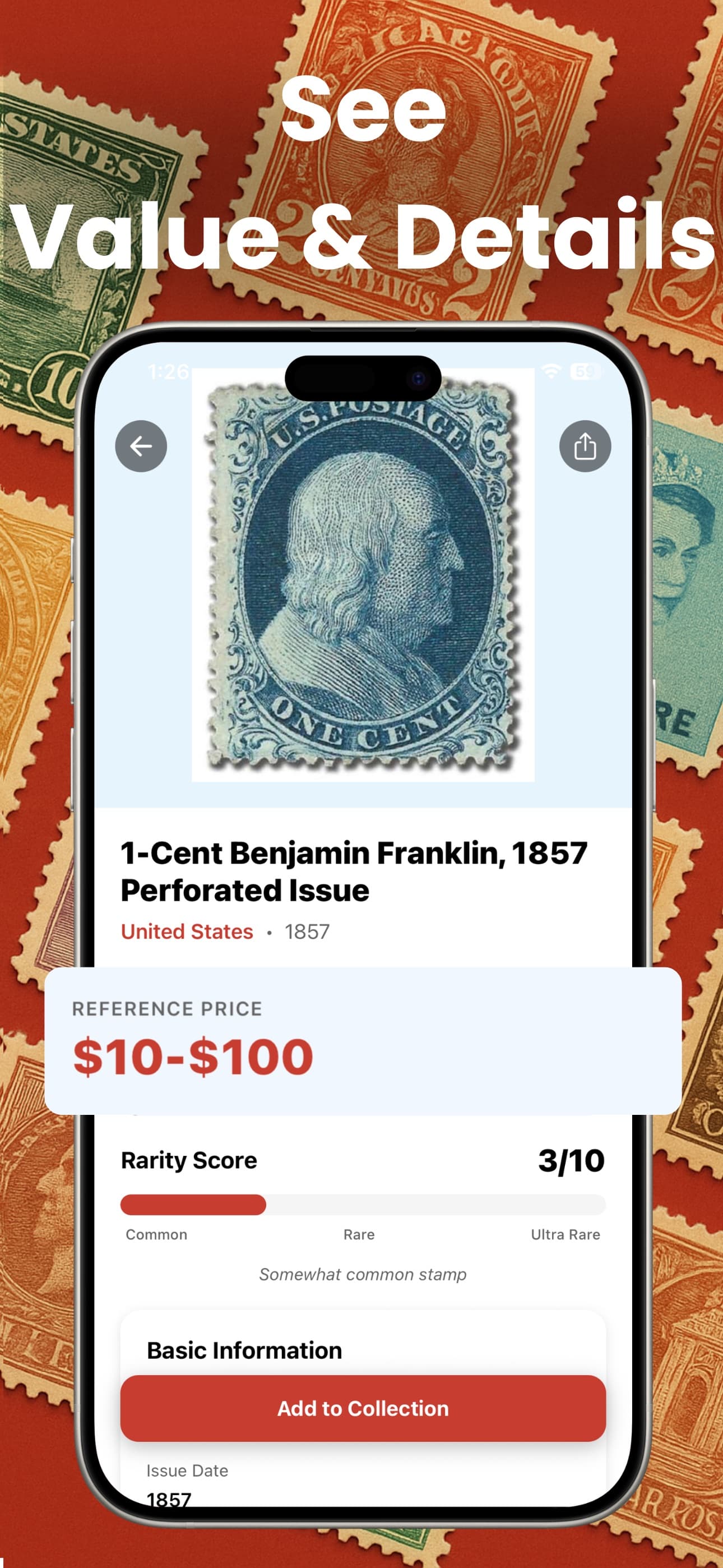
See the issue and era
StampGo names the stamp and shows its year, postal authority and a reference price range.
- 3
Prioritize by rarity
High rarity scores flag stamps worth checking carefully for authenticity and condition.
- 4
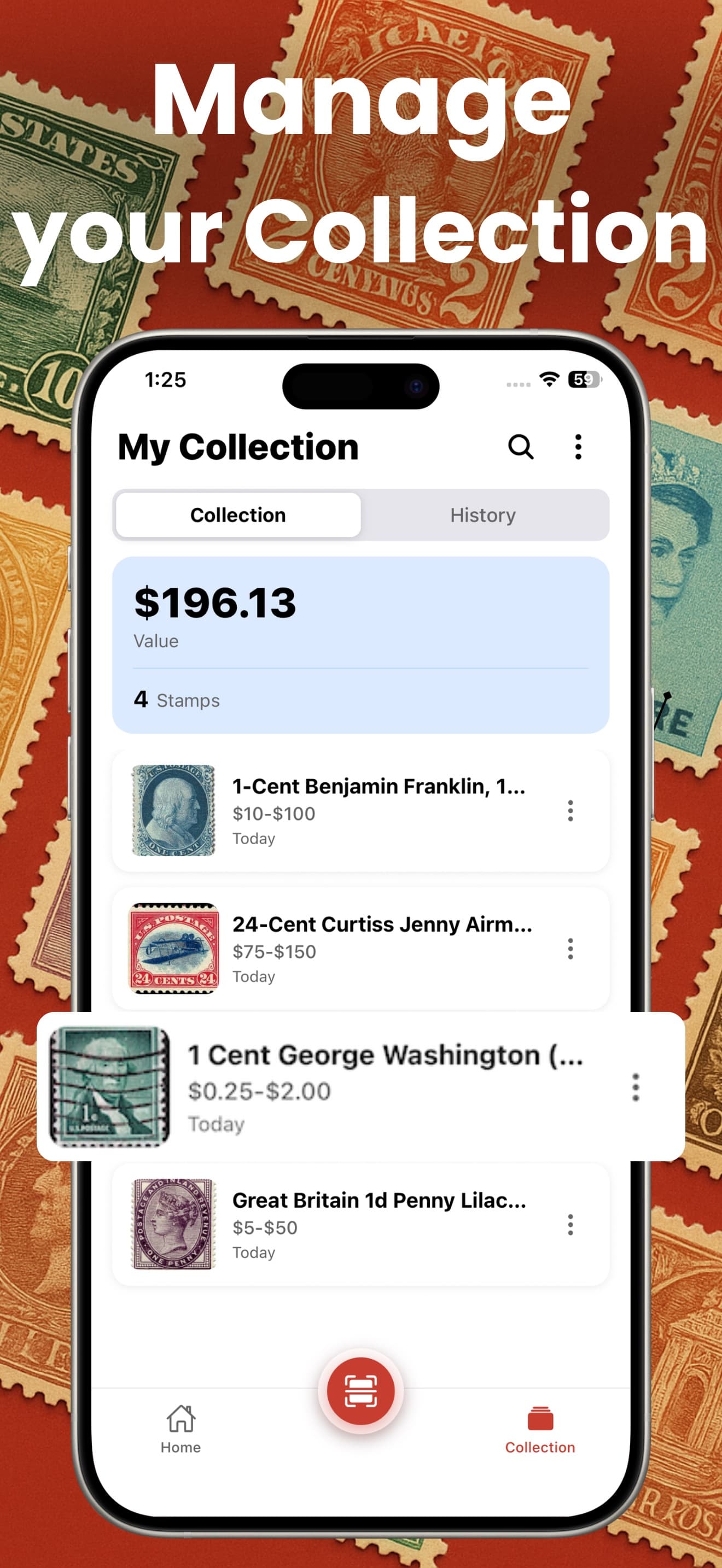
Save to your collection
Add each stamp to your collection and keep a running total of its estimated value.


Zdarma ke stažení pro iOS i Android
Časté dotazy
Mají Maovy známky nějakou cenu?
Některé ano. Známky kulturní revoluce s Maem nebo jeho citáty jsou velmi žádané a část emisí je cenná, zvlášť čisté a v kompletních sériích. Padělků je mnoho, proto kontrolujte pečlivě.
Která čínská známka má nejvyšší cenu?
Nejčastěji se uvádí malý přetisk „1 dolar“ na Red Revenue z roku 1897. „Celá země je rudá“ z roku 1968 je další slavná rarita.
Mají čínské zvěrokruhové známky cenu?
Opice z roku 1980 ano. Většina pozdějších zvěrokruhových známek se tiskla ve velkých nákladech a je dostupná.
Co znamená CTO na čínských známkách?
Cancelled to order, tedy zdvořilostní razítko: známky orazítkované poštou pro prodej sběratelům, ne pro skutečný provoz. Obvykle jsou levnější než čisté kusy.
Mají čínské známky z padesátých let nějakou cenu?
Mnoho raných známek ČLR z padesátých let je dostupných, ale kompletní čisté série, vzácné emise a skutečně prošlé kusy na obálce mohou stát víc. Poptávka sběratelů v Číně drží ceny pevněji než u mnoha zemí téže doby.
