
Collections et vente
Vendre des timbres : négociant, vente aux enchères ou en ligne
Mis à jour le · 6 min de lecture · Par l’équipe StampGo
Réponse rapide
Vendez les collections entières et les timbres courants à un négociant sérieux ou en lots en ligne, les timbres rares ou expertisés via une maison de ventes spécialisée ou un négociant de confiance, et les timbres isolés de valeur moyenne sur les places de marché. Commencez par identifier les pièces de valeur et obtenez plusieurs offres. StampGo vous aide à identifier et estimer avant de vendre.
L’essentiel
- Négociant
- Rapide et simple. Attendez-vous à une offre inférieure au prix de détail
- Maison de ventes
- Idéale pour le matériel rare, expertisé ou de forte valeur. Commission à prévoir
- Places de marché en ligne
- Bien pour les timbres et séries de valeur moyenne, mais c'est vous qui travaillez
- Avant de vendre
- Identifier les meilleurs timbres et connaître leur fourchette de valeur
- Toujours
- Obtenir plusieurs offres et ne pas se laisser presser de décider sur-le-champ
- Timbres neufs
- Valables pour l'affranchissement à leur valeur faciale, souvent plus qu'une offre de négociant
What's the best way to sell stamps?
Match the channel to the material: dealers for quick sales of collections, auction houses for rare and valuable stamps, and online marketplaces for individual stamps worth a few dollars to a few hundred.
| Channel | Best for | Pros | Cons |
|---|---|---|---|
| Stamp dealer | Whole collections and quick sales | Fast, one transaction, no listing work | Offers are below retail, because dealers need a margin |
| Auction house | Rare, certified or high-value stamps and collections | Reaches serious bidders, and competition can lift prices | Commission fees, and months until you're paid |
| Online marketplace | Individual stamps and sets | You set the price and reach buyers worldwide | Time-consuming: photos, listings, postage and returns |
| Club, society or stamp show | Mid-value material and local sales | Knowledgeable buyers and fair prices | Slower, with a smaller audience |
The American Philatelic Society also runs sales programs for its members, including an online marketplace and circuit mail sales, which suit collectors selling duplicates.
How do I prepare stamps for sale?
Identify the better stamps, check their condition, and keep everything organized and undamaged. Buyers pay more when they can quickly see what's there and trust that it's accurately described.
- Pick out the stamps worth selling individually, with their catalogue numbers. See what are my stamps worth?
- Check condition honestly: centering, gum, faults and cancellation. See condition grading.
- Keep stamps in their albums, stock pages or mounts. Never use tape or glue.
- Photograph the front and back of valuable stamps in good light.
- Get expert certificates for anything that could be worth hundreds of dollars or more.
How do I sell stamps to a dealer?
Contact two or three reputable dealers, show them the collection and compare written offers. Choose dealers who belong to an organization with a code of ethics, and never feel pressured to decide on the spot.
Dealers buy to resell, so their offers are below retail, and for common material well below catalogue value. That's normal. What matters is that the offer is fair for the material, and you'll only know that by comparing offers and knowing roughly what your better stamps are worth.
You can find dealers through the American Philatelic Society's dealer directory, or through the American Stamp Dealers Association and the National Stamp Dealers Association.
Should I sell stamps at auction?
Yes, if you have rare, certified or high-value stamps, or a strong specialized collection. Competition between bidders can push prices above a dealer's offer, but you'll pay commission and wait longer.
The American Philatelic Society points out that if an item sells at auction for about what a dealer would have paid, you may actually net less once the auctioneer's fee is deducted. Auctions make the most sense when the material is desirable enough to attract competitive bidding.
How do I sell stamps online or on eBay?
List individual stamps or sets with clear photos of the front and back, the catalogue number and an honest description of condition. Price from recent sold listings, not asking prices.
- Put the stamp's name, country, year and catalogue number in the title, because that's what buyers search for.
- Photograph the front and back on a plain background, with the perforations fully visible.
- Describe faults honestly. Returns and bad feedback cost more than a lower price.
- Group common stamps into country or topical lots instead of listing them one by one.
- Ship stamps flat, in protective sleeves with a stiffener.
What should I do with unused modern stamps?
Common unused stamps are often worth more as postage than as collectibles. In the US, stamps issued since 1860 remain valid for postage, so you can use them on mail at face value.
Dealers typically buy modern unused postage at a discount to face value. If you send letters and parcels, using the stamps yourself gets you their full value. Rules differ elsewhere: British pre-decimal stamps, for example, are no longer valid.
What does it cost to sell stamps at auction?
Auction houses charge sellers a commission on the hammer price, and many add fees for lotting, photography or insurance. Terms vary widely, so get the full fee schedule in writing before you consign.
- Ask what the seller's commission is, and whether it changes with the value of the consignment.
- Check for extra charges, such as lotting, photography, insurance and unsold-lot fees.
- Ask how reserves work, and what happens to lots that don't sell.
- Confirm when you'll be paid after the sale. It's often several weeks.
Buyers also pay a premium on top of the hammer price, which affects how much they're willing to bid. Compare the likely net result with a dealer's outright offer before you decide.
Étape par étape
How to price stamps before you sell them with StampGo
You negotiate better when you know what you have. StampGo identifies each stamp and gives a reference price, so you can spot a lowball offer.
- 1
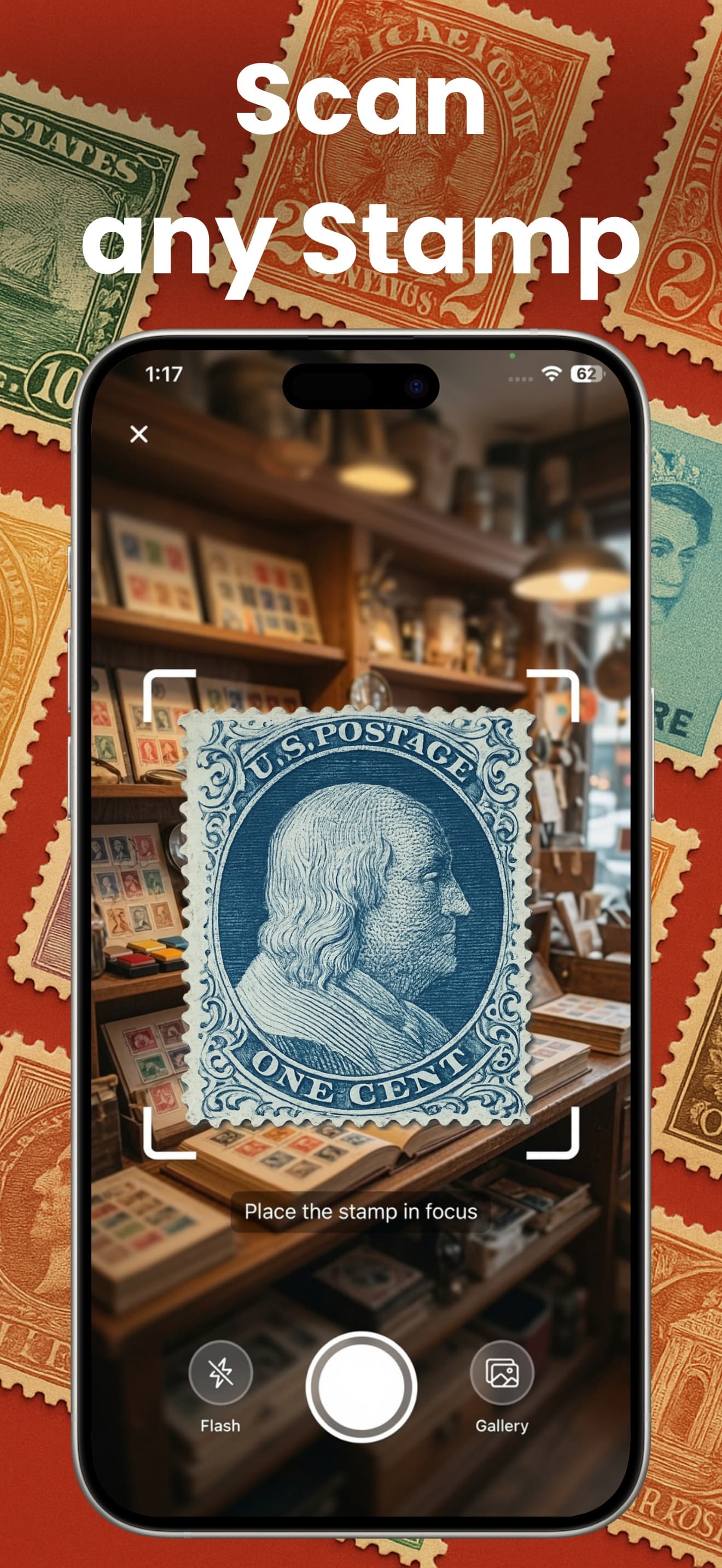
Identify the stamps to sell
Tap Scan Now and photograph each stamp you might sell individually.
- 2
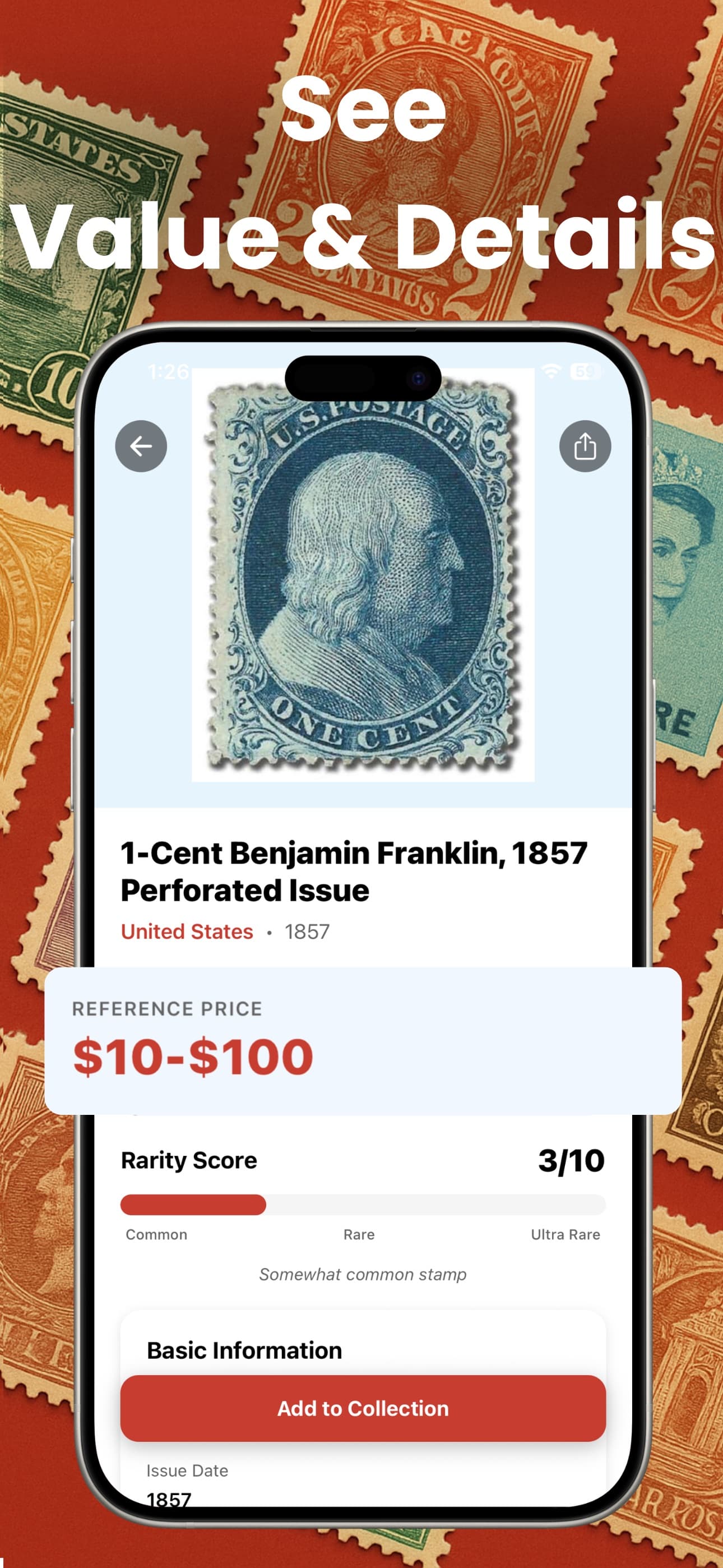
Check the price range and rarity
Use the reference price range and rarity score to decide which stamps to sell individually and which to sell as lots.
- 3
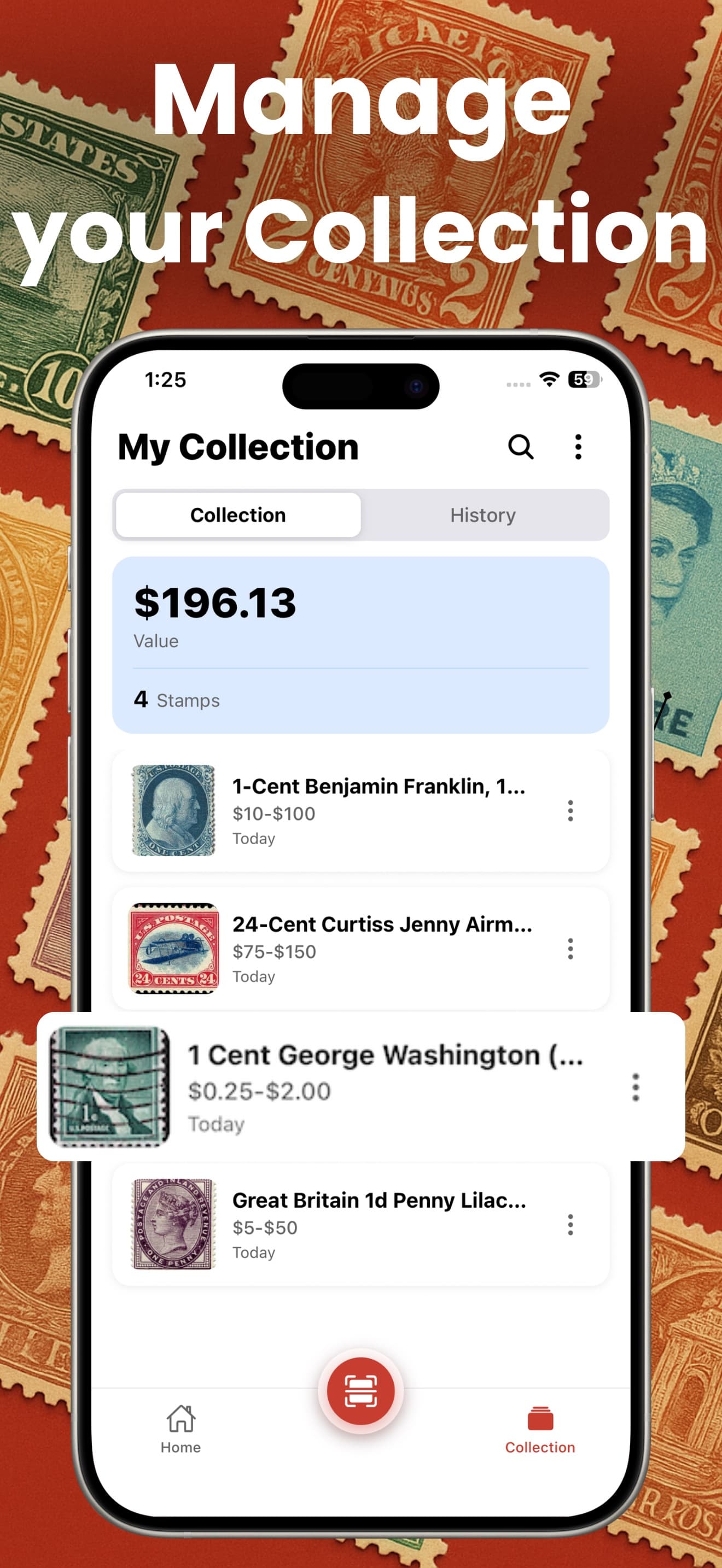
Build your sale list
Add the stamps to your collection to get an itemized list with a total estimated value.
- 4
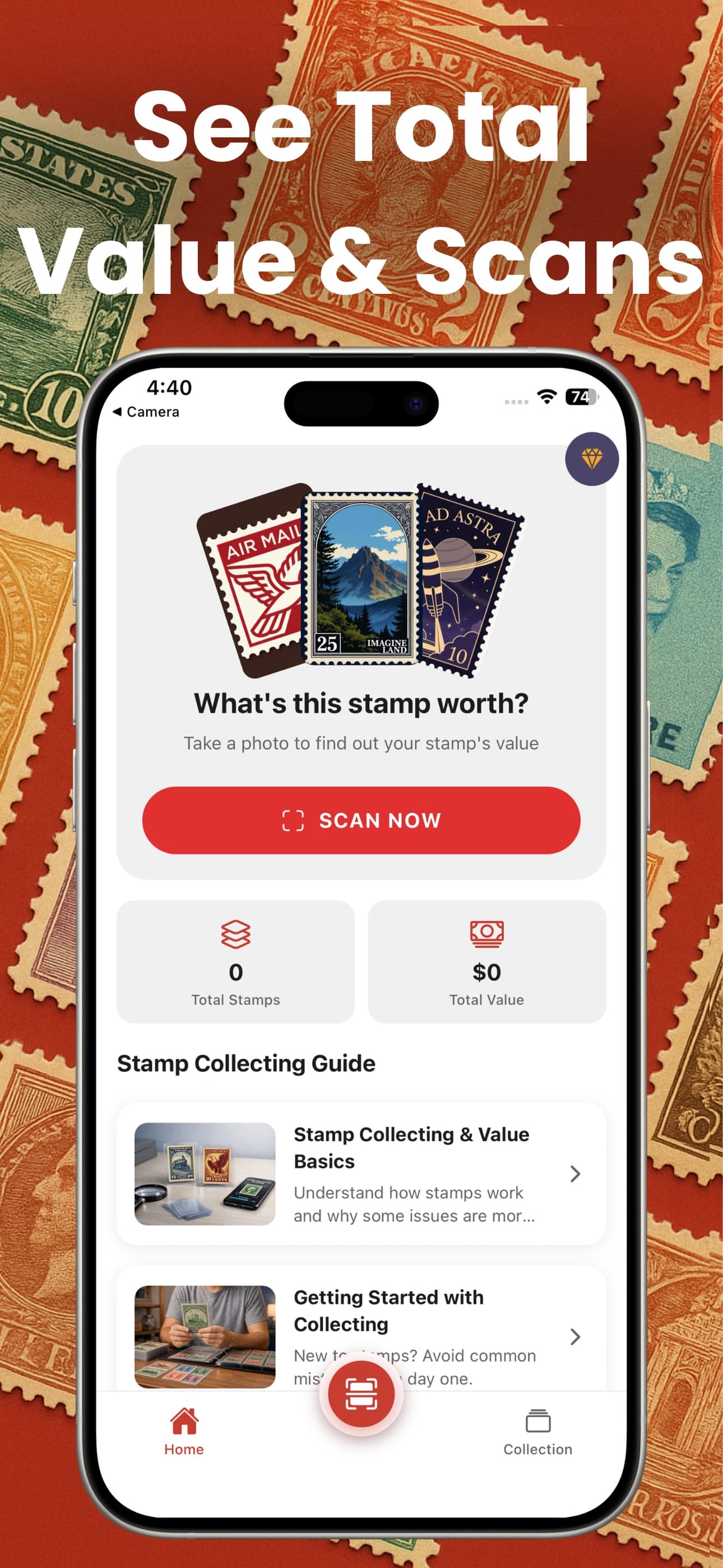
Compare offers against your total
Keep your total in mind when you compare dealer offers, and remember that dealers need a margin.


Téléchargement gratuit sur iOS et Android
Questions fréquentes
Combien un négociant paiera-t-il mes timbres ?
Moins que le prix de détail ou la cote. L'écart dépend de la demande : les timbres recherchés et de belle qualité obtiennent une part plus élevée, tandis que les timbres courants se vendent très peu.
Vaut-il mieux vendre les timbres à l'unité ou la collection entière ?
Vendez à l'unité ou aux enchères les quelques timbres de valeur, et le reste en lot. Les annonces individuelles prennent du temps et ne se justifient que pour des timbres valant plus de quelques euros.
Puis-je revendre mes timbres à la poste ?
Non. Les services postaux ne rachètent pas les timbres. Les timbres neufs peuvent servir à affranchir, être vendus à des négociants ou à d'autres collectionneurs.
Comment éviter de se faire avoir en vendant des timbres ?
Sachez à peu près ce que valent vos meilleurs timbres, obtenez plusieurs offres, choisissez des négociants membres d'une organisation dotée d'un code de déontologie, et refusez toute pression pour décider immédiatement.
