
Znaczki według krajów
Znaczki Kanady: które naprawdę są coś warte
Aktualizacja · 5 min czytania · Zespół StampGo
Krótka odpowiedź
Większość kanadyjskich znaczków po latach trzydziestych jest pospolita: kasowane kosztują grosze, czyste mniej więcej tyle, co nominał. Wartość tkwi w emisjach pensowych i centowych z lat 1851–1859, w Large i Small Queens, w wysokich nominałach emisji jubileuszowej z 1897 roku, we wczesnych wysokich nominałach jak Bluenose 50 centów z 1929 roku oraz w błędach druku. O cenie decyduje stan. StampGo rozpoznaje kanadyjskie znaczki ze zdjęcia.
Najważniejsze fakty
- Pierwszy znaczek
- Trzypensowy bóbr z 1851 roku, zaprojektowany przez Sandforda Fleminga
- Wielki rarytas
- Twelvepence Black z 1851 roku z królową Wiktorią
- Emisje klasyczne
- Pensy (1851–57), centy (1859), Large Queens (1868), Small Queens (1870)
- Popularne wysokie nominały
- Emisja jubileuszowa 1897 od 1 do 5 dolarów i Bluenose 50 centów z 1929 roku
- Katalog wzorcowy
- Unitrade Specialized Catalogue of Canadian Stamps
- Zwykle pospolite
- Większość znaczków wydanych od połowy lat trzydziestych
What are Canadian stamps worth by era?
The pre-Confederation classics of 1851–1867 hold the most value, the Victorian Queens and 1897–1898 issues are mixed, and most stamps from the 1930s on are common unless they're errors or scarce varieties.
| Era | Key issues | Typical value |
|---|---|---|
| 1851–1859 (pence and cents issues) | Three-Penny Beaver, 6d Prince Albert, 12d Black, 1859 cents issue | Often hundreds of dollars and up. The 12d Black is a major rarity |
| 1868–1897 (Large and Small Queens) | Queen Victoria definitives | Common values cost a few dollars; scarce papers, perforations and shades far more |
| 1897–1898 | Diamond Jubilee, Maple Leaf and Numeral issues, the 1898 map stamp | Low values are modest; the Jubilee $1–$5 high values are valuable |
| 1911–1935 | King George V Admirals, the 1928–29 Scroll issue with the Bluenose | Mixed. High values and coil varieties can be valuable |
| 1935–today | Definitives and commemoratives | Mostly common, apart from errors |
Which Canadian stamps are worth money?
The best candidates are the 1851–1859 classics, Large and Small Queen varieties, the Jubilee high values, the 1929 Bluenose and errors, especially unused and well centered.
- The Three-Penny Beaver (1851), Canada's first stamp.
- The Twelvepence Black (1851), one of the great rarities of Canadian philately.
- Large and Small Queens (1868–1897), where paper, perforation and shade varieties drive value.
- Diamond Jubilee high values (1897), from $1 to $5.
- The 50¢ Bluenose (1929), one of Canada's best-loved stamps. Well-centered unused copies fetch the most.
- Errors, such as imperforates and missing colors on later issues. See error stamps.
What is Canada's first stamp worth?
The 1851 Three-Penny Beaver typically sells for hundreds of dollars used, depending on its margins and condition, and much more unused. It was Canada's first stamp, and one of the first anywhere to show an animal rather than a monarch.
Designed by Sandford Fleming, the engineer who later championed standard time zones, the Beaver broke with the tradition of putting the monarch on every stamp. Like the Penny Black it was imperforate, so the margins matter a great deal. Forgeries exist, so valuable copies should be expertized.
Are old Canadian stamps worth anything?
Some are. Stamps from before about 1900 and early 20th-century high values can be valuable, but most Canadian stamps since the 1930s are common and worth cents used.
A typical family album holds plenty of King George V Admirals and Queen Elizabeth II definitives, printed in huge numbers. The stamps worth checking are the older Victorian issues, high values and anything that looks different from the usual version. See how to tell if a stamp is rare.
How do I check a Canadian stamp's value?
Identify the issue and its catalogue number, check perforation, paper and shade on classic issues, grade the condition, then compare recent sales. The Unitrade catalogue is the standard reference for Canada.
Scott and Stanley Gibbons also list Canadian stamps. For the classics, margins and centering matter as much as the issue itself. See stamp condition grades.
How can I tell roughly when a Canadian stamp was issued?
Look at the currency and the monarch. Values in pence date from 1851–1859 and cents from 1859 on, and the ruler shown narrows it further: Victoria until 1901, then Edward VII, George V, George VI and Elizabeth II.
- Queen Victoria: issues up to 1901, including the Large Queens, Small Queens and 1897 Jubilee.
- Edward VII: definitives from 1903.
- George V: from 1911, including the long-running Admiral issue.
- George VI: from 1937.
- Elizabeth II: from 1953 until 2022.
What about Newfoundland stamps?
Newfoundland issued its own stamps from 1857 until it joined Canada in 1949, and they're collected separately. The early pence issues and a few airmail rarities are valuable, while most 20th-century Newfoundland stamps are affordable.
If a stamp says “Newfoundland” rather than “Canada”, it comes from this once-separate dominion. Its 1857–1866 pence issues are scarce, and its pioneering airmail stamps are famous: the 1919 Hawker and 1927 De Pinedo overprints were produced in tiny numbers for early long-distance flights, and both are major rarities. Faked overprints are common, so certificates matter.
Newfoundland stamps from the 1930s and 1940s, including the pictorial definitives showing local scenes and wildlife, are generally inexpensive. After 1949, Canadian stamps were used there.
Krok po kroku
How to check Canadian stamp values with StampGo
StampGo recognizes Canadian stamps from the pence issues to today, so you can sort an album quickly and focus on the stamps that matter.
- 1
Scan the stamp
Tap Scan Now and photograph one stamp at a time, flat and in good light.
- 2
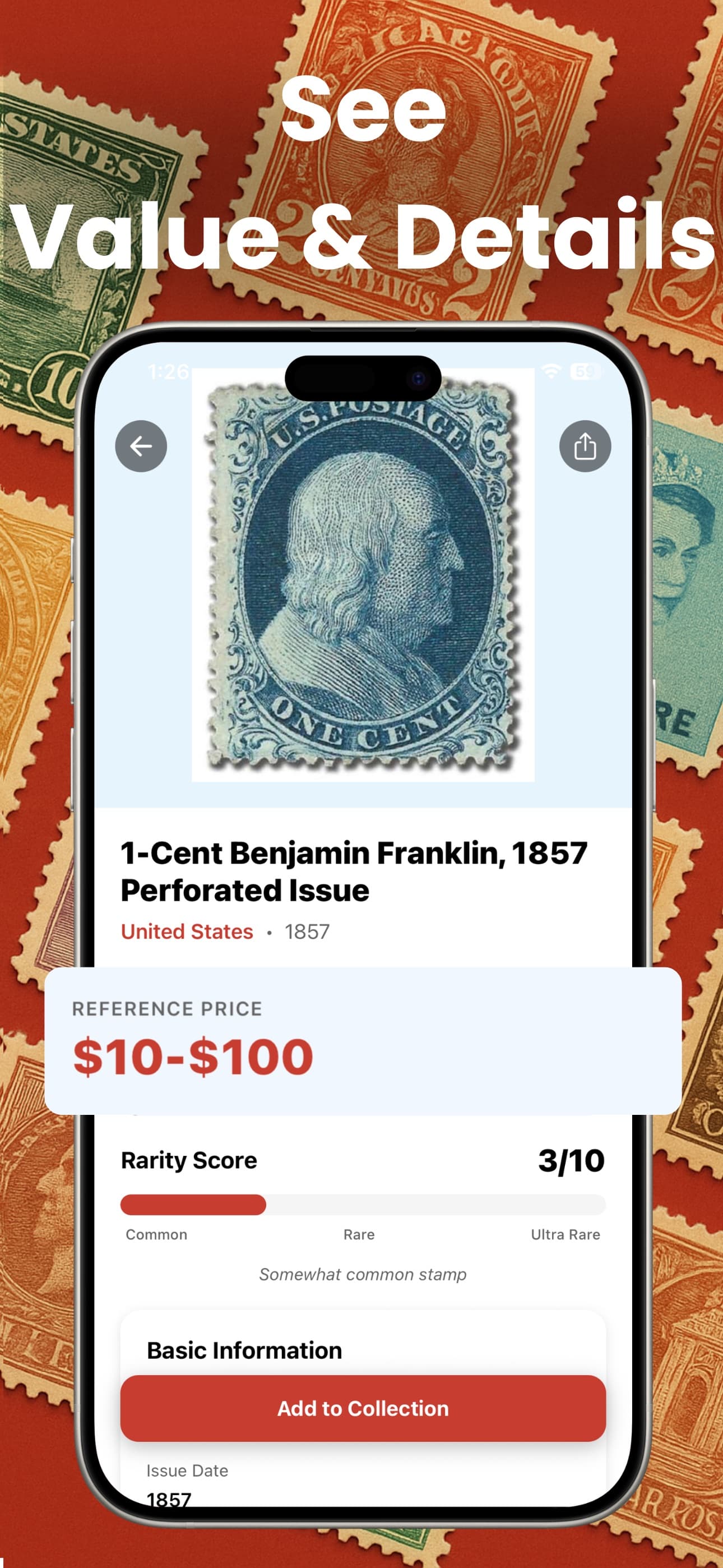
See the issue and price range
StampGo shows the stamp's name, country, year and a reference price range.
- 3
Check rarity, then varieties
A high rarity score is your cue to check perforation, paper and shade on classic issues.
- 4
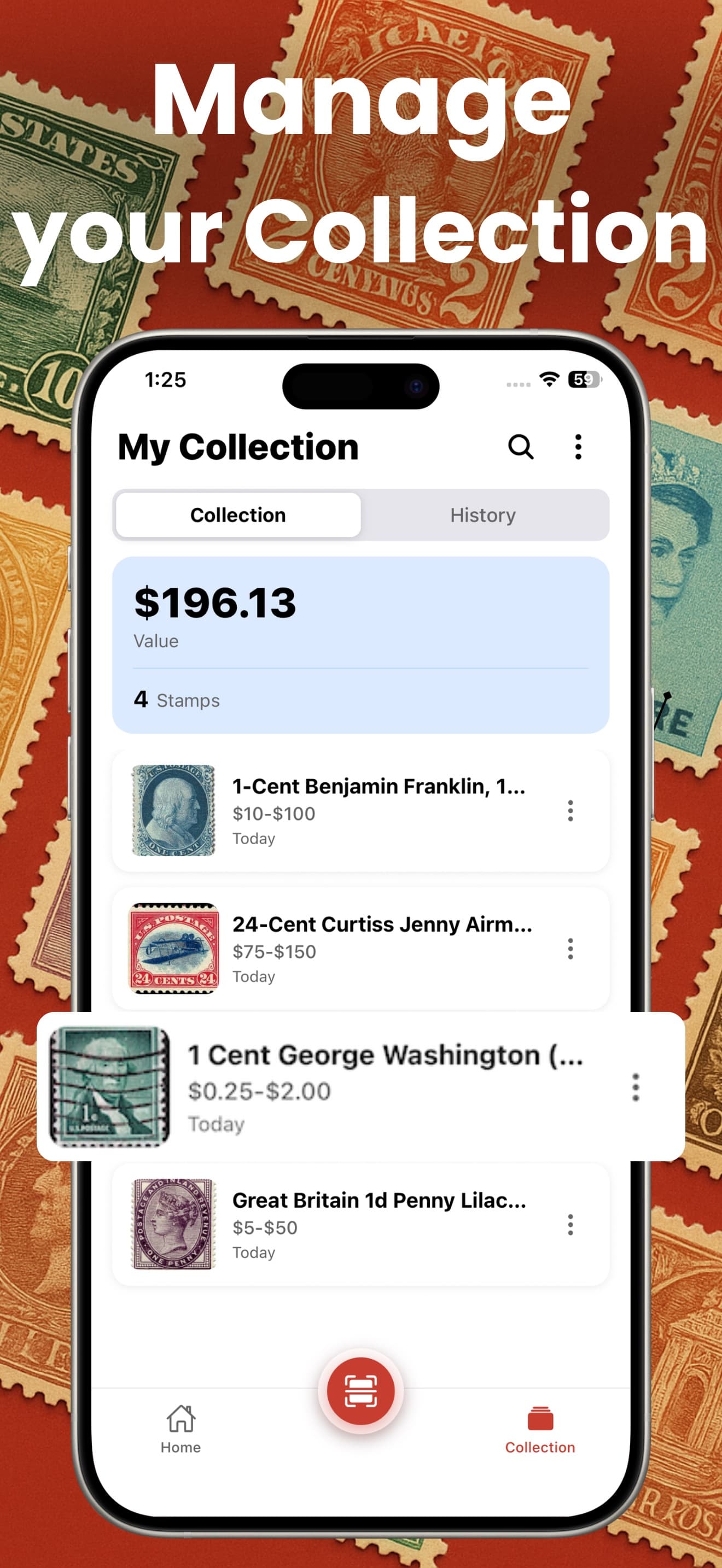
Save it to your collection
Add each stamp and track the collection's total estimated value.


Darmowa do pobrania na iOS i Androida
Pytania i odpowiedzi
Który kanadyjski znaczek jest najcenniejszy?
Twelvepence Black z 1851 roku uchodzi za najsłynniejszy rarytas Kanady. Cenne są też czyste emisje klasyczne, rzadkie odmiany Large Queens i niektóre błędy druku.
Ile wart jest znaczek Bluenose?
Bluenose 50 centów z 1929 roku kasowany kosztuje zwykle kilkadziesiąt dolarów, a czysty znacznie więcej, szczególnie dobrze wycentrowany i bez śladu podlepki. Niemal całą różnicę tłumaczy stan.
Czy kanadyjskie znaczki z Elżbietą II są coś warte?
Większość jest pospolita i warta grosze. Wyjątkiem są błędy druku, część wysokich nominałów i rzadkie odmiany poszukiwane przez specjalistów.
Z którego katalogu korzystać przy znaczkach Kanady?
W Kanadzie wzorcem jest Unitrade Specialized Catalogue of Canadian Stamps. Emisje kanadyjskie notują też Scott i Stanley Gibbons.
Ile warte są kanadyjskie Large Queens?
Large Queens z 1868 roku kosztują od kilkudziesięciu dolarów za pospolite nominały kasowane do znacznie więcej za rzadkie papiery, nakłady ze znakiem wodnym i egzemplarze czyste. Nominał 15 centów pozostawał w obiegu dziesiątki lat po wymianie pozostałych, dlatego jest najczęstszy i występuje w wielu odcieniach.
