
Identificar sellos
Números de catálogo de sellos: Edifil, Michel, Scott y Stanley Gibbons
Actualizado el · 5 min de lectura · Por el equipo de StampGo
Respuesta rápida
Un número de catálogo es el identificador único de una emisión en un catálogo concreto: Edifil en España, Michel en Alemania y buena parte de Europa, Stanley Gibbons en el Reino Unido y el Commonwealth, y Scott en Estados Unidos. Los números no coinciden entre catálogos, y las letras marcan categorías como correo aéreo o beneficencia.
Datos clave
- Qué es
- Una referencia única para una emisión, dentro de un catálogo
- España
- Edifil
- Alemania y Europa
- Michel (Mi), e Yvert et Tellier en Francia
- Reino Unido y Commonwealth
- Stanley Gibbons (SG)
- Estados Unidos
- Scott, usado también en todo el mundo por los comerciantes estadounidenses
- Importante
- Los números cambian de un catálogo a otro: di siempre cuál estás citando
What is a stamp catalogue number?
It's the ID that identifies one specific stamp issue, including its design, denomination, perforation, watermark and printing. Dealers, auctions and collectors use it so everyone knows exactly which stamp is being discussed.
“US 2¢ Washington” describes dozens of different stamps worth anything from cents to hundreds of dollars. “Scott 499” describes exactly one. That precision is the whole point, and it's why listings that quote a catalogue number are easier to trust than ones that don't.
Which stamp catalogue should I use?
Use the one used where you buy and sell: Scott in the United States, Stanley Gibbons in Britain and the Commonwealth, Michel in Germany and much of Europe, and Yvert in France.
| Catalogue | Region | Written as |
|---|---|---|
| Scott | United States, and worldwide listings used by US dealers | Scott 499, or Sc 499 |
| Stanley Gibbons | Great Britain and the Commonwealth | SG 429 |
| Michel | Germany, Austria, Switzerland and much of Europe | Mi 123 |
| Yvert et Tellier | France and French-speaking countries | YT 123 |
| Unitrade | Canada | Unitrade 341 |
The catalogues also differ in how they split varieties and how they price. A stamp listed once in Scott may have three numbers in a specialized catalogue.
What do letter prefixes in Scott numbers mean?
They mark categories outside ordinary postage. C is airmail, B is semi-postal, J is postage due, O is official, R is revenue and RW is the federal duck stamps.
| Prefix | Category | Example |
|---|---|---|
| (none) | Regular postage | Scott 499 |
| C | Airmail | Scott C3, the 24¢ Jenny |
| B | Semi-postal (a surcharge for a cause) | Scott B1 |
| E | Special delivery | Scott E1 |
| J | Postage due | Scott J1 |
| O | Official mail | Scott O1 |
| R | Revenue | Scott R1 |
| RW | Federal duck stamps | Scott RW1, the 1934 first issue |
Suffix letters matter too. A lowercase letter usually marks a variety, so Scott C3a is the Inverted Jenny rather than the normal C3.
What does catalogue value actually mean?
It's a reference retail price for that stamp in a stated grade, not the price you'll be paid. Common stamps usually sell well below catalogue, and exceptional copies can sell above it.
Catalogues also apply a minimum value to the cheapest stamps, which reflects a dealer's handling cost rather than what a single stamp fetches. Two catalogues can quote different values for the same stamp, because they price different grades and different markets. See what are my stamps worth?
How do I find the catalogue number for my stamp?
Identify the country, year and denomination first, then narrow by perforation, watermark and printing method, and match that against the catalogue's listing for the issue.
- Work out the country from the inscription or design.
- Read the denomination and currency.
- Estimate the year from the design, portrait or printed date.
- Check perforation gauge and watermark if the catalogue splits the issue.
- Match the listing, then note the number with your inventory record.
How to identify stamps covers each of those steps, and how to organize a stamp collection explains where to record the number.
How do catalogue numbers help when buying and selling?
They remove ambiguity. A number tells a buyer exactly which stamp, printing and variety is on offer, which makes listings searchable, offers comparable and disputes rare.
- Selling: a listing with a catalogue number and a condition grade attracts serious buyers. One that says “old rare stamp” attracts nobody who knows the market.
- Buying: you can compare like with like across dealers and auctions, and check recent sold prices for that exact number.
- Want lists: dealers work from numbers, so a list of numbers gets you the right stamps by post.
- Insurance and estates: an inventory of numbers and grades is far easier to value than a description of album pages.
Include the catalogue name as well as the number, because the same stamp has different numbers in Scott, SG and Michel. “SG 429” and “Scott 499” are not interchangeable, and quoting only a bare number invites confusion. See how to sell stamps.
Paso a paso
How to get from a photo to a catalogue number with StampGo
The slow part of finding a catalogue number is working out what the stamp is. That's the part an app does in seconds.
- 1
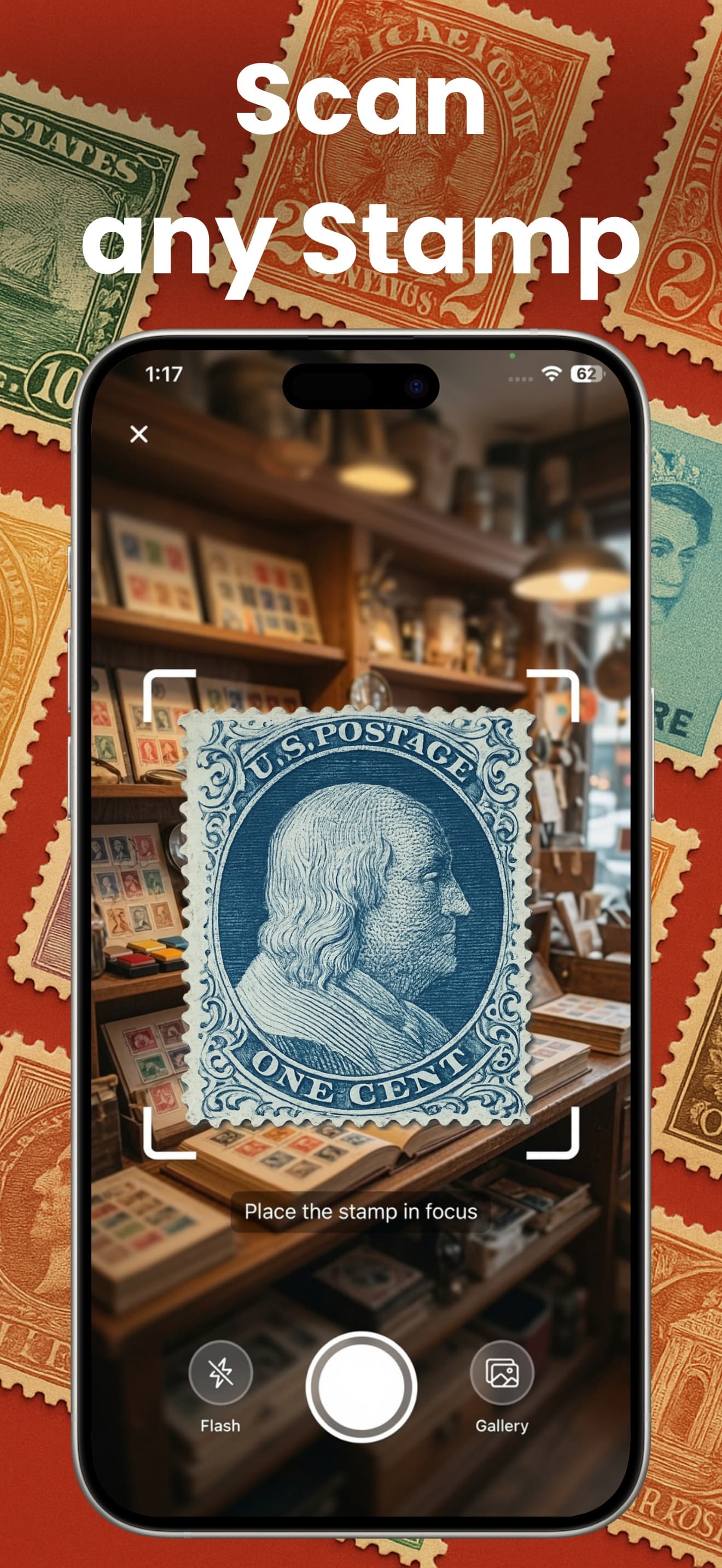
Scan the stamp
Tap Scan Now and photograph the stamp flat, with all four edges visible.
- 2
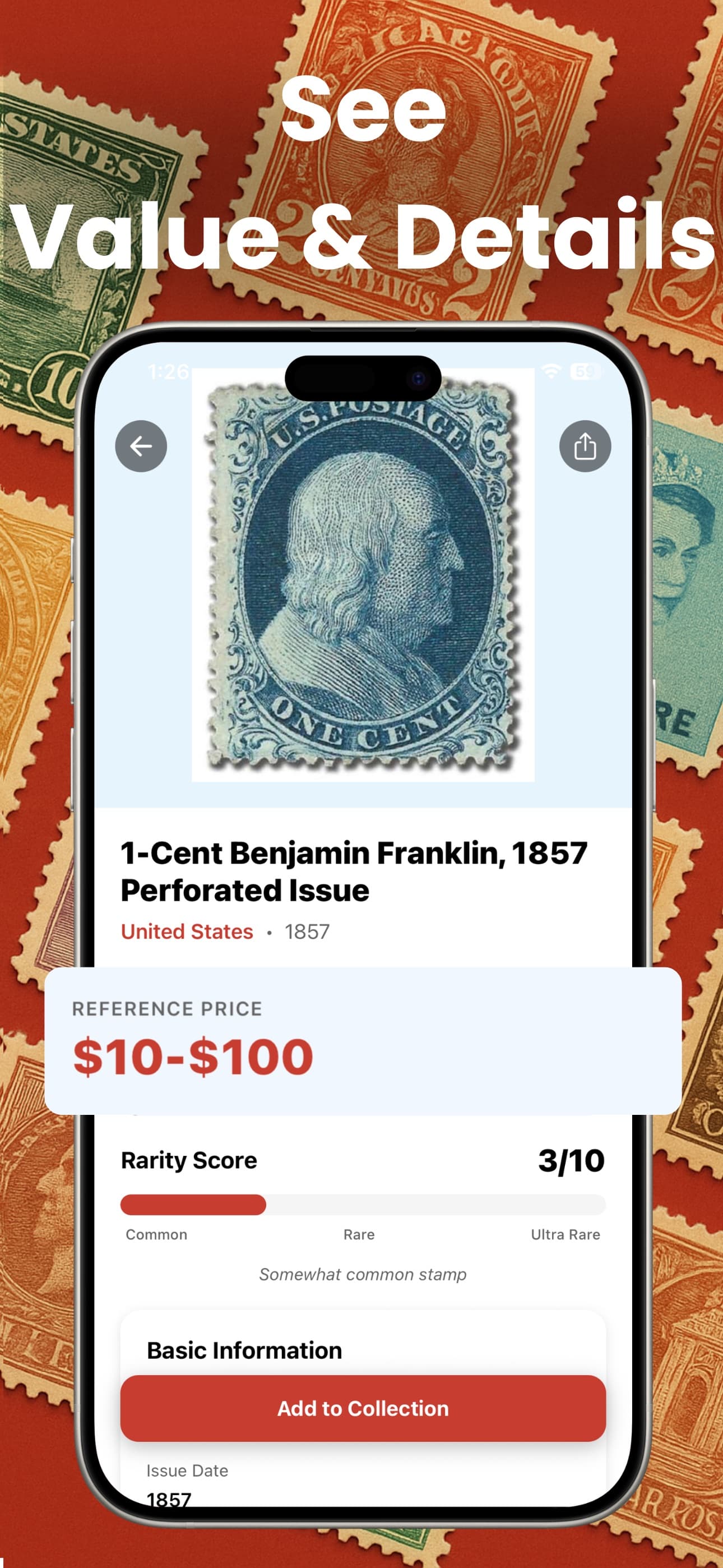
Note the issue, country and year
StampGo names the issue, which is exactly what you need to find the right catalogue listing.
- 3
Narrow the variety yourself
If the catalogue splits that issue, measure the perforations and check the watermark to pick the right number.
- 4
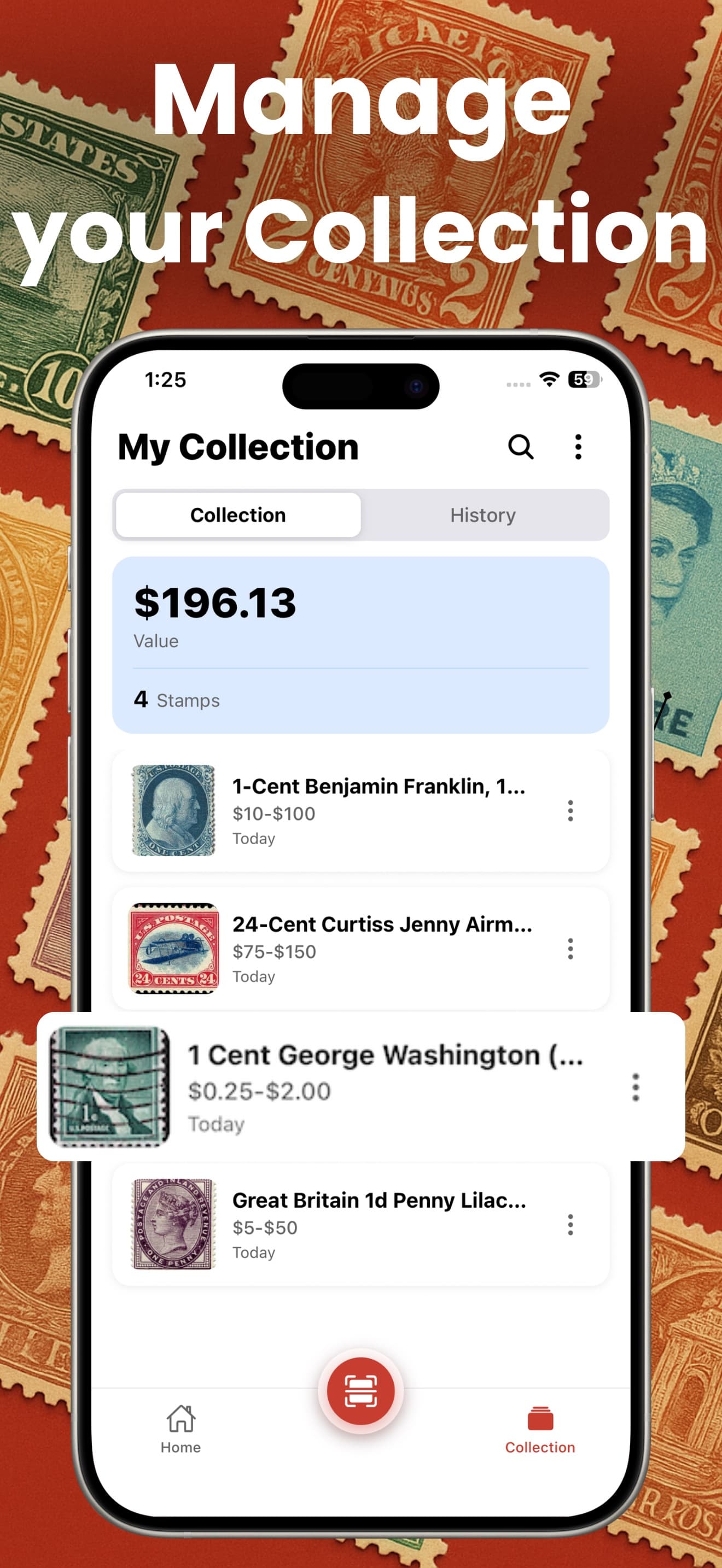
Record it with the stamp
Save the stamp to your collection and keep the catalogue number with your own inventory notes.


Descarga gratuita para iOS y Android
Preguntas frecuentes
¿Son iguales los números de Edifil y de Scott?
No. Cada catálogo numera a su manera, así que el mismo sello tiene números distintos en Edifil, Michel, SG y Scott. Indica siempre qué catálogo estás citando.
¿Necesito comprar un catálogo de sellos?
Al principio no. Las bases de datos gratuitas en línea cubren casi toda la identificación. Un catálogo impreso o digital compensa cuando te especializas en un país y necesitas detalle de variedades.
¿Qué significa «Edifil 1»?
Es el número que el catálogo Edifil asigna a una emisión concreta, identificando su diseño, valor facial, dentado e impresión, para que comprador y vendedor hablen de lo mismo.
¿Por qué dos catálogos dan valores distintos para el mismo sello?
Valoran estados y mercados diferentes. Scott valora en Very Fine para el mercado estadounidense, mientras que otros catálogos usan sus propios criterios y monedas.
¿Qué significa una letra minúscula tras el número de catálogo?
Señala una variedad del mismo sello base: un dentado, filigrana o matiz distintos, o un error. En Scott, C3a es la versión invertida del sello aéreo C3, y la diferencia de valor entre ambos es enorme.
