
Samla och sälja
Så ordnar och katalogiserar du en frimärkssamling
Uppdaterad · 5 min läsning · StampGo-teamet
Kort svar
Sortera märkena efter land och inom varje land efter år, och notera det du skulle sakna om samlingen försvann: katalognummer, skick, vad du betalade, aktuell uppskattning och förvaringsplats. Ett kalkylblad, särskild programvara eller en app fungerar lika bra. Uthållighet och säkerhetskopia väger tyngre än verktyget.
Nyckelfakta
- Standardordning
- Land, sedan utgivningsår. Det följer kataloger och album
- Alternativ
- Motivsamling, efter regeringstid eller epok, eller efter posthistoria
- Notera per märke
- Katalognummer, beskrivning, skick, inköpspris, uppskattning, plats
- Verktyg
- Kalkylblad, samlarprogram eller en app som skannar och registrerar
- Dubbletter
- Förvara i glassinekuvert per land. Det är bytes- och klubbförsäljningsmaterial
- Säkerhetskopia
- Håll en kopia av inventariet åtskild från samlingen
How should I sort a stamp collection?
By country first, then by year of issue within each country. That's the order catalogues, albums and dealers use, so anything you look up later will match.
Within a year, follow catalogue order rather than inventing your own. If you collect topically, sort by subject and then by country, and keep a note of the catalogue number anyway, because that's the language buyers speak.
- Sorted, unmounted material lives in a stockbook until you decide where it belongs.
- Mounted material goes on album pages, with mounts for unused stamps.
- Duplicates go into glassine envelopes, labelled by country and catalogue number.
- Covers are stored upright in cover boxes or sleeves, never folded.
What should a stamp inventory record?
Enough to identify the stamp and to prove what you had: catalogue number, a short description, condition, what you paid, a current estimate, and where it's stored.
| Field | Example | Why it matters |
|---|---|---|
| Catalogue number | Scott 499 / SG 429 | The unique ID dealers and buyers use |
| Description | US 1917 2¢ Washington, perf 11 | Human-readable, and catches mis-keyed numbers |
| Condition | Used, VF, light cancel | Drives the price more than anything else |
| Cost and date | $4, March 2026 | For your own records and any capital gains question |
| Current estimate | $6–$12 | A range, not a single figure |
| Location | Album 2, page 14 | Finds the stamp again in a big collection |
Add a photo for anything valuable, and record certificate numbers for expertized stamps. See stamp condition grades for consistent condition wording.
Spreadsheet, software or app?
A spreadsheet is free and flexible, dedicated software handles catalogue data and valuations, and a phone app is fastest for capturing stamps as you sort. Many collectors use an app to capture and a spreadsheet as the master record.
| Tool | Strengths | Trade-offs |
|---|---|---|
| Spreadsheet | Free, flexible, easy to back up and share | You type everything, including catalogue numbers |
| Collection software | Built-in catalogue data, reports and valuations | Costs money, and data can be tied to one program |
| Phone app | Scan, identify and log in one step; always with you | Estimates are ranges, not appraisals |
| Paper notebook | No setup, no battery | No backup, and hard to search or total |
What should I do with duplicates?
Keep them sorted in glassine envelopes by country. Duplicates are what you trade at clubs, sell in lots, or use to upgrade when you find a better copy.
Don't throw duplicates away, and don't let them clog your album. When a duplicate is in better condition than the one on your page, swap them and move the weaker copy to the trade pile. Bulk duplicates sell best as country lots. See how to sell stamps.
Why does an inventory matter?
Because it's what insurers, executors and buyers ask for. A collection with a clear list and photographs is quicker to insure, easier to divide fairly and faster to sell at a fair price.
It also protects you from buying the same stamp twice, and it shows which parts of the collection carry the value. For inherited albums, a list is the first thing to build. See inherited a stamp collection and how to value a stamp collection.
How do I tackle a big unsorted accumulation?
In passes. Sort roughly by country first, without stopping to research anything, then by era within each country, and only then look up individual stamps. Trying to do all three at once is why boxes stay unsorted for years.
- Pass one: split everything into country piles, and one pile for “no idea”. Speed matters more than accuracy here.
- Pass two: within each country, split by era or reign, using the monarch, currency or design as the clue.
- Pass three: identify individual stamps, starting with the oldest pile, and set aside anything that looks scarce.
- Pass four: mount the keepers, glassine the duplicates, and record what you've kept.
Work in short sessions with a clear table, good light and tongs. An hour of sorting done properly beats an afternoon of sorting that ends with stamps in a heap because you ran out of patience.
Steg för steg
How to catalogue a collection with StampGo
Scanning as you sort builds the inventory in the same pass, instead of leaving it as a job for later that never happens.
- 1
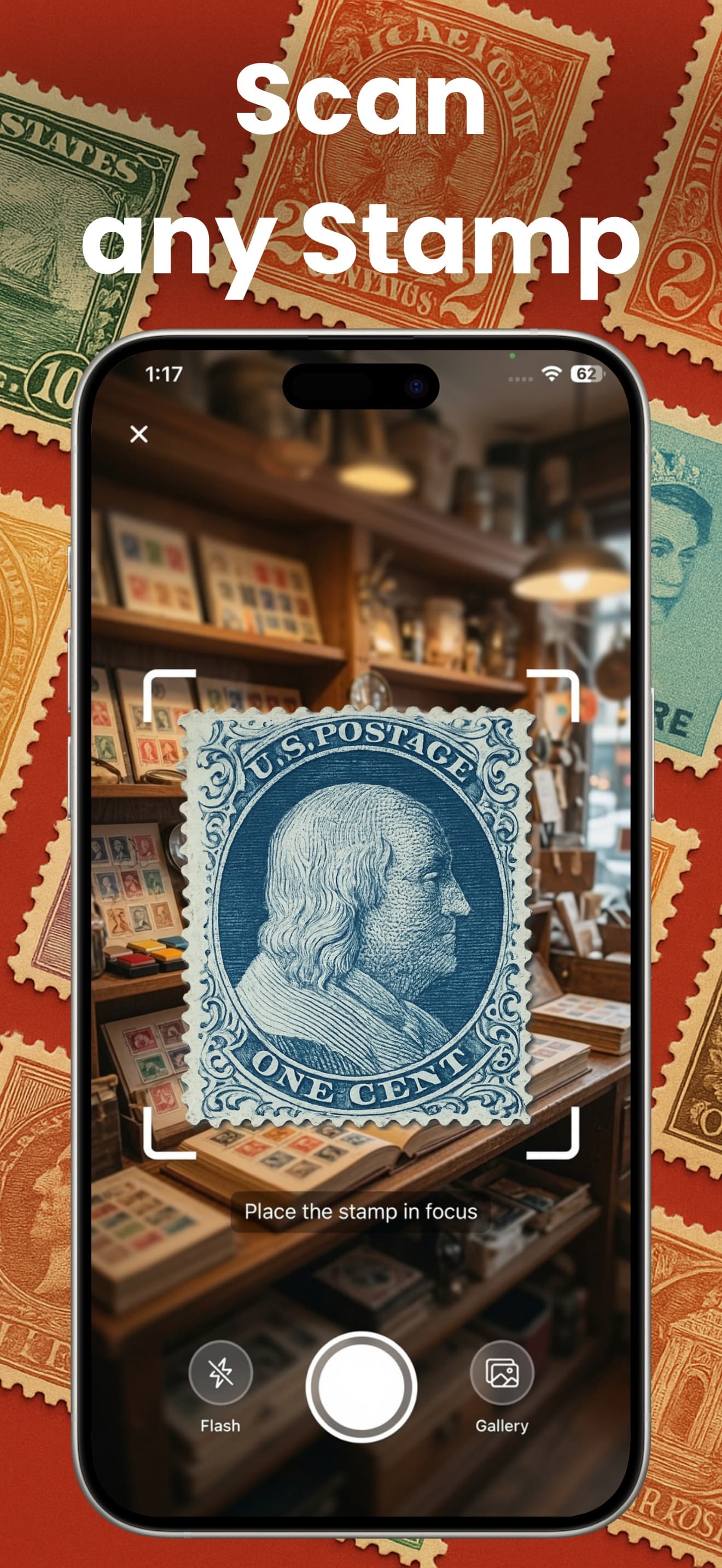
Scan each stamp as you sort
Tap Scan Now and photograph the stamp. Work through one country at a time.
- 2
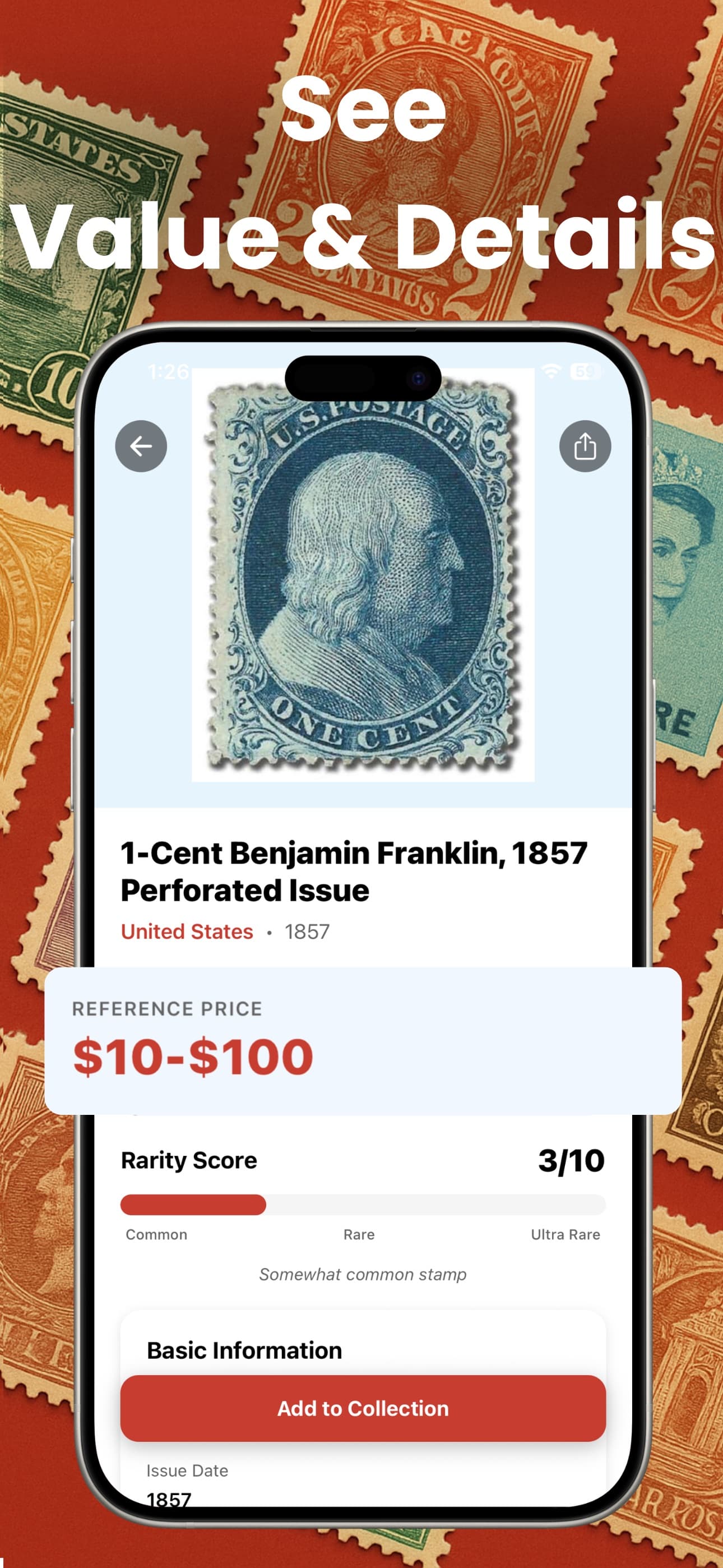
Capture the details
Each result gives you the issue, country, year and a reference price range to record.
- 3
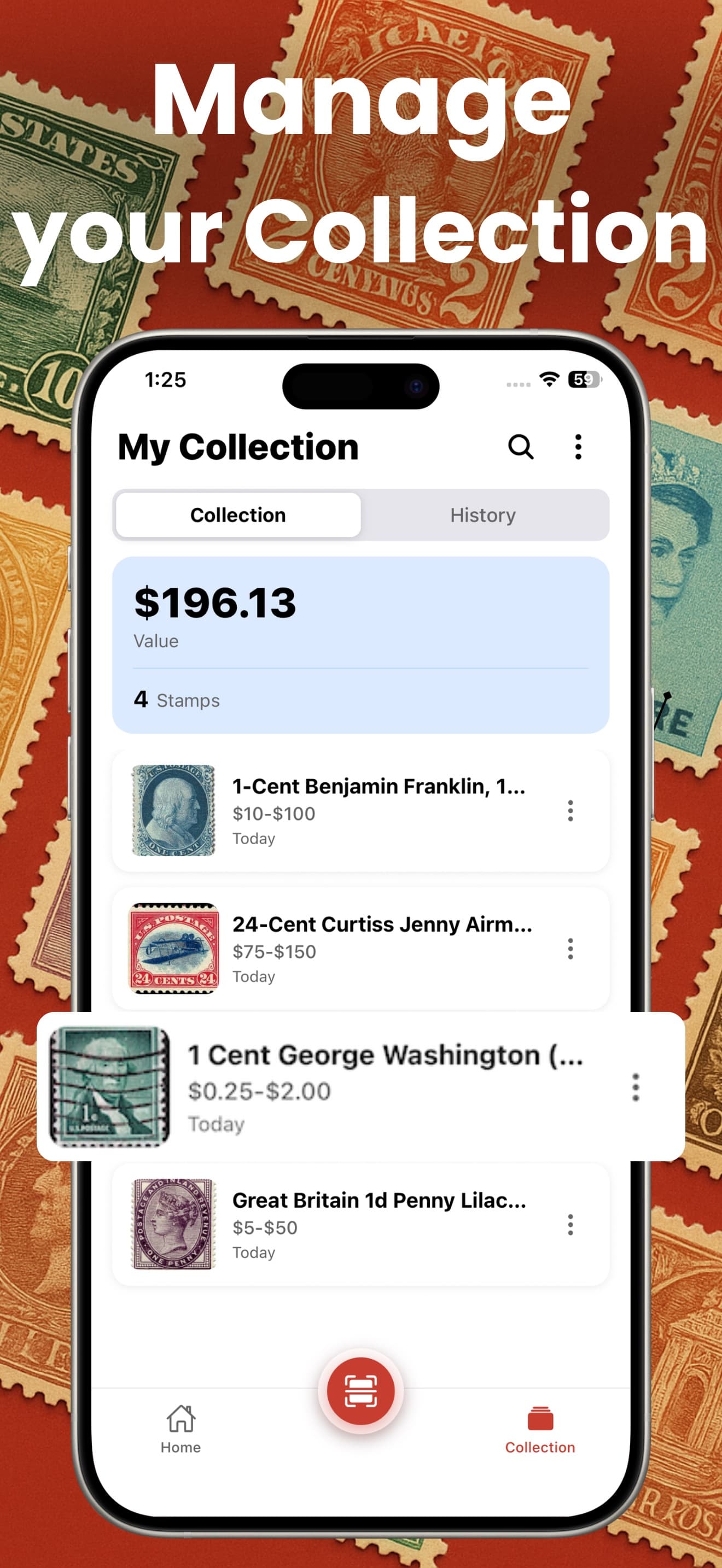
Add it to your collection
Saved stamps build a list you can search, with a running total value across everything you've logged.
- 4
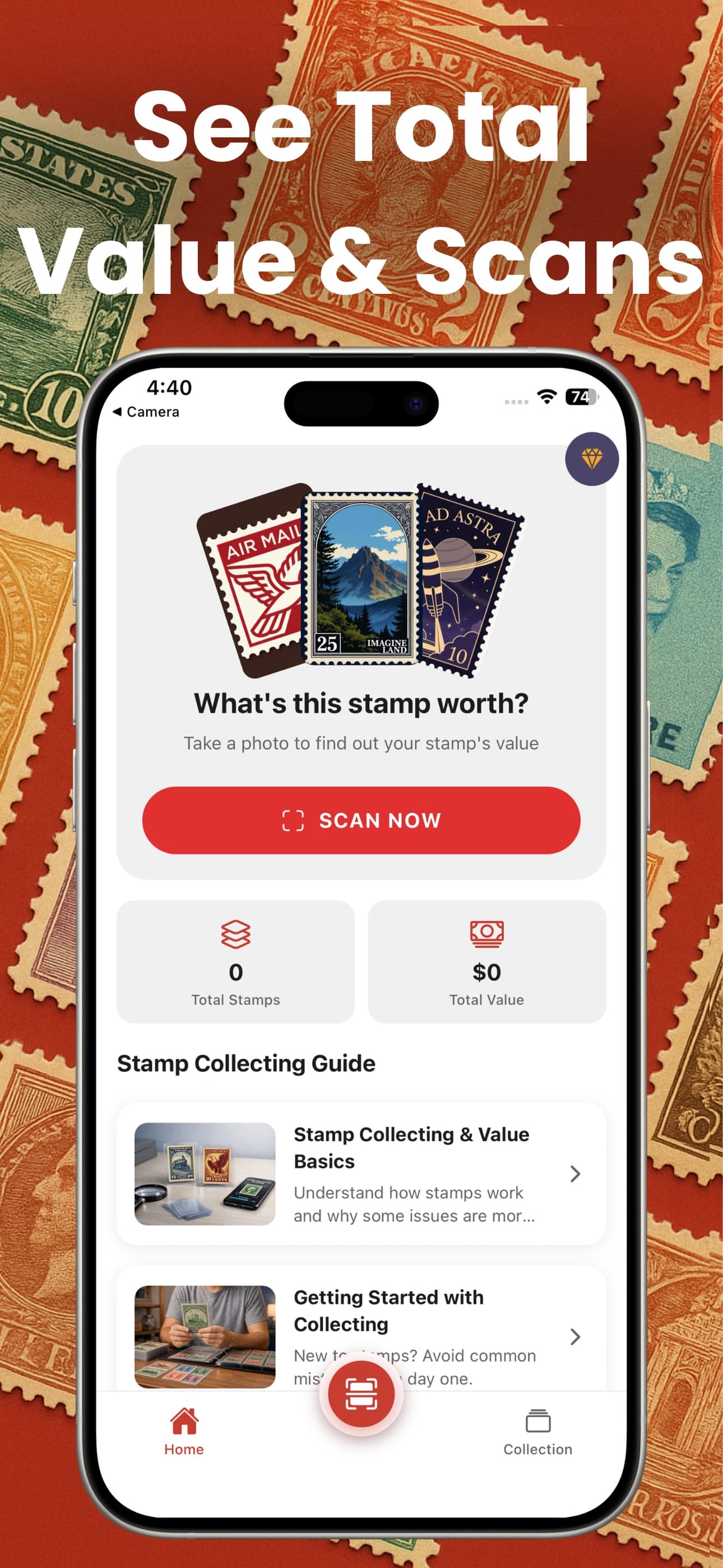
Check totals and history
The home screen shows the number of stamps and total estimated value, and the History tab keeps every scan.


Gratis att ladda ner för iOS och Android
Vanliga frågor
Vad ska jag ha i ett kalkylblad för frimärken?
En rad per märke med katalognummer, beskrivning, skick, inköpspris, förvärvsdatum, aktuell uppskattning och plats. Lägg till kolumner för intygsnummer och foton på värdefulla objekt.
Hur noterar jag skicket konsekvent?
Använd standardtermerna: postfriskt, ostämplat med fastsättare eller stämplat för gummeringen, och en centreringsbedömning som VF eller F. ”Fint exemplar” säger dig ingenting om fem år.
Ska jag ordna efter land eller motiv?
Efter land om du vill att samlingen ska följa kataloger och gå lätt att sälja. Efter motiv om du samlar för nöjes skull och vill ha vackra blad. I båda fallen ska du notera katalognumren.
Hur ofta ska jag uppdatera inventariet?
Varje gång du lägger till eller tar bort märken, och se över uppskattningarna en gång om året. Håll en säkerhetskopia åtskild från själva samlingen.
Ska jag numrera albumbladen?
Ja, så snart samlingen omfattar mer än ett album. Sidnumren ger varje märke en adress, och det är just det som gör ett inventarium verkligt sökbart och underlättar försäkring och dödsboärenden betydligt.
