
Stamp values
Error Stamps Worth Money: How to Spot a Valuable Printing Error
Updated · 5 min read · By the StampGo team
Quick answer
Error stamps are worth money when they show a major, consistent printing mistake, such as an inverted center, a missing color, missing perforations or a double impression, and only a few escaped. The 1918 Inverted Jenny is the most famous example. Minor misperforations and color shifts are “freaks” and usually worth little. Always get suspected errors expertized.
Key facts
- Errors
- Major, consistent mistakes: inverts, missing colors, imperforates, double prints, wrong paper
- Freaks
- Random, minor faults such as misperforations and color shifts. Usually low value
- Oddities
- One-off oddities, such as paper folds or inkless “albino” impressions
- Most famous
- The 1918 US Inverted Jenny: one sheet of 100 was sold
- Watch out for
- Fakes: chemically removed colors, trimmed perforations, altered stamps
- Confirm with
- An expert certificate before buying or selling
What is an error stamp?
An error stamp has a major, consistent printing mistake, such as an inverted design, a missing color, missing perforations or the wrong paper, that escaped the printer's quality checks.
Collectors sort printing mistakes into three groups, often shortened to EFOs: errors, freaks and oddities. Only true errors are consistently valuable, because they affect a whole sheet or pane in the same way and very few reach the public.
| Type | What it is | Typical value |
|---|---|---|
| Error | A major, consistent mistake: inverted center or frame, missing color, imperforate, double impression, wrong paper or watermark, inverted or missing overprint | Can be high, depending on how many exist |
| Freak | A random, inconsistent mistake: misperforation, color shift, ink smear | Usually modest |
| Oddity | A one-off: paper folds, inkless (albino) impressions | Varies, often modest |
Which error stamps are worth money?
The most valuable are inverts, missing colors and imperforates on popular stamps, where very few copies escaped. Value depends on how many exist, how famous the error is and how hard it is to fake.
- Inverts: part of the design printed upside down, like the Inverted Jenny, or the 1979 US $1 Rush Lamp “CIA invert”, of which one pane of 100 was sold.
- Missing colors: one color left out entirely on a multicolor stamp.
- Imperforates: stamps meant to be perforated but issued without perforations, usually collected in pairs to prove it.
- Double impressions: the design, or one color, printed twice.
- Inverted or missing overprints: surcharges or overprints applied upside down or left off.
How do I tell a real error from a freak or a fake?
A real error is major and consistent: a whole design element is missing or inverted, not just shifted. Freaks are small and random. Fakes are made by altering genuine stamps, so any valuable-looking error needs an expert certificate.
- Missing colors can be faked with chemicals or sunlight. Genuine examples show no trace of the missing ink.
- Imperforates can be faked by trimming the perforations off a normal stamp, which is why pairs and wide margins matter.
- Color shifts and misperforations are common freaks, not errors.
- Printer's waste, discarded material that was never issued, isn't a true error and is valued far lower.
Are modern error stamps worth money?
Some are. Missing colors and imperforates still turn up on recent issues, and genuine ones can sell for hundreds or thousands of dollars, depending on how many exist.
Modern printing is highly automated, so the errors that escape are often found as whole panes or sheets, and their value depends on how many were found. A single pane shared among a few collectors can be valuable, while a sheet of thousands spread through the market is worth much less. Check how to tell if a stamp is rare for the wider picture.
What should I do if I think I've found an error stamp?
Don't remove it from its envelope or block, and don't try to clean it. Compare it with a normal copy, check a specialized catalogue for listed errors, then send it to an expertizing service for a certificate.
- Keep it exactly as found: on cover, in a block or in its pane.
- Compare it side by side with a normal copy of the same stamp.
- Look it up in a specialized catalogue. Listed errors have their own catalogue numbers.
- Get a certificate from an expertizing service such as APEX, the Philatelic Foundation or BPA Expertising.
- Only then sell it, through a specialist auction house or a trusted dealer.
What are some famous US error stamps besides the Inverted Jenny?
The 1869 Pictorial inverts, the 1901 Pan-American inverts, the 1979 $1 Rush Lamp “CIA invert” and the 1962 Dag Hammarskjöld invert are among the best-known US errors, and each comes with a story.
- 1869 Pictorial inverts: the 15¢, 24¢ and 30¢ values exist with inverted centers or flags, and they're major rarities.
- 1901 Pan-American inverts: the 1¢, 2¢ and 4¢ values were found with inverted centers.
- 1979 $1 Rush Lamp (the “CIA invert”): a pane of 100 with its brown color printed upside down, bought at a post office in 1986.
- 1962 Dag Hammarskjöld invert: after an inverted-yellow error was found, the Post Office deliberately printed millions more inverts so nobody could profit from the scarcity, which made the error common.
The Hammarskjöld story is a good reminder that an error's value depends on how many exist, not how dramatic it looks.
Step by step
How to check a possible error stamp with StampGo
StampGo can't certify an error, but it quickly tells you what the normal stamp is, which is the first step in seeing what's different about yours.
- 1
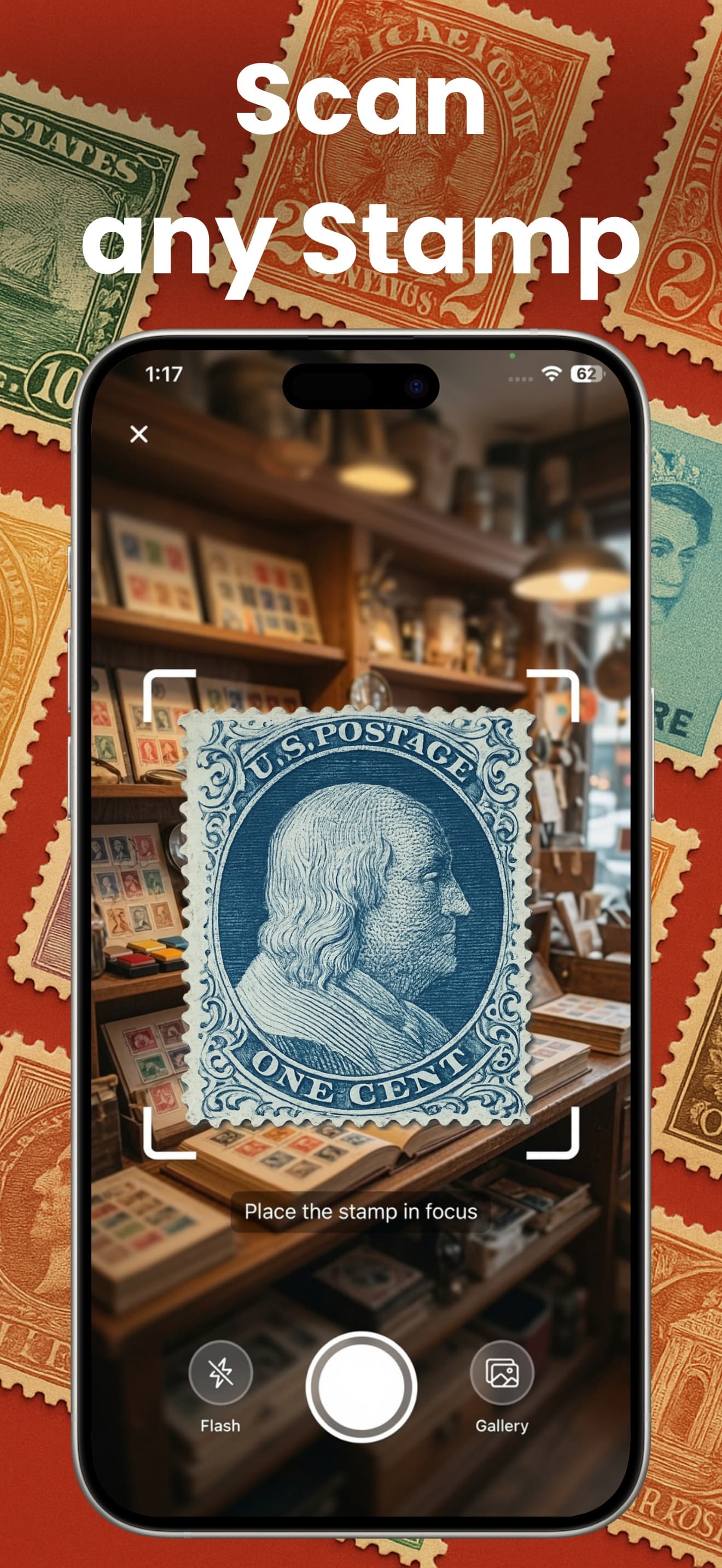
Scan the stamp
Photograph the suspected error with Scan Now, flat and in good light.
- 2
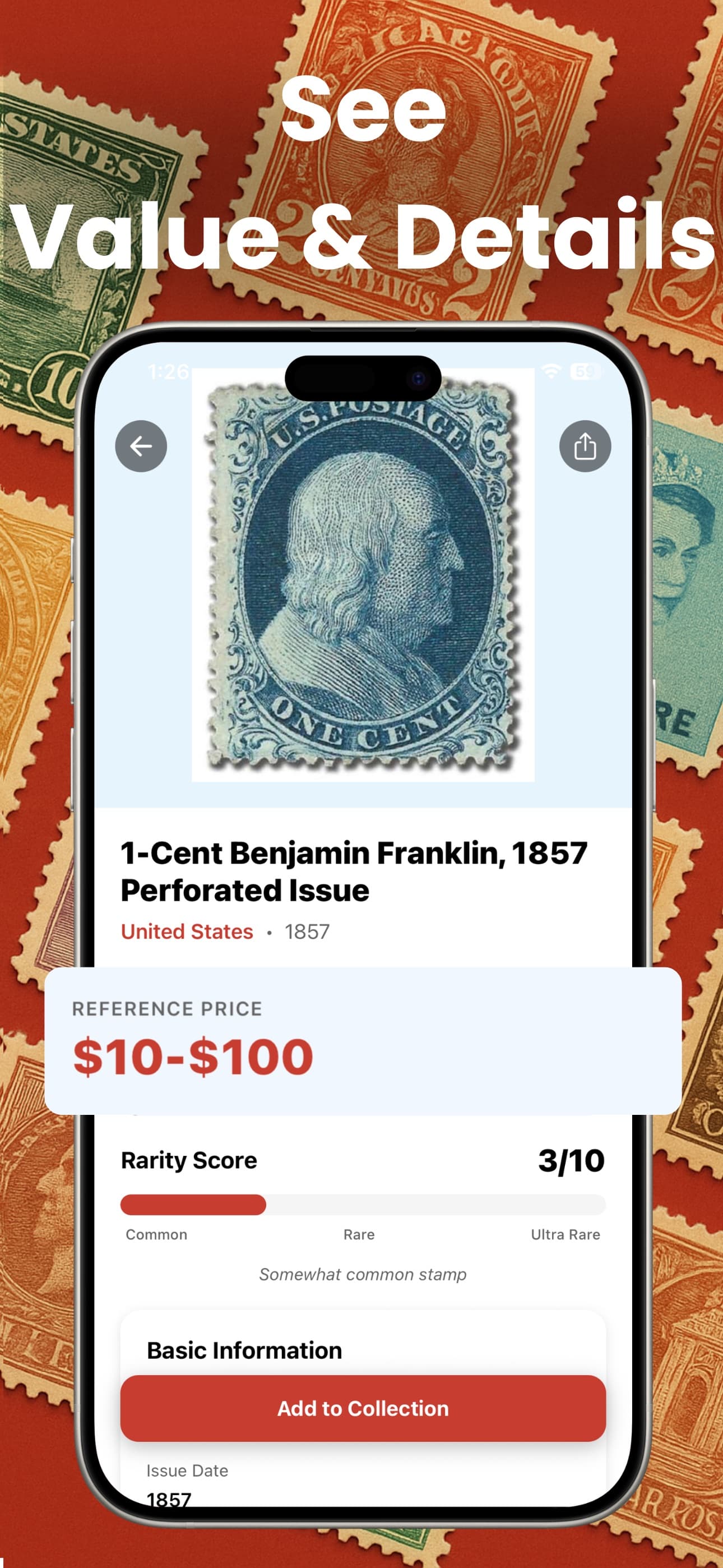
See the normal issue
The profile tells you which stamp it is, with its country, year and typical reference price.
- 3
Compare the details
Check your copy against the normal design: colors, orientation, perforations and overprints.
- 4
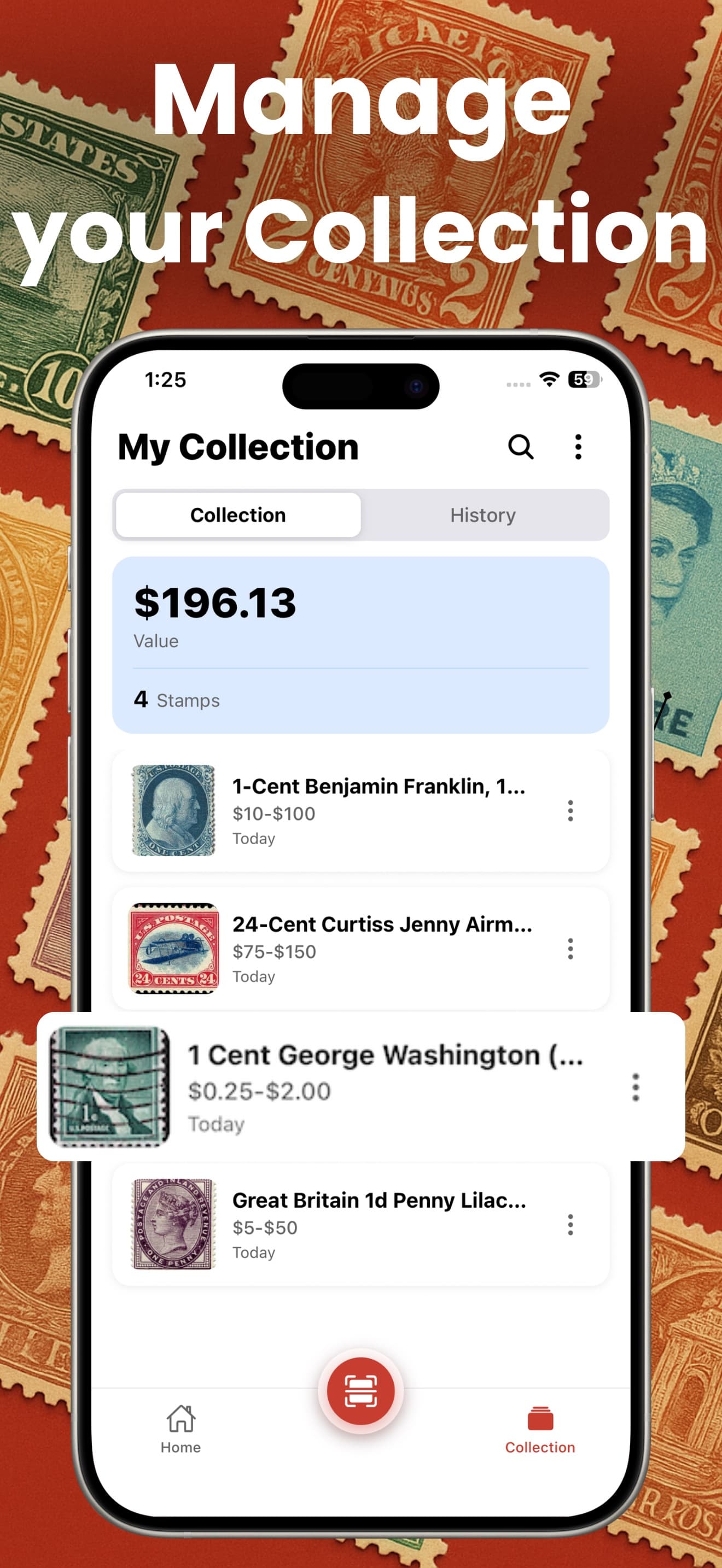
Save it and get it expertized
Add it to your collection to keep a record, then send any genuine-looking error for a certificate.


Free to download on iOS and Android
Frequently asked questions
What is the most valuable error stamp?
Among US stamps, the 1918 Inverted Jenny is the best known, with single copies selling for over a million dollars. Worldwide, Sweden's Treskilling Yellow color error is one of the most valuable stamps ever sold.
Is an off-center stamp an error?
No. Off-center stamps are common freaks caused by misaligned perforating. Dramatic misperforations interest some collectors, but they're rarely worth much.
Are stamps with missing perforations valuable?
Only if they're genuine imperforate errors, not trimmed copies. Collectors prefer imperforates in pairs or blocks, which prove the perforations were never there.
How do I know if my error stamp is fake?
Often you can't tell by eye. Missing colors, inverts and imperforates are all faked, so a valuable error should always have a certificate from a recognized expertizing service.
