
Identify stamps
Stamp Condition Grades Explained: MNH, VF, Centering and Faults
Updated · 5 min read · By the StampGo team
Quick answer
Stamp condition is judged on centering, gum, faults and cancellation. Centering runs from Superb and Extremely Fine (XF) through Very Fine (VF) and Fine (F) down to Very Good and Good. Unused stamps are described as MNH (mint never hinged), MH (hinged) or NG (no gum). Faults such as thins, tears and creases cut value sharply.
Key facts
- Centering grades
- Superb · XF (Extremely Fine) · VF (Very Fine) · F (Fine) · VG (Very Good) · G (Good)
- Numeric scale
- Some graders use 10–100, where 100 is a flawless “Gem”
- Gum terms
- MNH (mint never hinged) · MH (mint hinged) · OG (original gum) · NG (no gum)
- Common faults
- Thins, tears, creases, short or pulled perforations, stains, fading
- Used stamps
- Judged on centering, faults, and how light and neat the cancellation is
- Biggest price effect
- On classic and scarce stamps, where condition can change value several times over
What is stamp condition, and why does it matter?
Condition is a stamp's physical quality: how well it's centered, the state of its gum and perforations, any faults, and how it was cancelled. Two copies of the same stamp can differ in value many times over because of condition.
Catalogues price stamps in a stated condition. Scott, for example, prices in Very Fine. Better-than-average copies sell for more than catalogue and worse copies for less. The effect is strongest on classic and scarce stamps, where buyers compete for the best examples.
What do stamp centering grades like VF and XF mean?
Centering grades describe how evenly the design sits within the margins. XF (Extremely Fine) is almost perfectly centered, VF (Very Fine) is slightly off, and F (Fine) is noticeably off, but with the design still clear of the perforations.
| Grade | Abbreviation | What it looks like |
|---|---|---|
| Superb | S | Perfectly centered, with even margins on all four sides |
| Extremely Fine | XF | Almost perfectly centered |
| Very Fine | VF | Slightly off-center, with the design well clear of the perforations |
| Fine | F | Noticeably off-center, but the perforations don't touch the design |
| Very Good | VG | The perforations touch the design on one or more sides |
| Good / Fair | G | The perforations cut into the design |
Some graders, such as Professional Stamp Experts (PSE), also use a numeric scale from 10 to 100, where 100 is a flawless “Gem”. Numeric grades matter mostly for high-value US stamps.
What do MNH, MH, OG and NG mean?
They describe an unused stamp's gum. MNH means mint never hinged, with full original gum and no hinge mark. MH means it has been hinged. OG means original gum, and NG means no gum.
- MNH (mint never hinged): unused, with full original gum and no trace of a hinge. Usually the most valuable state for 20th-century stamps.
- MH or LH (mint hinged / lightly hinged): unused, but a stamp hinge was once attached and left a mark.
- HR (hinge remnant): part of an old hinge is still stuck on.
- OG (original gum): the gum the stamp was issued with, as opposed to regummed.
- NG (no gum): the gum has gone, often from soaking. Common on classic stamps.
- Regummed: new gum added to imitate original gum. It's a form of deception and reduces value.
Hinges were the normal way to mount stamps for most of the hobby's history, so many classic stamps are hinged. For modern stamps, collectors strongly prefer MNH.
What faults reduce a stamp's value?
Thins, tears, creases, missing or short perforations, stains, toning and fading all reduce value, often sharply. A faulty classic stamp may sell for a small fraction of the price of a sound one.
- Thin: paper lifted from the back, usually when a hinge was peeled off. Look at the back against the light.
- Tear or crease: visible when the stamp is tilted under a light.
- Short or pulled perforations: one or more perforation “teeth” missing.
- Toning or foxing: brown spots caused by damp storage.
- Fading: colors dulled by sunlight.
- Repairs: filled thins, reperforated edges or added margins. Expert certificates detect these.
How is the condition of used stamps judged?
Used stamps are judged on centering and faults, like unused ones, plus the cancellation. A light, neat cancel that leaves the design clear is preferred, while heavy, smudged cancels reduce value.
A socked-on-the-nose (SON) cancel is a neat circular date stamp centered on the stamp. It's desirable on many classic stamps because it shows the date and town clearly, and collectors of used stamps pay a premium for it.
How much does condition change a stamp's value?
Enormously for classic and scarce stamps, much less for common modern ones. A perfectly centered, fault-free copy of a scarce stamp can sell for several times the price of an average copy.
For common stamps worth a few cents, condition barely affects the price. For stamps worth more than a few dollars, it's usually the biggest factor after identification. Always grade a stamp before comparing it with sold prices. See what are my stamps worth?
Step by step
How to combine condition with StampGo's value estimate
StampGo tells you what the stamp is and its typical price range. Your condition check tells you where in that range your copy sits.
- 1
Identify the stamp
Tap Scan Now and photograph the front of the stamp, square to the camera and in good light.

- 2
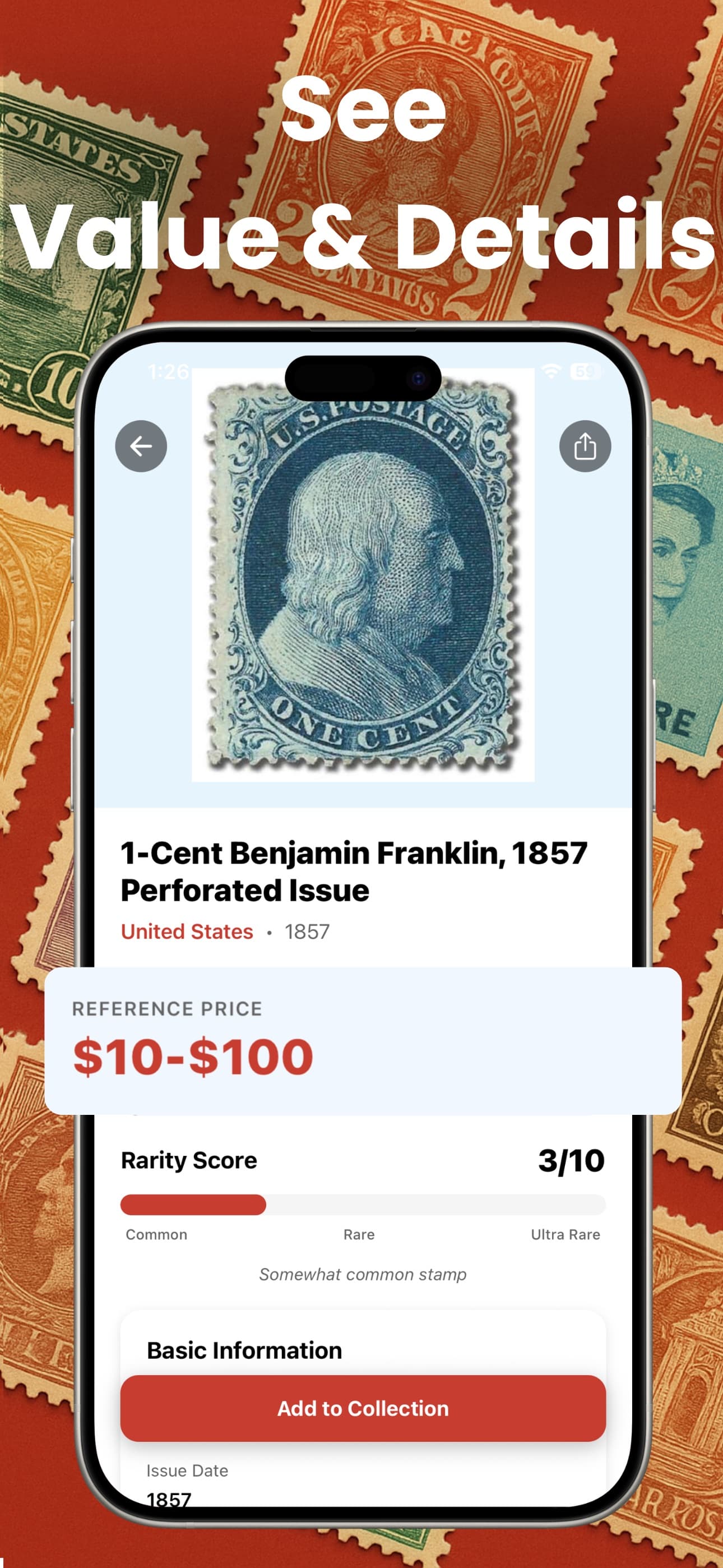
Note the reference price range
The profile shows the typical range for the issue, together with its rarity score.
- 3
Grade your copy
Check centering, perforations, gum and faults against the tables above. Sound, well-centered copies sit toward the top of the range, and faulty ones toward the bottom.
- 4
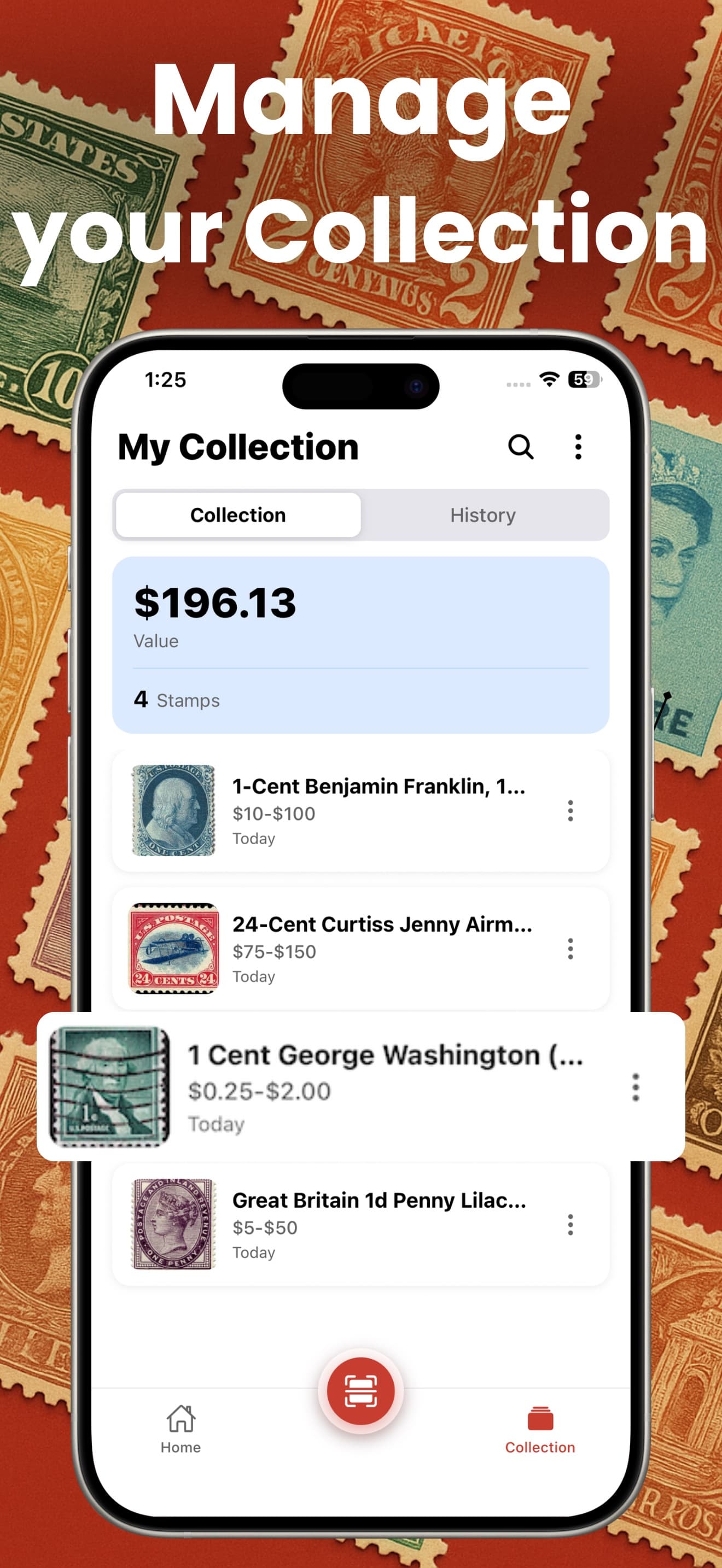
Save it to your collection
Add the stamp so you can track it and its estimate alongside the rest of your collection.


Free to download on iOS and Android
Frequently asked questions
What does MNH mean on a stamp?
Mint never hinged: the stamp is unused, has its full original gum and has never had a hinge attached. It's the most desirable state for most 20th-century stamps.
What does VF mean in stamp grading?
Very Fine: the design is slightly off-center but well clear of the perforations. Many catalogues, including Scott, price stamps in VF condition.
Is a hinged stamp worth less?
Usually, especially for stamps from the mid-20th century onward, where collectors expect MNH. On 19th-century stamps, light hinging is normal and the discount is smaller.
Should I get my stamps graded?
Only if they're valuable. Professional grading and certification cost money, and make sense for stamps worth hundreds of dollars or more, or when you're selling at auction.
