
Stamp values
How to Tell if a Stamp Is Rare: 7 Signs Collectors Look For
Updated · 5 min read · By the StampGo team
Quick answer
A stamp is rare when few copies exist, or few survive in collectable condition. Signs include an early issue date, a short period of use, a high face value, a printing error, a scarce perforation or watermark variety, and exceptional condition. StampGo gives every scan a 1–10 rarity score, from Common to Ultra Rare, as a quick first check.
Key facts
- Rarity means
- Few copies exist, or few survive in good condition
- Strongest signs
- Errors, scarce varieties, early issues, short-lived and high-value stamps
- Not a sign on its own
- Age, a famous face, or being unused
- Rare vs. valuable
- A rare stamp that few people collect can still be cheap
- Confirm with
- A specialized catalogue and an expert certificate
- Quick first check
- StampGo's 1–10 rarity score (Common → Rare → Ultra Rare)
What makes a stamp rare?
Low supply. A stamp is rare when few were printed, when few were sold before it was withdrawn or replaced, or when few have survived in collectable condition.
Rarity is about how many exist today, not how old a stamp is. Some 19th-century stamps survive by the million, while some modern errors exist as a single sheet. Collectors also separate rarity (how few exist) from value (what people pay): a stamp can be scarce but cheap if few people collect it.
What are the signs that a stamp might be rare?
Check for seven signs: an early issue, a short period of use, a high face value, a printing error, a scarce variety, an unusual postmark or use, and exceptional condition.
- An early issue. Classic-era stamps (roughly 1840–1870) were printed in smaller numbers, and fewer survive in good condition.
- A short period of use. Stamps withdrawn quickly, overprinted for a brief purpose or issued by short-lived states can be scarce.
- A high face value. High denominations were bought mainly for heavy mail and parcels, and were rarely saved, especially used.
- A printing error. Inverted centers, missing colors, imperforate sheets and double prints. See error stamps worth money.
- A scarce variety. A different perforation gauge, watermark or paper from the common version. See how to identify stamps.
- An unusual postmark or use. Early dates, rare town cancels, and unusual routes or rates, especially on the original envelope.
- Exceptional condition. A common classic stamp that's perfectly centered and fault-free is itself scarce.
What doesn't make a stamp rare?
Age alone, a famous subject and being unused don't make a stamp rare. Many old stamps, royal portraits and popular commemoratives were printed by the million.
- “It's over 100 years old.” Many stamps from the 1890s–1920s are very common.
- “It shows the Queen / Washington / Elvis.” Popular subjects were usually printed in the largest quantities. See the Elvis stamp.
- “It's never been used.” Unused modern stamps are mostly worth about face value.
- “It's a full sheet.” Sheets of common modern stamps usually sell near face value.
Which rare stamps should I look for?
Famous rarities almost never turn up in family albums, but these more realistic finds do: early classics in fine condition, key high values, recognizable errors and scarce varieties of common designs.
| Worth checking | Why |
|---|---|
| US stamps before 1900, especially unused | Lower print runs and strong demand. See US stamp values. |
| Washington-Franklin varieties (1908–1922) | Perforation, watermark and press differences create scarce versions. See the guide. |
| The Penny Black and early Penny Reds | Plates and check letters make some far scarcer. See Penny Black value. |
| Old German states (before 1871) | Bavaria, Saxony, Baden and others issued small numbers. See German stamp values. |
| Chinese stamps | Strong demand, especially for Qing dynasty and some 1960s–70s issues. See Chinese stamp values. |
| Anything that looks misprinted | Genuine errors can be valuable, but many are fakes or minor printing freaks. |
How do I confirm a stamp is rare?
Match it to a specialized catalogue listing, including its exact variety, then have promising candidates examined by an expertizing service, which issues a certificate of genuineness.
Rare stamps attract fakes and repairs: reperforated edges, regummed backs, filled thins, painted-in colors and common stamps altered to mimic a scarce variety. A certificate from a recognized service such as APEX, the Philatelic Foundation or BPA Expertising protects both buyer and seller.
Where do rare stamps usually turn up?
In older family albums, correspondence kept in attics, estate collections and dealers' mixed lots. Rare finds are most likely among pre-1900 material and items a collector set aside, rather than in modern albums.
- Old correspondence. Bundles of 19th-century letters can hold scarce stamps, postmarks and rates, so keep them intact.
- The front of old albums. Printed albums are usually arranged by date, so the earliest, and often most valuable, stamps come first.
- Stock books and envelopes marked “specials”. Collectors often set their best stamps aside.
- Unsorted accumulations. Boxes of loose stamps occasionally hold better items that nobody has checked.
Scan the candidates from each of these places first. It's much faster than working through thousands of common stamps in order.
Step by step
How to check a stamp's rarity with StampGo
StampGo gives every identified stamp a rarity score, so you can sort a pile in minutes and spend your time on the few that matter.
- 1
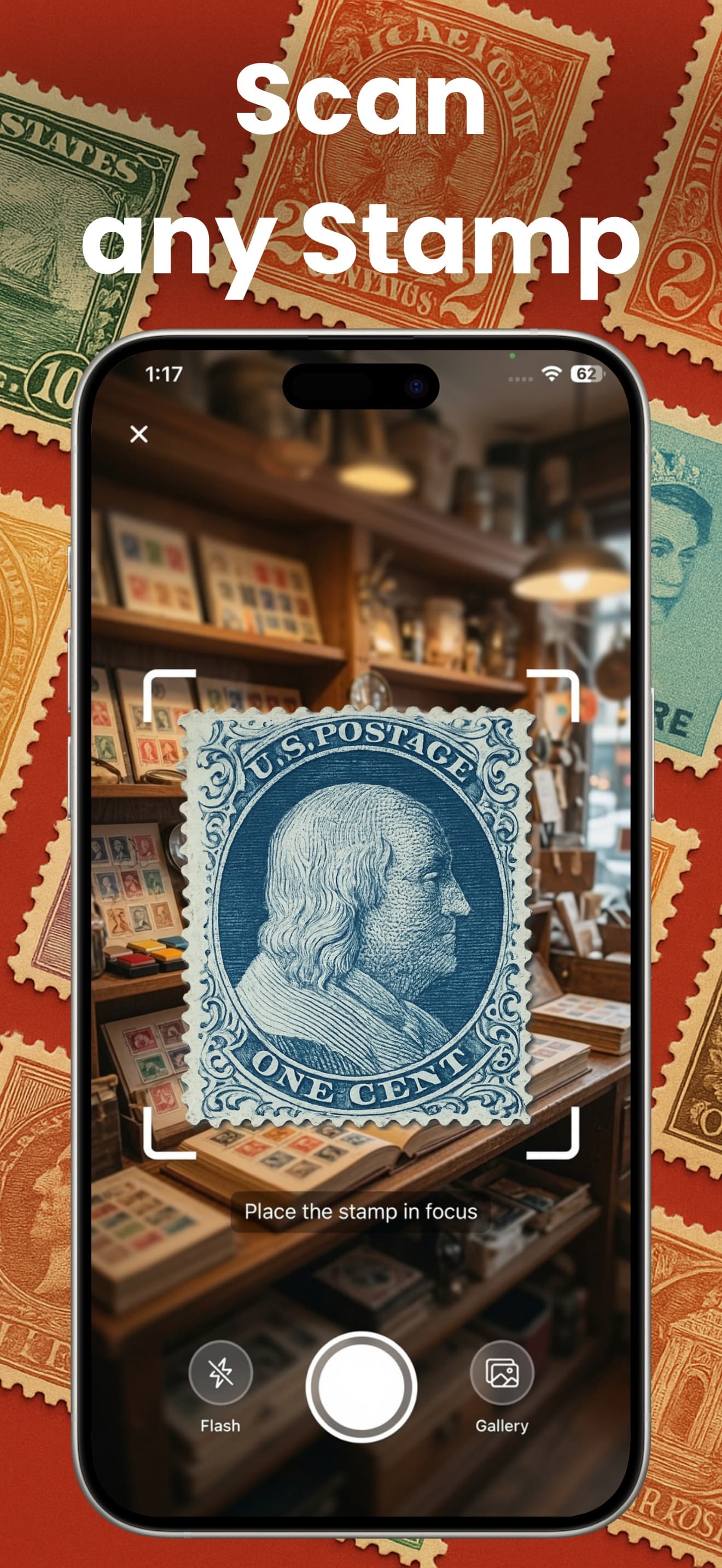
Scan the stamp
Tap Scan Now and photograph one stamp, flat and filling the frame.
- 2
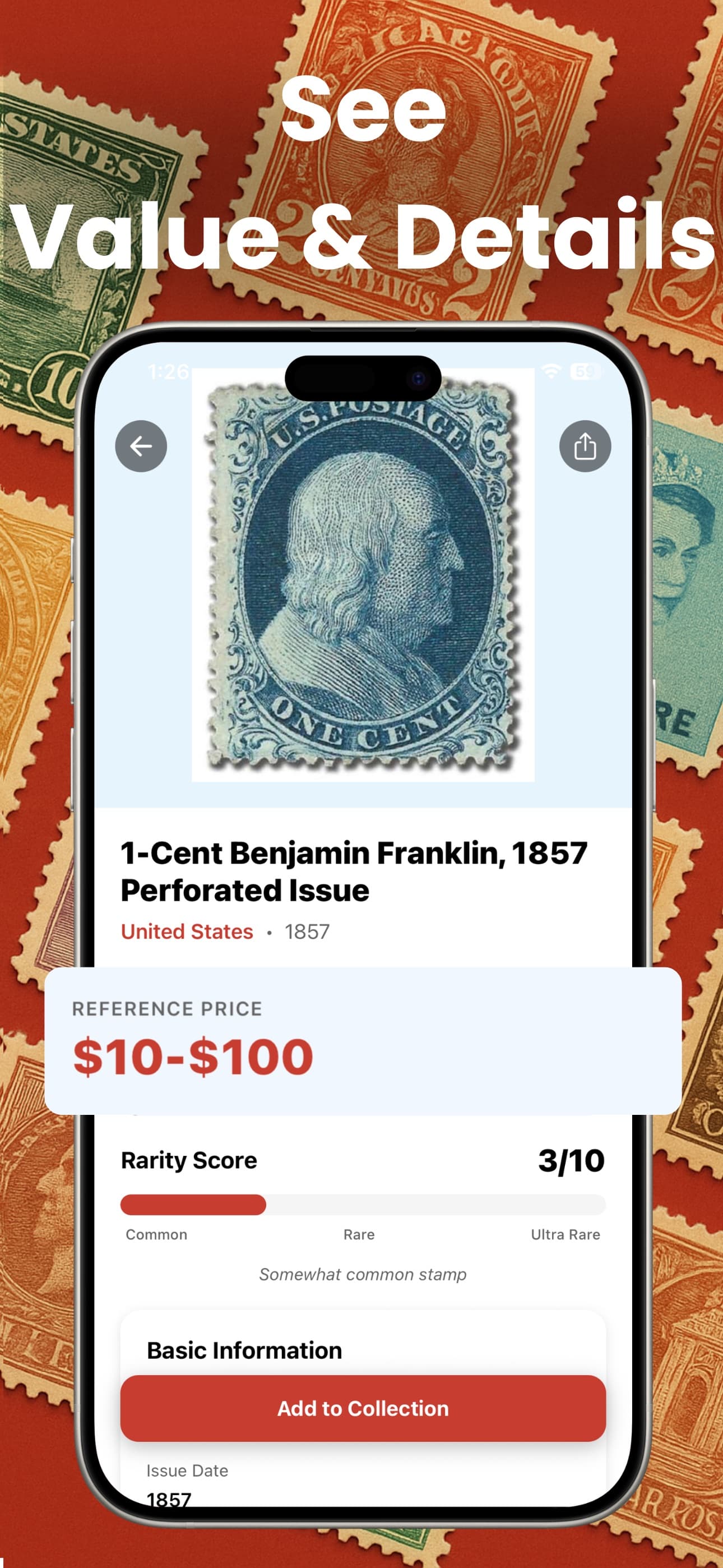
Read the rarity score
The profile shows a rarity score from 1 to 10 on a Common → Rare → Ultra Rare scale, with a short description such as “Somewhat common stamp”.
- 3
Compare it with the price range
A high rarity score together with a meaningful reference price is your signal to check condition and varieties, and to consider an expert opinion.
- 4
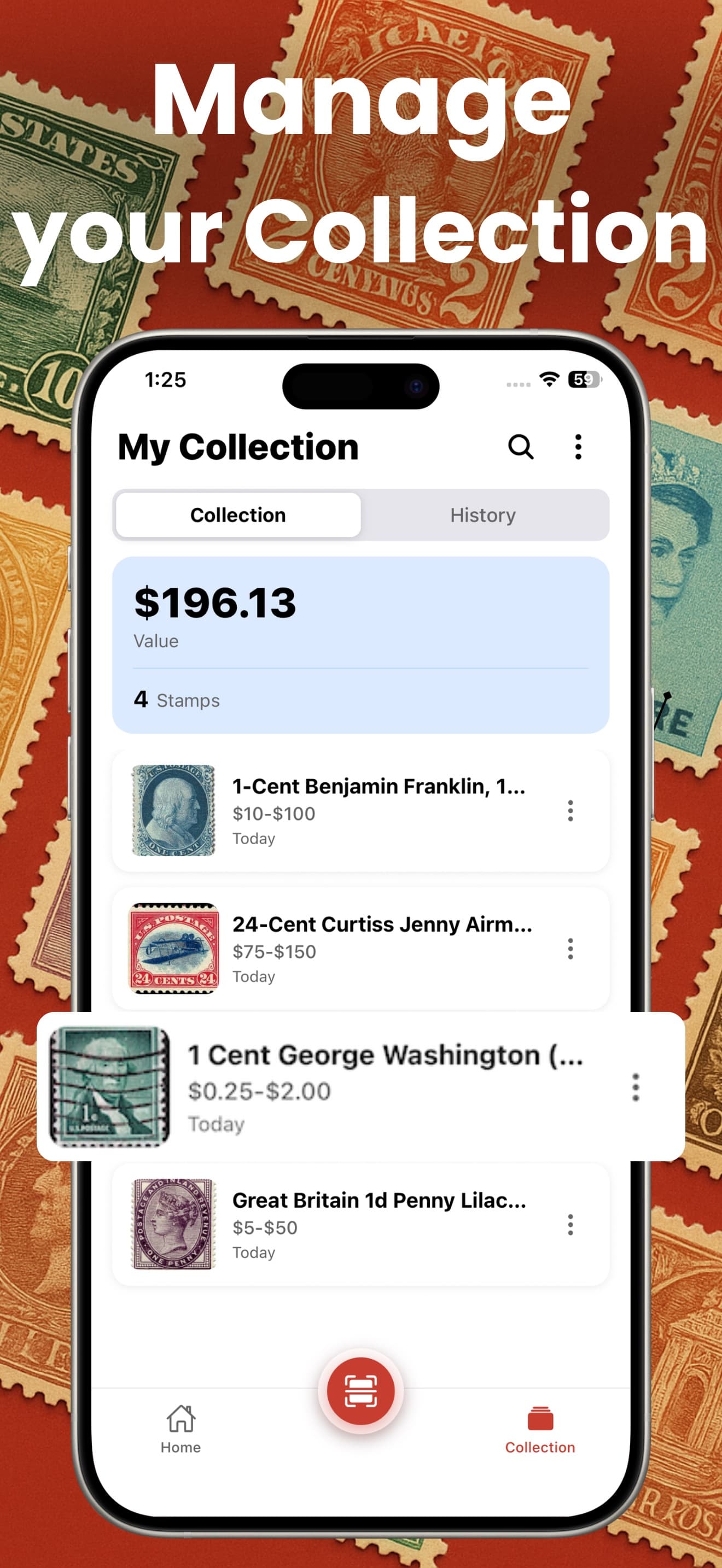
Save your finds
Add the stamp to your collection, so your rare finds and their estimated value stay in one place.


Free to download on iOS and Android
Frequently asked questions
Is a misprinted stamp rare?
Only if it's a genuine, consistent error, such as an inverted center or missing color, and few escaped. Minor misperforations and ink smudges are common “freaks” and usually add little value.
Are stamps with famous people on them rare?
Rarely. Popular subjects were printed in huge quantities because demand was high. Rarity comes from low supply, not the subject.
How rare does a stamp have to be to be valuable?
It depends on demand. A stamp with a few thousand surviving copies can be valuable if many collectors want it, while a scarcer stamp from a less-collected country may sell for less.
Can an app tell me if my stamp is rare?
It can give you a fast first signal. StampGo's rarity score is based on the identified issue. Confirming a scarce variety or an error may still need a catalogue, tools or an expert.
