
Hodnota známek
Příležitostné známky: které mají cenu vyšší než nominál
Aktualizováno · 5 min čtení · Tým StampGo
Rychlá odpověď
Většina příležitostných známek má cenu zhruba svého nominálu, protože se tiskly v milionech a sběratelé je uchovali. Cenné jsou rané emise, zvlášť americké příležitostné známky z let 1890 až 1930, vysoké nominály a pravé tiskové chyby. „Příležitostné známky“ se zlatou fólií z katalogového prodeje jsou suvenýry, ne poštovní ceniny.
Klíčová fakta
- Většina moderních emisí
- Čisté nominál, razítkované pár korun
- Cenné období
- Zhruba 1893 až 1930 u amerických příležitostných známek
- Co zvyšuje cenu
- Vysoké nominály, malé náklady, pravé chyby, dobré centrování
- Vánoční a sváteční známky
- Tištěné v obrovských nákladech. Téměř vždy běžné
- „Známky“ se zlatou fólií
- Suvenýry bez poštovní platnosti, při dalším prodeji skoro bezcenné
- Archy a aršíky
- Obvykle mají cenu nominálu jako poštovné
Are commemorative stamps worth anything?
Most are worth their face value and no more. Commemoratives are issued to be collected, so they're printed in large numbers and millions are saved in perfect condition, which is the opposite of scarcity.
That's the paradox of collecting modern issues: the stamps designed for collectors are the ones least likely to become rare. The 1993 Elvis stamp is the clearest example, with more than 500 million printed. Value comes from scarcity and demand, not from the occasion being commemorated.
What's the difference between a commemorative and a definitive?
A commemorative marks an event, person or anniversary and is printed once, for a limited period. A definitive is the everyday stamp, reprinted for years in many denominations.
Counter-intuitively, definitives more often hide the valuable varieties. They were reprinted with different perforations, watermarks and presses over long runs, which creates scarce versions. See the Washington-Franklin series for the classic case.
Which commemorative stamps are valuable?
Early issues with high face values, small print runs or famous errors. For the US that means the 1893 Columbians, 1898 Trans-Mississippi, 1901 Pan-Americans and the 1930 Graf Zeppelins.
| Issue | Why it matters |
|---|---|
| Columbian Exposition (1893) | The $1–$5 high values are the key stamps, especially unused |
| Trans-Mississippi (1898) | High values such as the $1 “Western Cattle in Storm” |
| Pan-American (1901) | Attractive bi-colours, and the famous inverted-centre errors |
| Graf Zeppelin airmails (1930) | Expensive when issued, so relatively few were sold |
| British Empire Exhibition (1924–25) | Britain's first commemoratives, so early and collected |
| Postal Union Congress £1 (1929) | The key British commemorative of the period |
Condition decides where in the range a copy falls. See stamp condition grades, and error stamps worth money for the inverts.
Why are modern commemoratives worth so little?
Because supply overwhelms demand. Post offices print tens of millions, collectors save whole sheets unused, and far more survive in perfect condition than there are buyers.
Unused modern commemoratives keep one solid use: they're valid postage. Sheets bought years ago can go on today's mail at their printed value, which usually beats what a dealer would pay. In the US, stamps issued since 1860 remain valid. See how to sell stamps.
What are gold-foil “commemorative” stamps worth?
Very little. Gold-foil replicas sold by mail-order and TV marketing firms are novelty items, not postage, and there's almost no collector market for them.
They're usually sold as “tributes” or “collector editions”, often in presentation folders with certificates of authenticity that authenticate nothing more than the novelty itself. The gold content is a microscopic layer, and the resale price is typically a small fraction of what was paid. The same caution applies to “collector edition” sheets from private mints.
What are Christmas stamps worth?
Almost always face value. Christmas issues are among the highest-volume stamps any post office prints, and they're saved in quantity every year.
The exceptions are the same as everywhere else: genuine errors, the earliest issues from a country's Christmas series, and unusual varieties. Christmas seals, the charity labels sold alongside stamps, are collected separately and are not valid postage.
Are commemorative first day covers and souvenir sheets worth more?
Usually not. First day covers for modern commemoratives were produced in huge numbers, and souvenir sheets tend to sell at or near face value. Both are attractive, and both are common.
Souvenir sheets and miniature sheets are issued specifically to be bought by collectors, so the same supply problem applies: almost every one printed survives in perfect condition. The exceptions are early sheets, limited overprints for exhibitions, and genuine errors.
- Modern first day covers: typically a few dollars at most, and often less than the stamps' face value.
- Souvenir sheets: around face value, with a small premium for popular topics.
- Presentation packs and year books: usually worth less than the stamps inside them.
- Worth checking: anything pre-1940, hand-painted cachets, and sheets with printing errors.
See first day cover value for what makes a cover worth more than its stamps.
Krok za krokem
How to check a commemorative with StampGo
Commemoratives are easy to scan in batches, because you're usually sorting a shoebox of modern issues looking for the few older ones that matter.
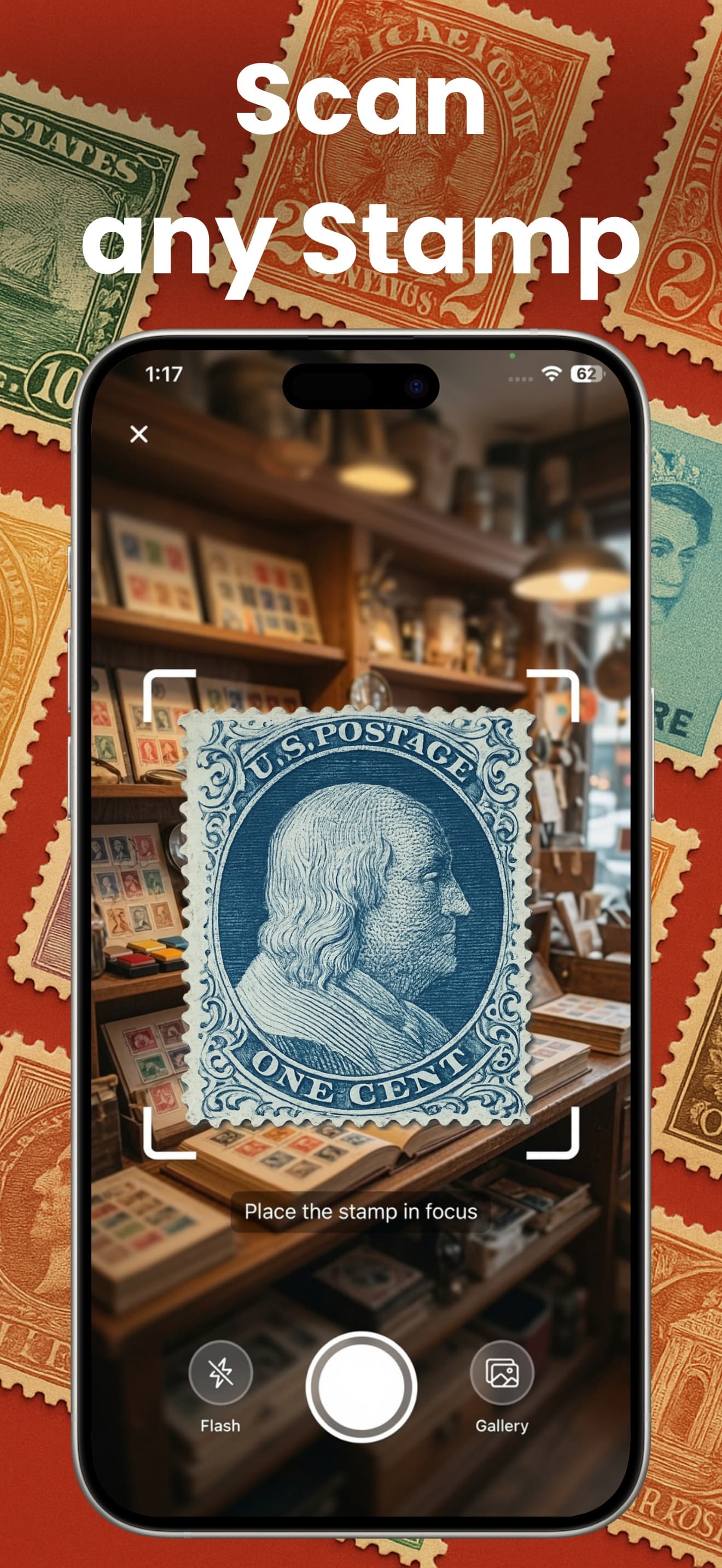
- 1
Scan the stamp
Tap Scan Now and photograph one stamp at a time.
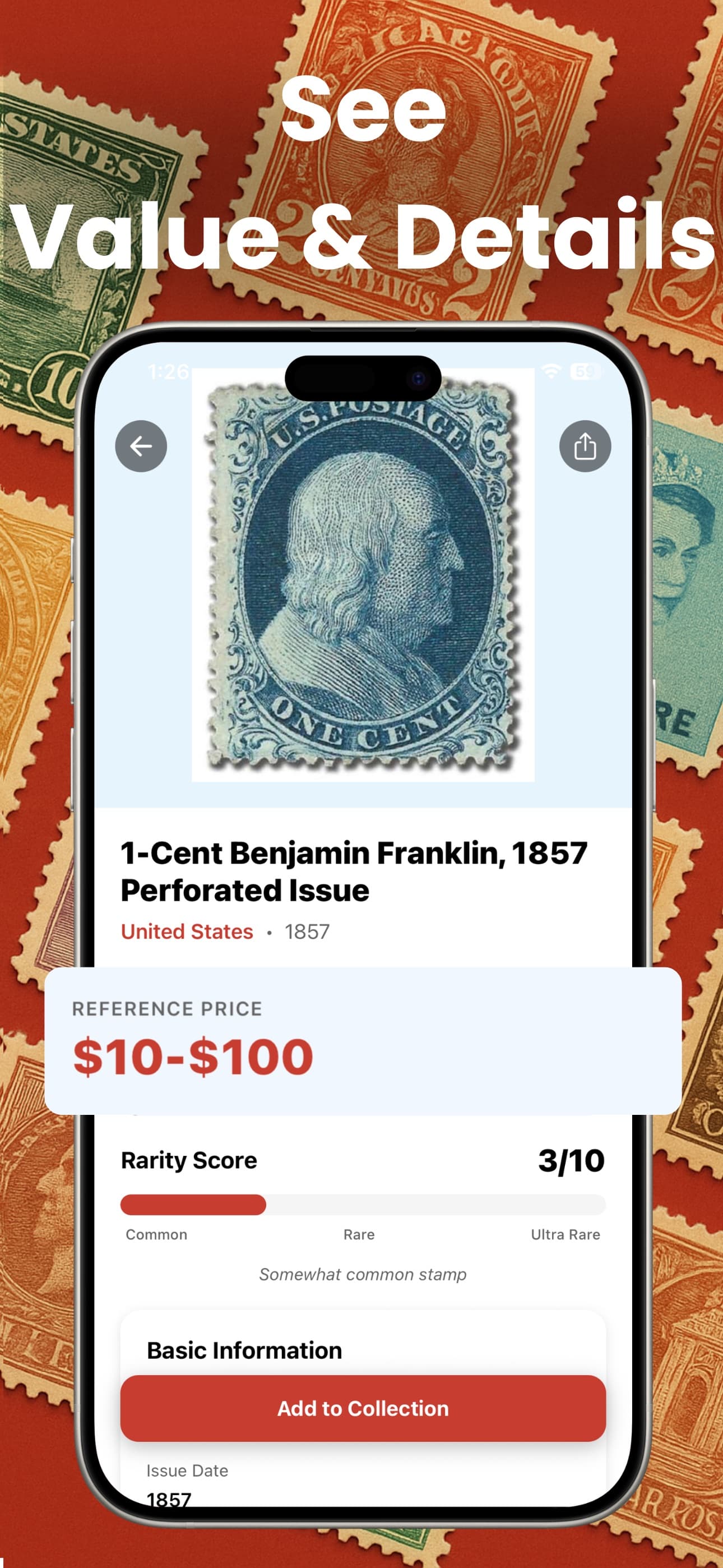
- 2
Check the year and price range
Anything issued before about 1930 with a meaningful reference price deserves a closer look.
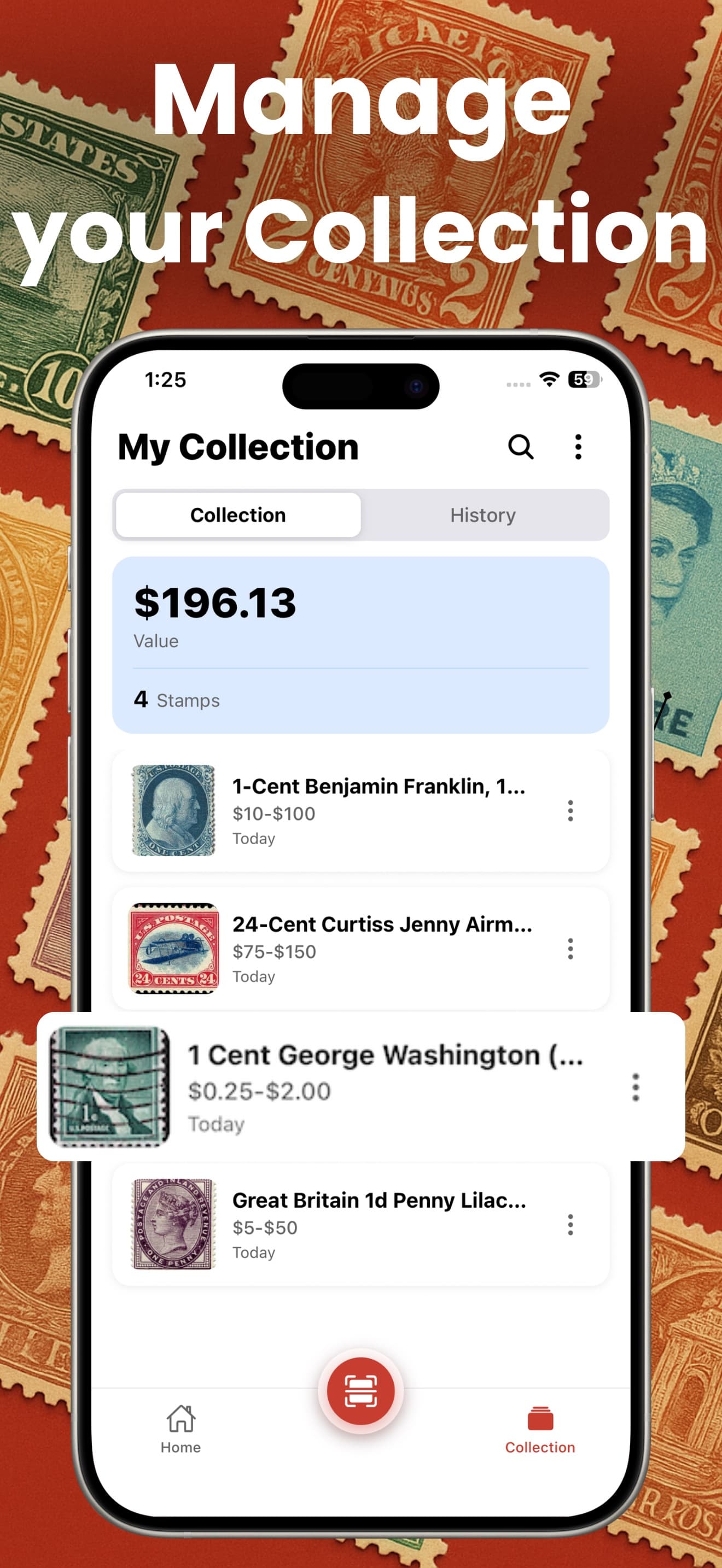
- 3
Set aside the keepers
Add the better stamps to your collection and leave the modern face-value ones in the postage pile.


Zdarma ke stažení pro iOS i Android
Časté dotazy
Má čistý příležitostný arch cenu vyšší než nominál?
Zřídka. Moderní archy se prodávají za nominál nebo pod ním, protože se jich uchovalo příliš mnoho. Nejspolehlivější využití je použít je jako poštovné.
Mají příležitostné známky ze sedmdesátých a osmdesátých let cenu?
Až na výjimky ne. Tiskly se v obrovských množstvích. V této době vytvářejí hodnotu pravé tiskové chyby, ne emise samotné.
Která americká příležitostná známka má nejvyšší cenu?
K nejcennějším patří chyby s převráceným středem z emise Pan-American z roku 1901 a vysoké nominály emise Columbian z roku 1893, spolu s leteckými Graf Zeppelin z roku 1930.
Mám staré příležitostné známky použít jako poštovné?
Pokud jsou běžné a čisté, klidně. V USA zůstávají známky vydané od roku 1860 platné, takže jejich použitím získáte plný nominál, obvykle víc, než by nabídl obchodník.
Vydávají se příležitostné známky i dnes?
Ano, každý rok, a sběratelům i lidem hledajícím dárek se stále líbí. Jen nečekejte zhodnocení: náklady jsou vysoké a známky se uchovávají v perfektním stavu, právě proto zůstávají běžné.
Prodělám, když čisté příležitostné známky nalepím na dopis?
Téměř nikdy. Většina moderních příležitostných známek má stejně cenu nominálu, takže jejich použití nic nestojí a ušetří nákup nového poštovného. Jen si napřed zkontrolujte vše zhruba před rokem 1940.
