
Frimærkers værdi
Særfrimærker: hvilke der er mere værd end pålydende
Opdateret · 5 min. læsning · StampGo-teamet
Kort svar
De fleste særfrimærker er cirka pålydende værd, fordi de blev trykt i millioner og gemt af samlere. De værdifulde er tidlige udgaver, især amerikanske særfrimærker fra 1890'erne til 1930, høje værdier og ægte fejltryk. »Særfrimærker« med guldfolie, der sælges via postordre, er souvenirs, ikke porto.
Nøglefakta
- De fleste moderne særfrimærker
- Pålydende ubrugte, nogle få øre stemplede
- Værdifuld periode
- Cirka 1893 til 1930 for amerikanske særfrimærker
- Det der løfter værdien
- Høje værdier, små oplag, ægte fejltryk, god centrering
- Jule- og helligdagsmærker
- Trykt i enorme oplag. Næsten altid almindelige
- »Mærker« med guldfolie
- Souvenirs uden portoværdi og næsten intet værd ved videresalg
- Ark og blokke
- Som regel pålydende værd som porto
Are commemorative stamps worth anything?
Most are worth their face value and no more. Commemoratives are issued to be collected, so they're printed in large numbers and millions are saved in perfect condition, which is the opposite of scarcity.
That's the paradox of collecting modern issues: the stamps designed for collectors are the ones least likely to become rare. The 1993 Elvis stamp is the clearest example, with more than 500 million printed. Value comes from scarcity and demand, not from the occasion being commemorated.
What's the difference between a commemorative and a definitive?
A commemorative marks an event, person or anniversary and is printed once, for a limited period. A definitive is the everyday stamp, reprinted for years in many denominations.
Counter-intuitively, definitives more often hide the valuable varieties. They were reprinted with different perforations, watermarks and presses over long runs, which creates scarce versions. See the Washington-Franklin series for the classic case.
Which commemorative stamps are valuable?
Early issues with high face values, small print runs or famous errors. For the US that means the 1893 Columbians, 1898 Trans-Mississippi, 1901 Pan-Americans and the 1930 Graf Zeppelins.
| Issue | Why it matters |
|---|---|
| Columbian Exposition (1893) | The $1–$5 high values are the key stamps, especially unused |
| Trans-Mississippi (1898) | High values such as the $1 “Western Cattle in Storm” |
| Pan-American (1901) | Attractive bi-colours, and the famous inverted-centre errors |
| Graf Zeppelin airmails (1930) | Expensive when issued, so relatively few were sold |
| British Empire Exhibition (1924–25) | Britain's first commemoratives, so early and collected |
| Postal Union Congress £1 (1929) | The key British commemorative of the period |
Condition decides where in the range a copy falls. See stamp condition grades, and error stamps worth money for the inverts.
Why are modern commemoratives worth so little?
Because supply overwhelms demand. Post offices print tens of millions, collectors save whole sheets unused, and far more survive in perfect condition than there are buyers.
Unused modern commemoratives keep one solid use: they're valid postage. Sheets bought years ago can go on today's mail at their printed value, which usually beats what a dealer would pay. In the US, stamps issued since 1860 remain valid. See how to sell stamps.
What are gold-foil “commemorative” stamps worth?
Very little. Gold-foil replicas sold by mail-order and TV marketing firms are novelty items, not postage, and there's almost no collector market for them.
They're usually sold as “tributes” or “collector editions”, often in presentation folders with certificates of authenticity that authenticate nothing more than the novelty itself. The gold content is a microscopic layer, and the resale price is typically a small fraction of what was paid. The same caution applies to “collector edition” sheets from private mints.
What are Christmas stamps worth?
Almost always face value. Christmas issues are among the highest-volume stamps any post office prints, and they're saved in quantity every year.
The exceptions are the same as everywhere else: genuine errors, the earliest issues from a country's Christmas series, and unusual varieties. Christmas seals, the charity labels sold alongside stamps, are collected separately and are not valid postage.
Are commemorative first day covers and souvenir sheets worth more?
Usually not. First day covers for modern commemoratives were produced in huge numbers, and souvenir sheets tend to sell at or near face value. Both are attractive, and both are common.
Souvenir sheets and miniature sheets are issued specifically to be bought by collectors, so the same supply problem applies: almost every one printed survives in perfect condition. The exceptions are early sheets, limited overprints for exhibitions, and genuine errors.
- Modern first day covers: typically a few dollars at most, and often less than the stamps' face value.
- Souvenir sheets: around face value, with a small premium for popular topics.
- Presentation packs and year books: usually worth less than the stamps inside them.
- Worth checking: anything pre-1940, hand-painted cachets, and sheets with printing errors.
See first day cover value for what makes a cover worth more than its stamps.
Trin for trin
How to check a commemorative with StampGo
Commemoratives are easy to scan in batches, because you're usually sorting a shoebox of modern issues looking for the few older ones that matter.
- 1
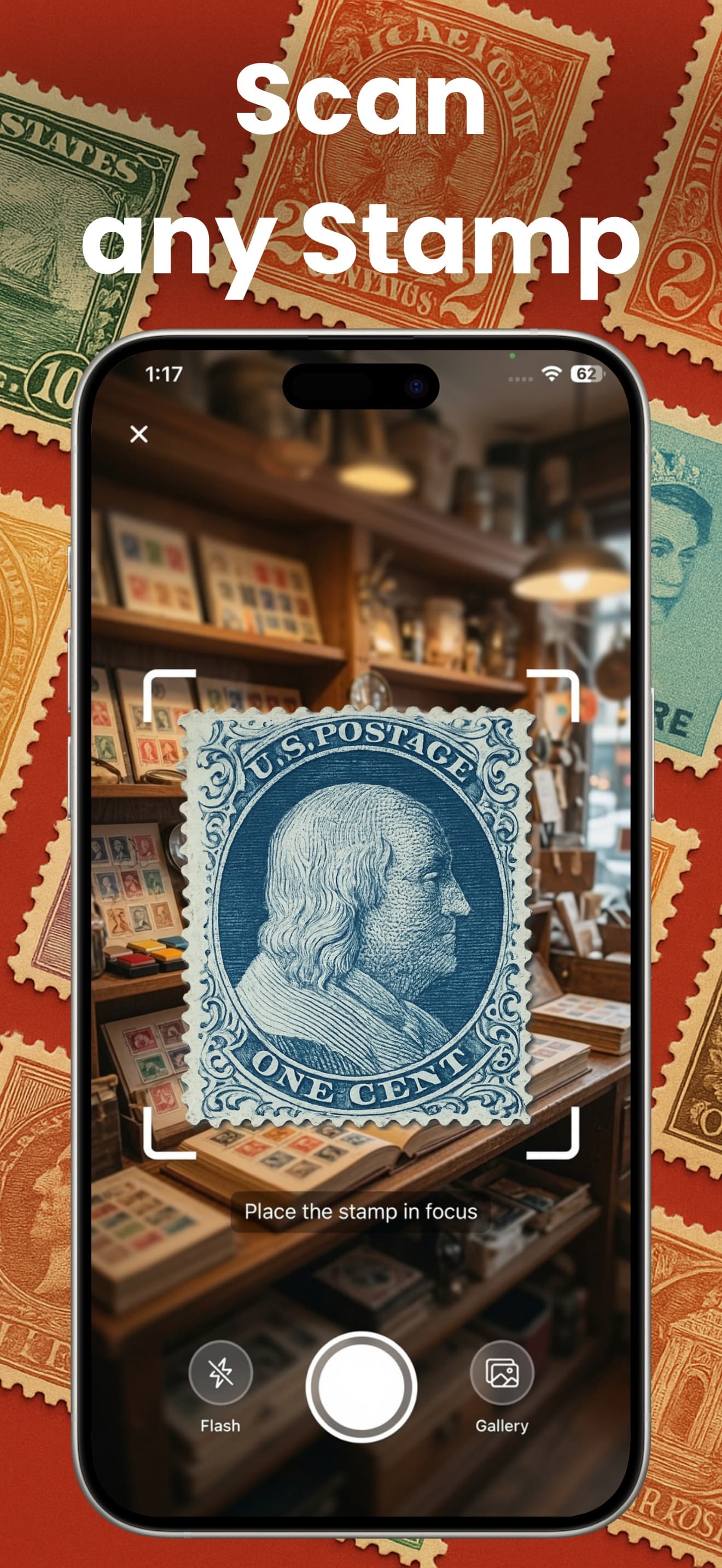
Scan the stamp
Tap Scan Now and photograph one stamp at a time.
- 2
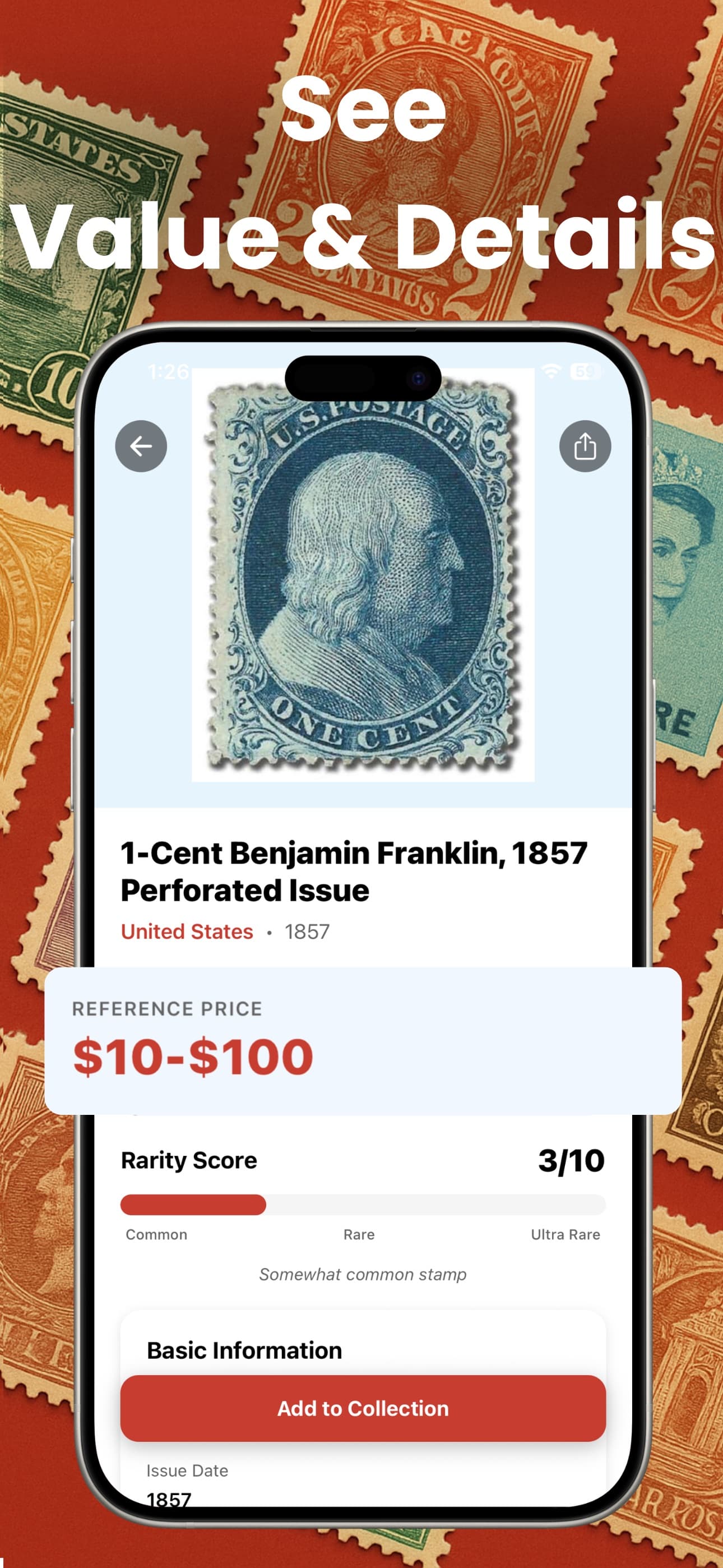
Check the year and price range
Anything issued before about 1930 with a meaningful reference price deserves a closer look.
- 3
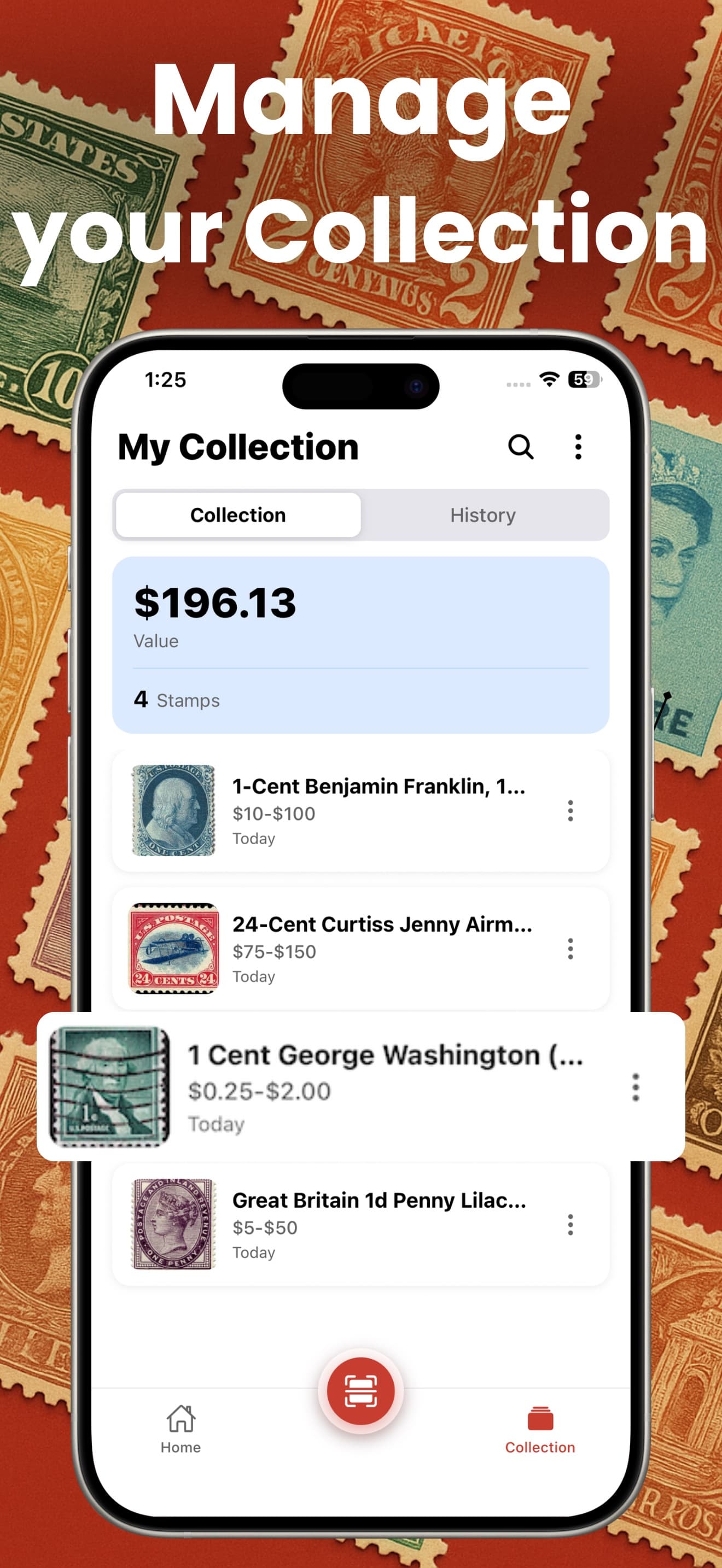
Set aside the keepers
Add the better stamps to your collection and leave the modern face-value ones in the postage pile.


Gratis at hente til iOS og Android
Ofte stillede spørgsmål
Er ubrugte særfrimærkeark mere værd end pålydende?
Sjældent. Moderne ark går for pålydende eller derunder, fordi så mange blev gemt. Den mest pålidelige anvendelse er som porto.
Er særfrimærker fra 1970'erne og 1980'erne værdifulde?
Nej, med få undtagelser. De blev trykt i enorme mængder. I den periode kommer værdien fra ægte fejltryk, ikke fra udgaverne i sig selv.
Hvilket amerikansk særfrimærke er dyrest?
Blandt de dyreste er fejltrykkene med omvendt midterparti i Pan-American-udgaven fra 1901 og de høje værdier i Columbian-udgaven fra 1893, sammen med Graf Zeppelin-luftpostmærkerne fra 1930.
Skal jeg bruge gamle særfrimærker som porto?
Hvis de er almindelige og ubrugte, så ja. I USA gælder mærker udsendt siden 1860 stadig, så brugen giver fuld pålydende værdi tilbage, typisk mere end en handler ville byde.
Udsendes der stadig særfrimærker?
Ja, hvert år, og de er stadig populære hos samlere og gavekøbere. Forvent bare ikke værdistigning: oplagene er store, og mærkerne gemmes i perfekt stand, og netop det holder dem almindelige.
Taber jeg penge ved at bruge ubrugte særfrimærker som porto?
Næsten aldrig. De fleste moderne særfrimærker er alligevel cirka pålydende værd, så at bruge dem koster dig ingenting og sparer nyt porto. Tjek blot først alt fra før cirka 1940.
