
Wartość znaczków
Znaczki okolicznościowe: które są warte więcej niż nominał
Aktualizacja · 5 min czytania · Zespół StampGo
Krótka odpowiedź
Większość znaczków okolicznościowych jest warta mniej więcej tyle, co nominał, bo drukowano je w milionach, a kolekcjonerzy je zachowali. Cenne są wczesne emisje, zwłaszcza amerykańskie znaczki okolicznościowe z lat 1890–1930, wysokie nominały i prawdziwe błędy druku. „Znaczki okolicznościowe” ze złotą folią sprzedawane wysyłkowo to pamiątki, a nie znaki opłaty pocztowej.
Najważniejsze fakty
- Większość nowoczesnych emisji
- Nominał w stanie czystym, grosze w stanie kasowanym
- Cenny okres
- Mniej więcej 1893–1930 dla amerykańskich znaczków okolicznościowych
- Co podnosi wartość
- Wysokie nominały, niskie nakłady, prawdziwe błędy, dobre wycentrowanie
- Znaczki świąteczne
- Drukowane w ogromnych nakładach. Niemal zawsze pospolite
- „Znaczki” ze złotą folią
- Pamiątki bez mocy opłaty pocztowej, przy odsprzedaży warte niewiele
- Arkusze i bloki
- Zwykle warte tyle, co nominał jako opłata pocztowa
Are commemorative stamps worth anything?
Most are worth their face value and no more. Commemoratives are issued to be collected, so they're printed in large numbers and millions are saved in perfect condition, which is the opposite of scarcity.
That's the paradox of collecting modern issues: the stamps designed for collectors are the ones least likely to become rare. The 1993 Elvis stamp is the clearest example, with more than 500 million printed. Value comes from scarcity and demand, not from the occasion being commemorated.
What's the difference between a commemorative and a definitive?
A commemorative marks an event, person or anniversary and is printed once, for a limited period. A definitive is the everyday stamp, reprinted for years in many denominations.
Counter-intuitively, definitives more often hide the valuable varieties. They were reprinted with different perforations, watermarks and presses over long runs, which creates scarce versions. See the Washington-Franklin series for the classic case.
Which commemorative stamps are valuable?
Early issues with high face values, small print runs or famous errors. For the US that means the 1893 Columbians, 1898 Trans-Mississippi, 1901 Pan-Americans and the 1930 Graf Zeppelins.
| Issue | Why it matters |
|---|---|
| Columbian Exposition (1893) | The $1–$5 high values are the key stamps, especially unused |
| Trans-Mississippi (1898) | High values such as the $1 “Western Cattle in Storm” |
| Pan-American (1901) | Attractive bi-colours, and the famous inverted-centre errors |
| Graf Zeppelin airmails (1930) | Expensive when issued, so relatively few were sold |
| British Empire Exhibition (1924–25) | Britain's first commemoratives, so early and collected |
| Postal Union Congress £1 (1929) | The key British commemorative of the period |
Condition decides where in the range a copy falls. See stamp condition grades, and error stamps worth money for the inverts.
Why are modern commemoratives worth so little?
Because supply overwhelms demand. Post offices print tens of millions, collectors save whole sheets unused, and far more survive in perfect condition than there are buyers.
Unused modern commemoratives keep one solid use: they're valid postage. Sheets bought years ago can go on today's mail at their printed value, which usually beats what a dealer would pay. In the US, stamps issued since 1860 remain valid. See how to sell stamps.
What are gold-foil “commemorative” stamps worth?
Very little. Gold-foil replicas sold by mail-order and TV marketing firms are novelty items, not postage, and there's almost no collector market for them.
They're usually sold as “tributes” or “collector editions”, often in presentation folders with certificates of authenticity that authenticate nothing more than the novelty itself. The gold content is a microscopic layer, and the resale price is typically a small fraction of what was paid. The same caution applies to “collector edition” sheets from private mints.
What are Christmas stamps worth?
Almost always face value. Christmas issues are among the highest-volume stamps any post office prints, and they're saved in quantity every year.
The exceptions are the same as everywhere else: genuine errors, the earliest issues from a country's Christmas series, and unusual varieties. Christmas seals, the charity labels sold alongside stamps, are collected separately and are not valid postage.
Are commemorative first day covers and souvenir sheets worth more?
Usually not. First day covers for modern commemoratives were produced in huge numbers, and souvenir sheets tend to sell at or near face value. Both are attractive, and both are common.
Souvenir sheets and miniature sheets are issued specifically to be bought by collectors, so the same supply problem applies: almost every one printed survives in perfect condition. The exceptions are early sheets, limited overprints for exhibitions, and genuine errors.
- Modern first day covers: typically a few dollars at most, and often less than the stamps' face value.
- Souvenir sheets: around face value, with a small premium for popular topics.
- Presentation packs and year books: usually worth less than the stamps inside them.
- Worth checking: anything pre-1940, hand-painted cachets, and sheets with printing errors.
See first day cover value for what makes a cover worth more than its stamps.
Krok po kroku
How to check a commemorative with StampGo
Commemoratives are easy to scan in batches, because you're usually sorting a shoebox of modern issues looking for the few older ones that matter.
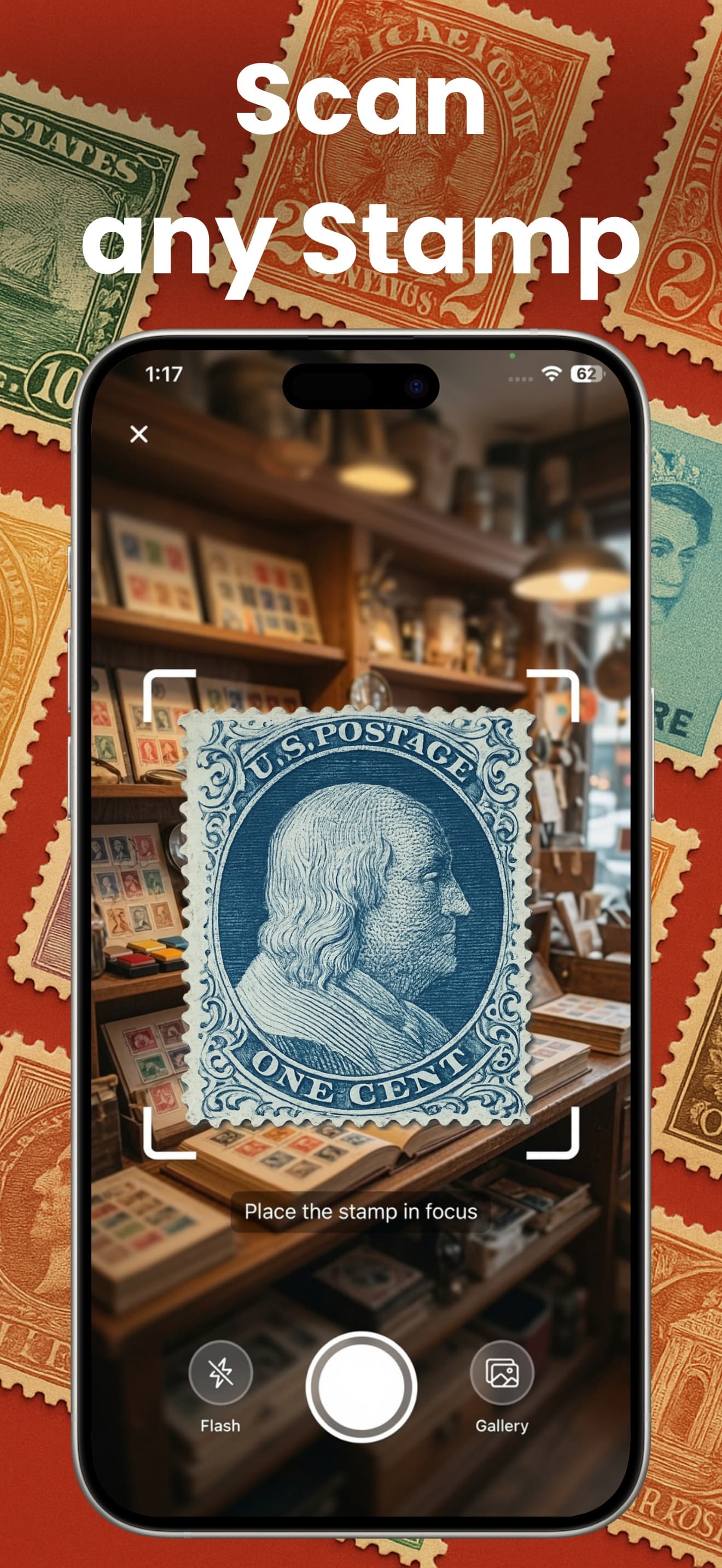
- 1
Scan the stamp
Tap Scan Now and photograph one stamp at a time.
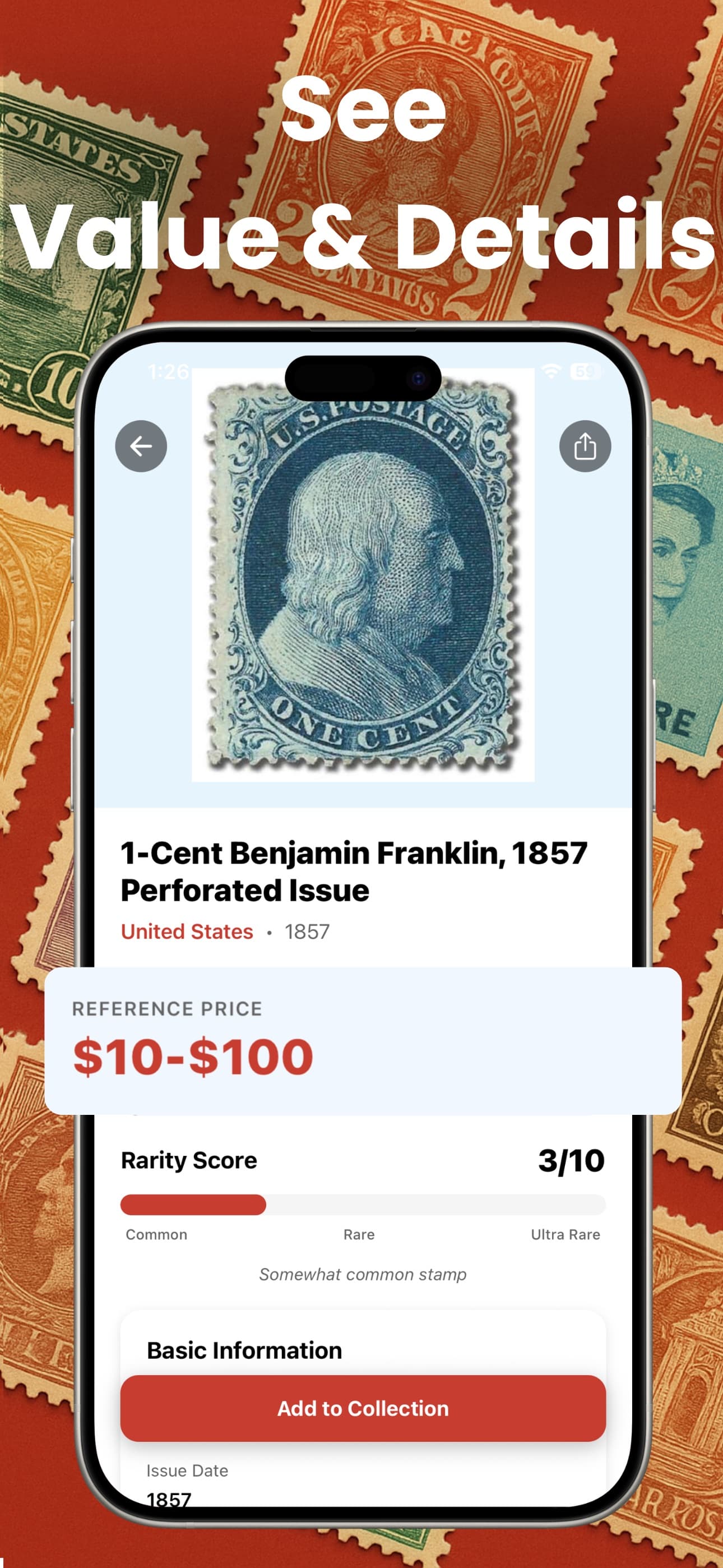
- 2
Check the year and price range
Anything issued before about 1930 with a meaningful reference price deserves a closer look.
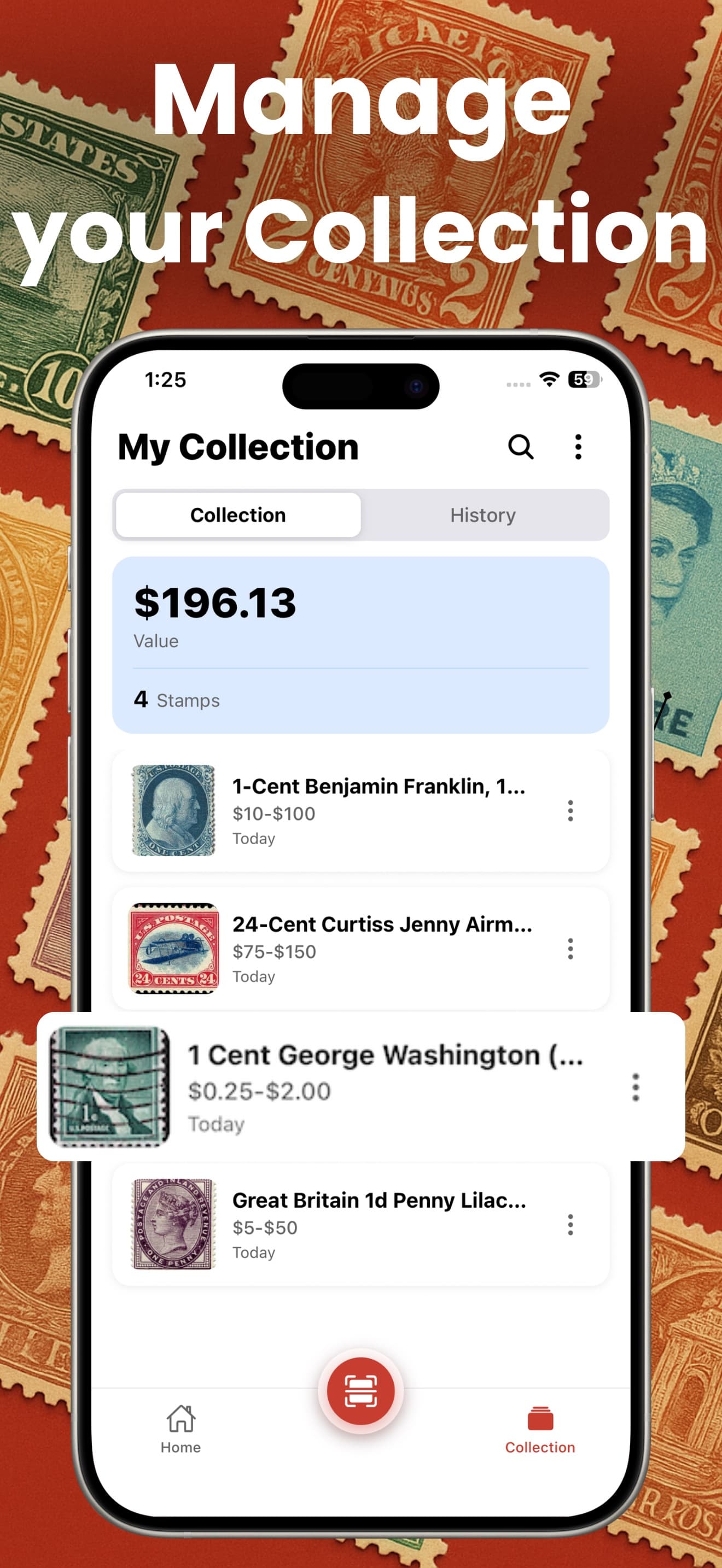
- 3
Set aside the keepers
Add the better stamps to your collection and leave the modern face-value ones in the postage pile.


Darmowa do pobrania na iOS i Androida
Pytania i odpowiedzi
Czy czysty arkusz okolicznościowy jest wart więcej niż nominał?
Rzadko. Nowoczesne arkusze sprzedają się po nominale lub poniżej, bo zachowano ich bardzo dużo. Najpewniejsze zastosowanie to wykorzystanie ich jako opłaty pocztowej.
Czy znaczki okolicznościowe z lat siedemdziesiątych i osiemdziesiątych są cenne?
Poza nielicznymi wyjątkami nie. Drukowano je w ogromnych ilościach. W tym okresie wartość tworzą prawdziwe błędy druku, a nie same emisje.
Który amerykański znaczek okolicznościowy jest najcenniejszy?
Do najcenniejszych należą błędy z odwróconym centrum z emisji Pan-American z 1901 roku i wysokie nominały emisji Columbian z 1893 roku, a także znaczki lotnicze Graf Zeppelin z 1930 roku.
Czy używać starych znaczków okolicznościowych do frankowania?
Jeśli są pospolite i czyste, jak najbardziej. W USA znaczki wydane od 1860 roku wciąż są ważne, więc ich użycie zwraca pełny nominał, zwykle więcej, niż zaoferowałby handlarz.
Czy nadal wydaje się znaczki okolicznościowe?
Tak, co roku, i wciąż podobają się kolekcjonerom oraz szukającym prezentu. Nie licz tylko na wzrost wartości: nakłady są duże, a egzemplarze przechowywane w idealnym stanie — i właśnie dlatego pozostają pospolite.
Czy tracę, używając czystych znaczków okolicznościowych do frankowania?
Prawie nigdy. Większość nowoczesnych znaczków okolicznościowych i tak jest warta tyle, co nominał, więc ich użycie nic nie kosztuje i oszczędza zakup nowych znaczków. Sprawdź wcześniej wszystko sprzed mniej więcej 1940 roku.
