
Francobolli celebri
Inverted Jenny: valore e storia dell'errore americano più celebre
Aggiornato il · 5 min di lettura · A cura del team StampGo
Risposta rapida
L'Inverted Jenny è il francobollo di posta aerea statunitense da 24 cent del 1918 con il biplano Curtiss JN-4 stampato capovolto. Fu venduto un solo foglio da 100, e singoli esemplari hanno superato il milione di dollari. Il 24 cent normale, con l'aereo dritto, vale molto meno: da decine a poche centinaia di dollari. La ristampa comune da 2 dollari del 2013 è diffusa.
In breve
- Emesso nel
- Maggio 1918, per il primo servizio regolare di posta aerea statunitense
- L'errore
- Il biplano Curtiss JN-4 blu stampato capovolto nella cornice rossa
- Quanti
- Un foglio da 100 fu venduto al pubblico. Nessun altro è mai stato trovato
- Scoperto da
- William T. Robey, che acquistò il foglio a Washington il 14 maggio 1918
- Valore
- Singoli esemplari sono stati venduti a oltre un milione di dollari
- Ristampa 2013
- Fogli USPS da 2 dollari con l'aereo capovolto. 100 fogli furono stampati dritti
What is the Inverted Jenny?
The Inverted Jenny is a 1918 US 24-cent airmail stamp on which the blue Curtiss JN-4 “Jenny” biplane was printed upside down. It's the most famous error in American stamp collecting.
The two-color stamp was printed in two passes, red frames first and then the blue airplane, so a sheet fed in the wrong way round could come out inverted. On 14 May 1918, collector William T. Robey bought a sheet of 100 at a Washington, D.C., post office for $24 and noticed the upside-down plane. No other inverted sheet has ever been found.
Robey soon sold the sheet to Philadelphia dealer Eugene Klein for $15,000, and it then went to collector Colonel Edward H. R. Green, who had it broken up into singles and blocks. That's why individual Inverted Jennys, each identified by its position on the original sheet, are traded today.
How much is an Inverted Jenny worth?
Single Inverted Jennys have sold for more than $1 million at auction, with the price depending on centering, gum and condition. Blocks are worth considerably more.
Because each of the 100 stamps is tracked by its position on the sheet, their ownership histories are well documented, including copies stolen decades ago. That tracking makes it very hard to pass off a fake as a newly discovered original. See error stamps worth money for how errors like this come about.
What is the regular 24-cent Jenny stamp worth?
The normal 1918 24¢ Jenny, with the plane the right way up, is common by comparison. Used copies typically sell for tens of dollars, and unused ones for roughly $75 to a few hundred, depending on centering and gum.
It was the first US airmail stamp, and the design was reissued later in 1918 in single-color 6¢ and 16¢ values. If the plane on your Jenny is flying the right way up, you have one of these. See US stamp values for other early airmail.
What is the 2013 Inverted Jenny reissue worth?
The US Postal Service's 2013 $2 Inverted Jenny souvenir sheet is common and worth about face value. The exceptions are the 100 sheets printed with the plane right side up, which USPS released at random as a promotion.
Each sheet contains six $2 stamps showing the famous inverted design. The “upright” sheets are the collectible ones, because they're the error of the reissue.
Could I have a real Inverted Jenny?
Almost certainly not, unless it came from a documented collection. All 100 copies are tracked by position. What people usually find is a normal 24¢ Jenny, a 2013 reissue or a reproduction.
- Reproductions are printed on modern paper, and are often the wrong size or lack perforations.
- 2013 reissue stamps are denominated $2, not 24 cents.
- A normal Jenny has the plane right side up.
If you believe you have a genuine one, keep it safe and contact a major expertizing service or auction house before telling anyone else.
What was the 24-cent Jenny stamp for?
It paid for the first regular US airmail service, which began on 15 May 1918 between Washington, D.C., Philadelphia and New York. Army pilots flew the route in Curtiss JN-4 “Jenny” biplanes, the aircraft pictured on the stamp.
The 24-cent rate included special delivery and was high for the time, which is one reason relatively few people bought the stamp for everyday mail. The service's first day was eventful: the pilot leaving Washington got lost and landed in a field in Maryland, far from his destination.
The Post Office cut the airmail rate within months, issuing 16¢ and then 6¢ versions of the Jenny design later in 1918. Together they're the first US airmail stamps, and the 24¢ is the only one that exists with the famous inverted plane.
Where are the Inverted Jennys today?
Most are in private collections and change hands through major auction houses. A few are held by institutions, including the Smithsonian's National Postal Museum in Washington, D.C.
Because each stamp's position on the original sheet is known, auction catalogues and specialist studies trace the ownership of individual copies over decades. Some copies have been stolen over the years, and those that resurfaced were identified by matching their perforations, centering and flaws against the records for their positions. If you ever see one offered privately without a documented history and a certificate, treat it with extreme caution.
Passo dopo passo
How to check a Jenny stamp with StampGo
StampGo tells you which Jenny you have, whether the 1918 24¢ airmail, a later value or the 2013 reissue, and what that version typically sells for.
- 1
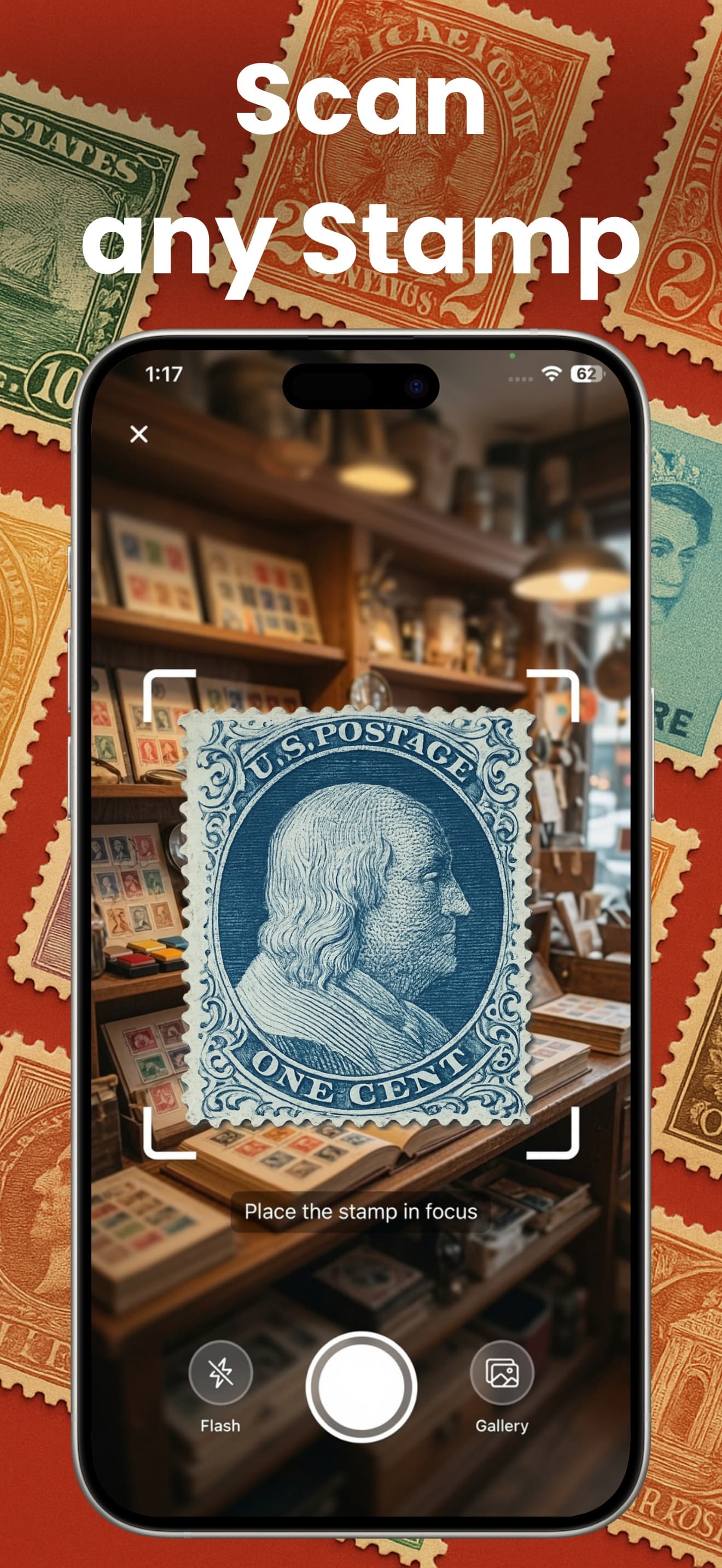
Scan the stamp
Tap Scan Now and photograph the stamp flat, in good light.
- 2
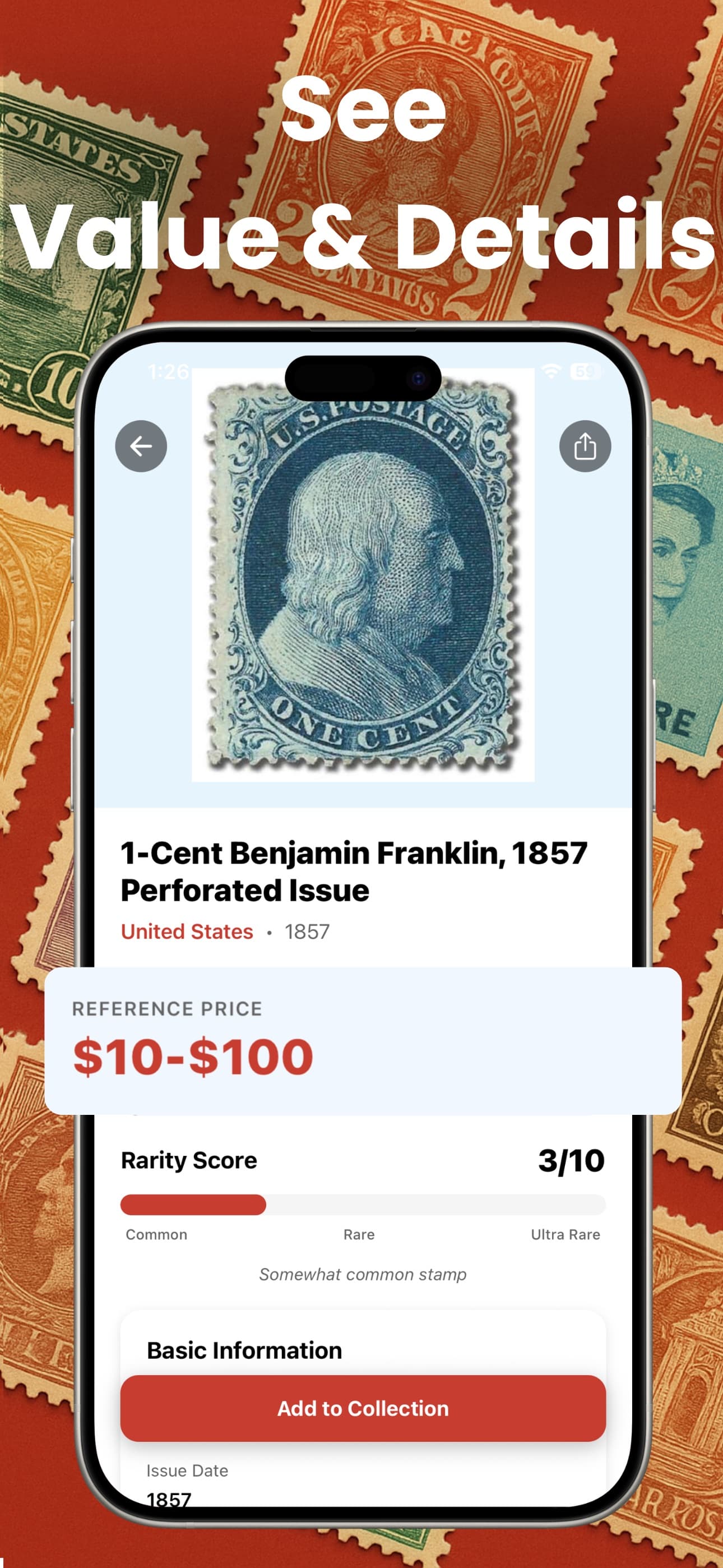
See which Jenny it is
StampGo identifies the issue, such as the 24-cent Curtiss Jenny airmail, with its year and a reference price range.
- 3
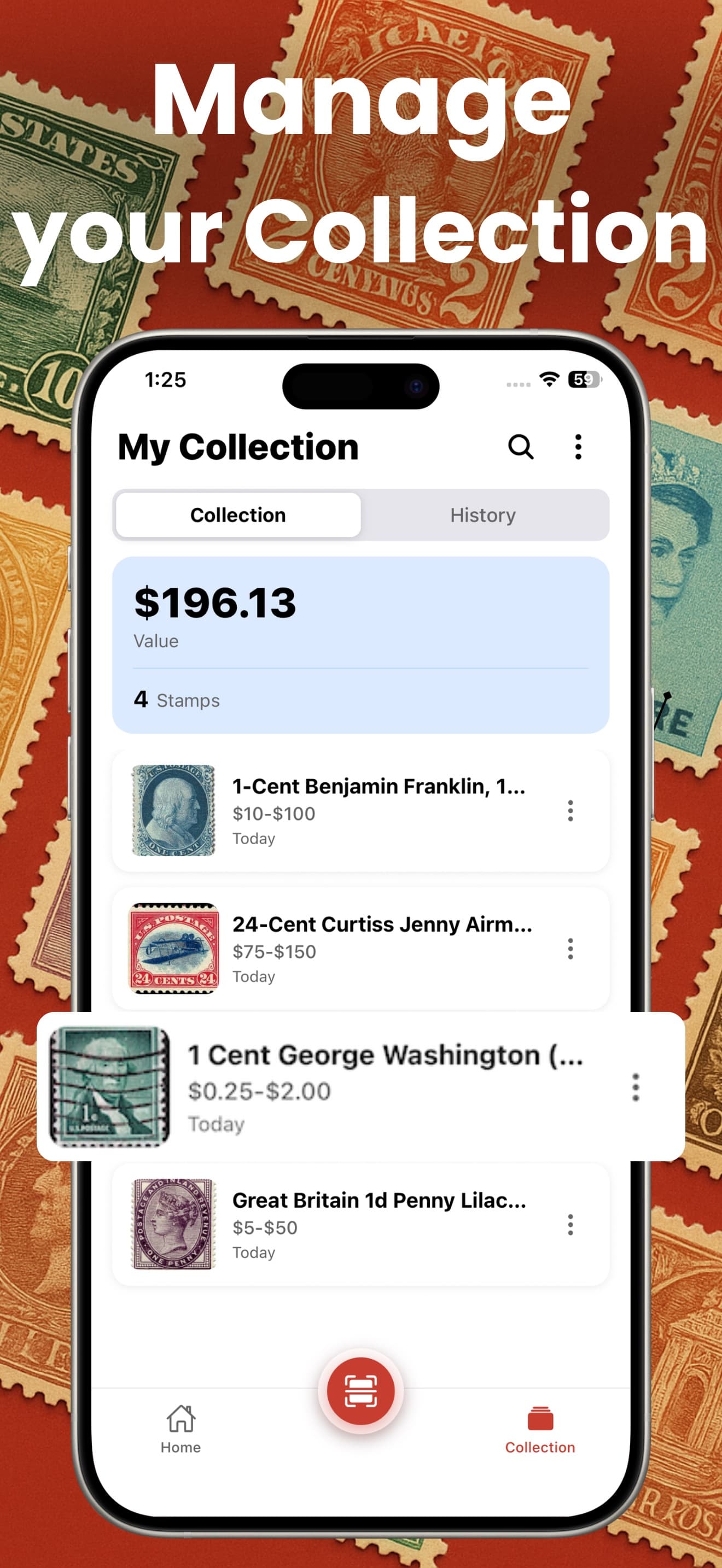
Save it to your collection
Add it to your collection. In the app's own screenshots, a 24-cent Curtiss Jenny airmail carries a $75–$150 reference range.


Download gratuito per iOS e Android
Domande frequenti
Quanti Inverted Jenny esistono?
Nel 1918 fu venduto al pubblico un foglio da 100, e nessun altro foglio capovolto è mai stato trovato. Il foglio fu smembrato, quindi i francobolli sopravvivono come esemplari singoli e blocchi.
Perché l'Inverted Jenny vale così tanto?
Unisce una rarità estrema, un errore clamoroso e immediatamente riconoscibile e una storia celebre. Ne esistono solo 100 e la domanda dei collezionisti è fortissima.
Dove posso vedere un Inverted Jenny?
Il National Postal Museum della Smithsonian, a Washington, ne conserva nella propria collezione, e sono tra i suoi oggetti più celebri.
Il francobollo del 2013 con l'aereo capovolto vale molto?
No. I fogli comuni del 2013 con l'aereo capovolto valgono più o meno il facciale. Sono rari soltanto i 100 fogli stampati con l'aereo dritto.
Chi stampò l'Inverted Jenny?
Il Bureau of Engraving and Printing di Washington. Il francobollo veniva stampato in due colori con due passaggi distinti, e l'errore avvenne quando un foglio fu inserito al contrario per il secondo colore.
