
Francobolli celebri
Penny Black: quanto vale oggi il primo francobollo del mondo
Aggiornato il · 5 min di lettura · A cura del team StampGo
Risposta rapida
Un Penny Black usato si vende di solito da decine a poche centinaia di dollari, a seconda di quanti dei suoi quattro margini siano integri, di quale tavola lo abbia stampato e del suo annullo. Gli esemplari nuovi costano migliaia. Ne furono stampati circa 68 milioni da 11 tavole nel 1840-41, quindi è celebre ma non raro. La tavola 11 e gli esemplari nuovi sono i più rari.
In breve
- Emesso
- In vendita dal 1º maggio 1840, valido per l'affrancatura dal 6 maggio 1840
- Tiratura
- Circa 68 milioni, da 11 tavole, in fogli da 240
- Stampatore
- Perkins, Bacon & Petch, Londra
- Disegno
- Il profilo della regina Vittoria, inciso dalla City Medal di William Wyon del 1837
- Valore da usato
- Da decine a poche centinaia di dollari, secondo margini e annullo
- I più rari
- La tavola 11, gli esemplari nuovi e i multipli come coppie e blocchi
How much is a Penny Black worth?
A used Penny Black typically sells for tens to a few hundred dollars, depending mostly on its margins, plate and cancellation. Unused examples cost thousands, and rare plates and multiples cost more.
| Condition | Typical value range |
|---|---|
| Used, cut into the design on one or more sides | Tens of dollars |
| Used, three clear margins | Roughly $50–$150 |
| Used, four clear margins and a neat cancel | Roughly $150–$500+ |
| Unused (mint) | Thousands of dollars |
| Plate 11, pairs, blocks, or on the original letter | Considerably more |
Why do the margins matter so much?
Penny Blacks were imperforate and cut from the sheet with scissors, so many were trimmed into the design. A copy with four clear margins is much scarcer, and worth several times more, than one cut close.
Britain didn't introduce perforations until the 1850s. Clerks and customers cut stamps apart by hand, and the gaps between stamps on the sheet were narrow. Collectors describe Penny Blacks by how many margins are intact, from four margins down, and wide, even margins command a premium. See stamp condition grades.
What do the letters in the corners of a Penny Black mean?
The check letters in the two bottom corners show the stamp's position on the sheet of 240. The left letter is the row (A–T) and the right letter the column (A–L). They were added to deter forgery.
Sheets had 20 rows of 12 stamps, so positions run from AA to TL. Specialists use the check letters, together with tiny differences between plates, to work out which of the 11 plates printed a stamp. Early plates such as 1a, 1b and 2 are among the most common. Plate 11 is by far the scarcest, because it printed black stamps only briefly before the switch to red.
Does the cancellation affect a Penny Black's value?
Yes. Penny Blacks were cancelled with a Maltese cross, usually in red. A neat, clear cross adds value, black crosses are scarcer on Penny Blacks, and unusual colors or numbered crosses carry a premium.
The red cancelling ink could be cleaned off and the stamps reused, so in February 1841 the Post Office switched to red stamps, the Penny Red, cancelled in black. Maltese crosses in other colors, and London crosses with a number in the center (used in 1843–44), are sought after by specialists. See UK stamp values for the Penny Reds that followed.
How can I tell if my Penny Black is real?
A genuine Penny Black is imperforate, printed in black from an engraved plate, has letters in the two bottom corners only, and has a small crown watermark. Reproductions are common, often perforated or on modern paper.
- No perforations. A perforated “Penny Black” is a reproduction.
- Letters only in the bottom corners. Stamps with letters in all four corners are later issues, such as later Penny Reds.
- A small crown watermark, visible in a watermark tray.
- Fine engraved lines. Under a magnifier, genuine stamps show crisp engraving, while printed replicas look flat or dotted.
- Shade. Genuine stamps range from grey-black to intense black.
If a stamp passes these checks and has good margins or an unusual cancel, get an expert opinion. The Royal Philatelic Society London and BPA Expertising both issue certificates for British classics.
What's the difference between a Penny Black and a Penny Red?
The Penny Red replaced the Penny Black in February 1841 and was printed in red-brown so that black cancellations would show clearly. It's far more common: billions were printed, and it stayed in use for nearly 40 years.
- Color: black (1840–41) versus red-brown or red (1841–1879).
- Perforations: early Penny Reds were imperforate like the Black. Perforated versions followed from 1854.
- Corner letters: Penny Blacks have letters in the bottom corners only. Penny Reds from 1858 have letters in all four corners.
- Plate numbers: Penny Reds from 1864 show a plate number in the side frame, which is how scarce plates such as plate 77 are identified.
Most Penny Reds sell for small sums, but plate and condition matter just as they do for the Black. See UK stamp values.
Passo dopo passo
How to value a Penny Black with StampGo
StampGo confirms the issue and gives a reference range. The checklist above then tells you where your copy falls within it.
- 1
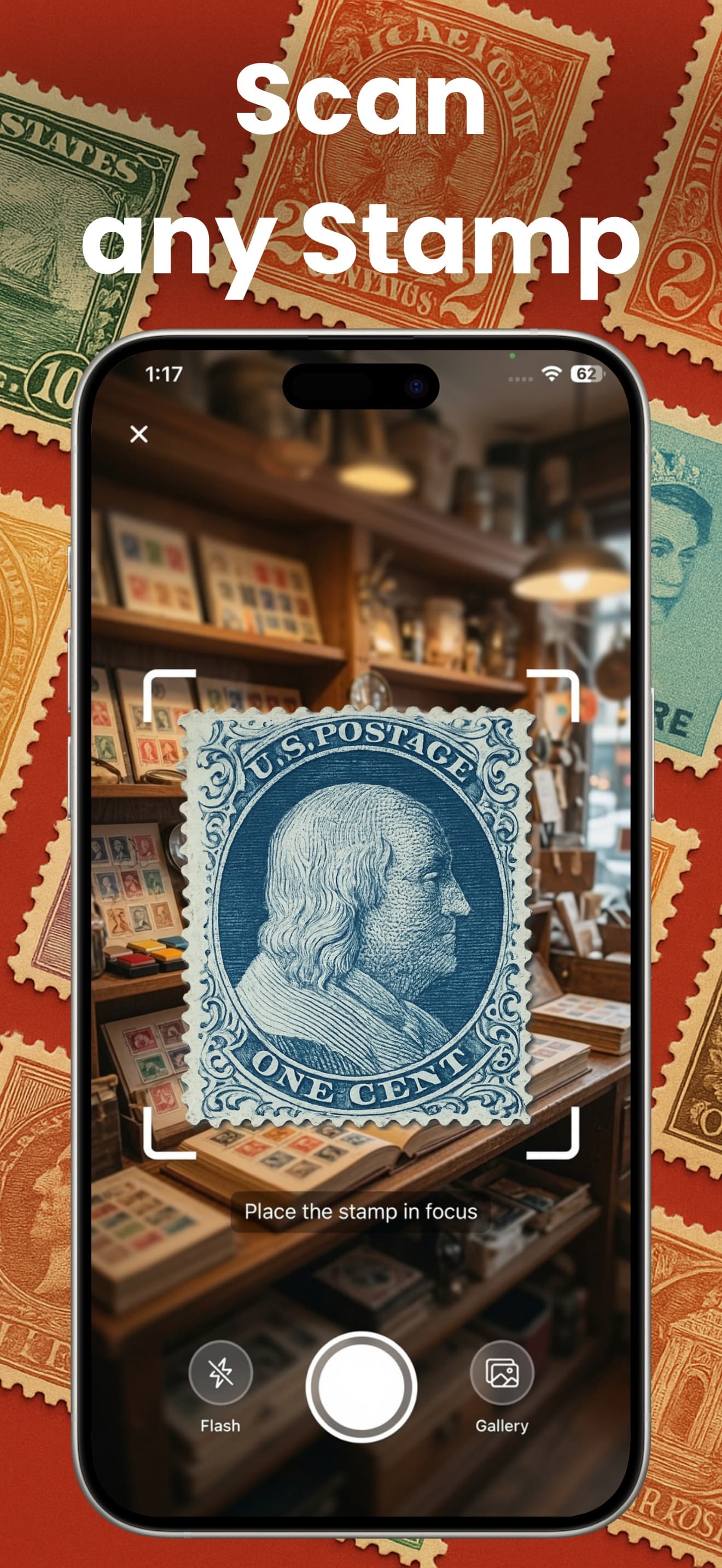
Scan the stamp
Photograph the Penny Black flat and square with Scan Now, so all four edges are visible.
- 2
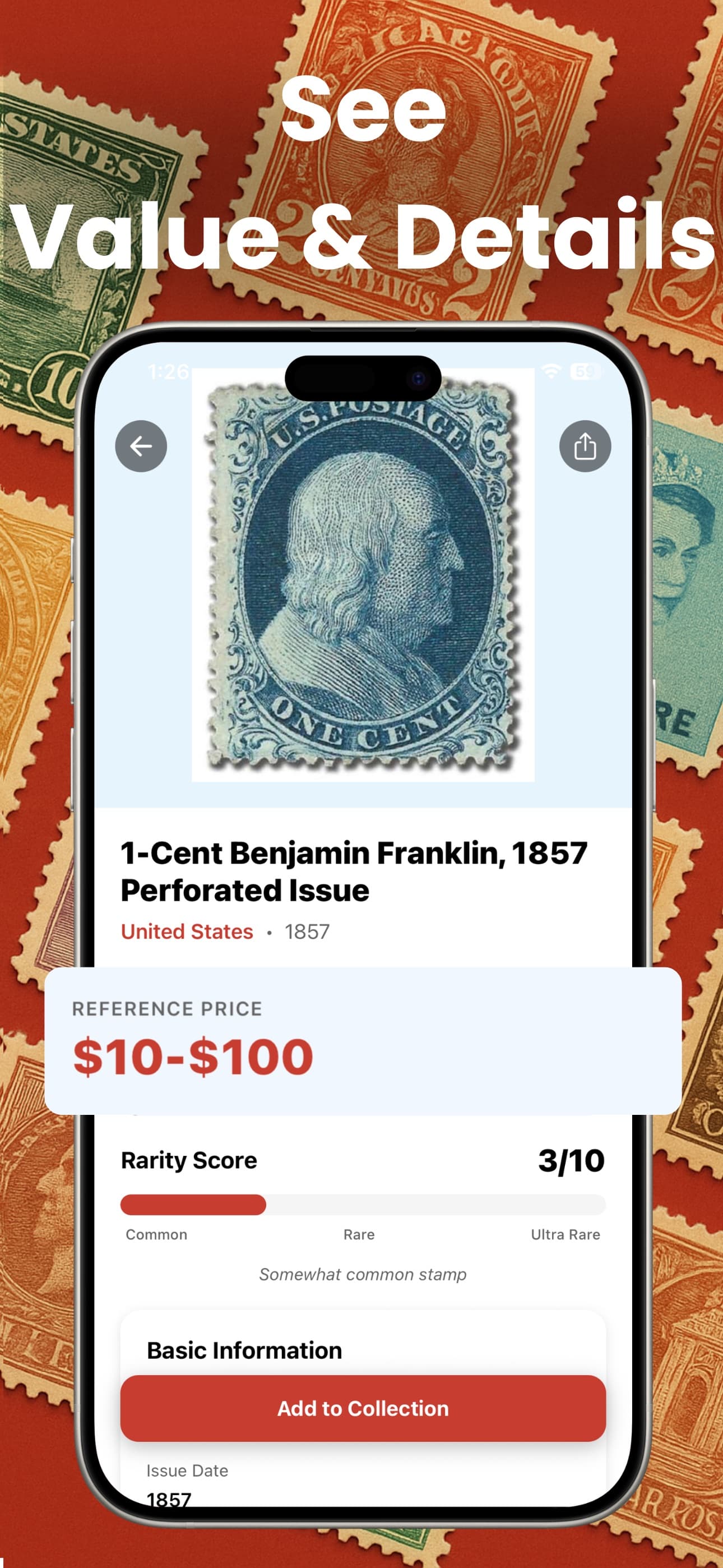
Confirm the issue and price range
Check that StampGo identifies it as the 1840 1d black, and note the reference price range and rarity score.
- 3
Count the margins and check the cancel
Four clear margins and a neat Maltese cross put your copy toward the top of the range. Cut-into margins put it toward the bottom.
- 4
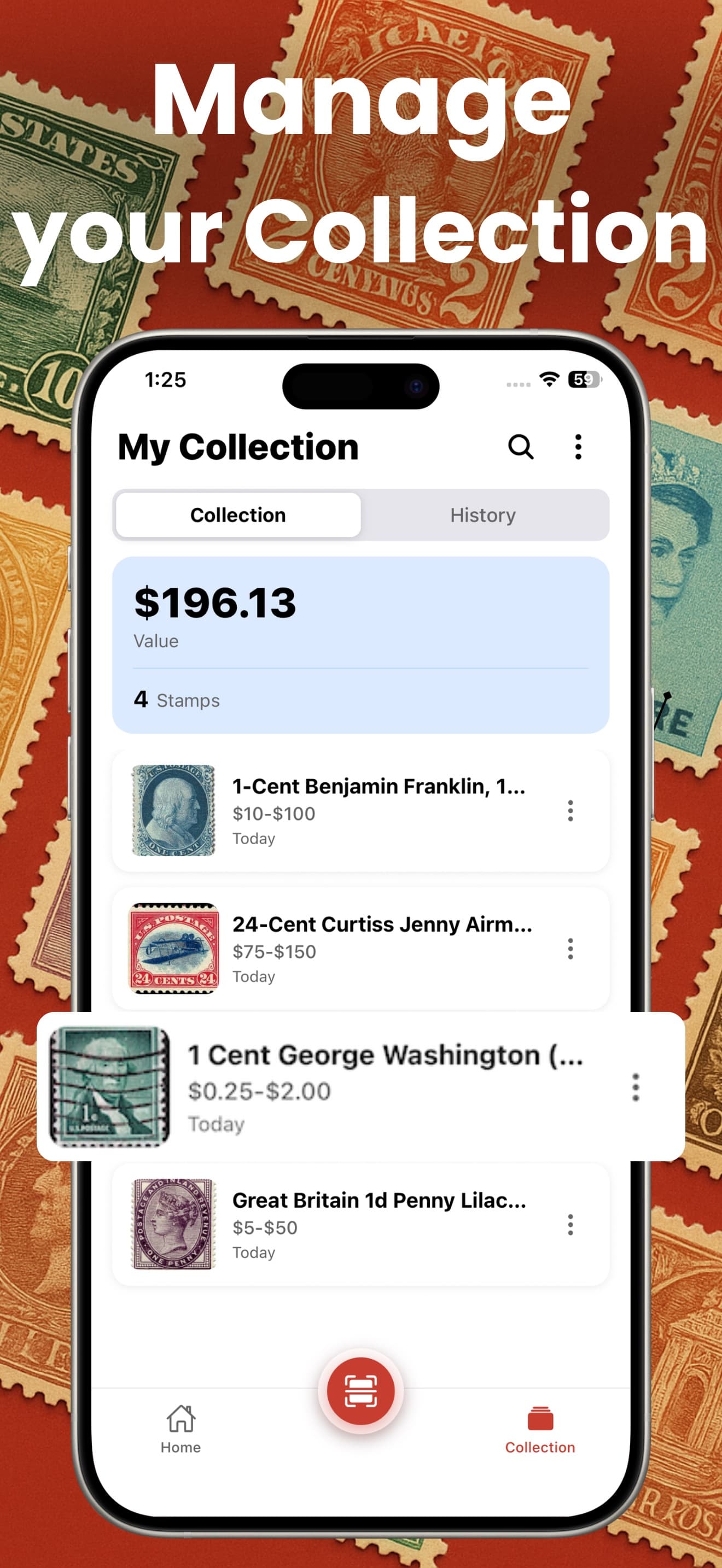
Save it to your collection
Add it, so it shows in your collection with its estimate.


Download gratuito per iOS e Android
Domande frequenti
Quanto vale oggi un Penny Black?
Da decine a poche centinaia di dollari per un esemplare usato, secondo margini, tavola e annullo, e migliaia per uno nuovo. Lo stato di conservazione spiega quasi tutta la differenza.
Quanti Penny Black esistono ancora?
Ne furono stampati circa 68 milioni. Nessuno sa quanti siano sopravvissuti con precisione, ma gli esemplari usati sono abbastanza diffusi da vendersi quasi sempre a cifre modeste.
Qual è il Penny Black più raro?
Quelli della tavola 11 sono i più rari, perché quella tavola stampò francobolli neri solo per poco tempo. Ancora più rari sono i blocchi nuovi e il francobollo ufficiale «VR» del 1840, preparato ma mai messo in uso generale.
Un Penny Black vale di più sulla busta?
Spesso sì. Un Penny Black sulla lettera originale, soprattutto con una data leggibile, può valere più del francobollo da solo. Non staccarlo.
Chi disegnò il Penny Black?
Nacque dalle riforme postali di Rowland Hill. Il ritratto della regina Vittoria fu inciso da Charles e Frederick Heath da un bozzetto di Henry Corbould, a sua volta basato sulla City Medal di William Wyon del 1837.
