
Hodnota známek
Bloky s číslem desky: co to je a jakou mají cenu
Aktualizováno · 5 min čtení · Tým StampGo
Rychlá odpověď
Blok s číslem desky je blok známek, který je stále spojený s okrajem archu nesoucím číslo tiskové desky. Moderní americké bloky se prodávají zhruba za nominál, zatímco bloky klasického období, hlavně před rokem 1940 a v dobrém stavu, mohou mít cenu několikanásobku týchž známek jednotlivě.
Klíčová fakta
- Co to je
- Blok známek s okrajem, na kterém je číslo desky
- Moderní americký formát
- Obvykle čtyřblok s číslem v rohovém okraji
- Klasický formát
- Často bloky šesti známek a u některých raných emisí ještě větší
- Moderní cena
- Kolem nominálu. Uchovalo se jich velké množství
- Klasická cena
- Příplatek oproti jednotlivým známkám, někdy výrazný
- Stav
- Nejvíc váží neporušený okraj, úplné zoubkování a nepřítomnost nálepky
What is a plate block?
It's a block of stamps that still has the sheet margin attached, with the plate number printed on that margin. The number identifies the printing plate used, which is why collectors keep the block intact.
Sheets were printed from numbered plates, and the number appears in the selvage, the blank paper around the stamps. Tear the selvage off and it's an ordinary block. Keep it, and it's a plate block, a collecting speciality of its own, particularly in the United States.
Other margin markings are collected the same way: copyright blocks, “Mr. ZIP” blocks and, on coils, plate number singles or strips cut from the roll.
How do I know if I have a plate block?
Look at the margin attached to the block. If it shows a number, usually small and printed near the corner, and the stamps are still joined to it, you have a plate block.
- Modern US issues: a block of 4 stamps with the plate number in the corner selvage.
- Older flat-plate issues: the standard collecting unit is often a block of 6, and sometimes larger.
- Position matters: the selvage should be the one bearing the number, not a blank margin from elsewhere on the sheet.
- Don't trim it. Cutting the selvage down to “tidy” it removes the point of the block.
What are plate blocks worth?
Modern plate blocks usually sell for around the face value of the stamps in them. Classic plate blocks, especially from before about 1940, can be worth several times the price of the same stamps as singles.
| Era | Typical plate block value |
|---|---|
| Classic US issues to about 1930 | A significant premium over singles, when sound and well centered |
| 1930s–1950s | Modest premium on better issues, near face value on common ones |
| 1960s onward | Usually about face value. Very large numbers were saved |
| Errors and scarce varieties | Can be worth far more, especially with the number attached |
The pattern is the same one that governs the rest of the hobby: things collectors deliberately saved in bulk stay cheap. See commemorative stamps value.
What condition issues matter for plate blocks?
Centering across all the stamps, intact perforations between them, clean and uncreased selvage, and gum that has never been hinged. A hinge mark on the selvage alone reduces the price.
- Never hinged is the standard for modern plate blocks. Hinging, even on the margin, cuts value.
- Separation matters: pulled perforations between two stamps devalue the whole block.
- Selvage damage, such as creases, tears and mounting marks, counts against it.
- Even centering across four or six stamps is harder to find than on a single, which is part of the appeal.
See stamp condition grades for the terms dealers use when describing blocks.
Should I break a plate block into singles?
Usually not. A classic plate block is worth more intact than as separate stamps, and breaking it is irreversible. For common modern blocks it makes little difference, since both are worth about face value.
If you're not sure which you have, treat the block as intact until it's been identified. The same rule applies to other multiples: pairs proving an imperforate error, blocks showing a plate flaw, and se-tenant strips are all worth more whole. See error stamps worth money.
What are copyright blocks, ZIP blocks and plate number coils?
They're the other margin-marking collectables. Copyright blocks show the postal service's copyright notice, ZIP blocks show the “Mr. ZIP” reminder, and plate number coils are coil stamps carrying a small plate number on the stamp itself.
| Type | What to look for |
|---|---|
| Copyright block | Selvage carrying the copyright notice, collected as a block of four |
| ZIP block | Selvage with the “Mr. ZIP” character or ZIP code reminder |
| Plate number coil (PNC) | A tiny plate number printed at the bottom of one stamp in a coil roll |
| Plate number single | A single stamp cut from a sheet so the number stays attached |
Most of these sell for around face value, with the same exception as plate blocks: scarce plate numbers and short-run printings carry a premium, and specialists track exactly which numbers are hard to find. If you're sorting a modern accumulation, don't tear margins off anything until you know which markings it carries.
Krok za krokem
How to check a plate block with StampGo
Start by identifying the stamp in the block. Once you know the issue and its era, the premium question answers itself.
- 1
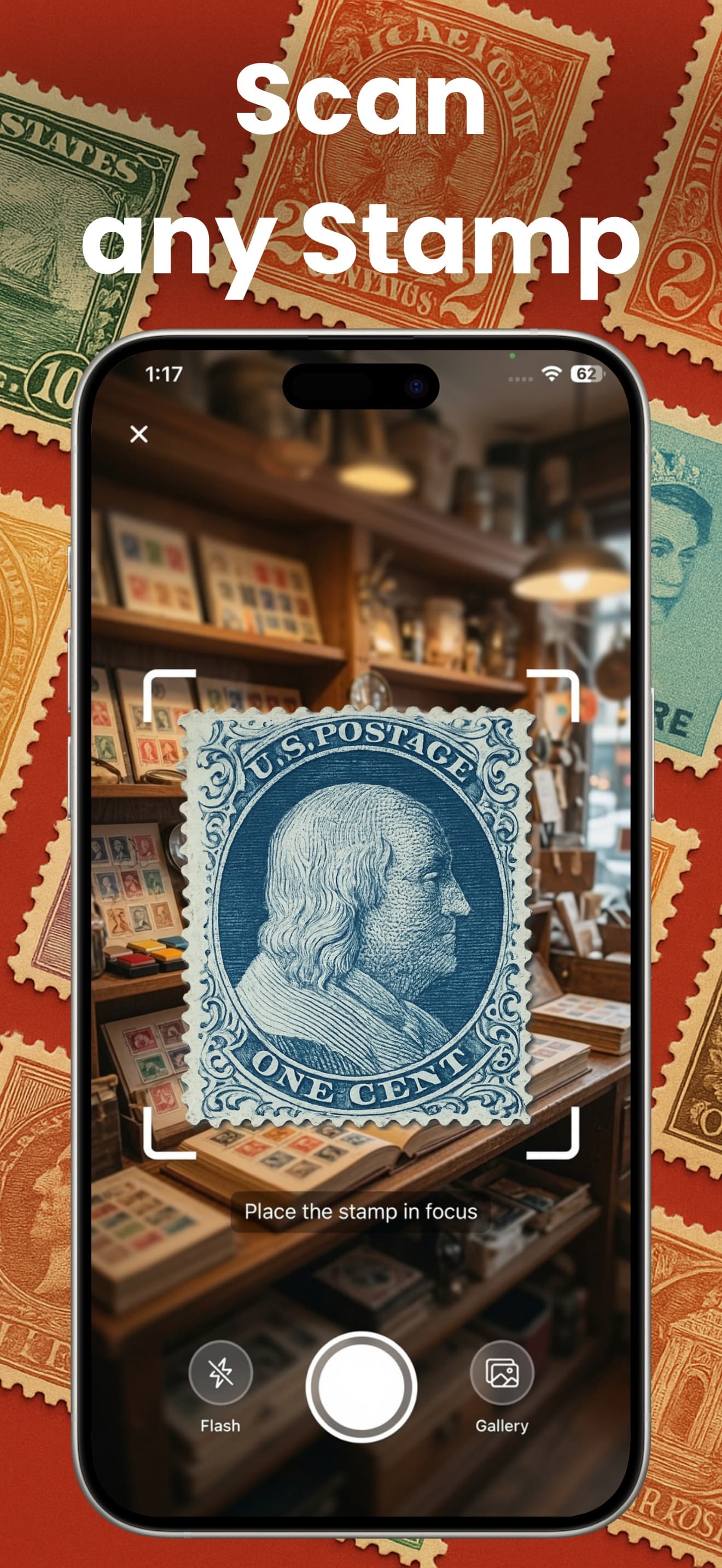
Scan one stamp in the block
Tap Scan Now and photograph a single stamp from the block, filling the frame, without separating anything.
- 2
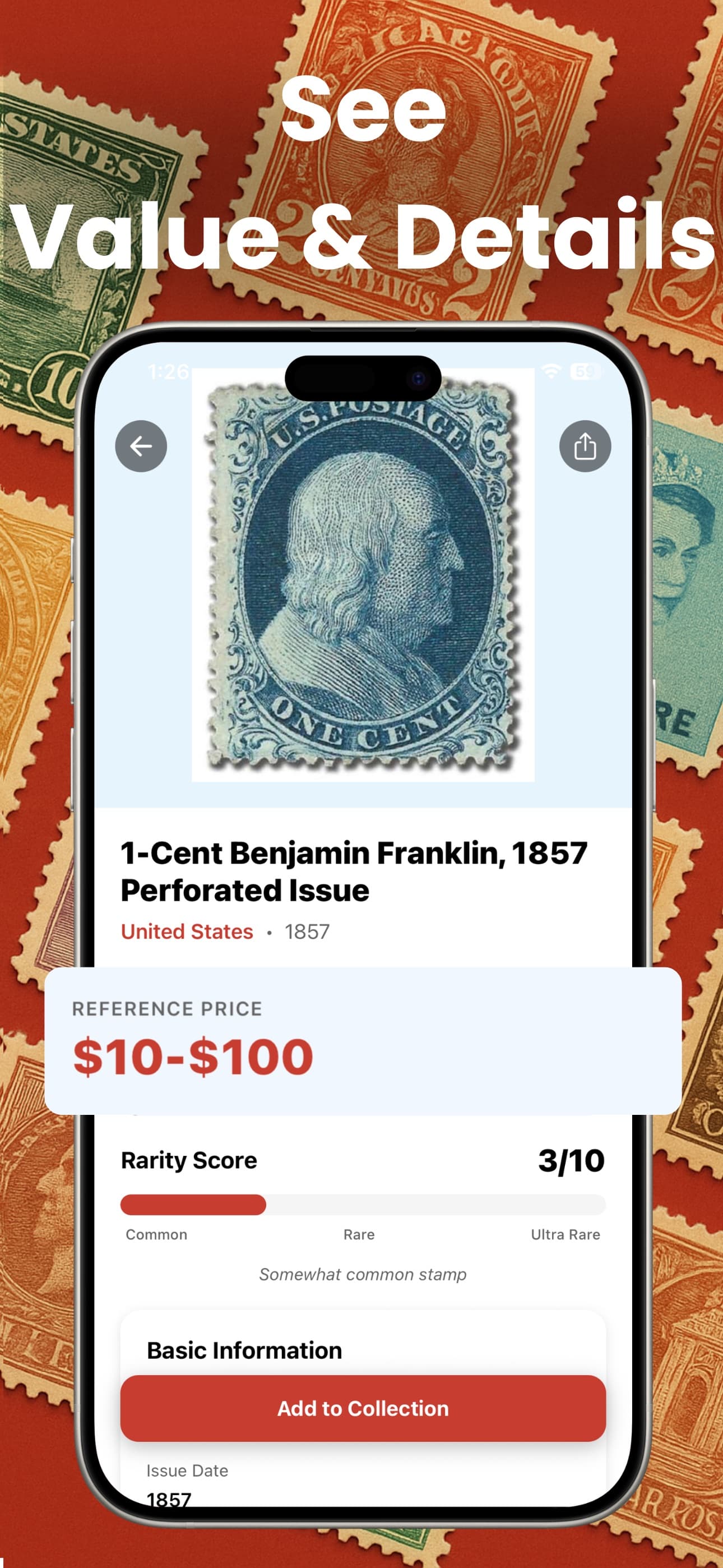
Check the issue and year
A pre-1940 issue with a meaningful reference price is worth researching as a plate block. A modern one usually isn't.
- 3
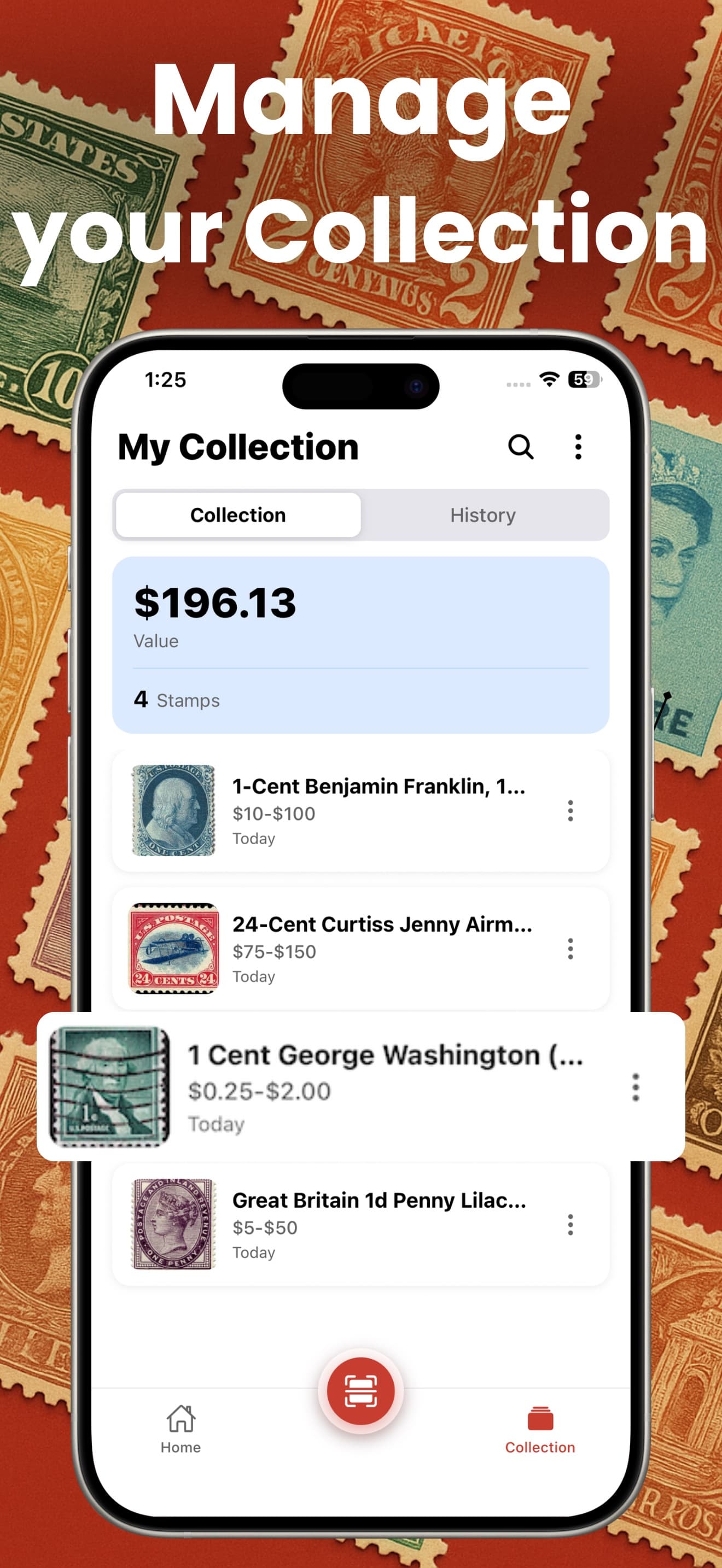
Log it as a block
Save the stamp to your collection and note in your own records that you hold it as a plate block, with the plate number.


Zdarma ke stažení pro iOS i Android
Časté dotazy
Jaký je rozdíl mezi blokem s číslem desky a rohovým blokem?
Rohový blok je prostě blok z rohu archu. Blokem s číslem desky se stane, až když připojený okraj nese číslo desky.
Sbírají se i kanadské bloky s číslem desky?
Ano. Kanadské emise se sbírají jako bloky z každého rohu archu a specializované katalogy jako Unitrade je uvádějí zvlášť.
Má blok s číslem desky vyšší cenu než čtyři jednotlivé známky?
U klasických emisí obvykle ano. U moderních zřídka: obojí bývá zhruba za nominál.
Mění samotné číslo desky cenu?
Někdy. U emisí, kde měly některé desky výrazně kratší náklady, jdou bloky z těchto vzácných desek s příplatkem. Je to specialistická oblast a katalogy rozdíly uvádějí.
Mám bloky s číslem desky ukládat do kapes?
Ano. Použijte kapsu dost velkou, aby blok i okraj ležely naplocho a netlačily na zoubkování. Na moderní blok nikdy nedávejte nálepku: i stopa na okraji sníží částku, kterou kupující zaplatí.
