
Valores por país
Sellos de Australia: cuáles valen dinero de verdad
Actualizado el · 6 min de lectura · Por el equipo de StampGo
Respuesta rápida
Los sellos australianos valiosos son las emisiones coloniales de 1850 a 1912, la serie del Canguro y el mapa desde 1913, y los valores clave anteriores al sistema decimal, como los 5 chelines del Puente de Sídney de 1932. Los sellos decimales, emitidos desde 1966, son en general comunes y valen cerca de su valor facial.
Datos clave
- Primeros sellos
- Las colonias emitieron los suyos desde 1850, antes de la federación
- Primera emisión nacional
- La serie del Canguro y el mapa, desde 1913
- La frontera
- La moneda decimal llegó en 1966. Los sellos anteriores son los coleccionables
- Sello clave anterior a 1966
- Los 5 chelines del Puente de Sídney de 1932
- Rareza famosa
- El Cisne invertido de Australia Occidental, de 1855
- Suelen ser comunes
- Los conmemorativos y ordinarios de la era decimal
What are Australian stamps worth by era?
Colonial and early Commonwealth issues carry the value. Pre-decimal stamps are mixed, with the high values and a few commemoratives standing out, while decimal issues from 1966 are mostly common.
| Era | Key issues | Typical value |
|---|---|---|
| 1850–1912 (colonies) | New South Wales, Victoria, Queensland, South Australia, Western Australia, Tasmania | Often valuable, especially early issues and on cover |
| 1913–1945 | Kangaroo and Map series, King George V heads, 1932 Harbour Bridge | High values and key commemoratives are the money |
| 1945–1965 | Pre-decimal definitives and commemoratives | Mostly modest, with some better high values |
| 1966–today | Decimal issues | Usually face value, apart from errors and varieties |
Which Australian stamps are worth money?
Colonial rarities, the high-value Kangaroo and Map stamps, the 1932 Sydney Harbour Bridge 5 shillings, and early airmail issues, especially unused and well centered.
- Kangaroo and Map high values. The pound denominations of the first Commonwealth series are the classic Australian rarities.
- 1932 Sydney Harbour Bridge 5 shillings. The key commemorative of the pre-decimal era, worth far more unused than used.
- Colonial issues. Each colony has its own scarce stamps, and Western Australia's Inverted Swan of 1855 is world-famous.
- Early airmail and flight covers, which connect to Australia's aviation history.
- Errors and varieties, including missing colours and perforation errors on later issues.
What does “pre-decimal” mean for Australian stamps?
It means stamps issued before Australia changed to dollars and cents in 1966. Pre-decimal stamps are priced in pounds, shillings and pence, and they're where most Australian value sits.
If a stamp shows a value such as 3d, 1/- or 5/-, it's pre-decimal and at least sixty years old. If it shows cents or dollars, it's from 1966 or later and almost certainly common. That single check sorts most family albums in a few minutes.
How do I identify an Australian stamp?
Look for “Australia” in the inscription, or a colony name such as New South Wales, Victoria or Tasmania on pre-1913 issues. The currency and monarch then narrow down the date.
- A colony name means the stamp predates the Commonwealth series of 1913.
- A kangaroo on a map of Australia identifies the first Commonwealth series.
- King George V, George VI or Elizabeth II narrows the reign, just as it does for British stamps.
- Watermarks and perforations separate many similar-looking Kangaroo and KGV printings, and they change the value substantially.
Stanley Gibbons and specialist Australian catalogues both cover these, and the differences matter. See how to identify stamps.
Are decimal Australian stamps worth anything?
Most are worth about face value. Australia has issued a lot of attractive commemoratives since 1966, and collectors saved them in quantity, so supply is high.
The exceptions are genuine errors, some booklet and coil varieties, and stamps on unusual covers. Unused decimal stamps still work as postage, which is often the best use for a shoebox of them. See commemorative stamps value.
What about Australian territory stamps?
Australia's external territories have issued their own stamps, including the Australian Antarctic Territory, Norfolk Island, Christmas Island and the Cocos (Keeling) Islands. Most collectors file them with Australia, and catalogues list them separately.
- Australian Antarctic Territory: polar themes and expedition postmarks make these popular, and covers carried on Antarctic voyages are collected in their own right.
- Norfolk Island: long-running issues with strong local themes.
- Christmas Island and Cocos (Keeling) Islands: small issuing programmes, which keeps some issues scarcer than mainland stamps.
- Papua and New Guinea: administered by Australia for much of the 20th century, and collected as a separate country with genuinely valuable early issues.
Territory stamps are a good example of why identification comes first: they look Australian, they're catalogued separately, and their values follow their own supply rather than mainland Australia's. See how to identify stamps.
Paso a paso
How to check Australian stamp values with StampGo
Colonial issues, Kangaroos and decimal commemoratives look nothing alike, so identifying the issue immediately tells you whether to keep going.
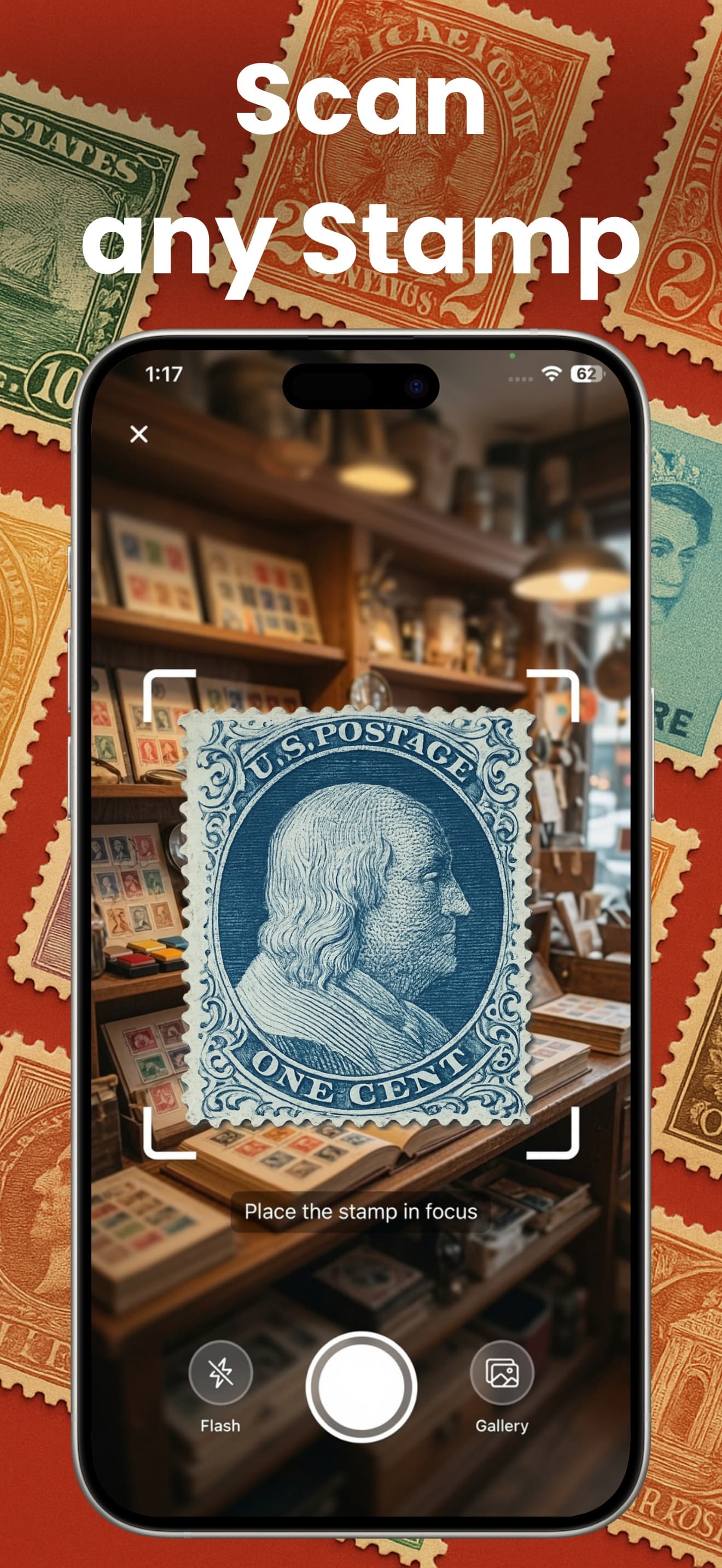
- 1
Scan the stamp
Tap Scan Now and photograph one stamp at a time, flat and filling the frame.
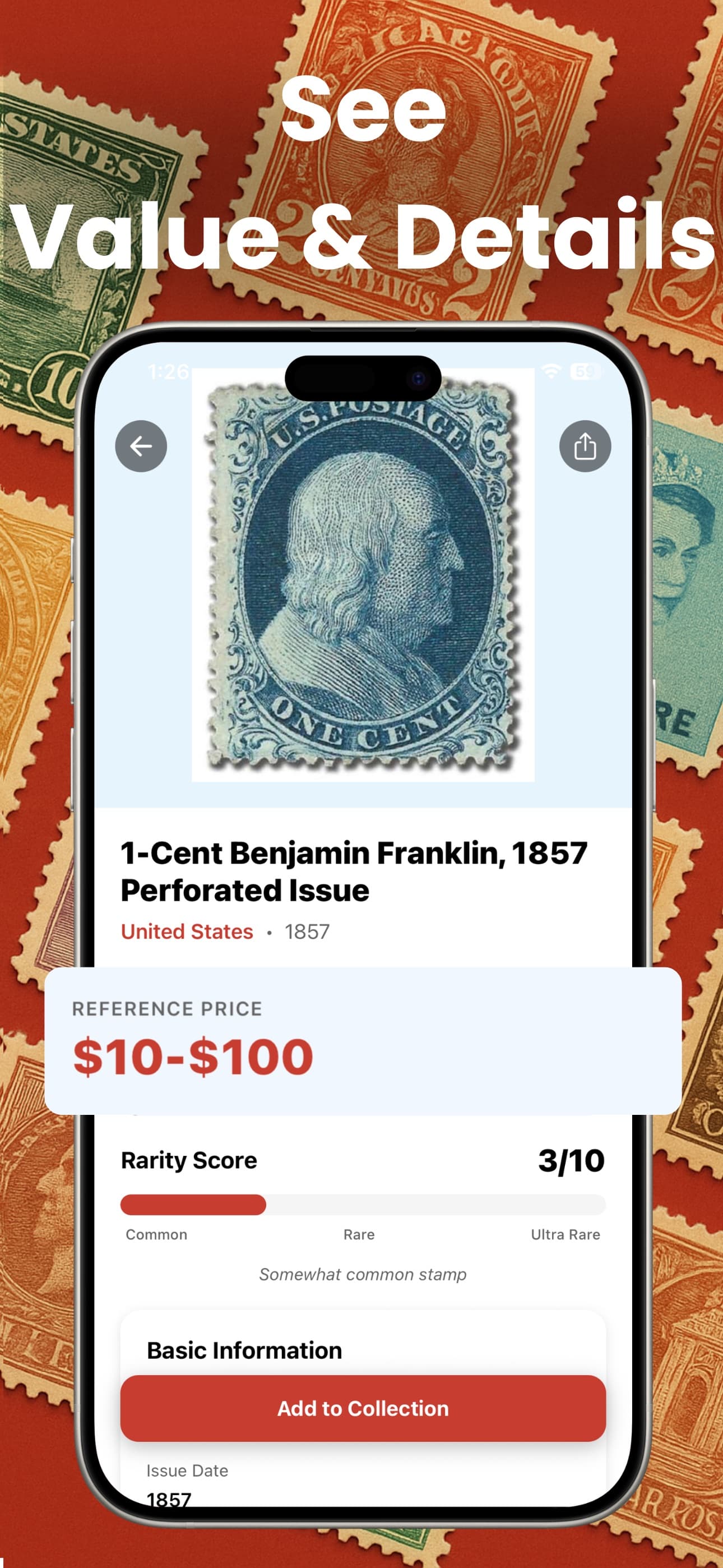
- 2
Check the issue and year
A pre-decimal date or a colony name is the signal to look closer at watermark, perforation and condition.
- 3
Use rarity to triage
Work through a shoebox quickly, setting aside anything with a high rarity score or a meaningful price range.
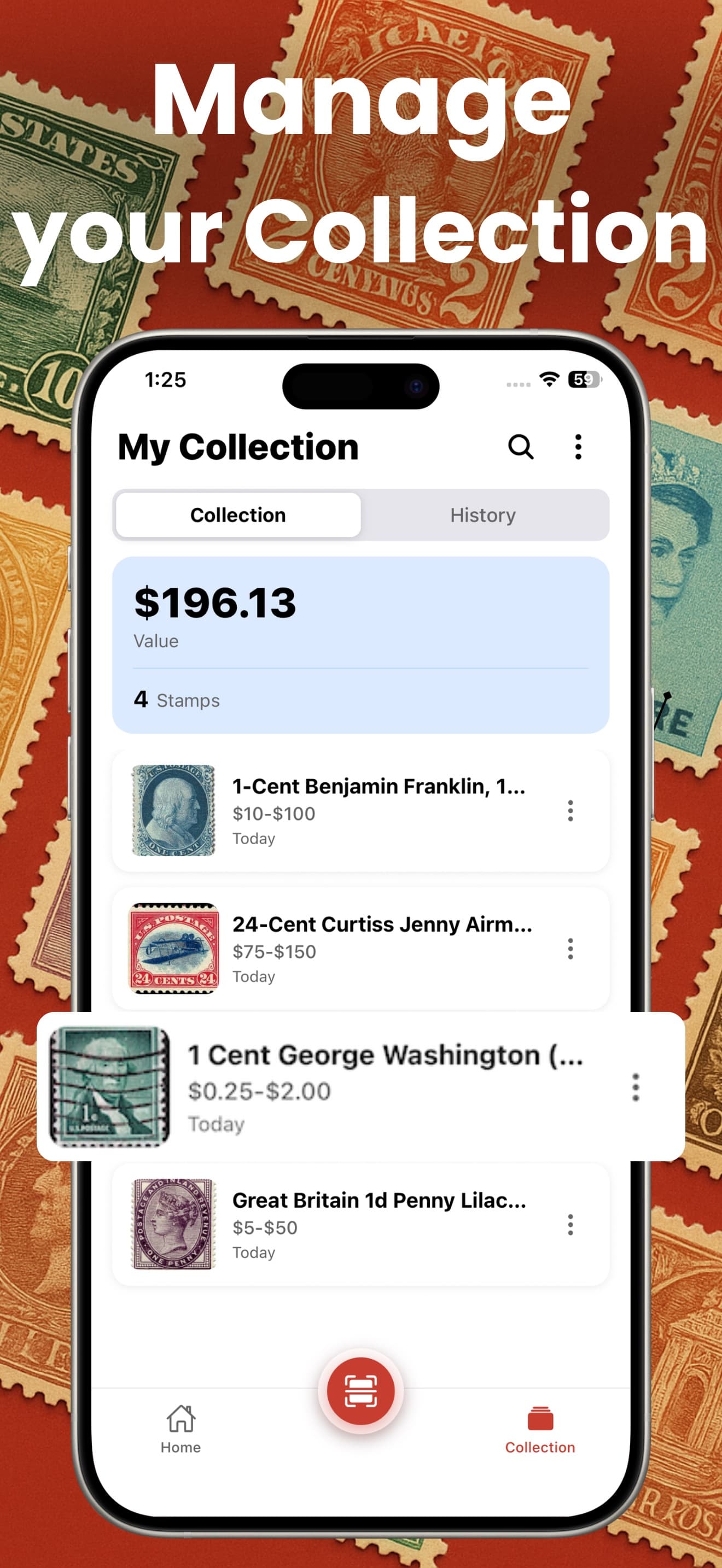
- 4
Save and total your collection
Add the keepers to your collection to track what the better part of the album is worth.


Descarga gratuita para iOS y Android
Preguntas frecuentes
¿Cuál es el sello australiano más valioso?
Encabezan la lista los valores altos de la serie del Canguro y el mapa y las grandes rarezas coloniales, incluido el Cisne invertido de Australia Occidental de 1855. A ese nivel el estado influye enormemente.
¿Valen algo los sellos australianos de los años setenta?
Por lo general no. Los sellos de la era decimal se imprimieron y guardaron en grandes cantidades, así que la mayoría valen su valor facial salvo que sean errores.
¿Cuánto vale un sello del canguro?
Los valores bajos de la serie del Canguro y el mapa son asequibles, mientras que los valores en chelines y libras, y las variedades de filigrana escasas, pueden valer mucho. Lo decide la tirada concreta.
¿Se pueden usar aún sellos australianos antiguos para franquear?
Los sellos decimales en dólares y centavos siguen siendo válidos en general. Los anteriores a 1966 en libras, chelines y peniques no lo son, y su sitio está de todos modos en una colección.
¿Cuánto vale un sello australiano anterior al sistema decimal?
Depende por completo de la emisión. Los ordinarios comunes de Jorge VI e Isabel II valen céntimos, mientras que los valores altos del Canguro, los 5 chelines del Puente de 1932 y las variedades de filigrana escasas van de decenas a miles de euros.
¿Los sellos australianos tienen filigrana?
Muchos de los primeros sí, y son importantes. El mismo diseño se imprimió en papeles con filigranas distintas, y algunas combinaciones son mucho más escasas, así que una cubeta de filigranas resulta útil si coleccionas Australia anterior a 1966.
¿Valen algo los sobres de primer día australianos?
La mayoría valen unos pocos euros como mucho, porque se produjeron en grandes cantidades desde los años sesenta. Merece la pena revisar bien los anteriores, los de viñetas inusuales y los que llevan valores altos anteriores al sistema decimal.
