
Frimærker efter land
Australske frimærker: hvilke der virkelig er penge værd
Opdateret · 5 min. læsning · StampGo-teamet
Kort svar
De værdifulde australske mærker er kolonitidens udgaver fra 1850 til 1912, kænguru- og kortserien fra 1913 og nøgleværdier fra før decimaliseringen, som 5 shilling Sydney Harbour Bridge fra 1932. Decimalmærker, udsendt fra 1966, er generelt almindelige og cirka pålydende værd.
Nøglefakta
- Første mærker
- Kolonierne udsendte deres egne fra 1850, før føderationen
- Første landsdækkende udgave
- Kænguru- og kortserien, fra 1913
- Skillelinjen
- Decimalvalutaen kom i 1966. Det er de ældre mærker, der samles
- Nøglemærke før 1966
- 5 shilling Sydney Harbour Bridge fra 1932
- Berømt sjældenhed
- Vestaustraliens omvendte svane fra 1855
- Oftest almindelige
- Særfrimærker og brugsmærker fra decimalperioden
What are Australian stamps worth by era?
Colonial and early Commonwealth issues carry the value. Pre-decimal stamps are mixed, with the high values and a few commemoratives standing out, while decimal issues from 1966 are mostly common.
| Era | Key issues | Typical value |
|---|---|---|
| 1850–1912 (colonies) | New South Wales, Victoria, Queensland, South Australia, Western Australia, Tasmania | Often valuable, especially early issues and on cover |
| 1913–1945 | Kangaroo and Map series, King George V heads, 1932 Harbour Bridge | High values and key commemoratives are the money |
| 1945–1965 | Pre-decimal definitives and commemoratives | Mostly modest, with some better high values |
| 1966–today | Decimal issues | Usually face value, apart from errors and varieties |
Which Australian stamps are worth money?
Colonial rarities, the high-value Kangaroo and Map stamps, the 1932 Sydney Harbour Bridge 5 shillings, and early airmail issues, especially unused and well centered.
- Kangaroo and Map high values. The pound denominations of the first Commonwealth series are the classic Australian rarities.
- 1932 Sydney Harbour Bridge 5 shillings. The key commemorative of the pre-decimal era, worth far more unused than used.
- Colonial issues. Each colony has its own scarce stamps, and Western Australia's Inverted Swan of 1855 is world-famous.
- Early airmail and flight covers, which connect to Australia's aviation history.
- Errors and varieties, including missing colours and perforation errors on later issues.
What does “pre-decimal” mean for Australian stamps?
It means stamps issued before Australia changed to dollars and cents in 1966. Pre-decimal stamps are priced in pounds, shillings and pence, and they're where most Australian value sits.
If a stamp shows a value such as 3d, 1/- or 5/-, it's pre-decimal and at least sixty years old. If it shows cents or dollars, it's from 1966 or later and almost certainly common. That single check sorts most family albums in a few minutes.
How do I identify an Australian stamp?
Look for “Australia” in the inscription, or a colony name such as New South Wales, Victoria or Tasmania on pre-1913 issues. The currency and monarch then narrow down the date.
- A colony name means the stamp predates the Commonwealth series of 1913.
- A kangaroo on a map of Australia identifies the first Commonwealth series.
- King George V, George VI or Elizabeth II narrows the reign, just as it does for British stamps.
- Watermarks and perforations separate many similar-looking Kangaroo and KGV printings, and they change the value substantially.
Stanley Gibbons and specialist Australian catalogues both cover these, and the differences matter. See how to identify stamps.
Are decimal Australian stamps worth anything?
Most are worth about face value. Australia has issued a lot of attractive commemoratives since 1966, and collectors saved them in quantity, so supply is high.
The exceptions are genuine errors, some booklet and coil varieties, and stamps on unusual covers. Unused decimal stamps still work as postage, which is often the best use for a shoebox of them. See commemorative stamps value.
What about Australian territory stamps?
Australia's external territories have issued their own stamps, including the Australian Antarctic Territory, Norfolk Island, Christmas Island and the Cocos (Keeling) Islands. Most collectors file them with Australia, and catalogues list them separately.
- Australian Antarctic Territory: polar themes and expedition postmarks make these popular, and covers carried on Antarctic voyages are collected in their own right.
- Norfolk Island: long-running issues with strong local themes.
- Christmas Island and Cocos (Keeling) Islands: small issuing programmes, which keeps some issues scarcer than mainland stamps.
- Papua and New Guinea: administered by Australia for much of the 20th century, and collected as a separate country with genuinely valuable early issues.
Territory stamps are a good example of why identification comes first: they look Australian, they're catalogued separately, and their values follow their own supply rather than mainland Australia's. See how to identify stamps.
Trin for trin
How to check Australian stamp values with StampGo
Colonial issues, Kangaroos and decimal commemoratives look nothing alike, so identifying the issue immediately tells you whether to keep going.
- 1
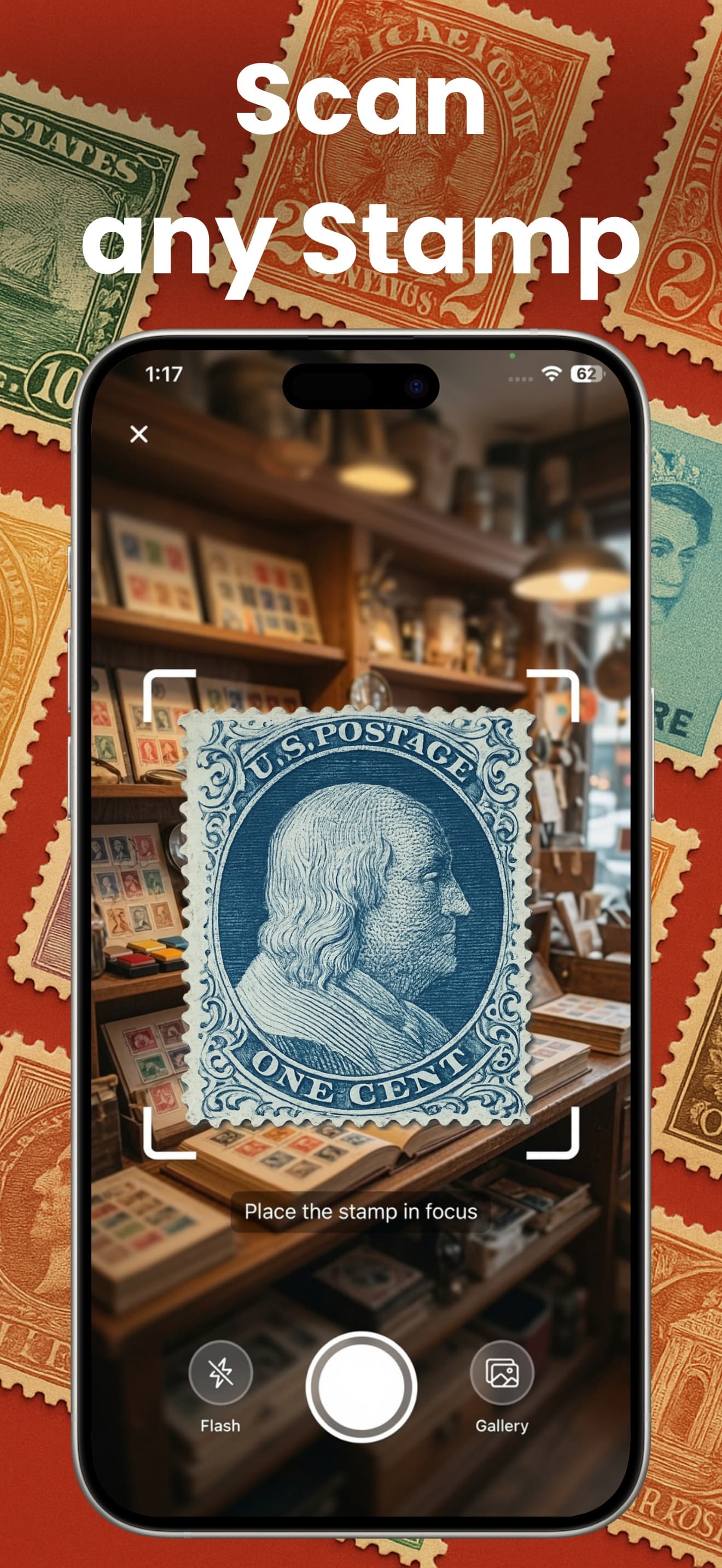
Scan the stamp
Tap Scan Now and photograph one stamp at a time, flat and filling the frame.
- 2
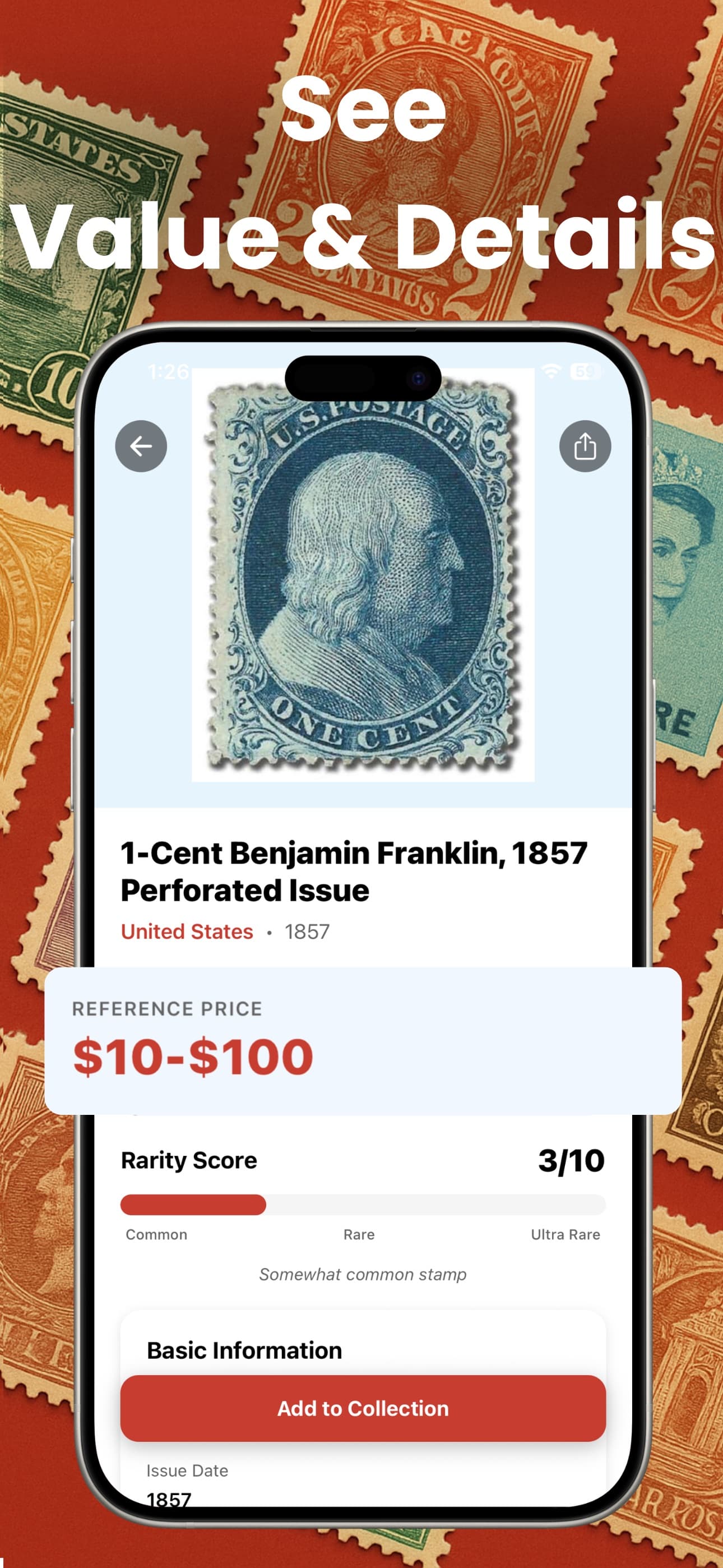
Check the issue and year
A pre-decimal date or a colony name is the signal to look closer at watermark, perforation and condition.
- 3
Use rarity to triage
Work through a shoebox quickly, setting aside anything with a high rarity score or a meaningful price range.
- 4
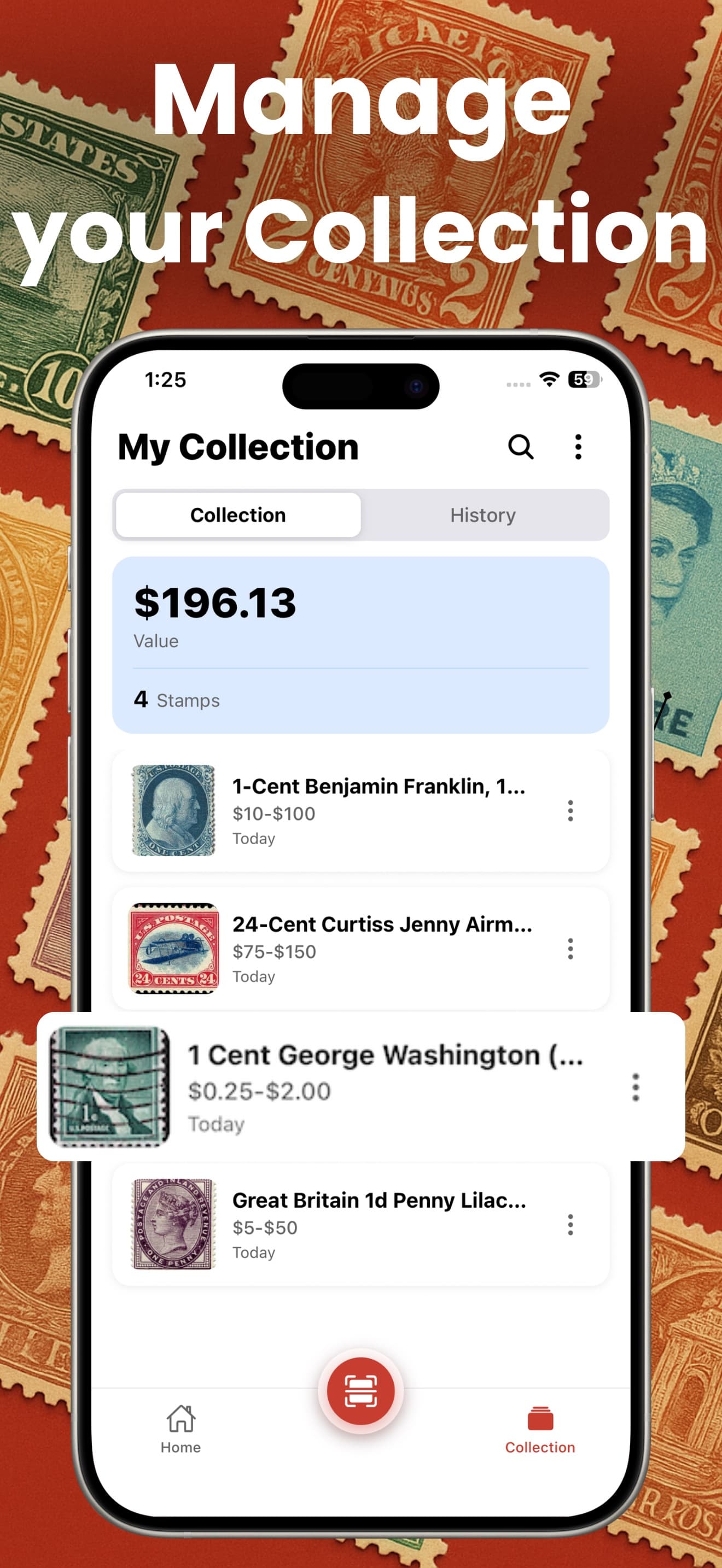
Save and total your collection
Add the keepers to your collection to track what the better part of the album is worth.


Gratis at hente til iOS og Android
Ofte stillede spørgsmål
Hvilket australsk frimærke er dyrest?
Øverst ligger de høje værdier i kænguru- og kortserien og de store kolonisjældenheder, heriblandt Vestaustraliens omvendte svane fra 1855. På det niveau vejer standen enormt tungt.
Er australske mærker fra 1970'erne noget værd?
Som regel ikke. Decimalperiodens mærker blev trykt og gemt i store mængder, så de fleste er cirka pålydende værd, medmindre det er fejltryk.
Hvad er et kængurumærke værd?
De lave værdier i kænguru- og kortserien er til at betale, mens shilling- og pundværdier samt sjældne vandmærkevarianter kan være meget værd. Det er det præcise oplag, der afgør det.
Kan gamle australske mærker stadig bruges til porto?
Decimalmærker i dollars og cent gælder generelt stadig. Mærker fra før 1966 i pund, shilling og pence gør ikke, og de hører alligevel hjemme i en samling.
Hvad er et australsk mærke fra før decimaliseringen værd?
Det afhænger helt af udgaven. Almindelige brugsmærker med Georg VI og Elizabeth II er øre værd, mens høje kænguruværdier, 5 shilling Harbour Bridge fra 1932 og sjældne vandmærkevarianter går fra nogle tiere til flere tusind kroner.
Har australske frimærker vandmærker?
Mange tidlige har, og de betyder noget. Samme motiv blev trykt på papir med forskellige vandmærker, og nogle kombinationer er langt sjældnere, så et vandmærkefad er værd at have til Australien før 1966.
Er australske førstedagskuverter noget værd?
De fleste højst nogle få tiere, fordi de blev fremstillet i store mængder fra 1960'erne. Det, der er værd at tjekke ordentligt, er tidligere kuverter, usædvanlige vignetter og kuverter med høje værdier fra før decimaliseringen.
