
Znaczki według krajów
Znaczki Australii: które naprawdę są coś warte
Aktualizacja · 5 min czytania · Zespół StampGo
Krótka odpowiedź
Cenne australijskie znaczki to emisje kolonialne z lat 1850–1912, seria z kangurem i mapą od 1913 roku oraz kluczowe nominały sprzed reformy dziesiętnej, jak 5 szylingów z mostem w Sydney z 1932 roku. Znaczki dziesiętne, wydawane od 1966 roku, są na ogół pospolite i warte mniej więcej tyle, co nominał.
Najważniejsze fakty
- Pierwsze znaczki
- Kolonie wydawały własne od 1850 roku, jeszcze przed federacją
- Pierwsza emisja ogólnokrajowa
- Seria z kangurem i mapą, od 1913 roku
- Granica
- Waluta dziesiętna weszła w 1966 roku. Kolekcjonerskie są znaczki wcześniejsze
- Kluczowy znaczek sprzed 1966
- 5 szylingów z mostem w Sydney z 1932 roku
- Słynny rarytas
- Odwrócony łabędź z Australii Zachodniej, 1855 rok
- Zwykle pospolite
- Znaczki okolicznościowe i obiegowe z okresu dziesiętnego
What are Australian stamps worth by era?
Colonial and early Commonwealth issues carry the value. Pre-decimal stamps are mixed, with the high values and a few commemoratives standing out, while decimal issues from 1966 are mostly common.
| Era | Key issues | Typical value |
|---|---|---|
| 1850–1912 (colonies) | New South Wales, Victoria, Queensland, South Australia, Western Australia, Tasmania | Often valuable, especially early issues and on cover |
| 1913–1945 | Kangaroo and Map series, King George V heads, 1932 Harbour Bridge | High values and key commemoratives are the money |
| 1945–1965 | Pre-decimal definitives and commemoratives | Mostly modest, with some better high values |
| 1966–today | Decimal issues | Usually face value, apart from errors and varieties |
Which Australian stamps are worth money?
Colonial rarities, the high-value Kangaroo and Map stamps, the 1932 Sydney Harbour Bridge 5 shillings, and early airmail issues, especially unused and well centered.
- Kangaroo and Map high values. The pound denominations of the first Commonwealth series are the classic Australian rarities.
- 1932 Sydney Harbour Bridge 5 shillings. The key commemorative of the pre-decimal era, worth far more unused than used.
- Colonial issues. Each colony has its own scarce stamps, and Western Australia's Inverted Swan of 1855 is world-famous.
- Early airmail and flight covers, which connect to Australia's aviation history.
- Errors and varieties, including missing colours and perforation errors on later issues.
What does “pre-decimal” mean for Australian stamps?
It means stamps issued before Australia changed to dollars and cents in 1966. Pre-decimal stamps are priced in pounds, shillings and pence, and they're where most Australian value sits.
If a stamp shows a value such as 3d, 1/- or 5/-, it's pre-decimal and at least sixty years old. If it shows cents or dollars, it's from 1966 or later and almost certainly common. That single check sorts most family albums in a few minutes.
How do I identify an Australian stamp?
Look for “Australia” in the inscription, or a colony name such as New South Wales, Victoria or Tasmania on pre-1913 issues. The currency and monarch then narrow down the date.
- A colony name means the stamp predates the Commonwealth series of 1913.
- A kangaroo on a map of Australia identifies the first Commonwealth series.
- King George V, George VI or Elizabeth II narrows the reign, just as it does for British stamps.
- Watermarks and perforations separate many similar-looking Kangaroo and KGV printings, and they change the value substantially.
Stanley Gibbons and specialist Australian catalogues both cover these, and the differences matter. See how to identify stamps.
Are decimal Australian stamps worth anything?
Most are worth about face value. Australia has issued a lot of attractive commemoratives since 1966, and collectors saved them in quantity, so supply is high.
The exceptions are genuine errors, some booklet and coil varieties, and stamps on unusual covers. Unused decimal stamps still work as postage, which is often the best use for a shoebox of them. See commemorative stamps value.
What about Australian territory stamps?
Australia's external territories have issued their own stamps, including the Australian Antarctic Territory, Norfolk Island, Christmas Island and the Cocos (Keeling) Islands. Most collectors file them with Australia, and catalogues list them separately.
- Australian Antarctic Territory: polar themes and expedition postmarks make these popular, and covers carried on Antarctic voyages are collected in their own right.
- Norfolk Island: long-running issues with strong local themes.
- Christmas Island and Cocos (Keeling) Islands: small issuing programmes, which keeps some issues scarcer than mainland stamps.
- Papua and New Guinea: administered by Australia for much of the 20th century, and collected as a separate country with genuinely valuable early issues.
Territory stamps are a good example of why identification comes first: they look Australian, they're catalogued separately, and their values follow their own supply rather than mainland Australia's. See how to identify stamps.
Krok po kroku
How to check Australian stamp values with StampGo
Colonial issues, Kangaroos and decimal commemoratives look nothing alike, so identifying the issue immediately tells you whether to keep going.
- 1
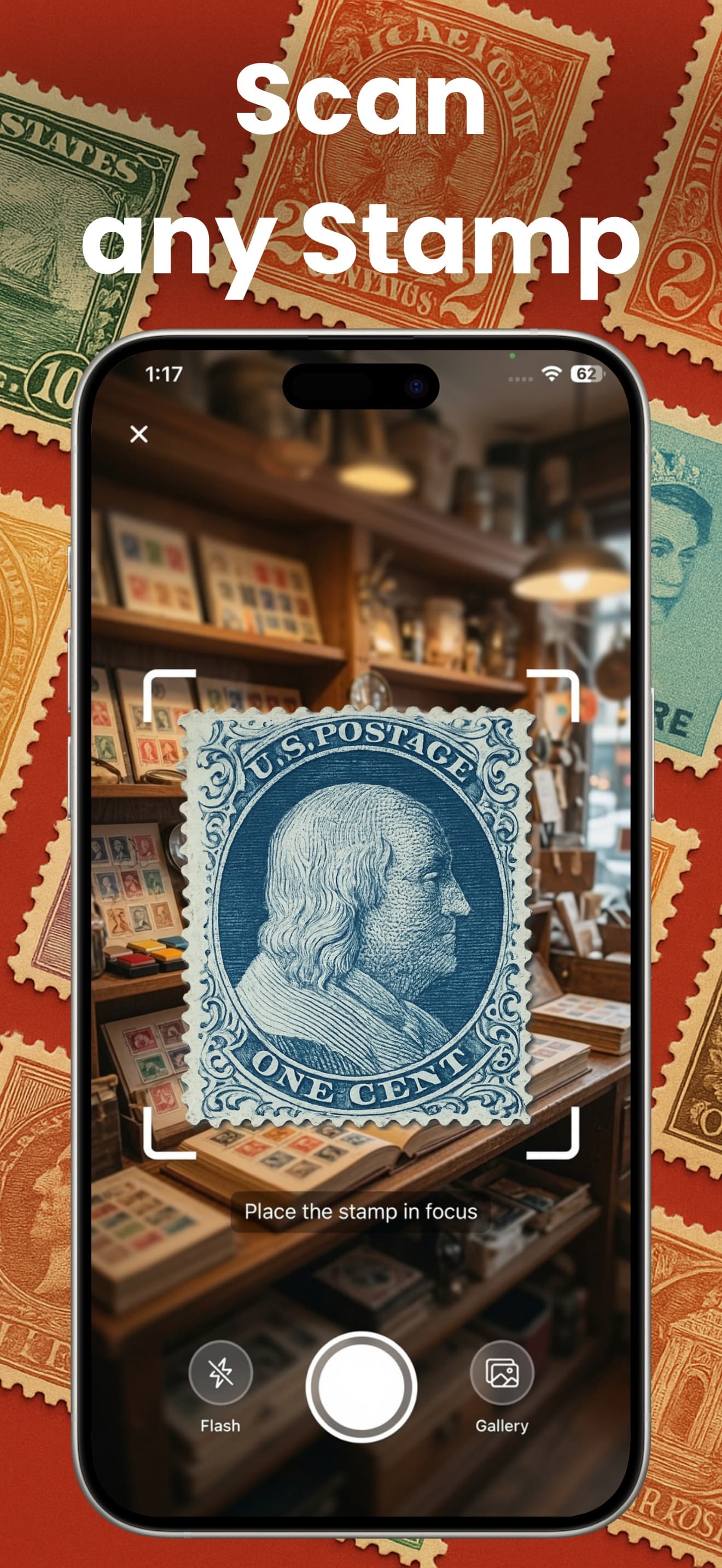
Scan the stamp
Tap Scan Now and photograph one stamp at a time, flat and filling the frame.
- 2
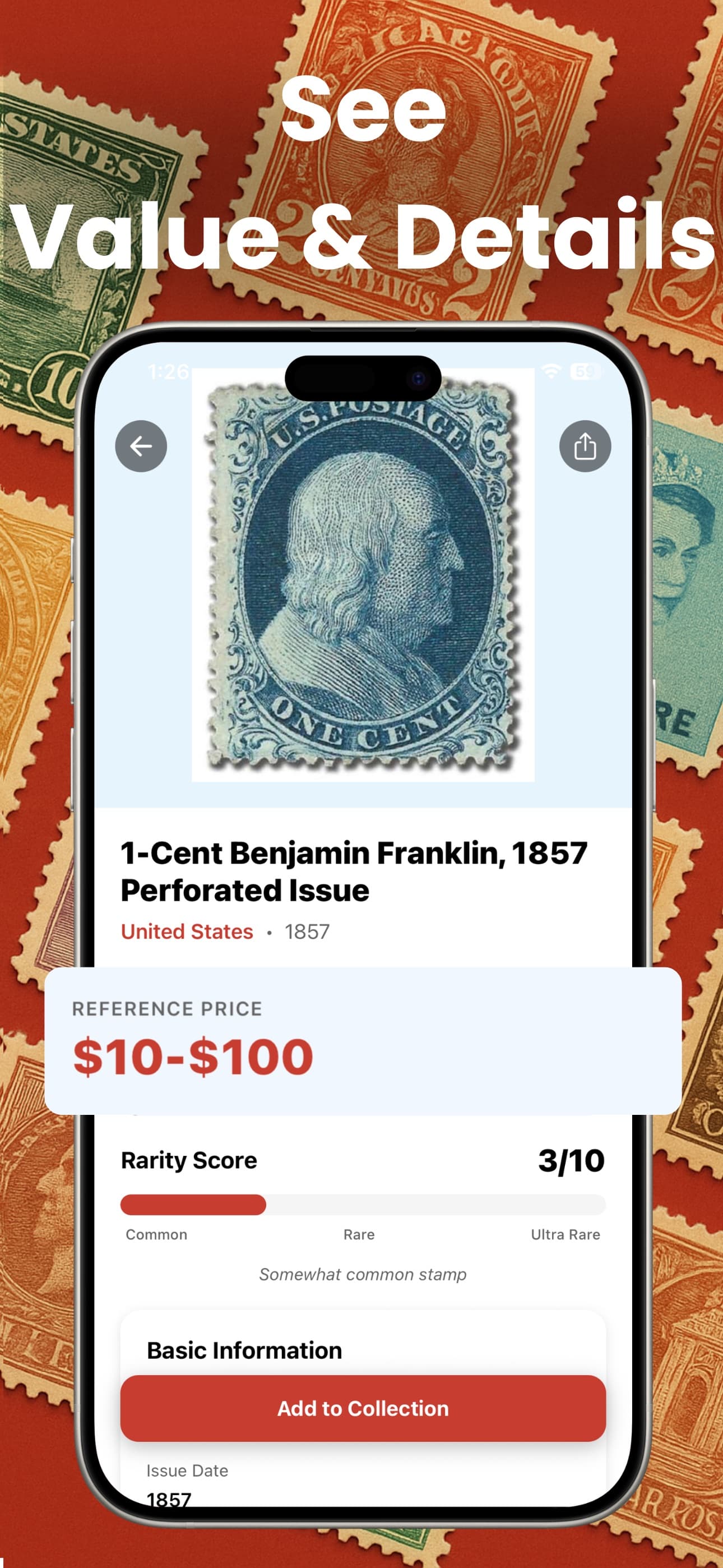
Check the issue and year
A pre-decimal date or a colony name is the signal to look closer at watermark, perforation and condition.
- 3
Use rarity to triage
Work through a shoebox quickly, setting aside anything with a high rarity score or a meaningful price range.
- 4
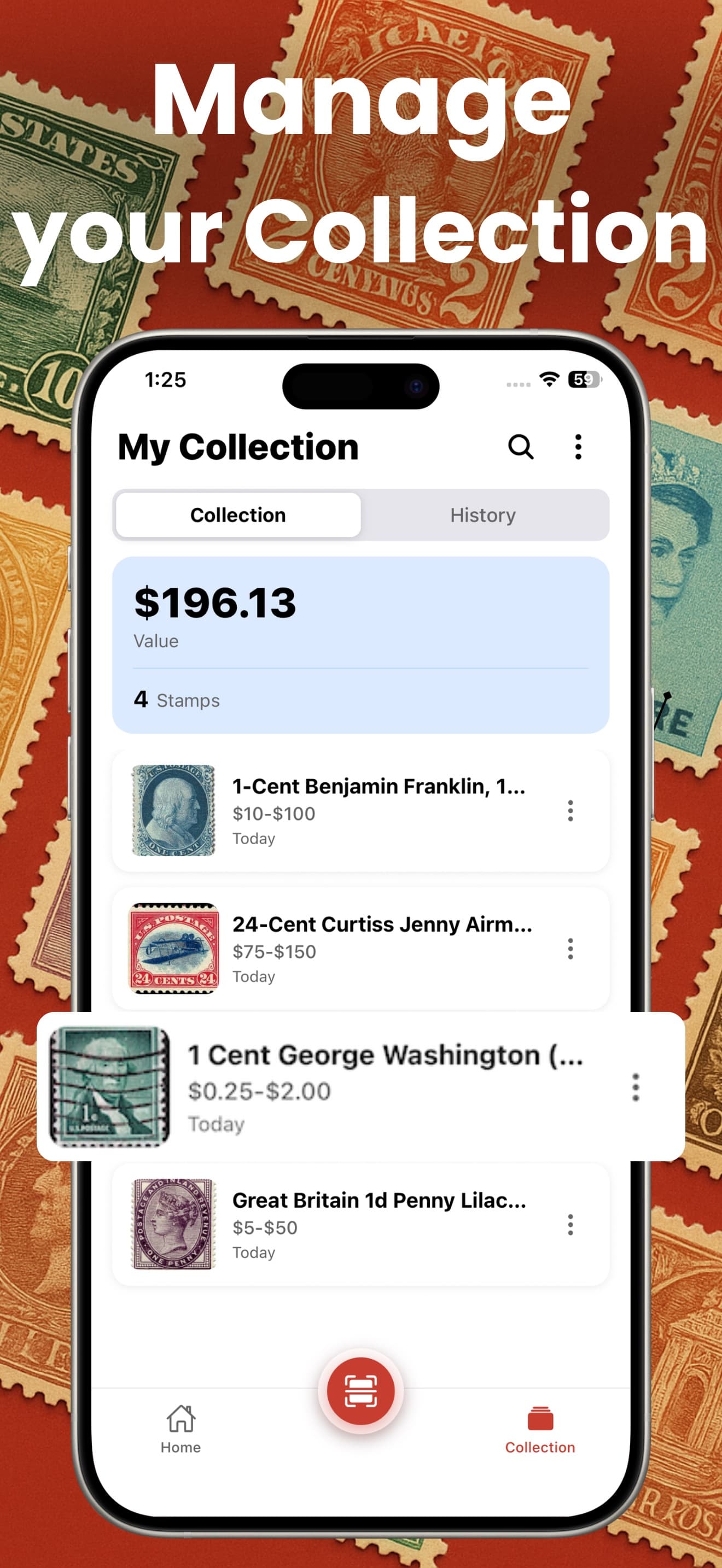
Save and total your collection
Add the keepers to your collection to track what the better part of the album is worth.


Darmowa do pobrania na iOS i Androida
Pytania i odpowiedzi
Który australijski znaczek jest najcenniejszy?
Na czele są wysokie nominały serii z kangurem i mapą oraz wielkie rarytasy kolonialne, w tym Odwrócony łabędź z Australii Zachodniej z 1855 roku. Na tym poziomie stan zachowania waży bardzo dużo.
Czy australijskie znaczki z lat siedemdziesiątych są coś warte?
Zwykle nie. Znaczki z okresu dziesiętnego drukowano i zachowywano w dużych ilościach, więc większość warta jest tyle, co nominał, chyba że to błędy druku.
Ile wart jest znaczek z kangurem?
Niskie nominały serii z kangurem i mapą są przystępne, natomiast nominały w szylingach i funtach oraz rzadkie odmiany znaku wodnego potrafią kosztować bardzo dużo. Decyduje konkretny nakład.
Czy starymi australijskimi znaczkami można jeszcze frankować?
Znaczki dziesiętne w dolarach i centach są na ogół nadal ważne. Te sprzed 1966 roku w funtach, szylingach i pensach już nie, a ich miejsce i tak jest w kolekcji.
Ile wart jest australijski znaczek sprzed reformy dziesiętnej?
Wszystko zależy od emisji. Pospolite znaczki obiegowe Jerzego VI i Elżbiety II są warte grosze, a wysokie nominały serii z kangurem, 5 szylingów z mostem z 1932 roku i rzadkie odmiany znaku wodnego — od kilkudziesięciu do kilku tysięcy dolarów.
Czy australijskie znaczki mają znaki wodne?
Wiele wczesnych ma i są one istotne. Ten sam rysunek drukowano na papierze z różnymi znakami wodnymi, a niektóre kombinacje są znacznie rzadsze, więc przy Australii sprzed 1966 roku warto mieć wanienkę do znaków wodnych.
Czy australijskie koperty FDC są coś warte?
Większość najwyżej kilkanaście złotych, bo od lat sześćdziesiątych powstawały masowo. Naprawdę warto sprawdzić te wcześniejsze, z nietypowymi rysunkami oraz z wysokimi nominałami sprzed reformy dziesiętnej.
