
Frimärken per land
Australiska frimärken: vilka som verkligen är värda pengar
Uppdaterad · 5 min läsning · StampGo-teamet
Kort svar
De värdefulla australiska märkena är kolonialutgåvorna 1850–1912, känguru- och kartserien från 1913 och nyckelvalörer före decimaliseringen, som 5 shilling Sydney Harbour Bridge från 1932. Decimalmärken, utgivna från 1966, är i allmänhet vanliga och värda ungefär sin valör.
Nyckelfakta
- Första märkena
- Kolonierna gav ut egna från 1850, före federationen
- Första nationella utgåvan
- Känguru- och kartserien, från 1913
- Gränsen
- Decimalvalutan kom 1966. Det är de äldre märkena som samlas
- Nyckelmärke före 1966
- 5 shilling Sydney Harbour Bridge från 1932
- Berömd raritet
- Västaustraliens omvända svan från 1855
- Oftast vanliga
- Minnes- och bruksmärken från decimalperioden
What are Australian stamps worth by era?
Colonial and early Commonwealth issues carry the value. Pre-decimal stamps are mixed, with the high values and a few commemoratives standing out, while decimal issues from 1966 are mostly common.
| Era | Key issues | Typical value |
|---|---|---|
| 1850–1912 (colonies) | New South Wales, Victoria, Queensland, South Australia, Western Australia, Tasmania | Often valuable, especially early issues and on cover |
| 1913–1945 | Kangaroo and Map series, King George V heads, 1932 Harbour Bridge | High values and key commemoratives are the money |
| 1945–1965 | Pre-decimal definitives and commemoratives | Mostly modest, with some better high values |
| 1966–today | Decimal issues | Usually face value, apart from errors and varieties |
Which Australian stamps are worth money?
Colonial rarities, the high-value Kangaroo and Map stamps, the 1932 Sydney Harbour Bridge 5 shillings, and early airmail issues, especially unused and well centered.
- Kangaroo and Map high values. The pound denominations of the first Commonwealth series are the classic Australian rarities.
- 1932 Sydney Harbour Bridge 5 shillings. The key commemorative of the pre-decimal era, worth far more unused than used.
- Colonial issues. Each colony has its own scarce stamps, and Western Australia's Inverted Swan of 1855 is world-famous.
- Early airmail and flight covers, which connect to Australia's aviation history.
- Errors and varieties, including missing colours and perforation errors on later issues.
What does “pre-decimal” mean for Australian stamps?
It means stamps issued before Australia changed to dollars and cents in 1966. Pre-decimal stamps are priced in pounds, shillings and pence, and they're where most Australian value sits.
If a stamp shows a value such as 3d, 1/- or 5/-, it's pre-decimal and at least sixty years old. If it shows cents or dollars, it's from 1966 or later and almost certainly common. That single check sorts most family albums in a few minutes.
How do I identify an Australian stamp?
Look for “Australia” in the inscription, or a colony name such as New South Wales, Victoria or Tasmania on pre-1913 issues. The currency and monarch then narrow down the date.
- A colony name means the stamp predates the Commonwealth series of 1913.
- A kangaroo on a map of Australia identifies the first Commonwealth series.
- King George V, George VI or Elizabeth II narrows the reign, just as it does for British stamps.
- Watermarks and perforations separate many similar-looking Kangaroo and KGV printings, and they change the value substantially.
Stanley Gibbons and specialist Australian catalogues both cover these, and the differences matter. See how to identify stamps.
Are decimal Australian stamps worth anything?
Most are worth about face value. Australia has issued a lot of attractive commemoratives since 1966, and collectors saved them in quantity, so supply is high.
The exceptions are genuine errors, some booklet and coil varieties, and stamps on unusual covers. Unused decimal stamps still work as postage, which is often the best use for a shoebox of them. See commemorative stamps value.
What about Australian territory stamps?
Australia's external territories have issued their own stamps, including the Australian Antarctic Territory, Norfolk Island, Christmas Island and the Cocos (Keeling) Islands. Most collectors file them with Australia, and catalogues list them separately.
- Australian Antarctic Territory: polar themes and expedition postmarks make these popular, and covers carried on Antarctic voyages are collected in their own right.
- Norfolk Island: long-running issues with strong local themes.
- Christmas Island and Cocos (Keeling) Islands: small issuing programmes, which keeps some issues scarcer than mainland stamps.
- Papua and New Guinea: administered by Australia for much of the 20th century, and collected as a separate country with genuinely valuable early issues.
Territory stamps are a good example of why identification comes first: they look Australian, they're catalogued separately, and their values follow their own supply rather than mainland Australia's. See how to identify stamps.
Steg för steg
How to check Australian stamp values with StampGo
Colonial issues, Kangaroos and decimal commemoratives look nothing alike, so identifying the issue immediately tells you whether to keep going.
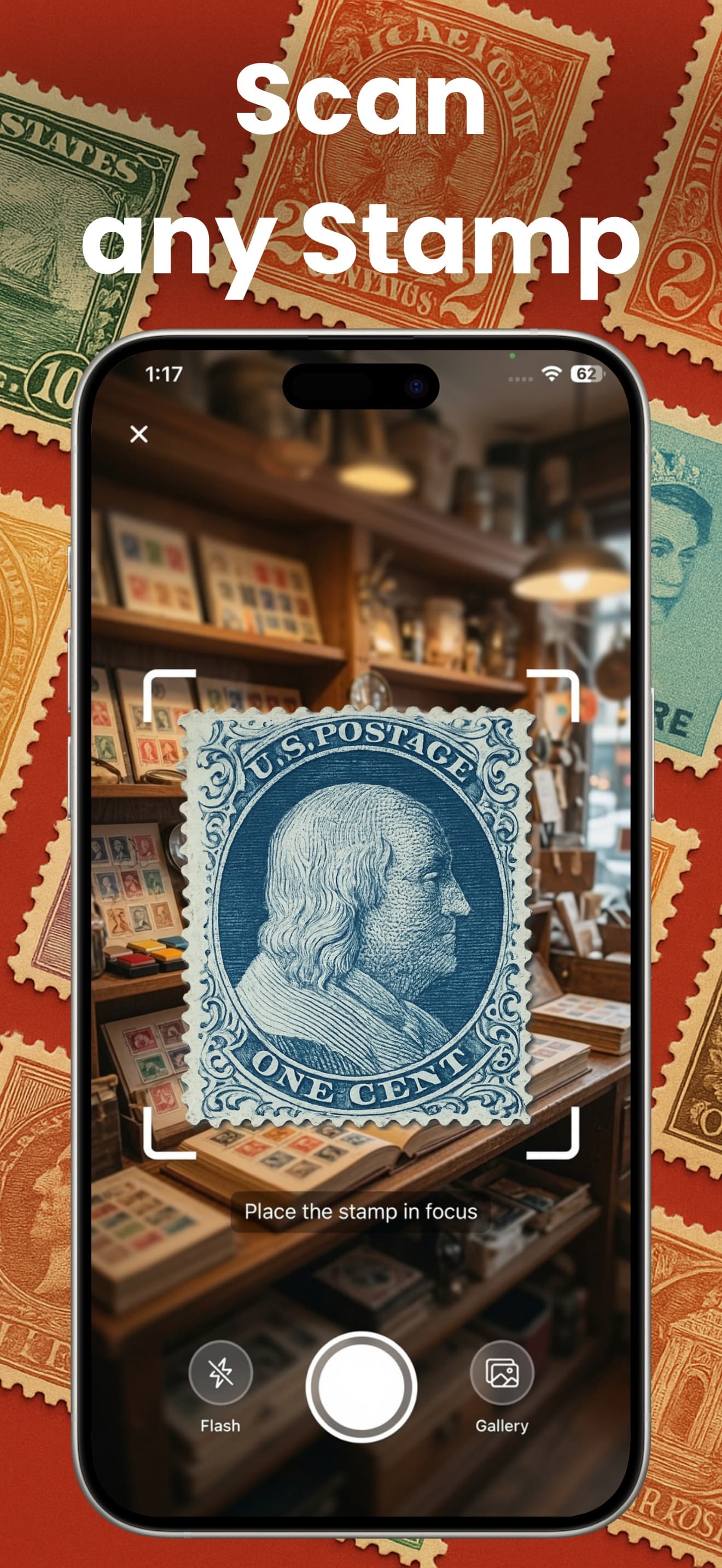
- 1
Scan the stamp
Tap Scan Now and photograph one stamp at a time, flat and filling the frame.
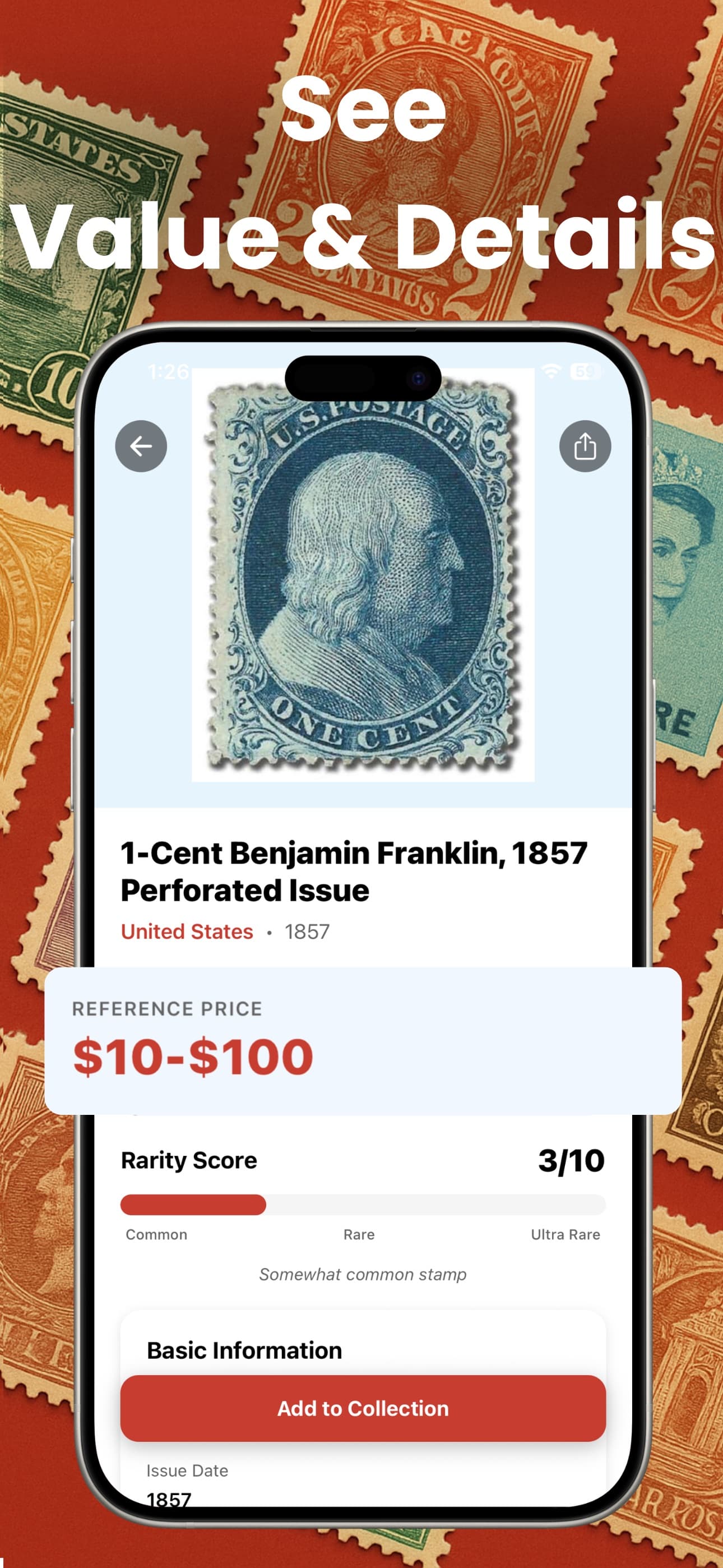
- 2
Check the issue and year
A pre-decimal date or a colony name is the signal to look closer at watermark, perforation and condition.
- 3
Use rarity to triage
Work through a shoebox quickly, setting aside anything with a high rarity score or a meaningful price range.
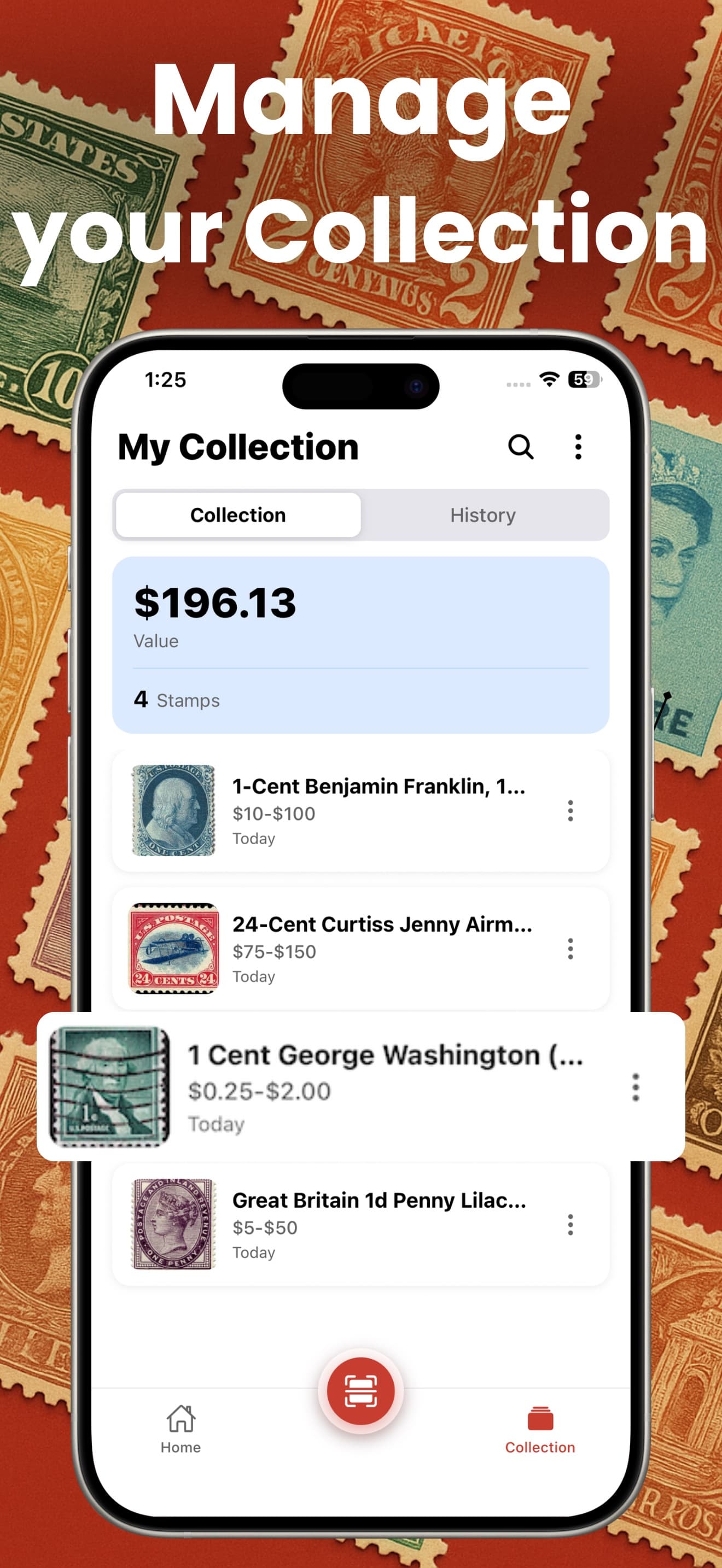
- 4
Save and total your collection
Add the keepers to your collection to track what the better part of the album is worth.


Gratis att ladda ner för iOS och Android
Vanliga frågor
Vilket är det dyraste australiska frimärket?
Högst upp ligger de höga valörerna i känguru- och kartserien och de stora kolonialrariteterna, däribland Västaustraliens omvända svan från 1855. På den nivån väger skicket oerhört tungt.
Är australiska märken från 1970-talet värda något?
I regel inte. Decimalperiodens märken trycktes och sparades i stora mängder, så de flesta är värda ungefär valören om det inte är feltryck.
Vad är ett kängurumärke värt?
De låga valörerna i känguru- och kartserien är prisvärda, medan shilling- och pundvalörer samt ovanliga vattenmärkesvarianter kan vara värda mycket. Det är den exakta upplagan som avgör.
Går gamla australiska märken fortfarande att frankera med?
Decimalmärken i dollar och cent gäller i allmänhet fortfarande. Märken före 1966 i pund, shilling och pence gör det inte, och de hör ändå hemma i en samling.
Vad är ett australiskt märke från före decimaliseringen värt?
Det beror helt på utgåvan. Vanliga bruksmärken med Georg VI och Elizabeth II är värda ören, medan höga kängurulvalörer, 5 shilling Harbour Bridge från 1932 och ovanliga vattenmärkesvarianter går från tiotals till tusentals kronor.
Har australiska frimärken vattenmärken?
Många tidiga har det, och de spelar roll. Samma motiv trycktes på papper med olika vattenmärken, och vissa kombinationer är betydligt ovanligare, så ett vattenmärkesfat är värt att ha för Australien före 1966.
Är australiska förstadagsbrev värda något?
De flesta högst några tiotals kronor, eftersom de tillverkades i stora mängder från 1960-talet. Det som är värt en ordentlig koll är tidigare brev, ovanliga vinjetter och brev med höga valörer från före decimaliseringen.
