
Valori per paese
Francobolli d'Australia: quali valgono davvero
Aggiornato il · 5 min di lettura · A cura del team StampGo
Risposta rapida
I francobolli australiani di valore sono le emissioni coloniali dal 1850 al 1912, la serie del Canguro e mappa dal 1913 e i valori chiave prima della decimalizzazione, come i 5 scellini del Ponte di Sydney del 1932. I francobolli decimali, emessi dal 1966, sono in genere comuni e valgono più o meno il valore facciale.
In breve
- Primi francobolli
- Le colonie emisero i propri dal 1850, prima della federazione
- Prima emissione nazionale
- La serie del Canguro e mappa, dal 1913
- Spartiacque
- La valuta decimale arriva nel 1966. I francobolli precedenti sono quelli da collezione
- Francobollo chiave pre-1966
- I 5 scellini del Ponte di Sydney del 1932
- Rarità celebre
- Il Cigno capovolto dell'Australia Occidentale, 1855
- Di solito comuni
- Commemorativi e ordinari dell'era decimale
What are Australian stamps worth by era?
Colonial and early Commonwealth issues carry the value. Pre-decimal stamps are mixed, with the high values and a few commemoratives standing out, while decimal issues from 1966 are mostly common.
| Era | Key issues | Typical value |
|---|---|---|
| 1850–1912 (colonies) | New South Wales, Victoria, Queensland, South Australia, Western Australia, Tasmania | Often valuable, especially early issues and on cover |
| 1913–1945 | Kangaroo and Map series, King George V heads, 1932 Harbour Bridge | High values and key commemoratives are the money |
| 1945–1965 | Pre-decimal definitives and commemoratives | Mostly modest, with some better high values |
| 1966–today | Decimal issues | Usually face value, apart from errors and varieties |
Which Australian stamps are worth money?
Colonial rarities, the high-value Kangaroo and Map stamps, the 1932 Sydney Harbour Bridge 5 shillings, and early airmail issues, especially unused and well centered.
- Kangaroo and Map high values. The pound denominations of the first Commonwealth series are the classic Australian rarities.
- 1932 Sydney Harbour Bridge 5 shillings. The key commemorative of the pre-decimal era, worth far more unused than used.
- Colonial issues. Each colony has its own scarce stamps, and Western Australia's Inverted Swan of 1855 is world-famous.
- Early airmail and flight covers, which connect to Australia's aviation history.
- Errors and varieties, including missing colours and perforation errors on later issues.
What does “pre-decimal” mean for Australian stamps?
It means stamps issued before Australia changed to dollars and cents in 1966. Pre-decimal stamps are priced in pounds, shillings and pence, and they're where most Australian value sits.
If a stamp shows a value such as 3d, 1/- or 5/-, it's pre-decimal and at least sixty years old. If it shows cents or dollars, it's from 1966 or later and almost certainly common. That single check sorts most family albums in a few minutes.
How do I identify an Australian stamp?
Look for “Australia” in the inscription, or a colony name such as New South Wales, Victoria or Tasmania on pre-1913 issues. The currency and monarch then narrow down the date.
- A colony name means the stamp predates the Commonwealth series of 1913.
- A kangaroo on a map of Australia identifies the first Commonwealth series.
- King George V, George VI or Elizabeth II narrows the reign, just as it does for British stamps.
- Watermarks and perforations separate many similar-looking Kangaroo and KGV printings, and they change the value substantially.
Stanley Gibbons and specialist Australian catalogues both cover these, and the differences matter. See how to identify stamps.
Are decimal Australian stamps worth anything?
Most are worth about face value. Australia has issued a lot of attractive commemoratives since 1966, and collectors saved them in quantity, so supply is high.
The exceptions are genuine errors, some booklet and coil varieties, and stamps on unusual covers. Unused decimal stamps still work as postage, which is often the best use for a shoebox of them. See commemorative stamps value.
What about Australian territory stamps?
Australia's external territories have issued their own stamps, including the Australian Antarctic Territory, Norfolk Island, Christmas Island and the Cocos (Keeling) Islands. Most collectors file them with Australia, and catalogues list them separately.
- Australian Antarctic Territory: polar themes and expedition postmarks make these popular, and covers carried on Antarctic voyages are collected in their own right.
- Norfolk Island: long-running issues with strong local themes.
- Christmas Island and Cocos (Keeling) Islands: small issuing programmes, which keeps some issues scarcer than mainland stamps.
- Papua and New Guinea: administered by Australia for much of the 20th century, and collected as a separate country with genuinely valuable early issues.
Territory stamps are a good example of why identification comes first: they look Australian, they're catalogued separately, and their values follow their own supply rather than mainland Australia's. See how to identify stamps.
Passo dopo passo
How to check Australian stamp values with StampGo
Colonial issues, Kangaroos and decimal commemoratives look nothing alike, so identifying the issue immediately tells you whether to keep going.
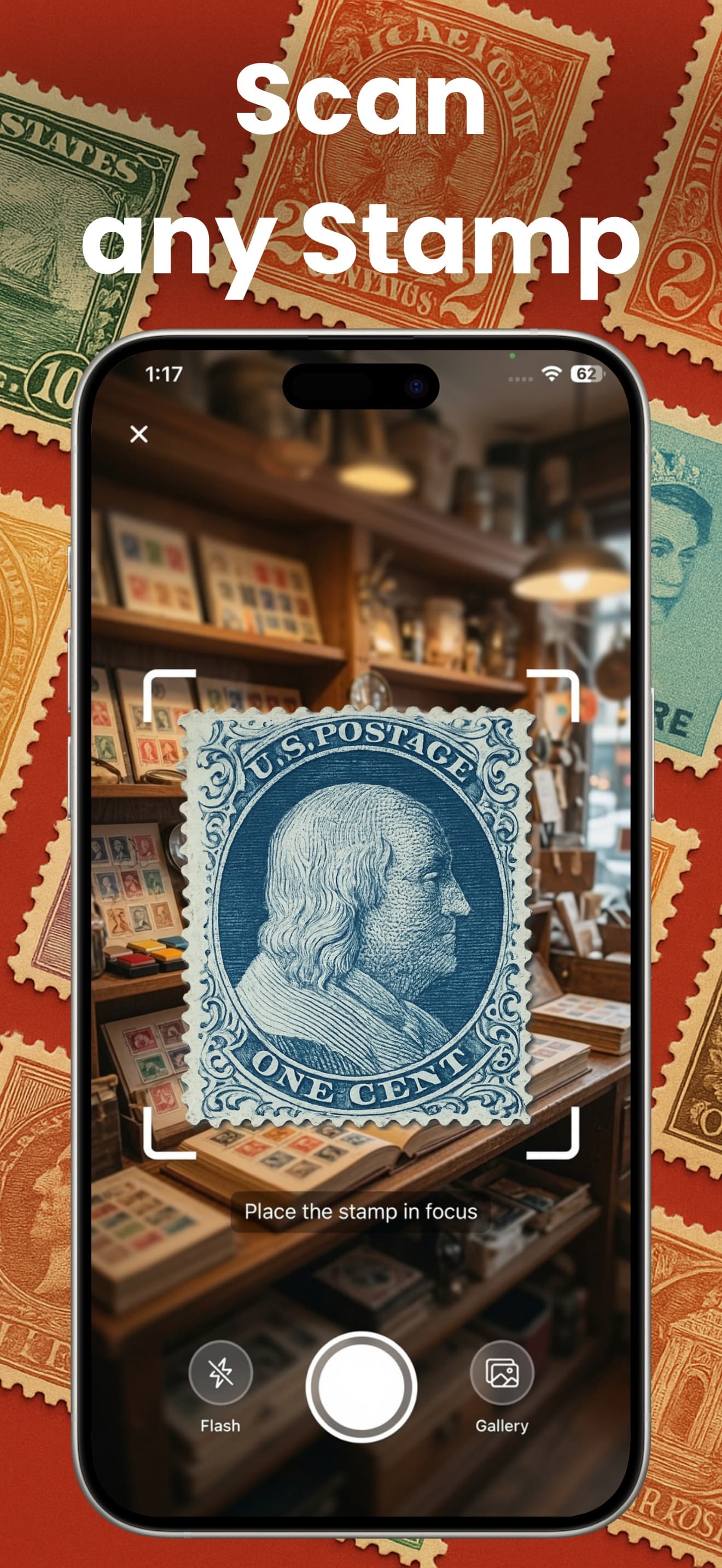
- 1
Scan the stamp
Tap Scan Now and photograph one stamp at a time, flat and filling the frame.
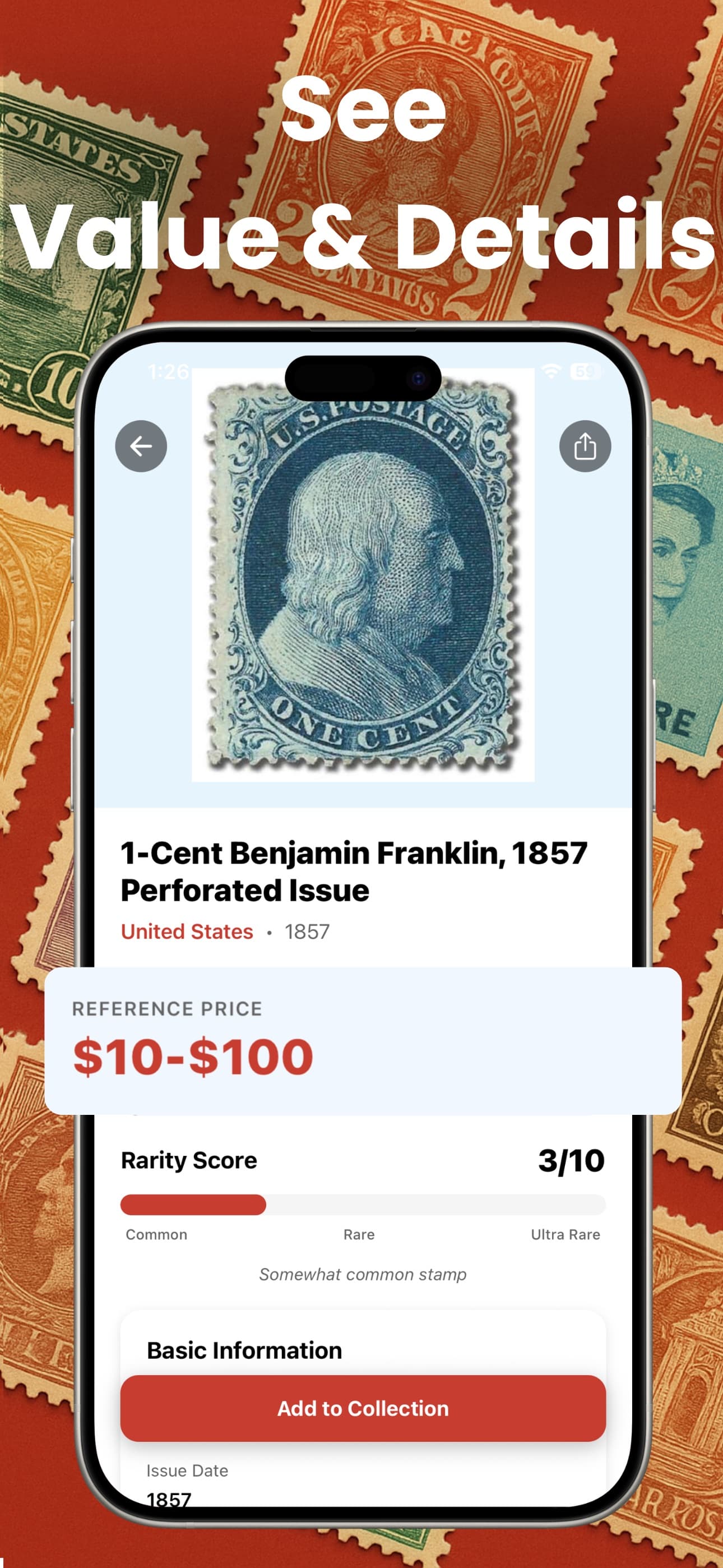
- 2
Check the issue and year
A pre-decimal date or a colony name is the signal to look closer at watermark, perforation and condition.
- 3
Use rarity to triage
Work through a shoebox quickly, setting aside anything with a high rarity score or a meaningful price range.
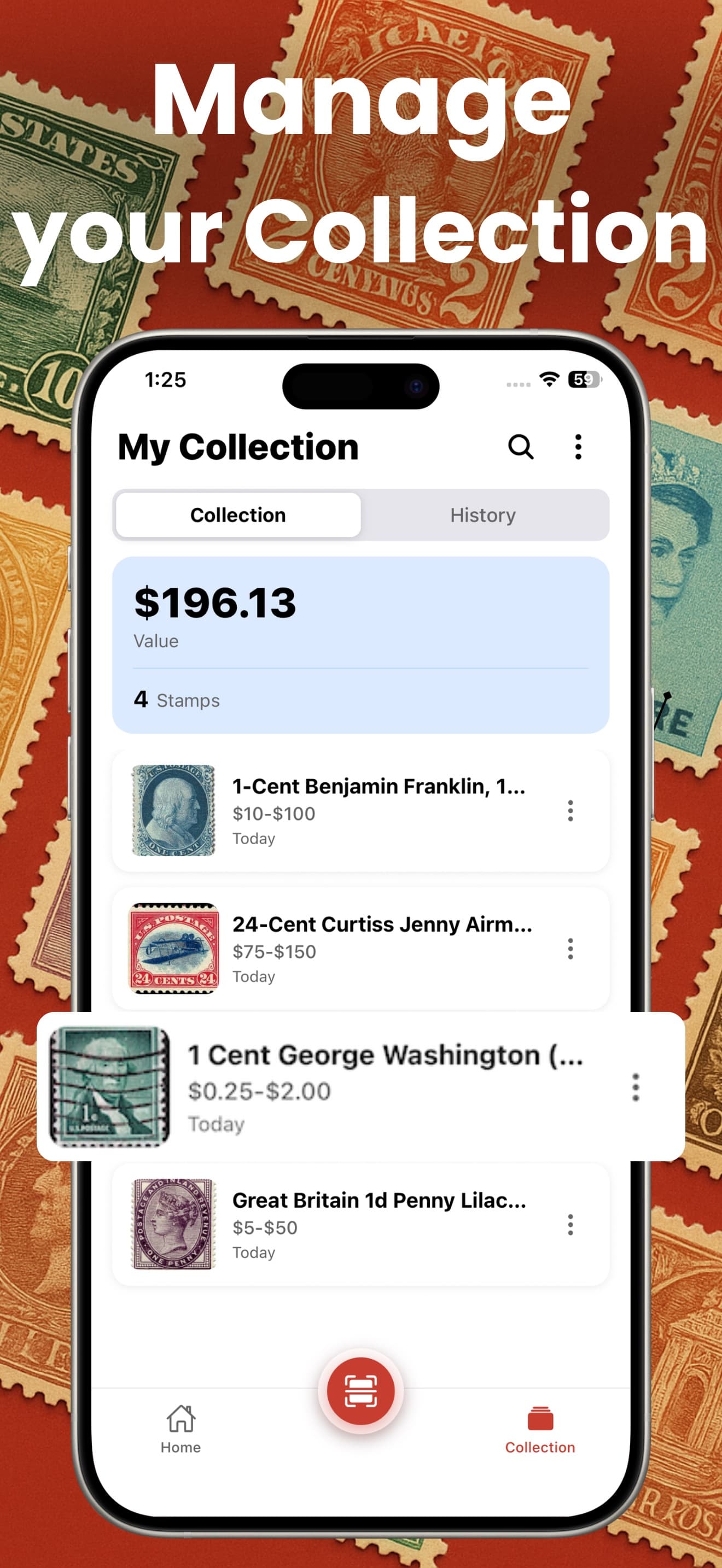
- 4
Save and total your collection
Add the keepers to your collection to track what the better part of the album is worth.


Download gratuito per iOS e Android
Domande frequenti
Qual è il francobollo australiano più prezioso?
In testa ci sono gli alti valori della serie del Canguro e mappa e le grandi rarità coloniali, tra cui il Cigno capovolto dell'Australia Occidentale del 1855. A quel livello lo stato di conservazione pesa moltissimo.
I francobolli australiani degli anni Settanta valgono qualcosa?
In genere no. I francobolli dell'era decimale furono stampati e conservati in grande quantità, quindi la maggior parte vale il valore facciale, a meno che non si tratti di errori.
Quanto vale un francobollo con il canguro?
I valori bassi della serie del Canguro e mappa sono accessibili, mentre i valori in scellini e sterline e le varietà di filigrana rare possono valere moltissimo. Decide la tiratura precisa.
Posso ancora affrancare con vecchi francobolli australiani?
I francobolli decimali in dollari e centesimi restano in genere validi. Quelli precedenti al 1966 in sterline, scellini e pence non lo sono, e il loro posto è comunque in una collezione.
Quanto vale un francobollo australiano precedente alla decimalizzazione?
Dipende interamente dall'emissione. Gli ordinari comuni di Giorgio VI ed Elisabetta II valgono pochi centesimi, mentre gli alti valori del Canguro, i 5 scellini del Ponte del 1932 e le varietà di filigrana rare vanno da decine a migliaia di euro.
I francobolli australiani hanno la filigrana?
Molti dei primi sì, ed è importante. Lo stesso disegno fu stampato su carte con filigrane diverse, e alcune combinazioni sono molto più rare, quindi una vaschetta per filigrane è utile se collezioni l'Australia pre-1966.
Le buste primo giorno australiane valgono qualcosa?
La maggior parte vale al massimo pochi euro, perché furono prodotte in grande quantità dagli anni Sessanta. Vale la pena controllare bene quelle precedenti, i cachet insoliti e le buste con alti valori pre-decimali.
