
各國行情
澳洲郵票:真正值錢的是哪些
更新於 · 4 分鐘閱讀 · StampGo 團隊
快速解答
澳洲值錢的郵票是 1850–1912 年的殖民地發行、1913 年起的袋鼠與地圖系列,以及 1932 年五先令雪梨港灣大橋等十進位前的關鍵票。1966 年起的十進位郵票大多很普通,價格接近面值。
重點資料
- 最早的郵票
- 各殖民地自 1850 年起、在聯邦成立前就自行發行
- 首次全國發行
- 袋鼠與地圖系列,1913 年起
- 分界線
- 1966 年改用十進位貨幣。收藏重點在更早的郵票
- 1966 年前關鍵票
- 1932 年五先令雪梨港灣大橋
- 著名稀有票
- 西澳 1855 年的倒置天鵝
- 通常很普通
- 十進位時期的紀念票與普通票
What are Australian stamps worth by era?
Colonial and early Commonwealth issues carry the value. Pre-decimal stamps are mixed, with the high values and a few commemoratives standing out, while decimal issues from 1966 are mostly common.
| Era | Key issues | Typical value |
|---|---|---|
| 1850–1912 (colonies) | New South Wales, Victoria, Queensland, South Australia, Western Australia, Tasmania | Often valuable, especially early issues and on cover |
| 1913–1945 | Kangaroo and Map series, King George V heads, 1932 Harbour Bridge | High values and key commemoratives are the money |
| 1945–1965 | Pre-decimal definitives and commemoratives | Mostly modest, with some better high values |
| 1966–today | Decimal issues | Usually face value, apart from errors and varieties |
Which Australian stamps are worth money?
Colonial rarities, the high-value Kangaroo and Map stamps, the 1932 Sydney Harbour Bridge 5 shillings, and early airmail issues, especially unused and well centered.
- Kangaroo and Map high values. The pound denominations of the first Commonwealth series are the classic Australian rarities.
- 1932 Sydney Harbour Bridge 5 shillings. The key commemorative of the pre-decimal era, worth far more unused than used.
- Colonial issues. Each colony has its own scarce stamps, and Western Australia's Inverted Swan of 1855 is world-famous.
- Early airmail and flight covers, which connect to Australia's aviation history.
- Errors and varieties, including missing colours and perforation errors on later issues.
What does “pre-decimal” mean for Australian stamps?
It means stamps issued before Australia changed to dollars and cents in 1966. Pre-decimal stamps are priced in pounds, shillings and pence, and they're where most Australian value sits.
If a stamp shows a value such as 3d, 1/- or 5/-, it's pre-decimal and at least sixty years old. If it shows cents or dollars, it's from 1966 or later and almost certainly common. That single check sorts most family albums in a few minutes.
How do I identify an Australian stamp?
Look for “Australia” in the inscription, or a colony name such as New South Wales, Victoria or Tasmania on pre-1913 issues. The currency and monarch then narrow down the date.
- A colony name means the stamp predates the Commonwealth series of 1913.
- A kangaroo on a map of Australia identifies the first Commonwealth series.
- King George V, George VI or Elizabeth II narrows the reign, just as it does for British stamps.
- Watermarks and perforations separate many similar-looking Kangaroo and KGV printings, and they change the value substantially.
Stanley Gibbons and specialist Australian catalogues both cover these, and the differences matter. See how to identify stamps.
Are decimal Australian stamps worth anything?
Most are worth about face value. Australia has issued a lot of attractive commemoratives since 1966, and collectors saved them in quantity, so supply is high.
The exceptions are genuine errors, some booklet and coil varieties, and stamps on unusual covers. Unused decimal stamps still work as postage, which is often the best use for a shoebox of them. See commemorative stamps value.
What about Australian territory stamps?
Australia's external territories have issued their own stamps, including the Australian Antarctic Territory, Norfolk Island, Christmas Island and the Cocos (Keeling) Islands. Most collectors file them with Australia, and catalogues list them separately.
- Australian Antarctic Territory: polar themes and expedition postmarks make these popular, and covers carried on Antarctic voyages are collected in their own right.
- Norfolk Island: long-running issues with strong local themes.
- Christmas Island and Cocos (Keeling) Islands: small issuing programmes, which keeps some issues scarcer than mainland stamps.
- Papua and New Guinea: administered by Australia for much of the 20th century, and collected as a separate country with genuinely valuable early issues.
Territory stamps are a good example of why identification comes first: they look Australian, they're catalogued separately, and their values follow their own supply rather than mainland Australia's. See how to identify stamps.
逐步操作
How to check Australian stamp values with StampGo
Colonial issues, Kangaroos and decimal commemoratives look nothing alike, so identifying the issue immediately tells you whether to keep going.
- 1
Scan the stamp
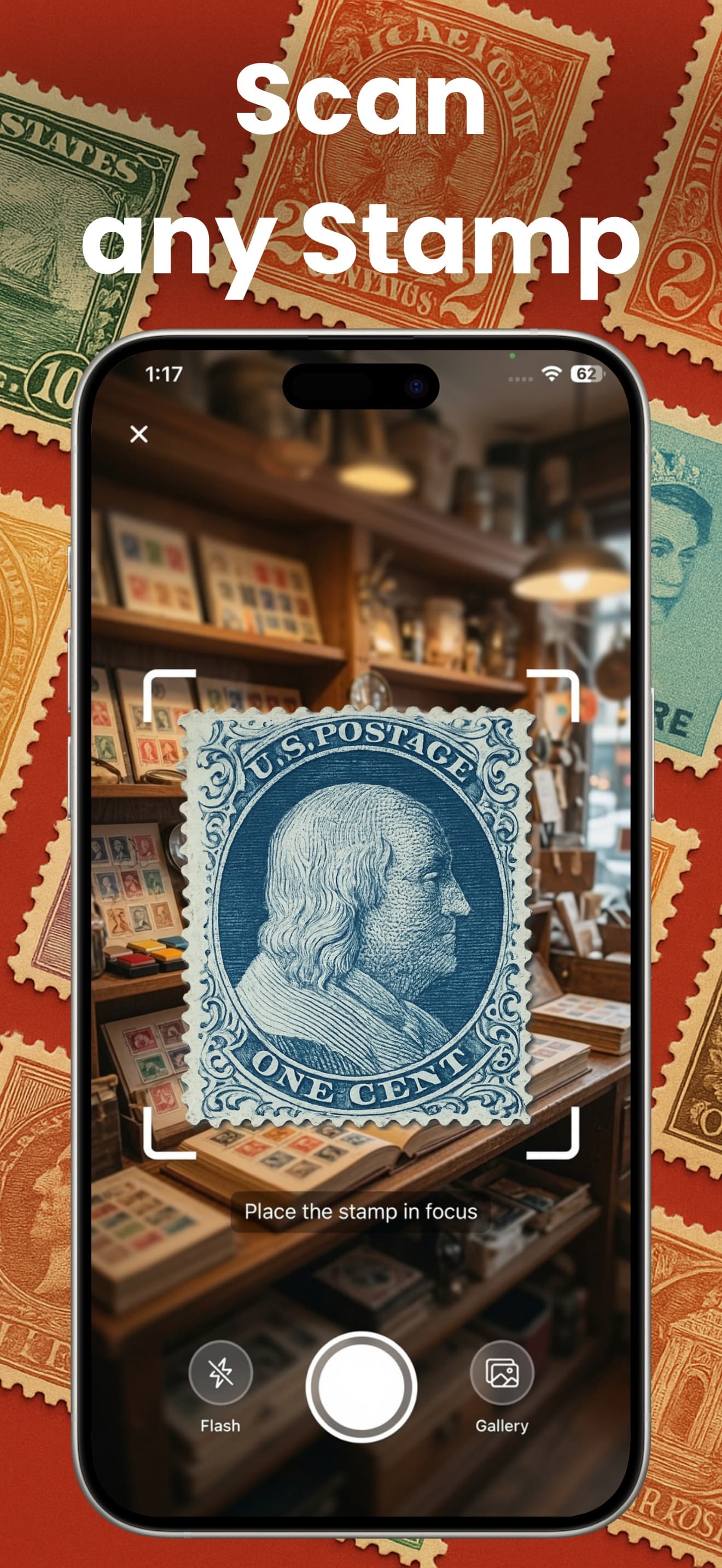
Tap Scan Now and photograph one stamp at a time, flat and filling the frame.
- 2
Check the issue and year
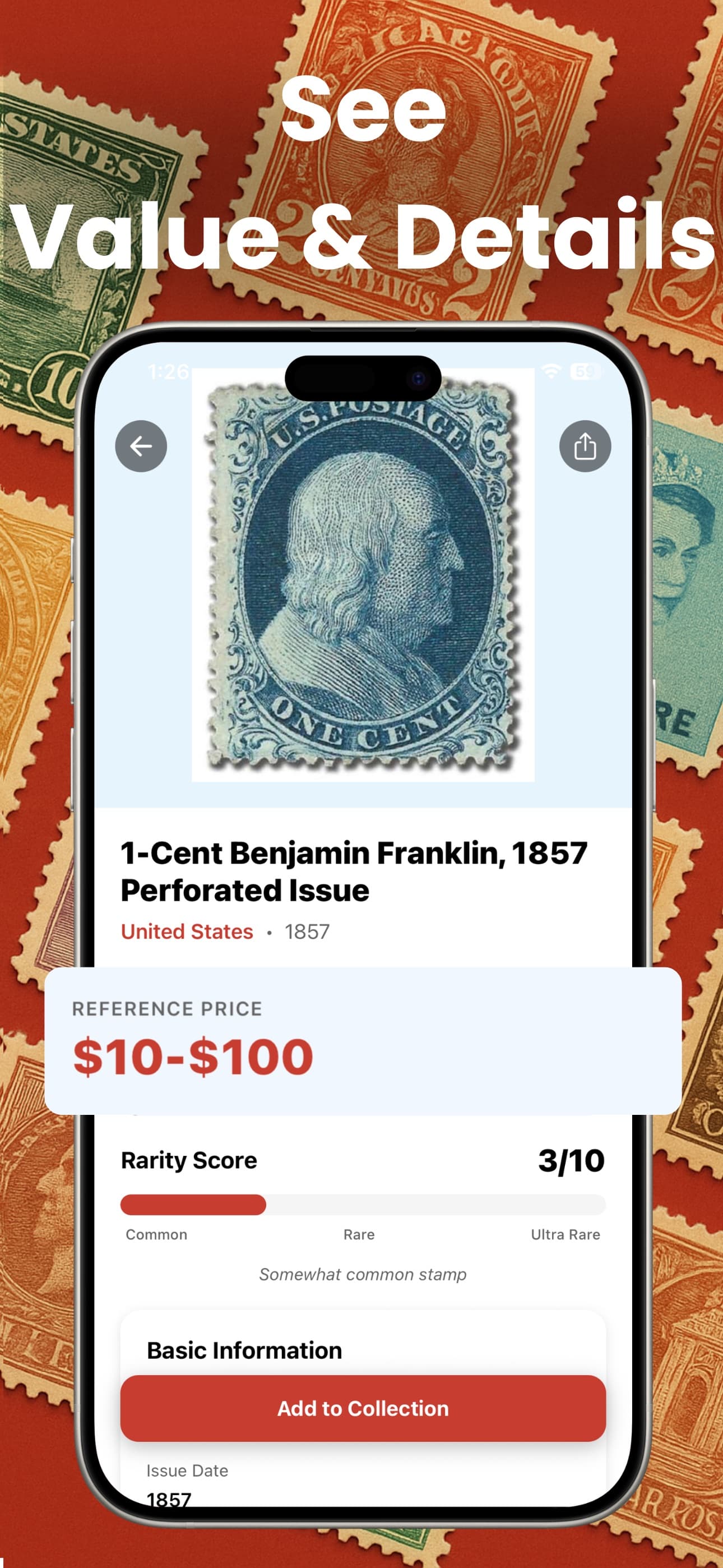
A pre-decimal date or a colony name is the signal to look closer at watermark, perforation and condition.
- 3
Use rarity to triage
Work through a shoebox quickly, setting aside anything with a high rarity score or a meaningful price range.
- 4
Save and total your collection
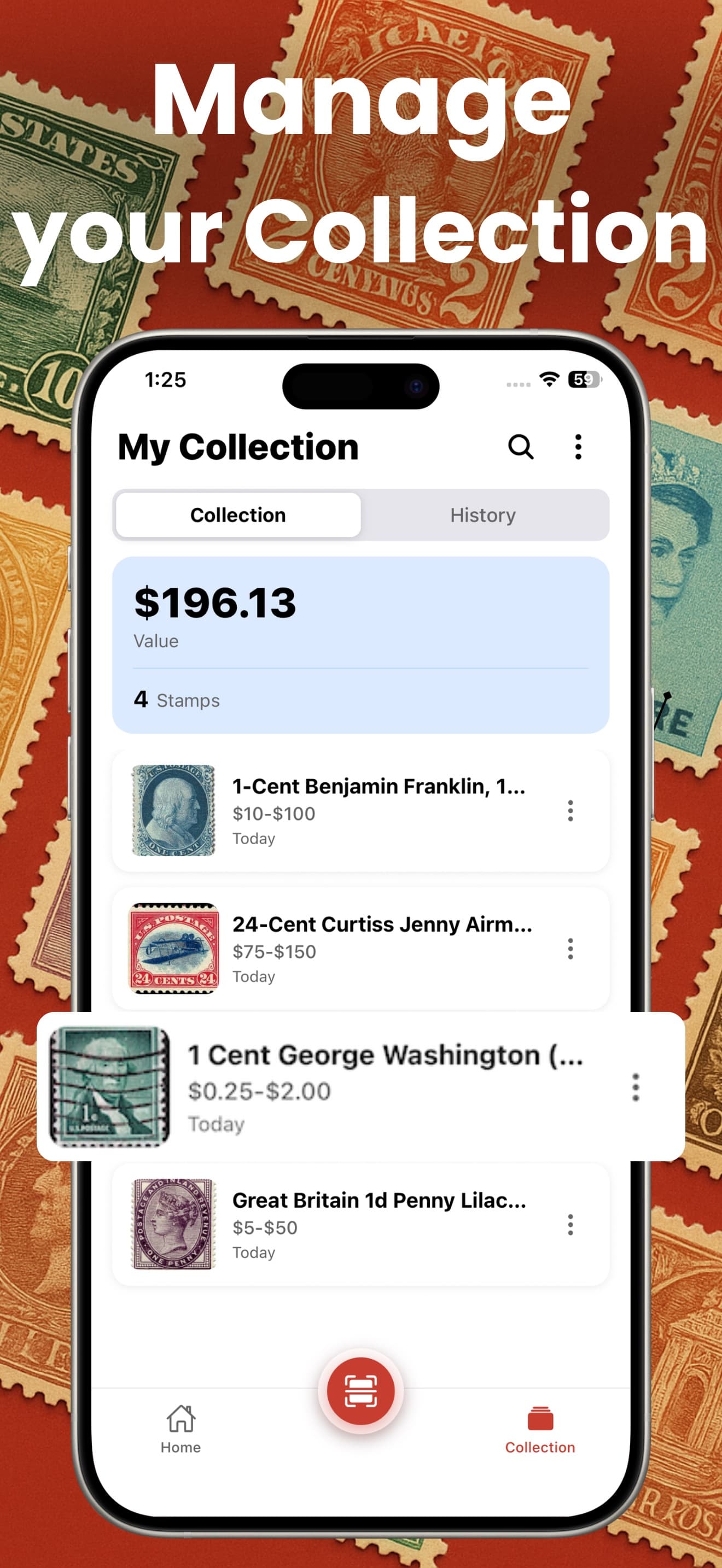
Add the keepers to your collection to track what the better part of the album is worth.


iOS 與 Android 免費下載
常見問題
最值錢的澳洲郵票是哪一張?
最高價的是袋鼠與地圖系列的高面值,以及大型殖民地稀有票,其中包括西澳 1855 年的倒置天鵝。在這個級別,品相對價格影響極大。
1970 年代的澳洲郵票值錢嗎?
通常不值錢。十進位時期郵票印量大且被大量保存,除非是印刷錯體,否則多半只值面值。
袋鼠郵票值多少?
袋鼠與地圖系列的低面值很便宜,但先令與鎊面值以及稀有浮水印變體可以非常高。決定價格的是確切的發行版本。
舊澳洲郵票還能寄信嗎?
以元與分計價的十進位郵票通常仍然有效。1966 年前的鎊、先令、便士郵票已無效,而且本來就更適合收藏。
十進位以前的澳洲郵票值多少?
完全看版本。喬治六世與伊莉莎白二世的常見普通票只值幾塊錢,但袋鼠高面值、1932 年大橋五先令與稀有浮水印變體,從數十到數千美元都有。
澳洲郵票有浮水印嗎?
早期很多都有,而且很重要。同一圖案印在不同浮水印紙上,某些組合罕見得多,所以收 1966 年前的澳洲郵票,浮水印盤很有用。
澳洲首日封值錢嗎?
大多只值一點點,因為 1960 年代起大量製作。值得細看的是更早的封、特殊的封繪,以及貼有十進位前高面值的封。
