
Známky podľa krajín
Známky Austrálie: ktoré majú naozaj cenu
Aktualizované · 5 min čítania · Tím StampGo
Rýchla odpoveď
Cenné austrálske známky sú koloniálne emisie z rokov 1850 až 1912, séria s klokanom a mapou od roku 1913 a kľúčové nominály pred desatinnou menou, ako 5 šilingov so sydneyským mostom z roku 1932. Desatinné známky vydávané od roku 1966 sú prevažne bežné a majú cenu zhruba nominálu.
Kľúčové fakty
- Prvé známky
- Kolónie vydávali vlastné od roku 1850, ešte pred federáciou
- Prvá celoštátna emisia
- Séria s klokanom a mapou, od roku 1913
- Deliaca čiara
- Desatinná mena prišla v roku 1966. Zberateľské sú staršie známky
- Kľúčová známka pred rokom 1966
- 5 šilingov so sydneyským mostom z roku 1932
- Slávna rarita
- Prevrátená labuť zo Západnej Austrálie, 1855
- Zvyčajne bežné
- Príležitostné a výplatné známky desatinného obdobia
What are Australian stamps worth by era?
Colonial and early Commonwealth issues carry the value. Pre-decimal stamps are mixed, with the high values and a few commemoratives standing out, while decimal issues from 1966 are mostly common.
| Era | Key issues | Typical value |
|---|---|---|
| 1850–1912 (colonies) | New South Wales, Victoria, Queensland, South Australia, Western Australia, Tasmania | Often valuable, especially early issues and on cover |
| 1913–1945 | Kangaroo and Map series, King George V heads, 1932 Harbour Bridge | High values and key commemoratives are the money |
| 1945–1965 | Pre-decimal definitives and commemoratives | Mostly modest, with some better high values |
| 1966–today | Decimal issues | Usually face value, apart from errors and varieties |
Which Australian stamps are worth money?
Colonial rarities, the high-value Kangaroo and Map stamps, the 1932 Sydney Harbour Bridge 5 shillings, and early airmail issues, especially unused and well centered.
- Kangaroo and Map high values. The pound denominations of the first Commonwealth series are the classic Australian rarities.
- 1932 Sydney Harbour Bridge 5 shillings. The key commemorative of the pre-decimal era, worth far more unused than used.
- Colonial issues. Each colony has its own scarce stamps, and Western Australia's Inverted Swan of 1855 is world-famous.
- Early airmail and flight covers, which connect to Australia's aviation history.
- Errors and varieties, including missing colours and perforation errors on later issues.
What does “pre-decimal” mean for Australian stamps?
It means stamps issued before Australia changed to dollars and cents in 1966. Pre-decimal stamps are priced in pounds, shillings and pence, and they're where most Australian value sits.
If a stamp shows a value such as 3d, 1/- or 5/-, it's pre-decimal and at least sixty years old. If it shows cents or dollars, it's from 1966 or later and almost certainly common. That single check sorts most family albums in a few minutes.
How do I identify an Australian stamp?
Look for “Australia” in the inscription, or a colony name such as New South Wales, Victoria or Tasmania on pre-1913 issues. The currency and monarch then narrow down the date.
- A colony name means the stamp predates the Commonwealth series of 1913.
- A kangaroo on a map of Australia identifies the first Commonwealth series.
- King George V, George VI or Elizabeth II narrows the reign, just as it does for British stamps.
- Watermarks and perforations separate many similar-looking Kangaroo and KGV printings, and they change the value substantially.
Stanley Gibbons and specialist Australian catalogues both cover these, and the differences matter. See how to identify stamps.
Are decimal Australian stamps worth anything?
Most are worth about face value. Australia has issued a lot of attractive commemoratives since 1966, and collectors saved them in quantity, so supply is high.
The exceptions are genuine errors, some booklet and coil varieties, and stamps on unusual covers. Unused decimal stamps still work as postage, which is often the best use for a shoebox of them. See commemorative stamps value.
What about Australian territory stamps?
Australia's external territories have issued their own stamps, including the Australian Antarctic Territory, Norfolk Island, Christmas Island and the Cocos (Keeling) Islands. Most collectors file them with Australia, and catalogues list them separately.
- Australian Antarctic Territory: polar themes and expedition postmarks make these popular, and covers carried on Antarctic voyages are collected in their own right.
- Norfolk Island: long-running issues with strong local themes.
- Christmas Island and Cocos (Keeling) Islands: small issuing programmes, which keeps some issues scarcer than mainland stamps.
- Papua and New Guinea: administered by Australia for much of the 20th century, and collected as a separate country with genuinely valuable early issues.
Territory stamps are a good example of why identification comes first: they look Australian, they're catalogued separately, and their values follow their own supply rather than mainland Australia's. See how to identify stamps.
Krok za krokom
How to check Australian stamp values with StampGo
Colonial issues, Kangaroos and decimal commemoratives look nothing alike, so identifying the issue immediately tells you whether to keep going.
- 1
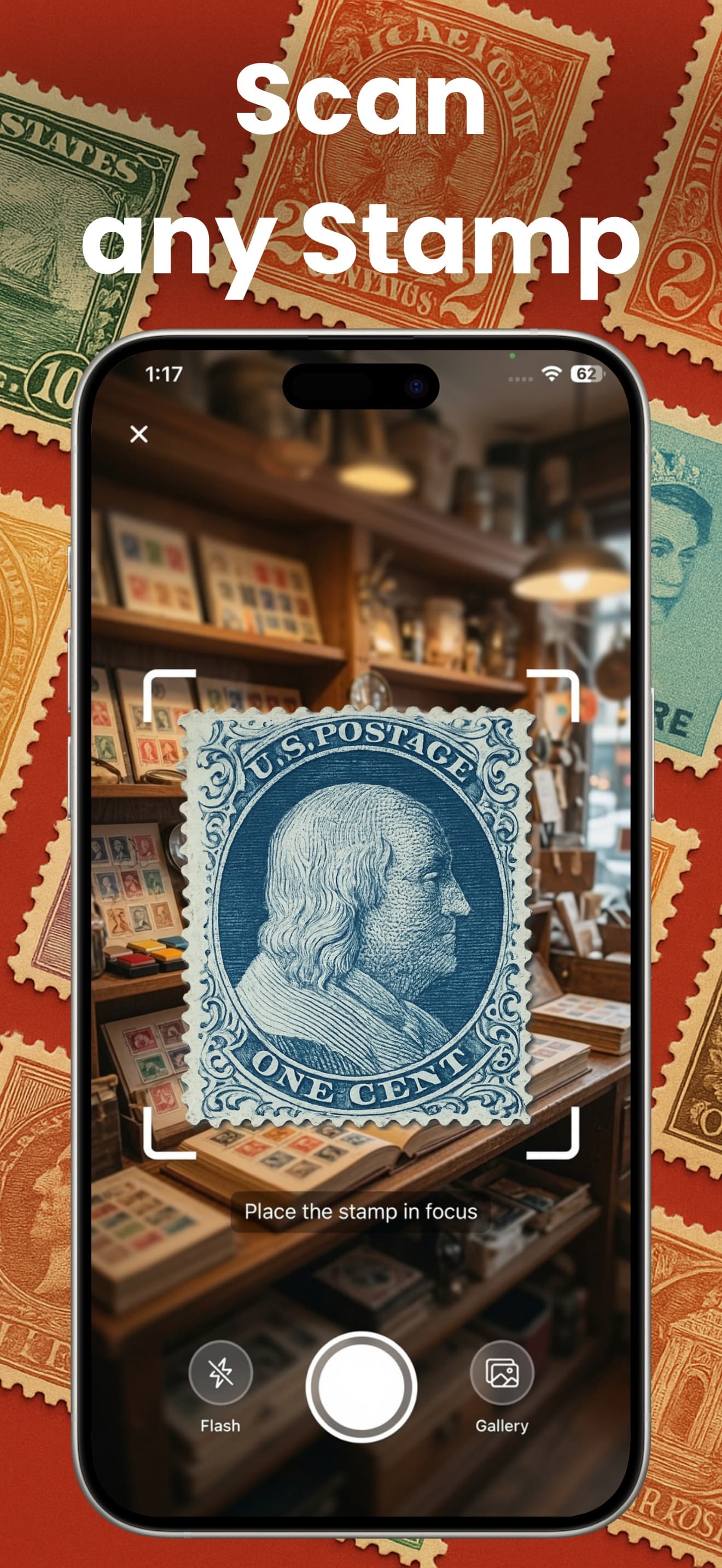
Scan the stamp
Tap Scan Now and photograph one stamp at a time, flat and filling the frame.
- 2
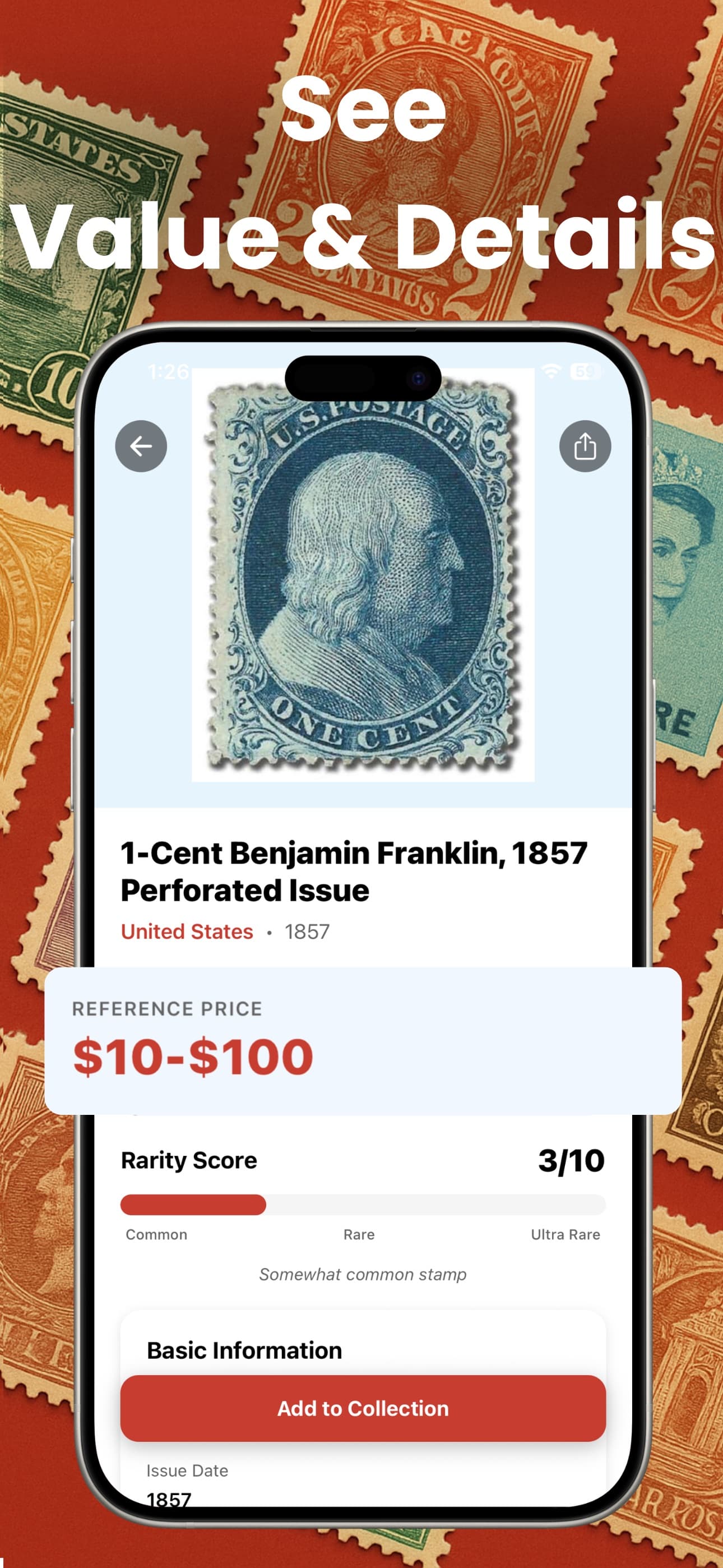
Check the issue and year
A pre-decimal date or a colony name is the signal to look closer at watermark, perforation and condition.
- 3
Use rarity to triage
Work through a shoebox quickly, setting aside anything with a high rarity score or a meaningful price range.
- 4
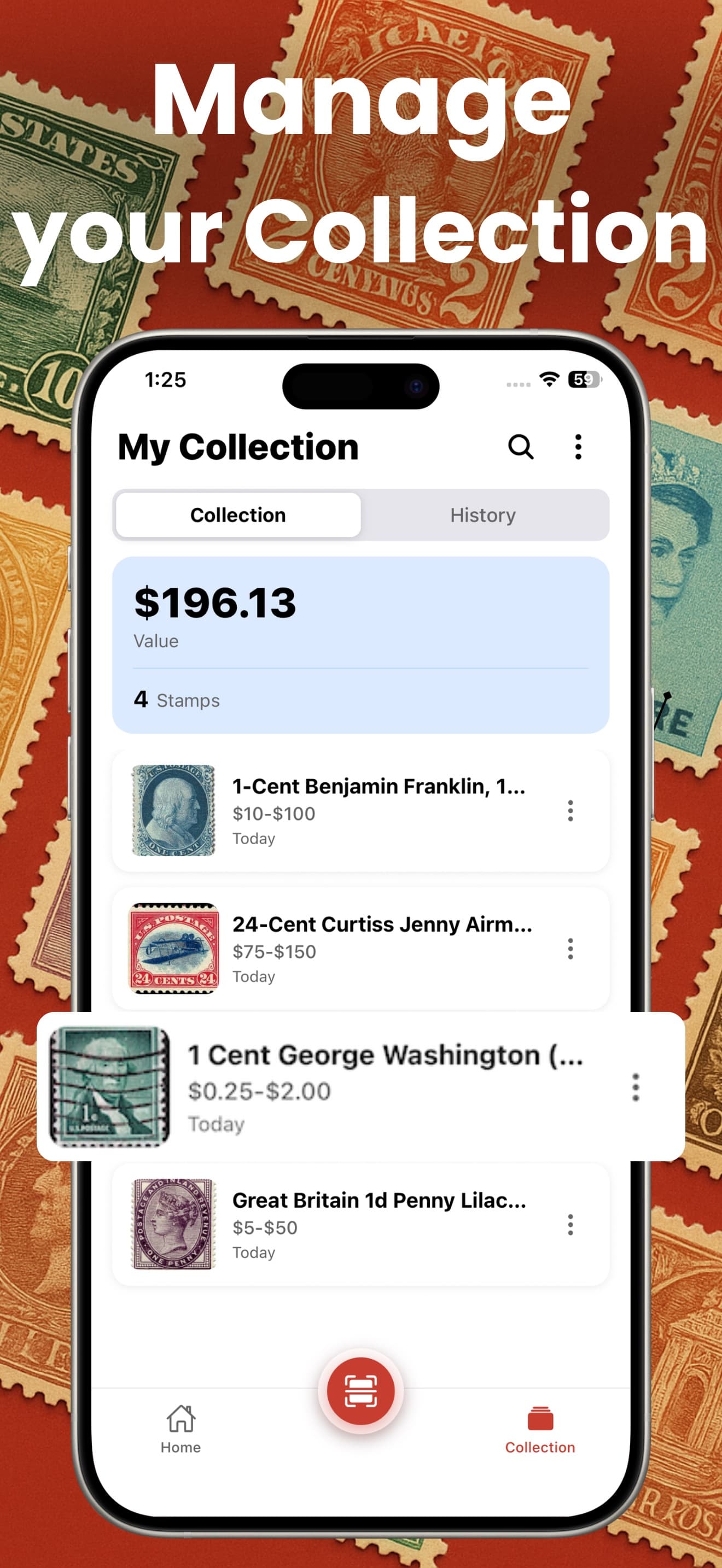
Save and total your collection
Add the keepers to your collection to track what the better part of the album is worth.


Zadarmo na stiahnutie pre iOS aj Android
Časté otázky
Ktorá austrálska známka má najvyššiu cenu?
Na čele sú vysoké nominály série s klokanom a mapou a veľké koloniálne rarity vrátane Prevrátenej labute zo Západnej Austrálie z roku 1855. Na tejto úrovni má stav veľmi silný vplyv.
Majú austrálske známky zo sedemdesiatych rokov nejakú cenu?
Spravidla nie. Známky desatinného obdobia sa tlačili a uchovávali vo veľkom, takže väčšina má cenu zhruba nominálu, ak nejde o tlačové chyby.
Akú cenu má známka s klokanom?
Nízke nominály série s klokanom a mapou sú dostupné, kým šilingové a librové hodnoty a vzácne varianty vodotlače môžu stáť veľmi veľa. Rozhoduje konkrétny náklad.
Dajú sa staré austrálske známky ešte použiť na list?
Desatinné známky v dolároch a centoch sú vo všeobecnosti stále platné. Známky pred rokom 1966 v librách, šilingoch a penciach nie a ich miesto je aj tak v zbierke.
Akú cenu má austrálska známka pred desatinnou menou?
Závisí to úplne od emisie. Bežné výplatné známky Juraja VI. a Alžbety II. stoja centy, kým vysoké klokanie nominály, 5 šilingov s mostom z roku 1932 a vzácne varianty vodotlače idú od desiatok do tisícov dolárov.
Majú austrálske známky vodotlač?
Mnohé rané áno a sú dôležité. Rovnaký obraz sa tlačil na papiere s rôznymi vodotlačami a niektoré kombinácie sú oveľa vzácnejšie, takže pri Austrálii pred rokom 1966 sa oplatí mať vaničku na vodotlač.
Majú austrálske obálky prvého dňa nejakú cenu?
Väčšina nanajvýš pár desiatok eur, keďže od šesťdesiatych rokov vznikali vo veľkom. Poriadne stoja za kontrolu staršie obálky, nezvyčajné prítlače a kusy s vysokými nominálmi z čias pred desatinnou menou.
