
Valeurs par pays
Timbres d'Australie : lesquels ont vraiment de la valeur
Mis à jour le · 6 min de lecture · Par l’équipe StampGo
Réponse rapide
Les timbres australiens qui valent de l'argent sont les émissions coloniales de 1850 à 1912, la série Kangourou et carte à partir de 1913, et les fortes valeurs d'avant la décimalisation comme le 5 shillings Sydney Harbour Bridge de 1932. Les timbres décimaux, émis à partir de 1966, sont généralement courants et valent à peu près leur valeur faciale.
L’essentiel
- Premiers timbres
- Les colonies ont émis les leurs dès 1850, avant la fédération
- Première émission nationale
- La série Kangourou et carte, à partir de 1913
- Frontière
- La monnaie décimale arrive en 1966. Les timbres antérieurs sont les plus collectionnés
- Timbre clé d'avant 1966
- Le 5 shillings Sydney Harbour Bridge de 1932
- Rareté célèbre
- Le Cygne renversé d'Australie-Occidentale, 1855
- Généralement courants
- Les commémoratifs et usuels de l'ère décimale
What are Australian stamps worth by era?
Colonial and early Commonwealth issues carry the value. Pre-decimal stamps are mixed, with the high values and a few commemoratives standing out, while decimal issues from 1966 are mostly common.
| Era | Key issues | Typical value |
|---|---|---|
| 1850–1912 (colonies) | New South Wales, Victoria, Queensland, South Australia, Western Australia, Tasmania | Often valuable, especially early issues and on cover |
| 1913–1945 | Kangaroo and Map series, King George V heads, 1932 Harbour Bridge | High values and key commemoratives are the money |
| 1945–1965 | Pre-decimal definitives and commemoratives | Mostly modest, with some better high values |
| 1966–today | Decimal issues | Usually face value, apart from errors and varieties |
Which Australian stamps are worth money?
Colonial rarities, the high-value Kangaroo and Map stamps, the 1932 Sydney Harbour Bridge 5 shillings, and early airmail issues, especially unused and well centered.
- Kangaroo and Map high values. The pound denominations of the first Commonwealth series are the classic Australian rarities.
- 1932 Sydney Harbour Bridge 5 shillings. The key commemorative of the pre-decimal era, worth far more unused than used.
- Colonial issues. Each colony has its own scarce stamps, and Western Australia's Inverted Swan of 1855 is world-famous.
- Early airmail and flight covers, which connect to Australia's aviation history.
- Errors and varieties, including missing colours and perforation errors on later issues.
What does “pre-decimal” mean for Australian stamps?
It means stamps issued before Australia changed to dollars and cents in 1966. Pre-decimal stamps are priced in pounds, shillings and pence, and they're where most Australian value sits.
If a stamp shows a value such as 3d, 1/- or 5/-, it's pre-decimal and at least sixty years old. If it shows cents or dollars, it's from 1966 or later and almost certainly common. That single check sorts most family albums in a few minutes.
How do I identify an Australian stamp?
Look for “Australia” in the inscription, or a colony name such as New South Wales, Victoria or Tasmania on pre-1913 issues. The currency and monarch then narrow down the date.
- A colony name means the stamp predates the Commonwealth series of 1913.
- A kangaroo on a map of Australia identifies the first Commonwealth series.
- King George V, George VI or Elizabeth II narrows the reign, just as it does for British stamps.
- Watermarks and perforations separate many similar-looking Kangaroo and KGV printings, and they change the value substantially.
Stanley Gibbons and specialist Australian catalogues both cover these, and the differences matter. See how to identify stamps.
Are decimal Australian stamps worth anything?
Most are worth about face value. Australia has issued a lot of attractive commemoratives since 1966, and collectors saved them in quantity, so supply is high.
The exceptions are genuine errors, some booklet and coil varieties, and stamps on unusual covers. Unused decimal stamps still work as postage, which is often the best use for a shoebox of them. See commemorative stamps value.
What about Australian territory stamps?
Australia's external territories have issued their own stamps, including the Australian Antarctic Territory, Norfolk Island, Christmas Island and the Cocos (Keeling) Islands. Most collectors file them with Australia, and catalogues list them separately.
- Australian Antarctic Territory: polar themes and expedition postmarks make these popular, and covers carried on Antarctic voyages are collected in their own right.
- Norfolk Island: long-running issues with strong local themes.
- Christmas Island and Cocos (Keeling) Islands: small issuing programmes, which keeps some issues scarcer than mainland stamps.
- Papua and New Guinea: administered by Australia for much of the 20th century, and collected as a separate country with genuinely valuable early issues.
Territory stamps are a good example of why identification comes first: they look Australian, they're catalogued separately, and their values follow their own supply rather than mainland Australia's. See how to identify stamps.
Étape par étape
How to check Australian stamp values with StampGo
Colonial issues, Kangaroos and decimal commemoratives look nothing alike, so identifying the issue immediately tells you whether to keep going.
- 1
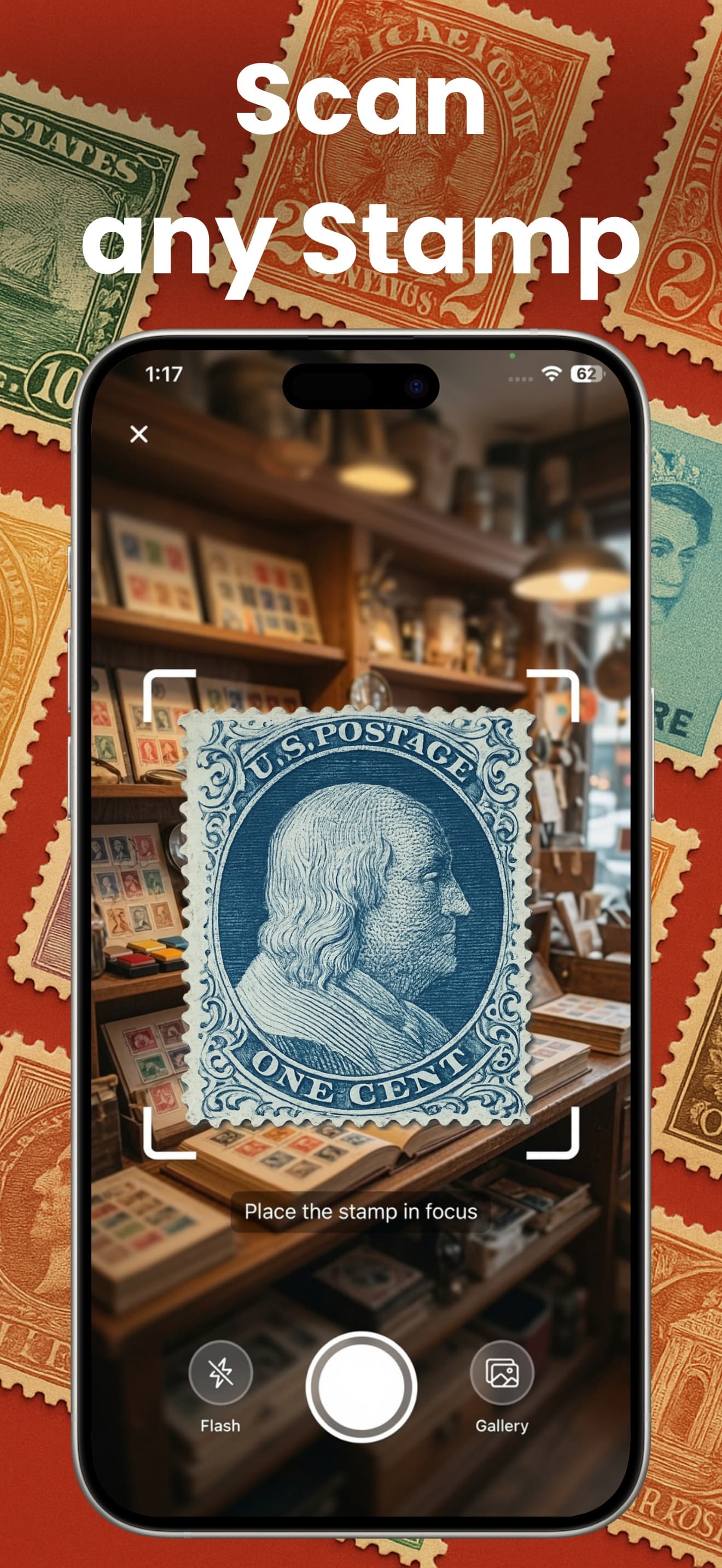
Scan the stamp
Tap Scan Now and photograph one stamp at a time, flat and filling the frame.
- 2
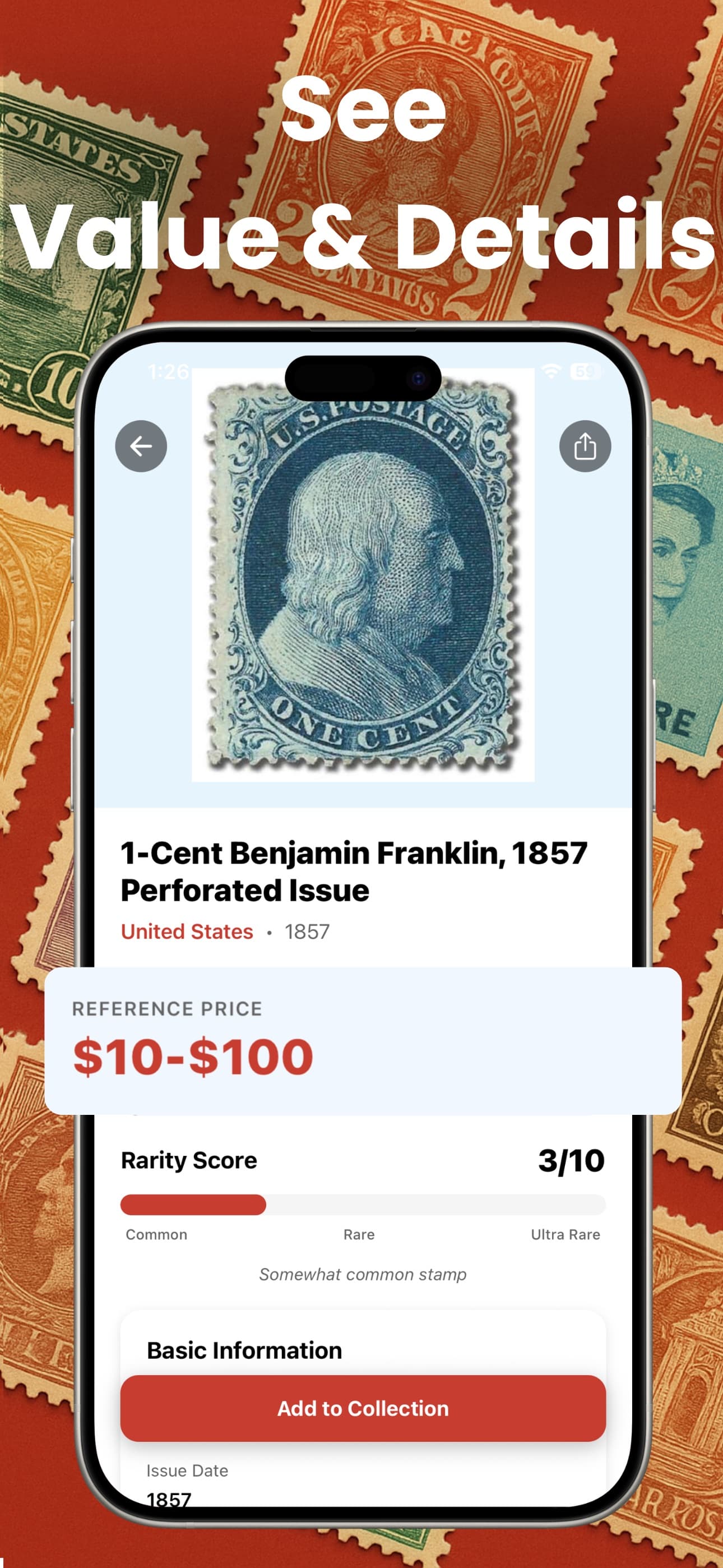
Check the issue and year
A pre-decimal date or a colony name is the signal to look closer at watermark, perforation and condition.
- 3
Use rarity to triage
Work through a shoebox quickly, setting aside anything with a high rarity score or a meaningful price range.
- 4
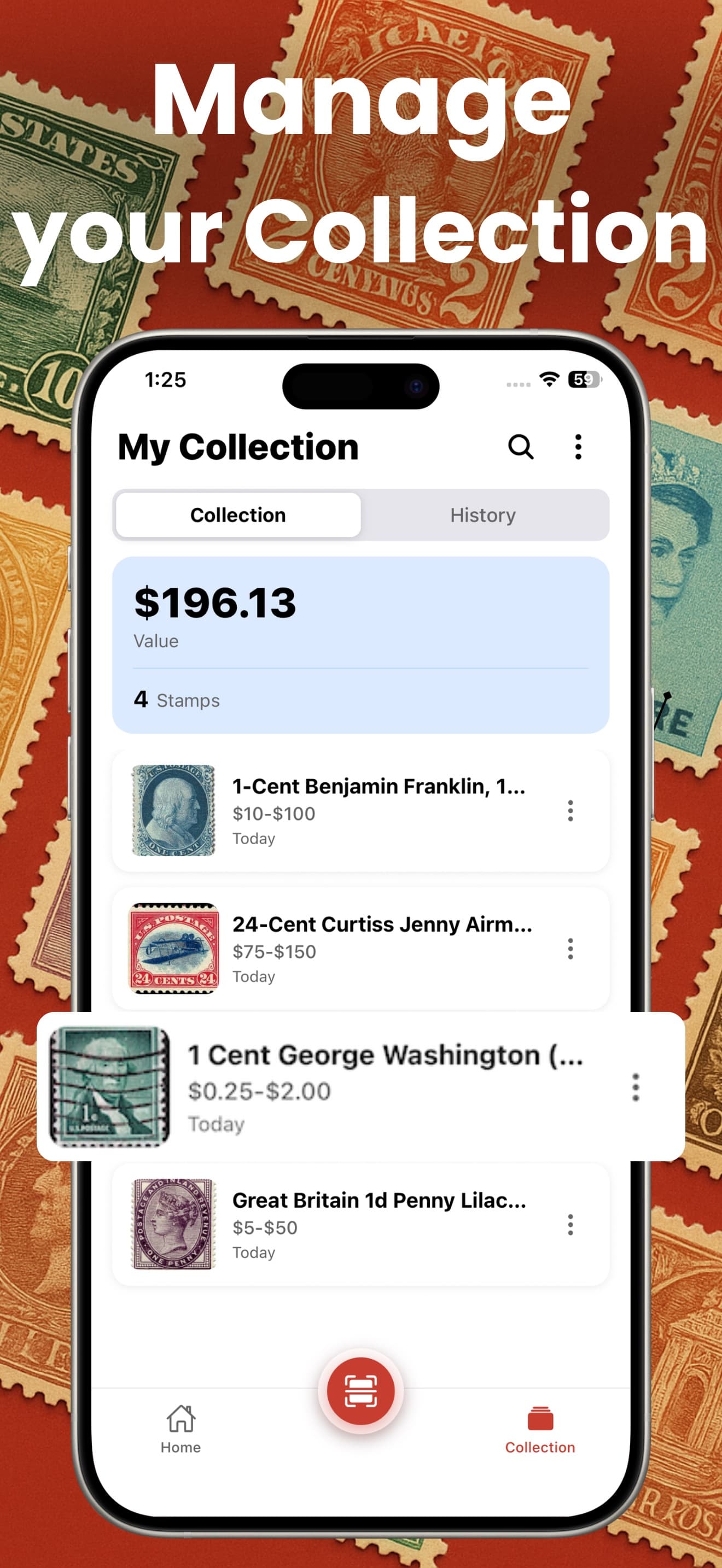
Save and total your collection
Add the keepers to your collection to track what the better part of the album is worth.


Téléchargement gratuit sur iOS et Android
Questions fréquentes
Quel est le timbre australien le plus précieux ?
Les fortes valeurs de la série Kangourou et carte ainsi que les grandes raretés coloniales, dont le Cygne renversé d'Australie-Occidentale de 1855, dominent la liste. À ce niveau, l'état compte énormément.
Les timbres australiens des années 1970 valent-ils quelque chose ?
En général non. Les timbres de l'ère décimale ont été imprimés et conservés en grande quantité, la plupart valent donc leur valeur faciale, sauf s'il s'agit d'erreurs.
Combien vaut un timbre kangourou ?
Les petites valeurs de la série Kangourou et carte sont abordables, tandis que les valeurs en shillings et en livres, ainsi que les variétés de filigrane rares, peuvent valoir très cher. C'est le tirage précis qui décide.
Peut-on encore affranchir avec de vieux timbres australiens ?
Les timbres décimaux en dollars et cents restent généralement valables. Les timbres d'avant 1966 en livres, shillings et pence ne le sont pas, et leur place est de toute façon dans une collection.
Combien vaut un timbre australien d'avant la décimalisation ?
Tout dépend de l'émission. Les usuels courants de George VI et d'Élisabeth II valent quelques centimes, tandis que les fortes valeurs Kangourou, le 5 shillings Harbour Bridge de 1932 et les variétés de filigrane rares vont de quelques dizaines à plusieurs milliers d'euros.
Les timbres australiens ont-ils des filigranes ?
Beaucoup d'émissions anciennes en ont, et ils comptent. Le même dessin a été imprimé sur des papiers à filigranes différents, et certaines combinaisons sont bien plus rares, d'où l'intérêt d'une cuvette à filigrane si vous collectionnez l'Australie d'avant 1966.
Les plis premier jour australiens valent-ils quelque chose ?
La plupart valent quelques euros au maximum, car ils ont été produits en grande quantité à partir des années 1960. Les plis plus anciens, les cachets inhabituels et ceux portant de fortes valeurs d'avant la décimalisation méritent un examen sérieux.
