
有名な切手
ワシントンとフランクリンの切手:手持ちはいくらか
更新日 · 4 分で読めます · StampGoチーム
結論
ジョージ・ワシントンとベンジャミン・フランクリンの切手の大半は数円から数百円です。何十億枚も印刷された日常的なアメリカ切手だからです。ただし一部は数万円以上になります。19世紀の発行物と、1908年から1922年のワシントン・フランクリン・シリーズの希少バラエティで、これらは目打、透かし、印刷方式だけが違います。StampGoは写真から発行物を判別します。
基本データ
- どこにでもある理由
- 1847年の最初の発行以来、ワシントンとフランクリンはアメリカ切手に登場し続けている
- 難しいシリーズ
- ワシントン・フランクリンの肖像(1908〜1922年):約250種類
- バラエティを分けるもの
- 目打の度数、透かし、平版か輪転か、そして紙
- 日常的な低額面
- 1セント緑と2セント赤。何十億枚も印刷された
- 最も高いもの
- 希少な目打と透かしの組み合わせ、コイル切手、エラー、初期の発行物
- 必要な道具
- 目打ゲージ、透かし用トレー、ミリ定規
How much is a George Washington stamp worth?
Most George Washington stamps are worth a few cents to a dollar. Washington appeared on the most common US stamps for over a century, so the value depends on the exact issue, variety and condition, not the portrait.
| Stamp | Typical value |
|---|---|
| Common 20th-century Washington stamps (1¢–3¢), used | A few cents |
| Washington-Franklin Heads (1908–1922), common varieties | Cents to a few dollars |
| Washington-Franklin Heads, scarce perforation or watermark varieties | Tens to hundreds of dollars, sometimes more |
| 19th-century Washington issues (1847–1890s) | Dollars to thousands, depending on the issue and condition |
| The 1932 Washington Bicentennial set | Mostly common |
The red 2¢ Washington, the letter-rate stamp for decades, is the classic example. Billions were used, so most are worth a few cents, but certain varieties printed on the wrong paper, perforated differently or from a different press are worth far more.
How much is a Benjamin Franklin stamp worth?
Most Franklin stamps are common too, but early Franklin issues can be valuable. The 1847 5¢ Franklin was one of the first two US stamps, and the 1¢ Franklins of the 1850s–60s are worth checking.
Franklin, the first Postmaster General, has appeared on US stamps since 1847. The 1¢ blue Franklin of 1851–1861 comes in several types that specialists separate by tiny design differences, and the 1861–1866 1¢ Franklin in StampGo's own screenshots carries a $15–$75 reference range. In the Washington-Franklin series, Franklin appears on the 1908 1¢ and, from 1912, on the higher values.
The rarest of all is the 1868 1¢ Franklin “Z Grill”, with only two known. It's one of the most valuable US stamps. See US stamp values.
Why is the Washington-Franklin series so hard to identify?
About 250 different stamps share a handful of designs. They were printed between 1908 and 1922 with different perforations, watermarks, papers and presses, and some combinations are far scarcer than others.
- Perforation gauge: perf 12, 10, 8½ or compound gauges such as 12 × 10, plus imperforate and coil stamps.
- Watermark: a double-line “USPS”, a single-line “USPS”, or none.
- Printing method: flat-plate and rotary-press stamps of the same design differ slightly in size.
- Paper: most were printed on ordinary paper, but some were printed on bluish or other unusual papers.
How do I identify my Washington or Franklin stamp?
Start with the denomination, color and design to find the issue, then measure the perforation gauge, check the watermark and measure the size to pin down the exact variety.
A photo gets you to the issue. For Washington-Franklins, the rest needs a perforation gauge, a watermark tray and a millimeter ruler. Our guide to how to identify stamps explains each tool.
Are 1 cent and 2 cent Washington stamps worth anything?
Usually only a few cents, because they were printed in the billions to pay everyday postage. The exceptions are scarce varieties and unused, well-centered copies of early issues.
Condition matters a lot for the better varieties, so check centering and gum before you compare prices. See stamp condition grades.
What's the difference between flat-plate and rotary-press stamps?
They're the same designs printed on different presses. Rotary-press stamps were printed from curved plates, which stretched the image slightly, so they're a fraction of a millimeter taller or wider than flat-plate stamps of the same design.
Rotary presses were first used for coil stamps in the mid-1910s and later for sheet stamps. To tell the two apart, measure the printed design with a millimeter ruler and compare it with a catalogue's dimensions. Many rotary-press stamps from the 1920s onward also show faint ridges on the back from gum breakers, which were used to stop the sheets curling.
It matters because some Washington-Franklin values are common in one printing and scarce in the other, even with the same perforation and watermark. That's why careful collectors check all three: perforation, watermark and press.
手順
How to check a Washington or Franklin stamp with StampGo
StampGo narrows down which Washington or Franklin issue you have from a photo, so you know whether it's worth getting out the perforation gauge.
- 1
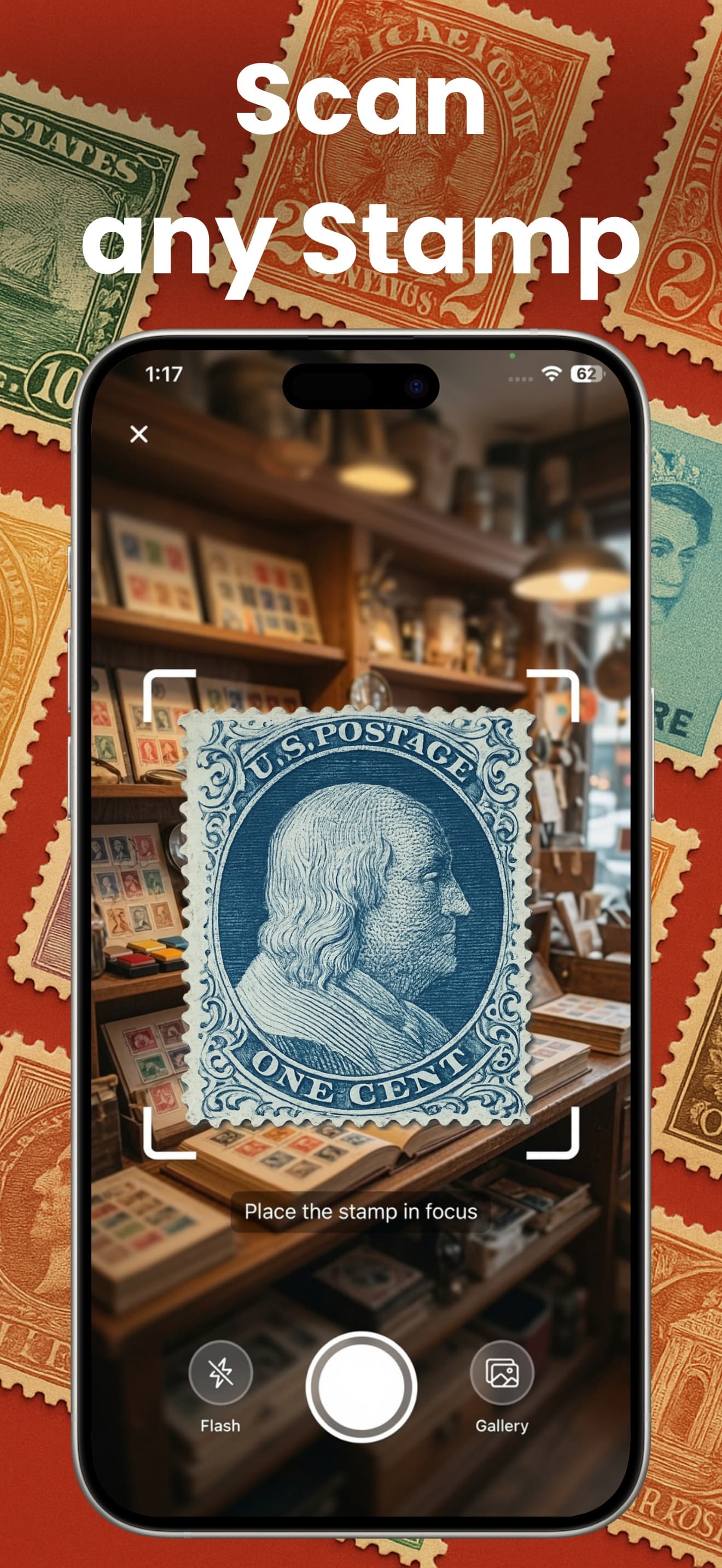
Scan the stamp
Tap Scan Now and photograph the stamp flat, with all four edges visible.
- 2
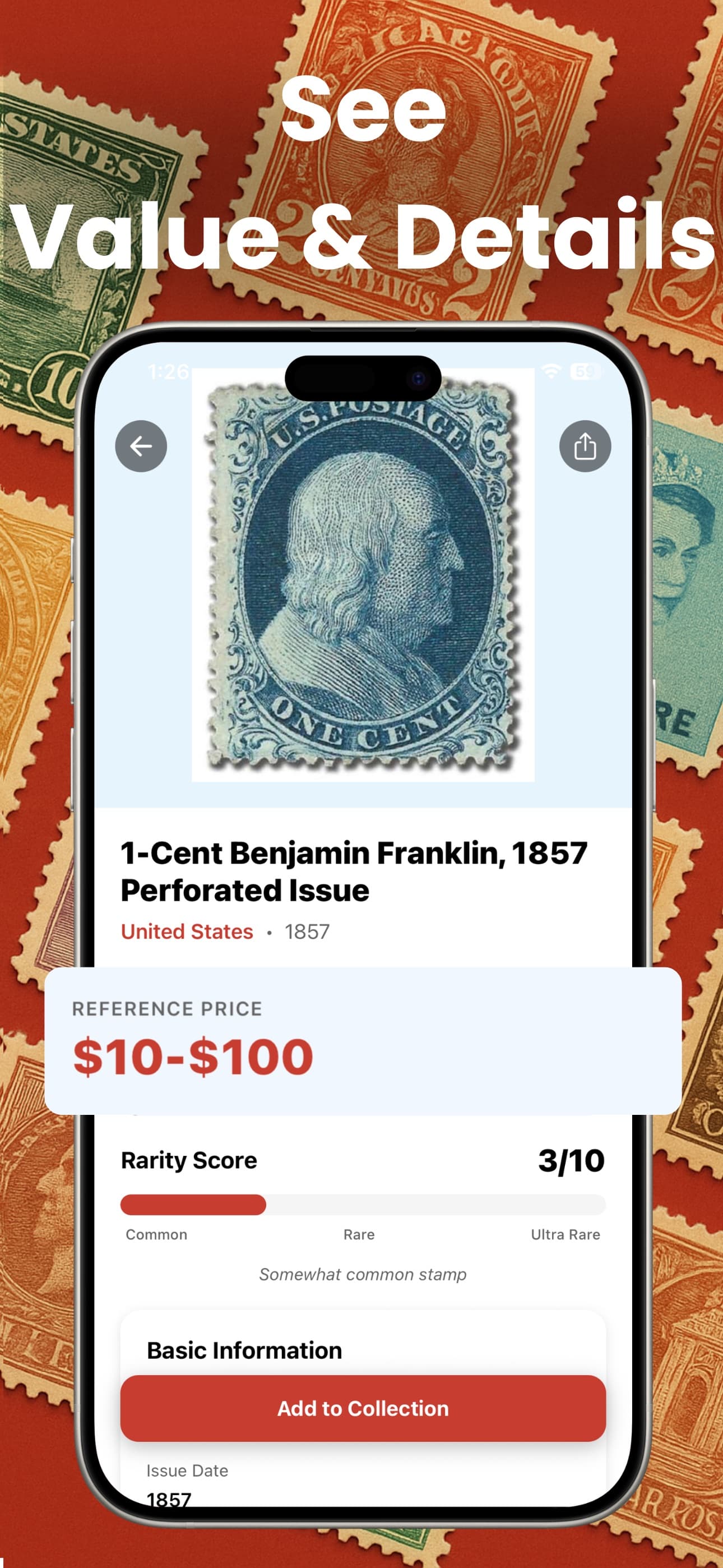
See the issue and price range
StampGo names the issue, such as the “1-Cent Benjamin Franklin, 1857 Perforated Issue”, with its year and a reference price.
- 3
Check varieties if it's promising
If the rarity score or price range is high, measure the perforations and check the watermark to pin down the exact variety.
- 4
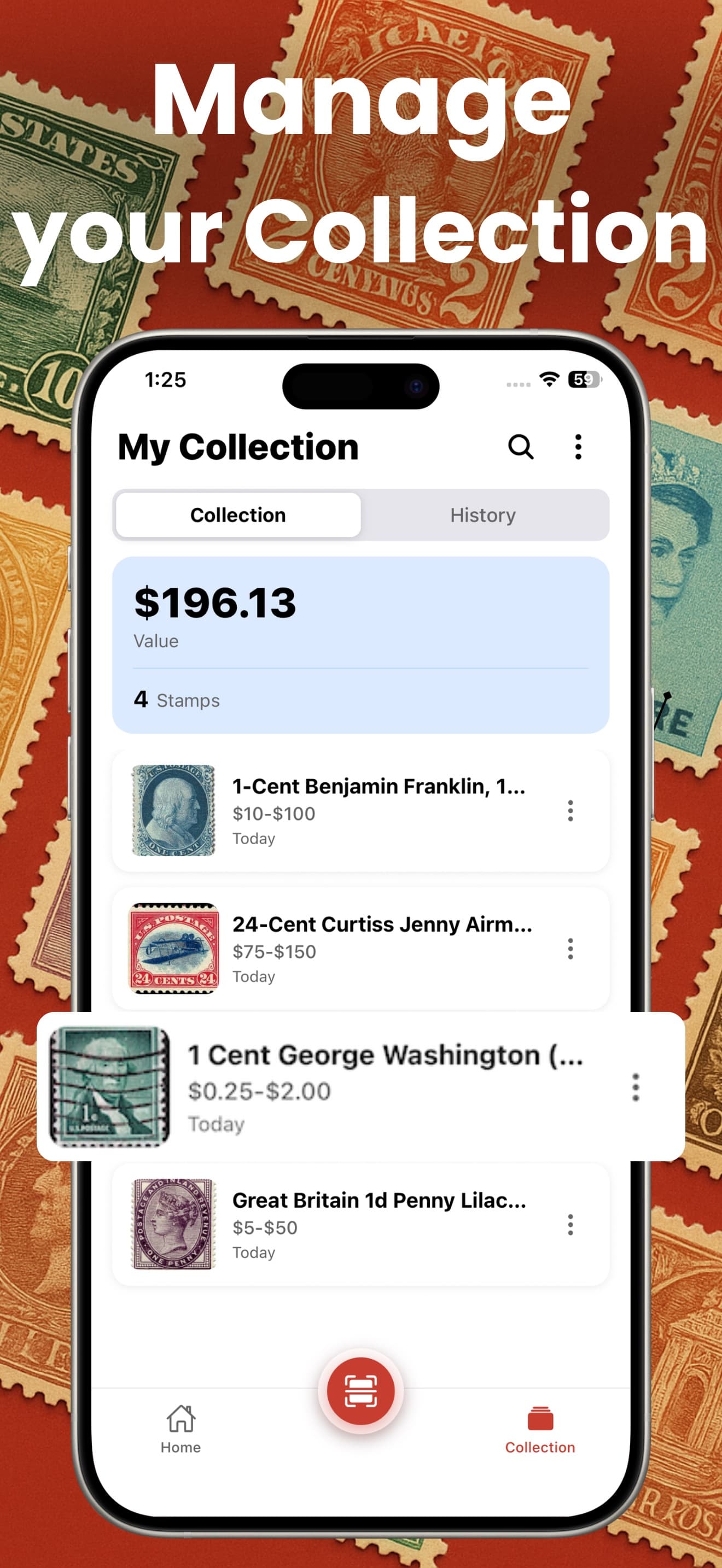
Save it to your collection
Add it to your collection. The app's screenshots show a 1¢ George Washington at $0.25–$2.00, which is typical for a common issue.


iOS・Androidで無料ダウンロード
よくある質問
赤いジョージ・ワシントンの切手はいくらですか?
1890年から1930年の2セント赤のワシントンは、使用済みならほとんどが数円です。1908年から1922年のシリーズの一部バラエティは、目打と透かしで見分けられ、はるかに高くなります。
最も高いベンジャミン・フランクリンの切手は?
2枚しか知られていない1868年の1セント・フランクリンZグリルが、アメリカ切手でも最高額級です。
最も高いジョージ・ワシントンの切手は?
希少な初期のワシントン発行物と、特定のコイル切手や目打バラエティなど希少なワシントン・フランクリンが最高値を付けます。価値を決めるのは正確なバラエティと状態です。
ワシントン・フランクリンには目打ゲージが必要ですか?
はい、最初の特定より先へ進むなら必要です。ありふれたワシントン・フランクリンと希少なものを分けるのは、まさに目打、透かし、印刷方式だからです。
なぜワシントン・フランクリンにはバラエティが多いのですか?
14年に及ぶシリーズの期間中、印刷彫刻局は近代化にともなって紙、透かし、目打機、印刷機を次々に変えました。その変更のたびに同じ図案の新しいバラエティが生まれたのです。
